
Aerospace And Precision Engineering Industry
In the aerospace and precision engineering industry, marking is a mission-critical process. Every component must be permanently identified to ensure traceability, safety compliance, and lifecycle management.
Unlike general industrial applications, aerospace marking must meet strict international standards, including readability after extreme environmental exposure such as:
High temperatures
Vibration and mechanical stress
Corrosion and chemical exposure
This is why aerospace marking solutions require high precision, high reliability, and strict process control.
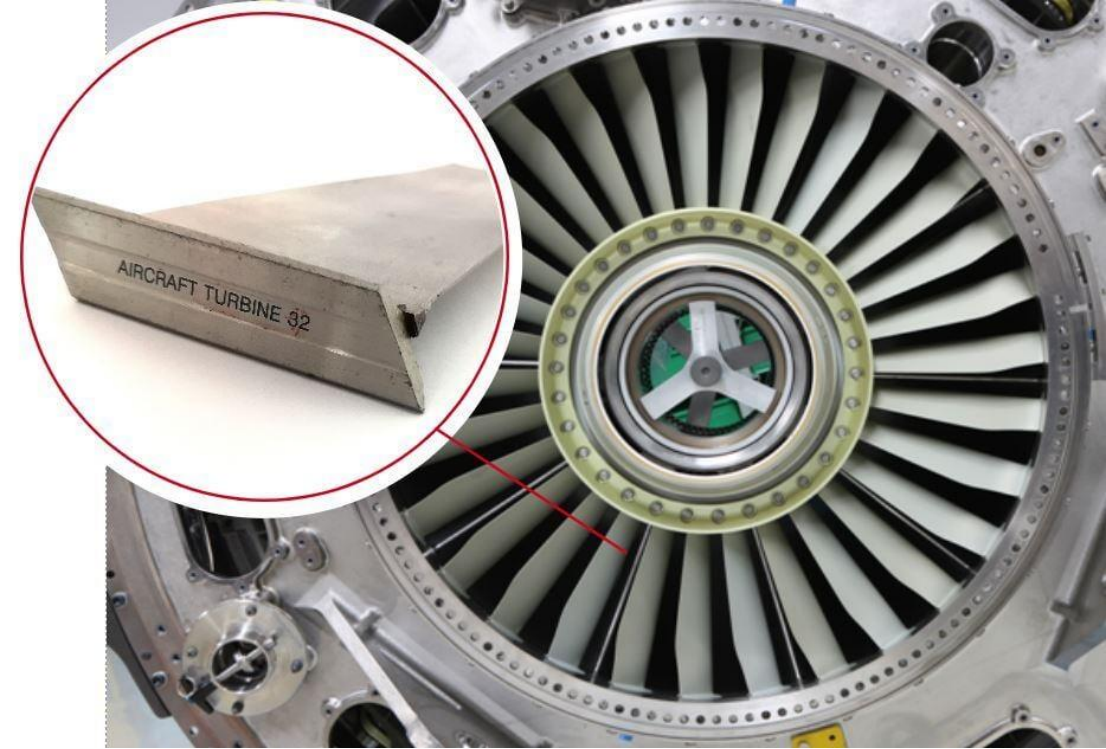
Aircraft component marking samples
What Components Require Marking in Aerospace?
Aerospace marking is applied across a wide range of critical components:
1.Structural Components
Typical parts:
Aircraft frames and brackets
Fuselage structural elements
Mounting components
Marking content:
Part numbers
Serial numbers
Manufacturing traceability codes
Requirement:
Deep, permanent marking that remains readable after coating or surface treatment
2.Engine & High-Temperature Components
Typical parts:
Turbine blades
Engine housings
High-temperature alloy components
Requirement:
Marking must withstand extreme heat and oxidation
No micro-cracks or structural damage allowed
3.Fasteners & Safety-Critical Small Parts
Includes:
Aerospace bolts and screws
Safety-critical connectors
Requirement:
Ultra-small marking area
High precision and readability
Consistency in batch production
4.Precision Machined Components
Examples:
Gears, shafts, bearings
CNC-machined precision parts
Requirement:
No deformation
High-contrast, machine-readable codes
5.Nameplates & Compliance Labels
Used for:
Certification plates
Equipment identification
Requirement:
Long-term durability
Compliance with aerospace standards
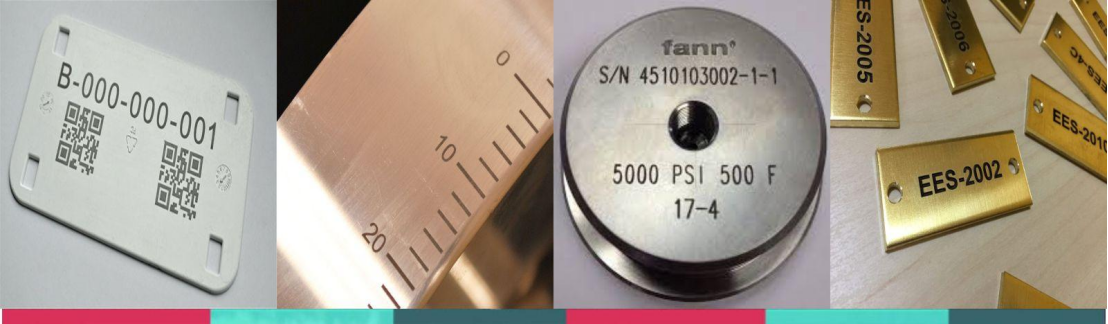
Case studies of marking aircraft parts
Key Technical Challenges in Aerospace Marking
1.Material Sensitivity & High-Value Components
Aerospace materials include:
Titanium alloys
Nickel-based superalloys
Aluminum alloys
Challenge:
Any micro-damage may affect part performance
✔ Solution:
Low thermal impact marking (fiber laser / UV laser)
Controlled energy input
2.Traceability Standards (UID / DataMatrix Codes)
Aerospace parts often require:
Unique Identification (UID)
Data Matrix codes compliant with industry standards
Requirement:
High contrast
Machine-readable accuracy
3.Surface Integrity Requirements
Aerospace marking must NOT:
Create cracks
Affect fatigue strength
Damage coatings
✔ This is a key difference from general industrial marking
Recommended Marking Technologies
Dot Peen Marking Machine (Primary for Aerospace)
Best for:
Structural parts
Components requiring deep, permanent marking
Technical Advantages:
Deep indentation unaffected by coatings
Minimal thermal impact
High durability in extreme environments
Widely used in aerospace for UID and traceability marking
Fiber Laser Marking Machine
Best for:
Metal components
High-precision and high-contrast marking
Technical Capabilities:
Non-contact marking (no mechanical stress)
Suitable for titanium, steel, aluminum
Supports engraving and annealing marking
Ideal for:
QR codes
Serial numbers
Precision parts
UV Laser Marking Machine
Best for:
Sensitive materials
High-precision micro marking
Advantages:
Ultra-low heat input
No damage to delicate surfaces
High-resolution marking
Used in:
Precision engineering
Electronic aerospace components
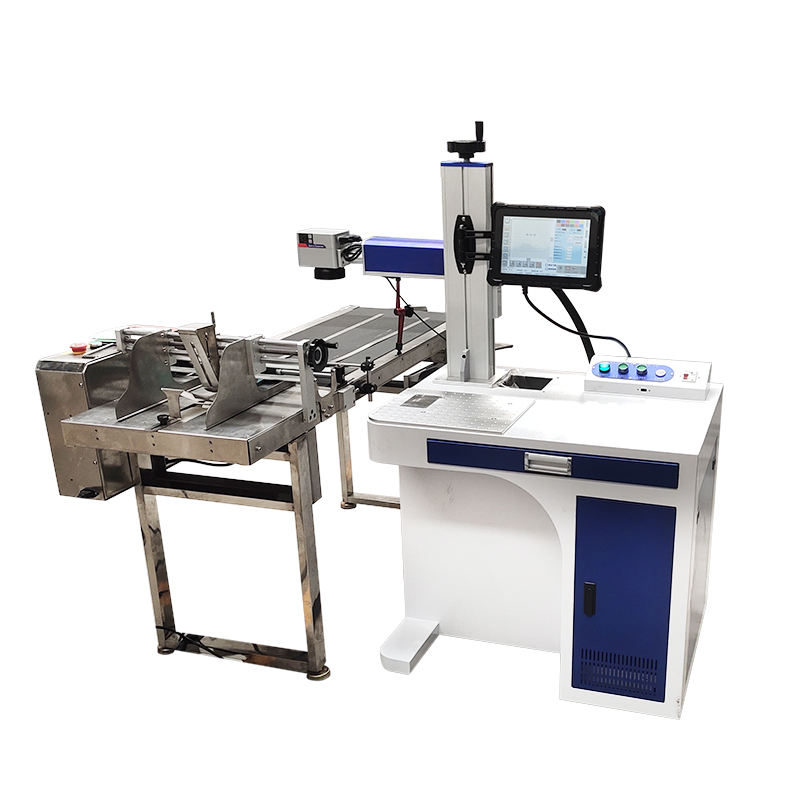
Flying Laser Marking Machine
Application-Based Selection Guide
Scenario 1: Aircraft Structural Parts
Requirement: Deep, permanent marking
✔ Recommended:
Dot peen marking
Scenario 2: Engine Components
Requirement: Heat-resistant marking without damage
✔ Recommended:
Fiber laser (controlled parameters)
Scenario 3: Precision Components
Requirement: High accuracy + no deformation
✔ Recommended:
Fiber laser or UV laser
Scenario 4: UID / DataMatrix Codes
Requirement: Machine-readable traceability
✔ Recommended:
Fiber laser (high contrast)
FAQ
Q1: What is the best marking method for aerospace parts?
A: Dot peen is widely used for deep, permanent marking, while fiber laser is preferred for precision and high-contrast marking.
Q2: Can laser marking damage aerospace components?
A: When properly controlled, laser marking is a non-contact process that does not affect structural integrity.
Q3: Why is traceability important in aerospace marking?
A: It ensures every component can be tracked throughout its lifecycle, improving safety and compliance.
Q4: Is UV laser necessary in aerospace marking?
A: UV laser is used for highly sensitive or precision components where minimal heat impact is required.
Why Choose ZS Machinery
ZS Machinery provides high-reliability marking solutions for aerospace and precision engineering applications:
Dot peen systems for deep and permanent marking
Fiber laser systems for high-precision applications
UV laser systems for sensitive materials
Custom solutions for complex aerospace components
Support for automated and traceability systems
We focus on process reliability, precision, and compliance, not just equipment
Conclusion and call to action
In aerospace and precision engineering, marking is a critical part of safety and quality control systems.
The right marking solution ensures:
Permanent traceability
Compliance with strict standards
Zero impact on component performance
ZS Machinery delivers marking solutions designed for high-performance, high-precision, and high-reliability industries.Welcome to contact us at any time for your own marking solutions.