Hardware And Tools Industry
In the hardware and tools industry, marking plays a critical role in product identification, brand recognition, traceability, and quality control.From hand tools to heavy-duty industrial components, manufacturers require clear, permanent, and wear-resistant markings that can withstand harsh working environments.
Unlike decorative marking, tool marking must prioritize durability, readability, and efficiency in mass production.
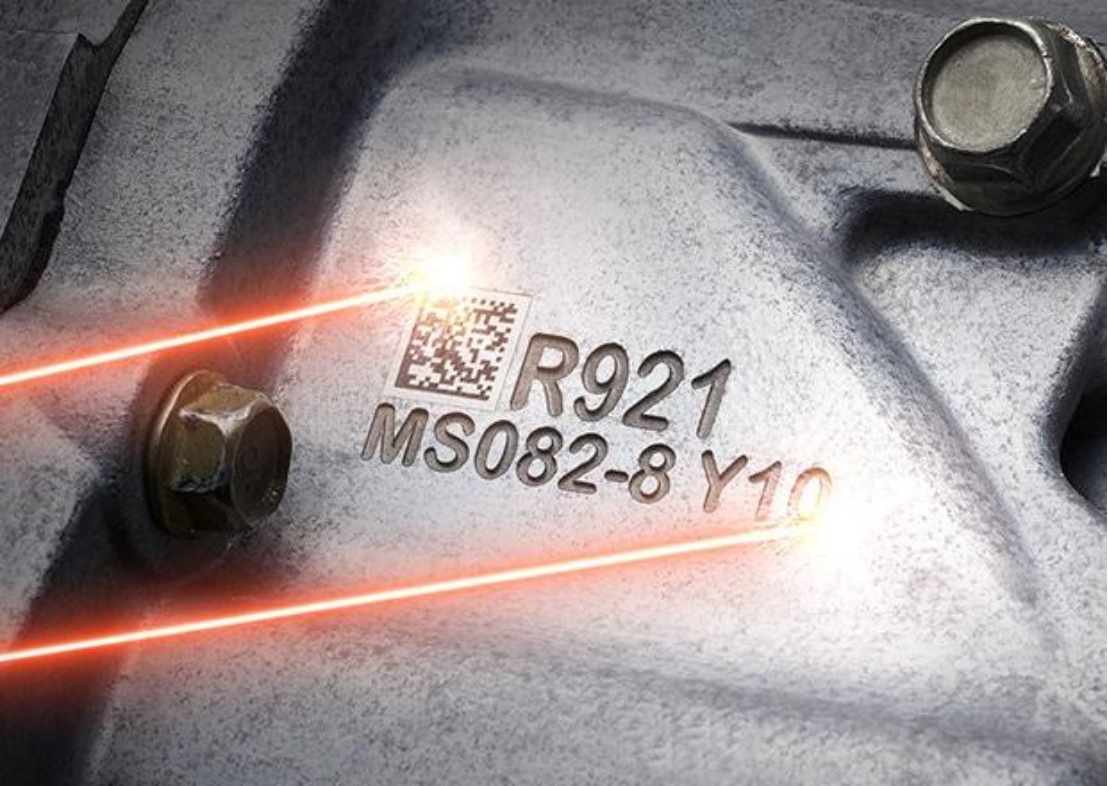
Hardware and tools marking
What Needs to Be Marked in Hardware & Tools?
Marking is widely applied across various hardware products:
1.Hand Tools Marking
For hand tools such as wrenches, screwdrivers, pliers, and hammers, marking is commonly used for brand logos, product names, model numbers, and basic specifications. Since these tools are frequently used in harsh working environments, the markings must be clear, durable, and highly resistant to wear on metal surfaces to ensure long-term visibility.
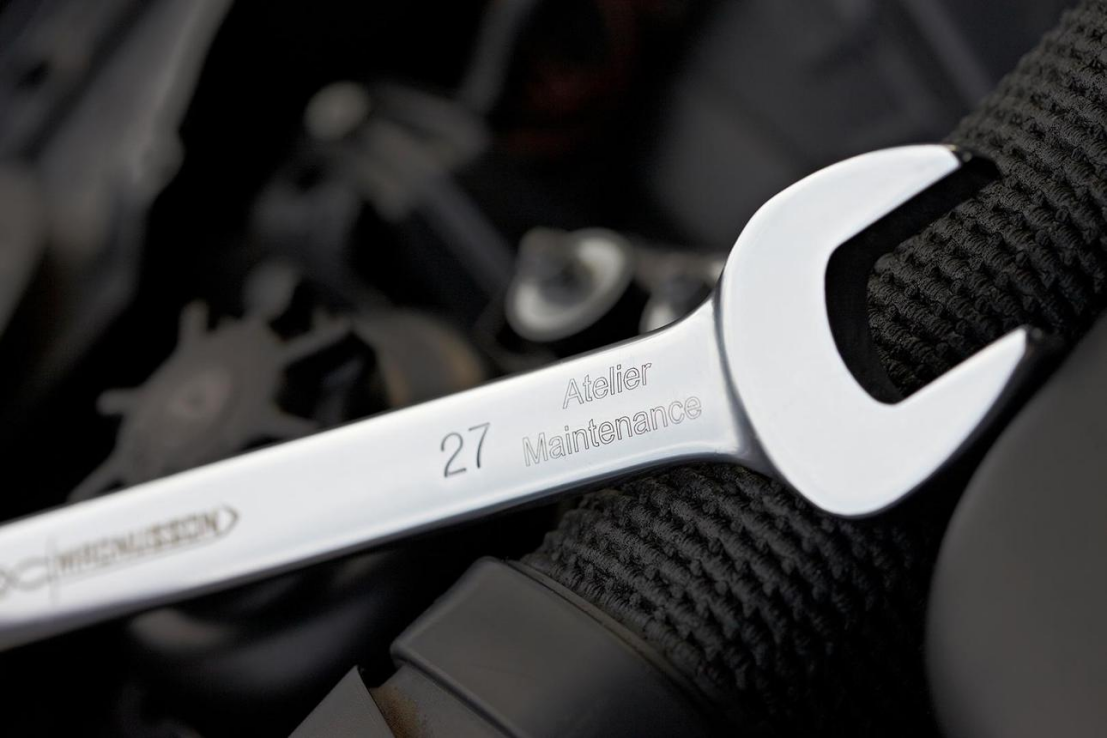
Marking on the surface of a hand wrench
2.Industrial Tools & Equipment Marking
Industrial cutting tools, drill bits, molds, and dies require more functional identification marking, including tool codes, batch numbers, and performance or size specifications. These components often operate under high temperature, friction, and heavy mechanical load, so the marking must remain stable and readable even after prolonged industrial use.
3.Fasteners & Small Hardware Marking
For fasteners such as bolts, nuts, washers, and screws, marking is mainly used for batch identification, traceability codes, and manufacturer information. Due to the extremely small surface area and high production volume, the marking process must support high-speed operation while maintaining clear and consistent readability.
4.Tool Accessories & Components Marking
Tool accessories such as blades, tool holders, and various functional attachments often require compact but precise identification, including QR codes, serial numbers, and compliance markings. These applications typically involve limited marking space, making high-precision marking essential to ensure both readability and functional traceability.
Key Challenges in Hardware Marking
The hardware manufacturing industry involves a wide range of demanding applications, and the marking process must overcome several technical and production-related challenges to ensure reliable identification and traceability.
1.Harsh Working and Wear Conditions
Hardware products such as tools and industrial components are often used in environments exposed to mechanical abrasion, oil, chemicals, moisture, and outdoor conditions. These factors can easily wear down surface markings over time. Therefore, the marking must remain permanently legible even after long-term and repeated use in harsh environments.
2.High Hardness of Materials
Most hardware components are manufactured from hardened steel, stainless steel, or various alloy materials. These materials are difficult to process and require sufficient marking energy and stable control to achieve clear, durable results without affecting material performance or surface quality.
3.Small, Curved, and Irregular Surfaces
Many hardware parts, especially fasteners and small components, have very limited marking space. In addition, curved, uneven, or irregular geometries are common in tool and accessory design. This requires high-precision marking capability, flexible positioning systems, and stable focus control to ensure consistent readability across different shapes and sizes.
4.High Production Efficiency Requirements
The hardware industry is typically characterized by large-scale mass production. Marking systems must therefore support fast cycle times, stable continuous operation, and easy integration with automated production lines. High efficiency and reliability are essential to meet industrial manufacturing speed and consistency requirements.
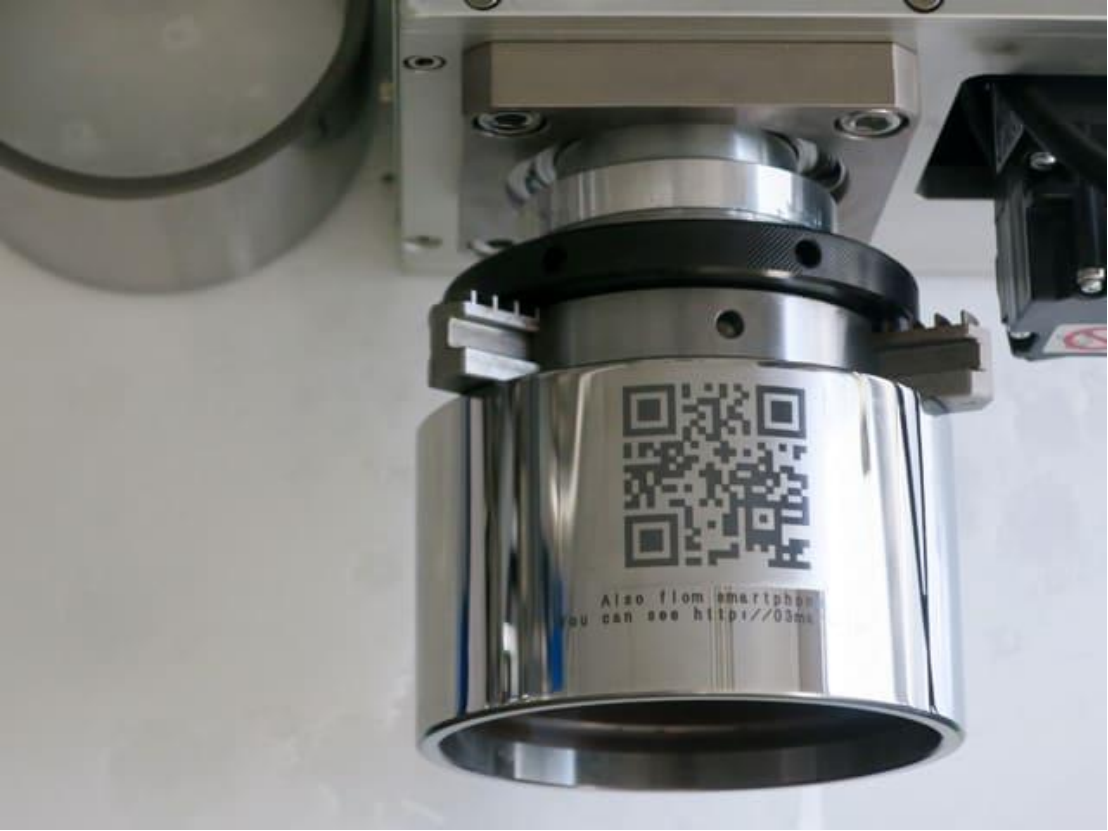
Metal hardware QR code marking
ZS Machinery Recommend Marking Solutions For Hardware And Tools
Based on the material characteristics, surface conditions, and production requirements of hardware products, ZS Machinery provides the following marking technology recommendations to achieve reliable, efficient, and durable identification.
1.Fiber Laser Marking Machines
Fiber laser marking is the most widely used solution for metal hardware and precision tools. It is especially suitable for hardened steel, stainless steel, and various alloy materials that require permanent and high-quality marking. This technology supports high-speed, high-precision processing and is fully non-contact, meaning there is no tool wear during operation.
It can achieve multiple marking effects such as engraving, annealing, and deep marking, while maintaining strong resistance to wear, corrosion, and high temperatures. Fiber laser systems are ideal for marking logos, serial numbers, QR codes, and permanent branding on tools and industrial components.
2.Dot Peen Marking Machines
Dot peen marking is a robust solution designed for heavy-duty metal parts and applications requiring deep and permanent indentation. It performs particularly well in harsh industrial environments and on surfaces where coatings, rust, or uneven conditions may exist.
The equipment offers a relatively lower initial investment and provides reliable marking performance under demanding conditions. However, compared with laser solutions, it produces lower resolution results, generates noise during operation, and is less suitable for applications requiring high aesthetic quality. It is commonly used for structural parts, large hardware components, and industrial equipment identification.
3.CO₂ Laser Marking Machines
CO₂ laser marking machines are mainly used for non-metal materials in hardware-related applications. They are suitable for plastic tool components, rubber parts, wood materials, handles, and packaging products.
As a non-contact marking solution, CO₂ lasers can produce clear and high-contrast results on organic materials without damaging the surface. This makes them particularly suitable for product branding, labeling, and identification on tool handles and non-metal accessories.
4.UV Laser Marking Machines
For applications requiring ultra-fine marking or working with sensitive materials, UV laser marking machines provide an excellent solution. They are particularly suitable for high-precision surface marking on metal as well as non-metal materials such as plastics, glass, and coated surfaces.
Due to its “cold processing” characteristics, UV laser generates minimal heat-affected zones, making it ideal for delicate materials that cannot withstand thermal stress. It is commonly used for very fine markings, high-resolution QR codes, micro text, and precision identification where surface integrity and visual quality are critical.
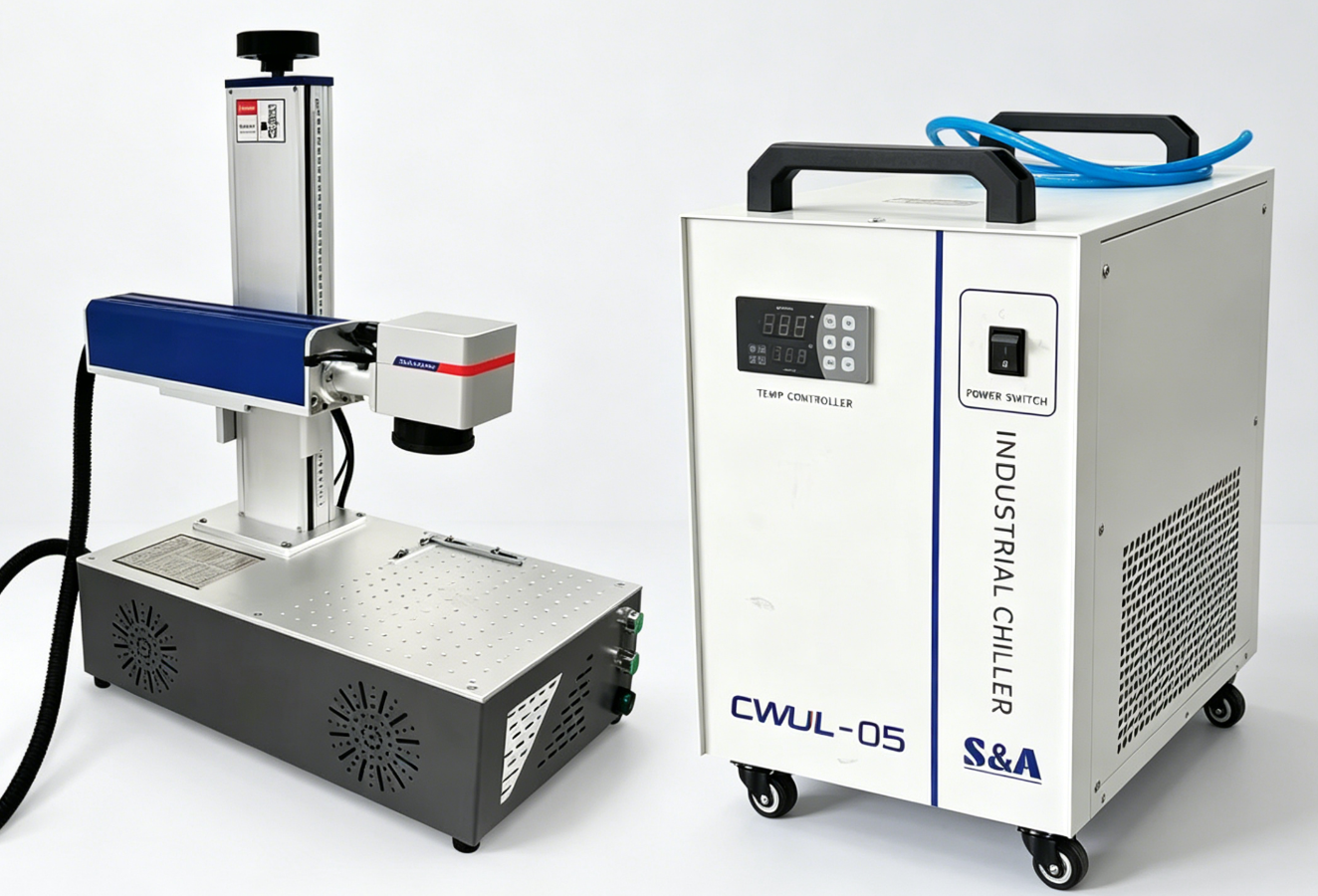
ZS Machinery UV Laser Marking Machine
Material-Specific Recommendations
Based on the materials being processed, ZS Machinery has summarized the following specific recommendations for your initial selection.
| Material | Recommended Technology | Reason |
| Steel / Stainless Steel | Fiber Laser | High precision, durability, no contact |
| Hardened Metals | Fiber Laser / Dot Peen | Fiber for precision, dot peen for deep marking |
| Aluminum | Fiber Laser | Fast marking, good contrast |
| Plastics (Handles) | CO₂ Laser | Clean marking without deformation |
| Coated Surfaces | Fiber Laser (controlled power) | Prevents coating damage |
Why Choose ZS Machinery
ZS Machinery provides reliable and flexible marking solutions for the hardware and tools industry:
Fiber laser systems for metal tools and components
Dot peen machines for deep marking applications
CO₂ laser systems for non-metal materials
Custom fixtures for irregular shapes and small parts
Support for automated production lines
CE and ISO certified equipment
One-year machine warranty, extended core component warranty
Conclusion and call to action
In the hardware and tools industry, marking is essential for:
Product identification
Brand recognition
Quality control
Traceability
With the right marking technology, manufacturers can achieve durable, high-quality, and efficient marking across a wide range of products.
ZS Machinery’s multi-technology approach ensures that every tool—whether small or heavy-duty—receives the most suitable marking solution.Feel free to contact us anytime for a solution tailored to your needs.