
Jewelry And Crafts Industry Marking
Marking in the jewelry and crafts industry is usually about design, personalization, and artistic expression. Compared with industrial marking, this field requires higher precision, better surface quality, and greater flexibility across different materials.
ZS Machinery provides marking and engraving solutions for a wide range of materials including precious metals, wood, stone, glass, and organic materials, helping manufacturers and artisans achieve fine detail, consistent quality, and creative customization.
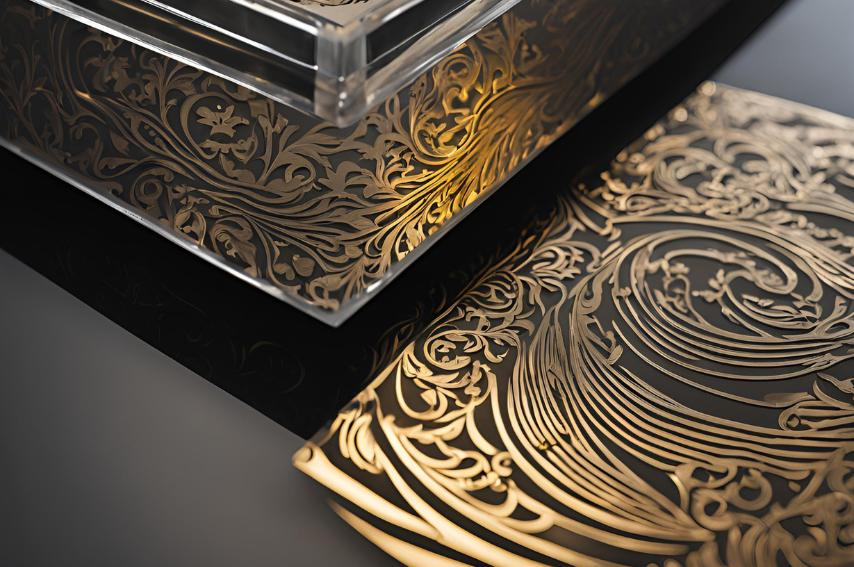
Jewelry and craft marking
Application Scenarios Of Jewelry And Crafts Marking
1.Precious Metal Hallmarking and Compliance
In jewelry manufacturing, laser marking is crucial for stamping purity marks (e.g., Au999, Pt950, 925 silver), manufacturer logos, and legal hallmarks on precious metals. This non-contact process avoids distorting delicate jewelry pieces and ensures high-definition, permanent marks that meet strict regulatory standards for authenticity without causing weight loss to the metal.
2.Inner and Outer Ring Personalization
A staple in the bridal and fashion jewelry sectors, specialized rotary marking systems are used to engrave the inner or outer circumferences of wedding bands and bangles. This application allows for the precise etching of wedding dates, romantic vows, custom coordinates, and complex symbols without compromising the structural integrity, smooth finish, or comfort of the band.
3.Gemstone and Diamond Girdle Inscription
For high-value gemstones and diamonds, micro-laser marking is utilized to engrave microscopic serial numbers, grading report IDs (such as GIA or IGI certification numbers), or branded logos onto the stone’s girdle. These marks are invisible to the naked eye, requiring a jeweler’s loupe to read, thereby providing anti-counterfeiting security and provenance tracking without affecting the stone’s clarity grade or brilliance.
4.Complex Surface Texturing and Shading
Modern marking systems go beyond simple text to offer advanced surface texturing on jewelry and decorative metal crafts. By varying pulse frequencies and laser wavelengths, systems can create contrast, frosted finishes, matte textures, and 3D depth effects on metals, offering designers a precise, eco-friendly alternative to traditional chemical etching or manual chasing.
5.Watchmaking and Timepiece Detailing
In the luxury watch industry, ultra-precise marking is applied to watch dials, bezels, case backs, and internal movement components. Lasers handle everything from microscopic brand typography and limited-edition serial numbering to functional markings like tachymeter scales, demanding micro-level accuracy that maintains the water resistance and delicate balance of the timepiece.
6.Custom Handwriting and Biometric Engraving
Driven by the booming demand for sentimental luxury, marking systems are increasingly used to replicate unique human elements onto jewelry pendants, bracelets, and keepsakes. This includes scanning and flawlessly etching real fingerprints, heartbeats, children’s drawings, or handwritten notes from loved ones, transforming standard accessories into deeply personal, one-of-a-kind heirlooms.
7.Cultural, Religious, and Fine Art Crafts
Laser marking plays a vital role in the production of traditional and spiritual crafts, including jade carvings, wooden amulets, metal icons, and religious talismans. It enables the flawless replication of intricate sacred geometry, ancient calligraphy, and layered historical motifs on delicate, fibrous, or notoriously hard materials that are difficult or time-consuming to carve by hand.
8.Stone-Setting Guides and Manufacturing Layouts
In the jewelry fabrication phase, marking lasers serve as a high-precision preparation tool by etching cutting lines, drilling points, and stone-setting layouts directly onto the metal matrix. This assists bench jewelers and setters in perfectly aligning pavé, channel, or prong settings, significantly reducing human error and speeding up the assembly of complex, multi-stone high jewelry.
9.Glass, Crystal, and Award Ornamentation
In the giftware and corporate award sectors, surface and sub-surface (3D internal) laser engraving are used to create detailed graphics, logos, and text inside or on the surface of crystal trophies, premium glassware, and art ornaments. The process eliminates micro-cracking and thermal stress, preserving the premium, flawless look of fragile materials.
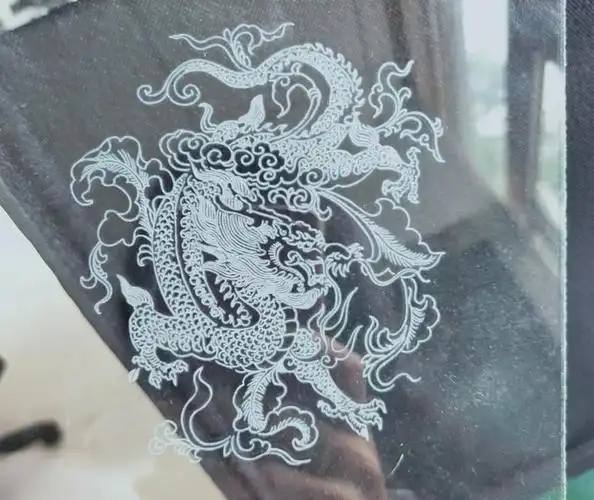
Glass UV Laser Marking Samples
10.Luxury Packaging and Presentation Materials
The presentation of jewelry and crafts is as vital as the product itself. Laser marking and cutting are widely deployed to customize high-end display stands, velvet-lined wooden boxes, leather pouches, and acrylic showcases with intricate patterns or brand logos, ensuring a cohesive, premium unboxing experience that elevates the perceived value of the brand.
Requirements Of Jewelry And Crafts Industry Marking
In the jewelry and crafts industry, marking technology must meet much higher standards in terms of precision, material protection, and flexibility, as both aesthetic value and product uniqueness are critical.
1.High Precision and Fine Detail
Jewelry products often involve extremely fine design elements such as small text, intricate patterns, logos, and personalized engravings. These details must be clearly reproduced without distortion, ensuring high visual quality even on very small surfaces such as rings, pendants, and metal accessories.
2.Surface Protection and Material Safety
Surface quality is especially important when working with precious metals and delicate craft materials. Excessive heat, mechanical stress, or improper processing can easily damage the appearance or structural integrity of the product. Therefore, the marking process must minimize thermal impact and avoid any deformation, discoloration, or surface damage.
3.Strong Customization Capability
Customization plays a central role in this industry, with growing demand for personalized jewelry and unique craft designs. Marking systems must therefore support flexible design input, quick changeover, and small-batch or single-piece production, enabling efficient processing of highly customized products without compromising quality or consistency.
Key Challenges In Jewelry And Crafts Marking
1.Wide Material Diversity
One of the biggest challenges in this industry is the extremely wide range of materials. Jewelry and craft products can include gold, silver, stainless steel, wood, stone, acrylic, leather, and even organic materials such as leaves. Each material reacts differently to marking processes, requiring carefully adjusted parameters and suitable technologies to achieve consistent and high-quality results.
2.Heat Sensitivity of Materials
Many materials used in jewelry and crafts are highly sensitive to heat. Plastics, coated surfaces, leather, and organic materials can easily burn, deform, or discolor if excessive thermal energy is applied. This makes it essential to use marking methods that minimize heat impact and protect the integrity of delicate surfaces.
3.Material Loss in Precious Metals
For precious metals such as gold and silver, material conservation is an important consideration. Deep engraving processes may remove valuable material, which not only increases cost but also affects product value. Therefore, the marking depth and process must be carefully controlled to balance durability with minimal material loss.
4.High Requirements for Visual Quality
In addition to functionality, aesthetic quality is a core requirement in jewelry and crafts. Markings must be clean, smooth, and visually consistent, especially for high-end products. Any defects such as rough edges, uneven lines, or surface damage can significantly reduce the perceived value of the product, making precision and finish quality equally important as durability.
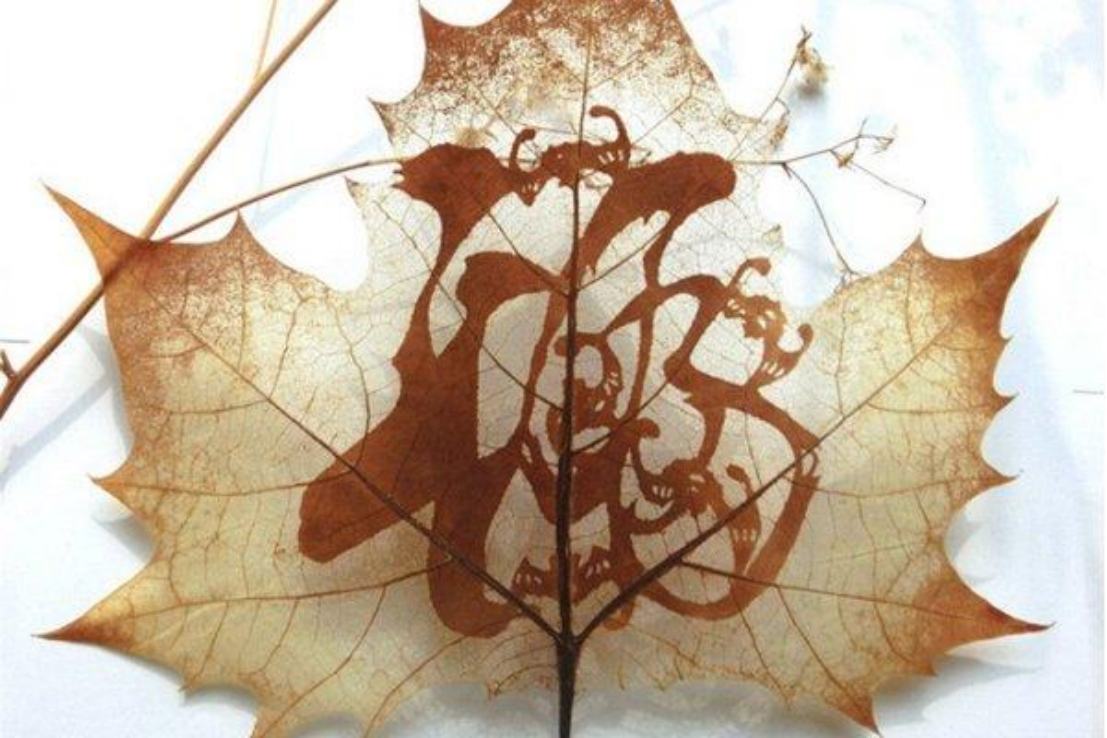
Marking leaf crafts
Recommended Marking Technologies
Based on ZS Machinery’s more than ten years of experience serving clients in the jewelry industry, we recommend the following marking solution for marking.
UV Laser Marking Machine
UV laser marking is the preferred solution for high-end jewelry and delicate materials that require extremely fine detail and minimal surface impact. Due to its “cold processing” characteristics, UV laser generates very low thermal stress, helping to preserve the original surface finish and prevent discoloration or deformation.
It is widely used for engraving on gold, silver, plated jewelry, and other sensitive materials, as well as high-precision marking on plastics and coated surfaces. It is also suitable for creative and artistic applications such as marking on leaves, where traditional methods would easily cause damage. Overall, UV laser is ideal when precision, clarity, and surface protection are the top priorities.
Fiber Laser Marking Machine
Fiber laser marking is suitable for applications that require stronger contrast or deeper engraving effects. It is commonly used on stainless steel jewelry, metal crafts, and stone materials. In stone engraving applications, fiber lasers can produce durable and clearly visible markings, making them ideal for decorative items, memorial products, and personalized crafts.
In jewelry production, fiber lasers can also be used for deeper engraving when necessary, but careful control is required when working with precious metals to minimize unnecessary material loss and maintain product value.
CO₂ Laser Marking Machine
CO₂ laser marking is widely used for non-metal materials such as wood, leather, paper, bamboo, and similar organic materials. It produces a natural engraving effect with slight surface burning, which is often considered part of the aesthetic design in artistic and decorative products. This technology is commonly applied in wooden crafts, gift items, custom packaging, and leather goods. In many cases, the visual texture created by CO₂ laser engraving is intentionally used as a design feature, adding artistic value to the final product.
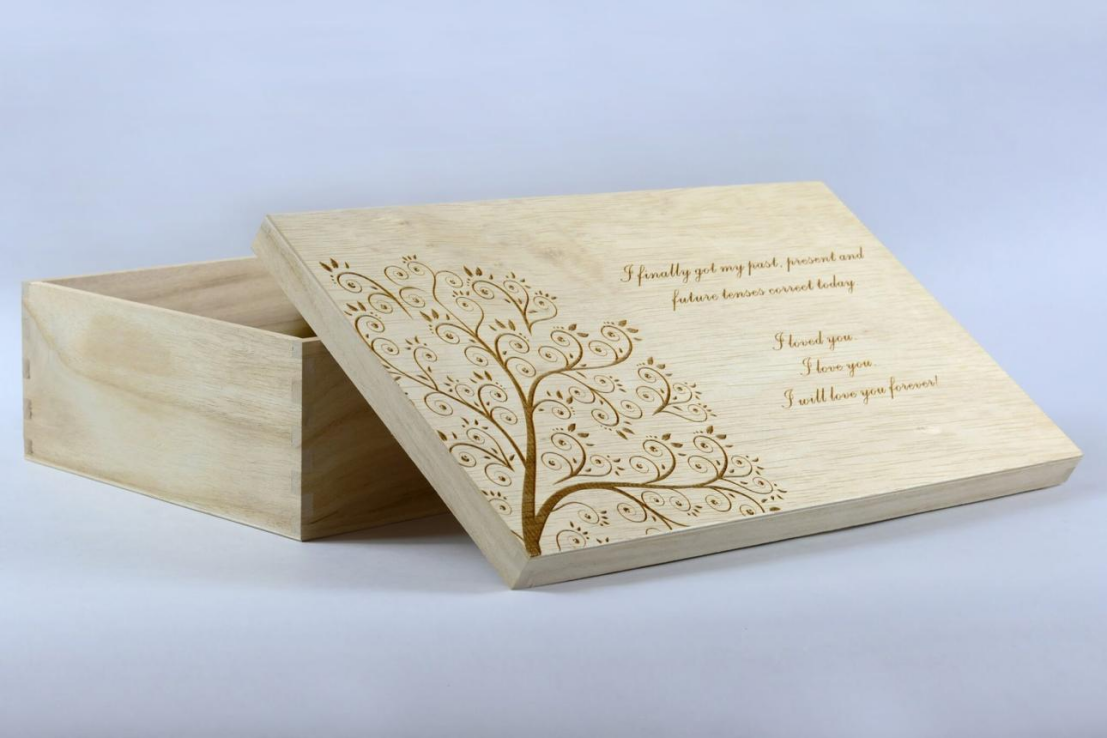
CO2 Laser Marking Wood Sample
Technology Comparison
| Technology | Suitable Materials | Marking Effect | Depth Capability | Typical Application |
| UV Laser Marking | Gold, silver, plastic, organic materials | Fine, high precision, no burn | Shallow | Jewelry, leaves, delicate crafts |
| Fiber Laser Marking | Metal, stone | High contrast, deep engraving possible | Medium to deep | Metal engraving, stone carving |
| CO2 Laser Marking | Wood, leather, paper, organic materials | Natural engraving, slight burn effect | Medium | Wood crafts, leather engraving |
How to Choose the Right Solution
| Application Requirement | Recommended Solution | Reason |
| Fine jewelry engraving (gold, silver) | UV Laser | High precision, no surface damage |
| Deep engraving on metal | Fiber Laser | Strong marking capability |
| Stone carving | Fiber Laser | Clear and durable result |
| Wood and leather crafts | CO2 Laser | Natural engraving effect |
| Organic materials (leaves, paper) | UV Laser | Minimal thermal impact |
| Decorative or artistic products | CO2 / UV Laser | Flexible visual effects |
Practical Considerations
When working with precious metals such as gold and silver, it is important to balance engraving depth and material loss. In some cases, shallow marking is preferred to preserve material value.
For artistic products, the visual effect should be tested on sample materials before production, as different materials respond differently to laser parameters.
In small-batch or customized production, ease of operation and flexibility are more important than automation level.
Conclusion And Call To Action
Marking in the jewelry and crafts industry requires a combination of precision, flexibility, and material understanding. Different materials and design requirements demand different technologies.
UV laser marking is best suited for fine and delicate applications, fiber laser marking provides strength and depth for metal and stone, while CO2 laser marking offers natural and artistic effects for organic materials.
Choosing the right technology allows manufacturers and artisans to achieve both technical accuracy and creative expression.
Get the Right Solution for Your Application
If you are working with jewelry or craft products and need a suitable marking or engraving solution, we can help you evaluate your materials and design requirements.
Contact us to find the most practical and precise solution for your application.