
Glass Marking And Printing Solutions: UV Laser Engraving and UV Printing Guide
Glass marking is widely used in industries such as packaging, homeware, electronics, lighting, and decoration. While it offers excellent transparency and aesthetic value, it is also one of the most challenging materials for marking and engraving.
Unlike metals or plastics, glass is brittle, thermally sensitive, and prone to cracking under stress. This makes process control critical in any glass marking or engraving application.
In real production, the goal is not just to create a visible mark, but to achieve clear contrast without cracking, chipping, or internal stress damage.
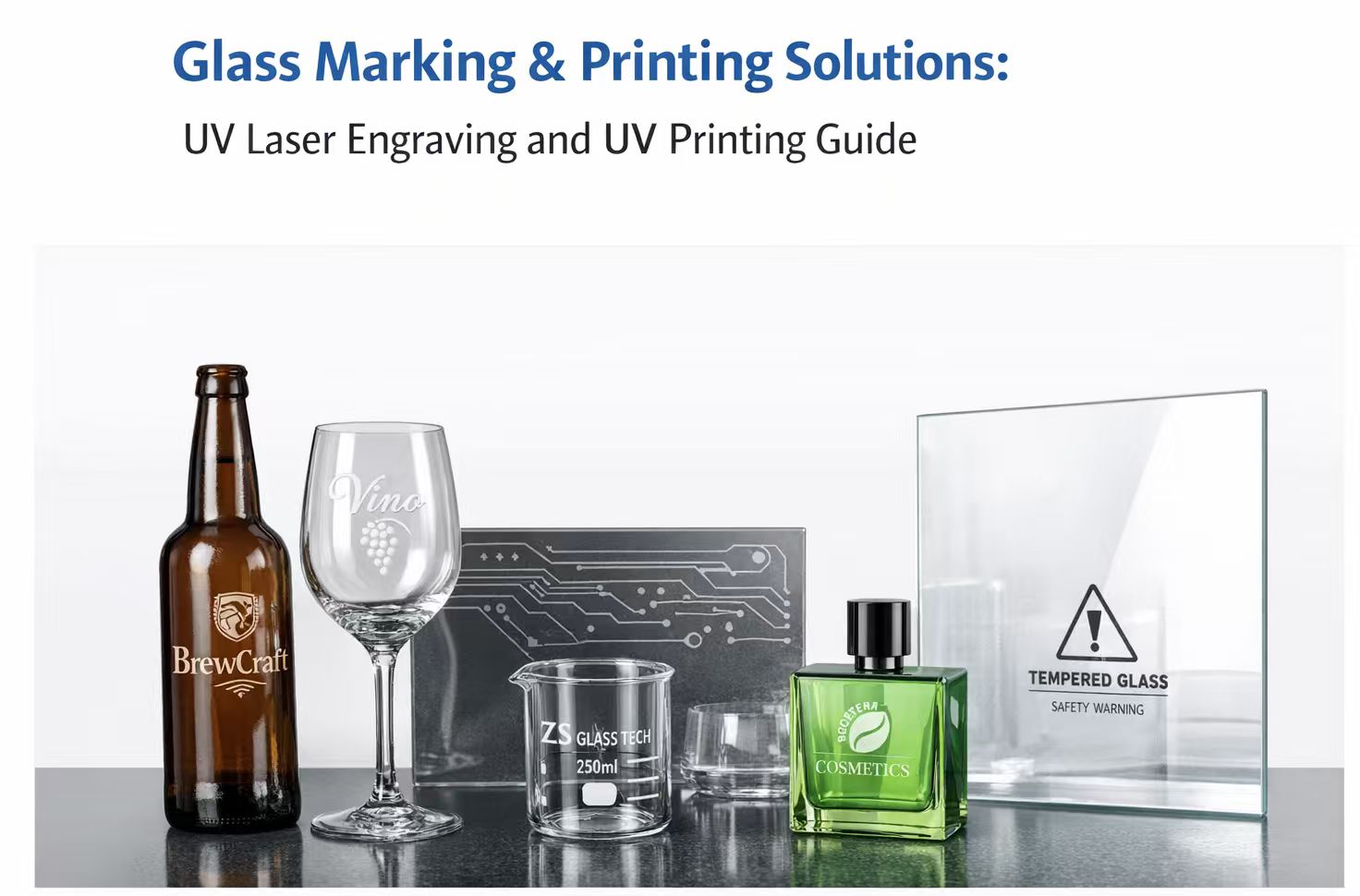
Glass Marking And Printing Solutions
1.Characteristics of Glass Materials
Glass materials vary depending on composition and manufacturing process:
Soda-lime glass (common glass, bottles, containers)
Borosilicate glass (heat-resistant glass)
Tempered glass (strengthened glass)
Coated or frosted glass
Key properties include:
high hardness but low toughness
very low thermal shock resistance
transparent or reflective surface
internal stress (especially in tempered glass)
These characteristics make glass highly sensitive to localized heat and rapid temperature changes.
2.Key Challenges in Glass Marking
2.1 Cracking and Micro-Fractures
Excessive thermal stress can cause:
visible cracks
internal micro-fractures
long-term structural weakness
2.2 Chipping and Surface Damage
Improper parameters may lead to:
edge chipping
rough engraving surfaces
2.3 Low Contrast
Because glass is transparent:
marks may appear faint
readability becomes an issue
2.4 Internal Stress (Tempered Glass)
Tempered glass is especially sensitive:
laser processing can release internal stress
may cause unexpected breakage
3.Glass Laser Marking and Engraving Technologies
3.1 UV Laser Marking on Glass (Recommended Solution)
UV laser is the most suitable technology for glass laser marking and engraving.
Process Mechanism
UV lasers interact with glass through:
micro-structural modification
controlled surface ablation
minimal thermal impact
Unlike traditional thermal lasers, UV lasers reduce heat input and therefore lower the risk of cracking.
Advantages
minimal heat-affected zone
reduced risk of cracks and chipping
high precision for fine details
suitable for thin or delicate glass
Applications
logos on glass products
QR codes and traceability marking
decorative engraving
electronic glass components
Process Characteristics
Marking results typically appear as:
frosted or matte white effect
fine micro-texture on surface
The quality depends on:
pulse energy control
focus accuracy
scanning strategy
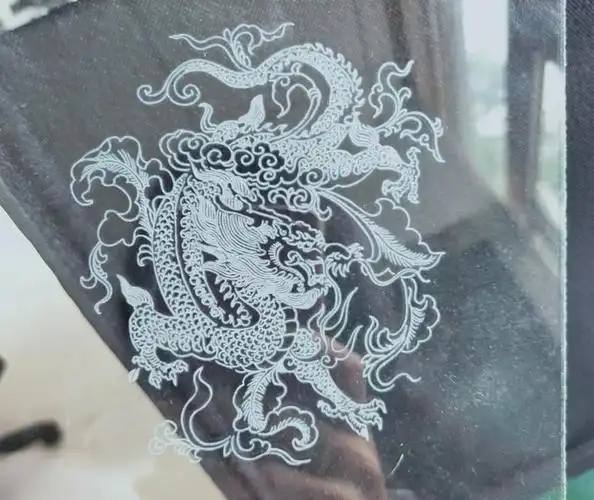
Glass UV Laser Marking Samples
3.2 Glass Engraving vs Marking
Understanding the difference is important for selecting the right process.
Glass Laser Marking
shallow surface modification
minimal depth
clean and precise
Best for:
text, codes, logos
Glass Laser Engraving
deeper surface texture
stronger visual contrast
more decorative effect
Best for:
patterns
artistic designs
branding elements
3.3 Why CO₂ or Fiber Laser Are Less Suitable
Although CO₂ lasers can engrave glass, they often introduce:
higher thermal stress
risk of cracking
less controlled results
Fiber lasers are generally not suitable because:
poor absorption on transparent materials
unstable marking quality
Therefore, UV laser is the preferred solution for high-quality glass marking.
4.UV Printing on Glass (Full-Color Solution)
When marking requirements include color, branding, or high visual impact, UV printing on glass is the ideal solution.
Process Mechanism
UV printers deposit ink directly onto the glass surface and cure it instantly using ultraviolet light.
Advantages
full-color printing (logos, images, gradients)
high resolution and sharp detail
no thermal damage to glass
suitable for various shapes
Supported Applications
Flat Surface Printing
glass panels
decorative plates
signage
Cylindrical Surface Printing
glass bottles
cups and tumblers
Single and Batch Production
customized one-piece printing
high-speed batch production
Different machine configurations are available for:
flatbed UV printing
rotary UV printing (cylindrical objects)
automated production lines
Key Considerations
surface cleanliness affects adhesion
primer may be required for strong bonding
curing conditions influence durability
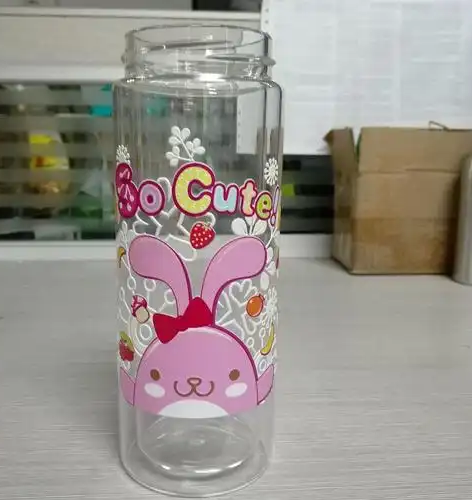
UV Printing On Glass Cups
5.How to Choose the Right Glass Marking Solution
The correct solution depends on the final application:
If the goal is permanent marking without damaging the glass, UV laser marking is the best option.
If the requirement is decorative engraving with texture, UV laser engraving provides better visual effect.
If the goal is full-color branding or product design, UV printing is the only suitable solution.
In some applications, combining laser marking with printing can achieve both durability and visual impact.
6.Production and Automation Solutions
Glass processing often involves large volumes and strict quality requirements.
Automated Glass Marking Systems
Typical configurations include:
conveyor systems
vision positioning systems
rotary devices for cylindrical objects
Benefits
consistent marking quality
high production efficiency
reduced manual handling
suitable for fragile materials
Typical Applications
beverage bottle marking
glassware branding
industrial glass identification
7.Process Optimization in Practice
To achieve stable results in glass marking:
control laser energy precisely
avoid excessive heat accumulation
ensure accurate focus positioning
adapt parameters to glass type
Because different glass compositions behave differently,
sample testing is essential before mass production
8.ZS Machinery Glass Marking Solutions
ZS Machinery provides complete solutions for glass marking, engraving, and UV printing, including:
UV laser marking machines for precision applications
UV printers for flat and cylindrical glass
customized systems for single or batch production
automation solutions with vision and conveyor integration
We help customers:
test different glass materials
optimize processing parameters
improve marking quality and consistency
build efficient production lines
Call to Action
Send us your glass samples today, and our engineers will recommend the most suitable UV laser marking or UV printing solution for your application.