Energy Industry
Industrial marking in the energy industry requires a different approach compared to general manufacturing. Components are often large, exposed to harsh environments, and subject to strict traceability requirements. Marking is not only used for identification, but also plays a role in safety management, maintenance, and long-term asset tracking.
ZS Machinery provides marking solutions for both traditional energy industries such as oil and gas, as well as new energy applications including batteries and solar systems. The goal is to ensure that markings remain clear, durable, and readable throughout the full service life of the component.
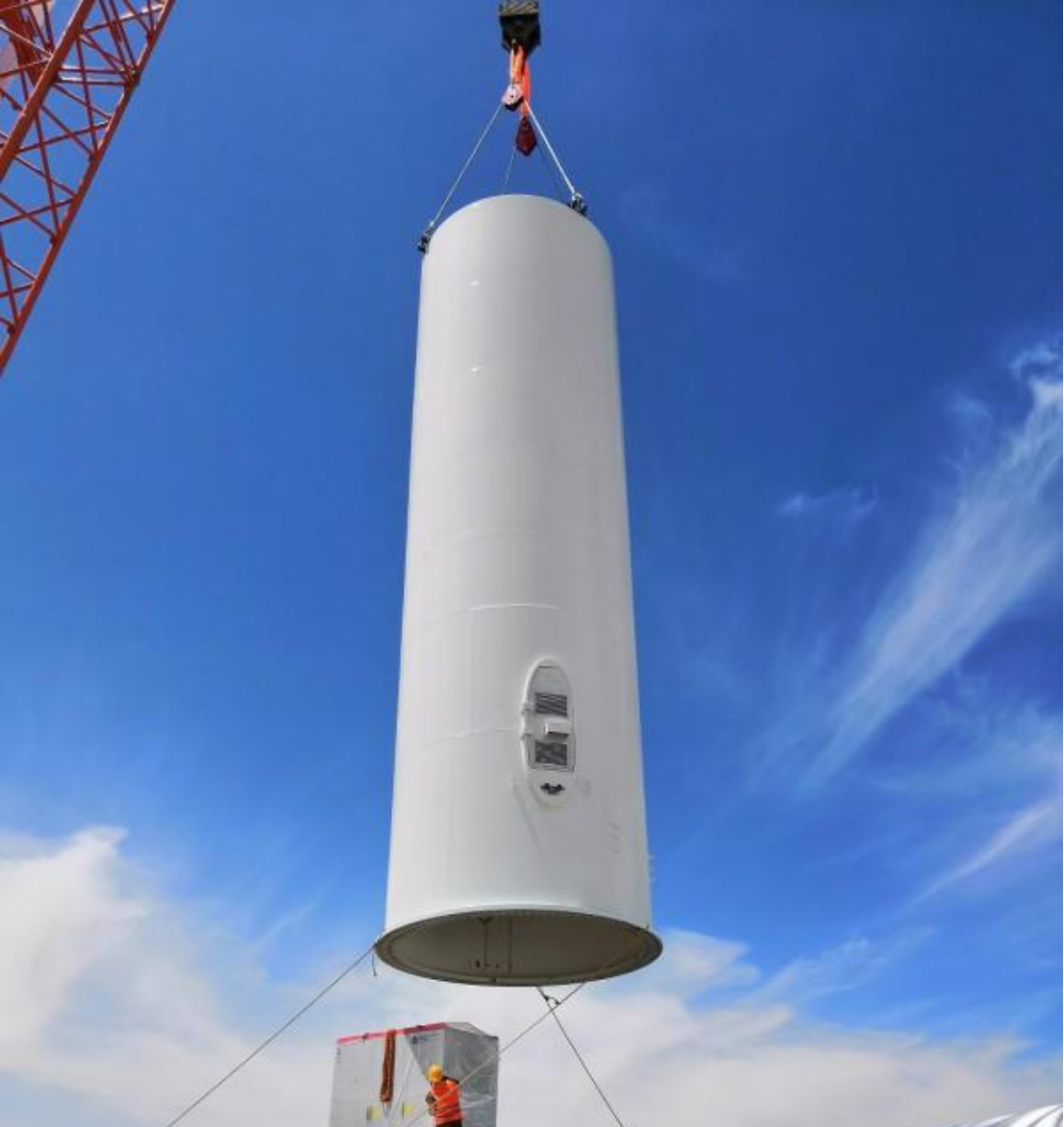
New energy wind power industry marking
Energy Industry Requirements
In oil and gas applications, marking is commonly used on pipelines, valves, flanges, drilling equipment, and pressure vessels. The information typically includes serial numbers, material specifications, inspection data, and compliance markings.
In new energy industries, marking is essential for traceability of battery cells, modules, and electronic components. QR codes and data matrix codes are widely used to track production and quality data.
Across these sectors, the requirements are consistent. Markings must be permanent, resistant to environmental exposure, and maintain readability over long periods of time.
Key Challenges Of Marking In Energy Industry
1.One of the main challenges is the size and weight of components. Many parts cannot be moved to a fixed workstation, especially in pipeline or field environments. This makes portable marking solutions necessary.
2.Surface conditions are often not ideal. Materials may be rusty, coated, or uneven. In oil and gas environments, surfaces are frequently exposed to oil, chemicals, and moisture, which affects marking quality.
3.Material diversity also increases complexity. Carbon steel, stainless steel, aluminum, and plastics may all require different marking methods.
4.In addition, traceability requirements are long-term. Markings must remain readable for years, which eliminates non-permanent solutions in most cases.
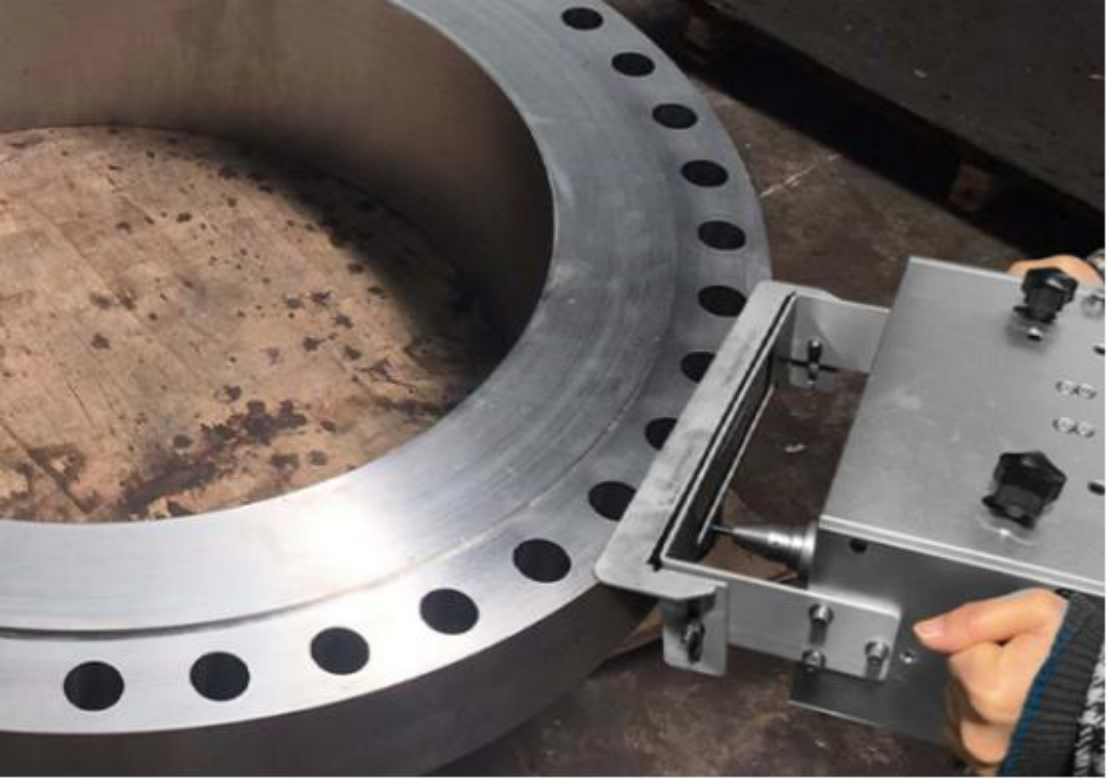
Dot Peen Marking On Flanges
Recommended Marking Technologies
Different technologies perform differently under energy industry conditions. The selection should be based on real application scenarios rather than a single standard.ZS Machinery has been deeply involved in the energy marking field for over a decade. We have summarized the following energy marking solutions and provided a detailed comparison of each scheme.
1.Portable Dot Peen Marking Machine
Dot peen marking uses a mechanical pin to create permanent indentations on the surface. This method is highly reliable for rough or untreated materials and does not require a clean surface.
It is particularly suitable for large and heavy components such as pipelines and structural steel. Portable systems allow marking to be performed directly on-site, which is essential in field operations.
The depth of marking ensures long-term durability, even in harsh environments with corrosion or wear.
2.Portable Fiber Laser Marking Machine
Fiber laser marking provides higher precision and cleaner results compared to mechanical methods. It is suitable for applications that require clear, high-contrast markings such as QR codes and serial numbers.
Portable laser systems allow flexibility when working with medium to large components. They are widely used for stainless steel and aluminum parts where appearance and readability are important.
However, surface condition has a greater impact on laser marking quality. Heavily rusted or coated surfaces may require preparation.
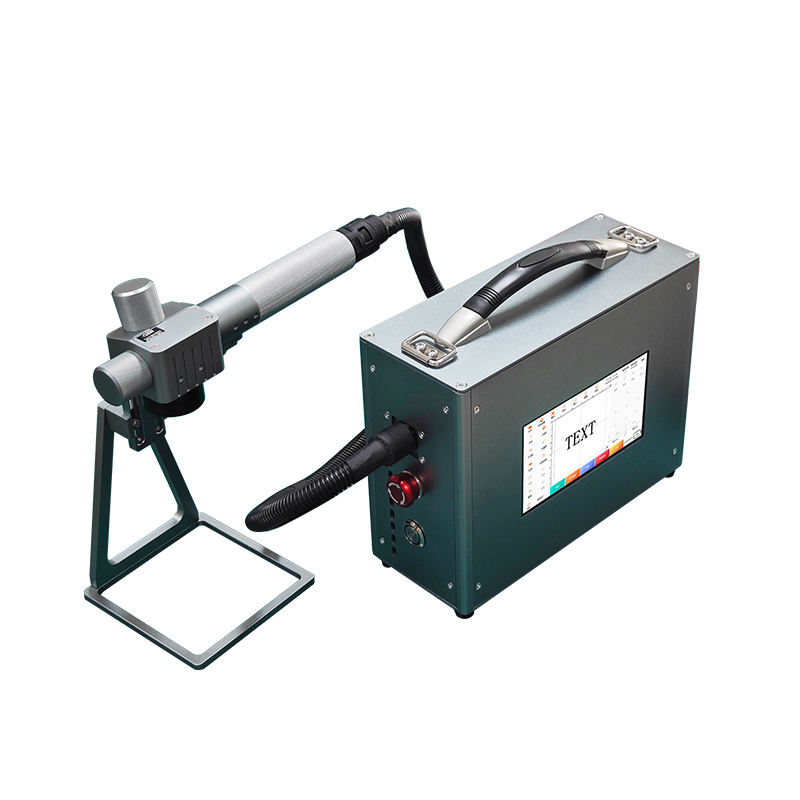
Handheld Portable Fiber Laser Marking Machine
3.UV Laser Marking Solution
UV laser marking is mainly used in new energy applications where materials are sensitive to heat. It produces high-quality marks without thermal damage.
This makes it suitable for battery cells, plastic housings, and electronic components. It is commonly used in production environments where precision and material protection are critical.
4.UV Printing Solution
UV printing is used when color marking is required. It allows direct printing of colored text and graphics on different surfaces.
While it does not provide deep or permanent marking like dot peen or laser, it is useful for control panels, labels, and visual identification where color differentiation is important.
Four Technology Comparison Table
For a detailed comparison of the four marking schemes, please refer to the table below.
| Technology | Marking Type | Suitable Materials | Marking Depth | Portability | Typical Use Case |
| Dot Peen Marking | Mechanical engraving | Carbon steel, stainless steel | Deep | High | Pipelines, flanges, heavy structures |
| Fiber Laser Marking | Laser engraving | Metals (steel, aluminum) | Medium | Medium / High (portable models) | Precision parts, QR codes |
| UV Laser Marking | Cold laser marking | Plastics, battery materials | Shallow | Low / Medium | Battery cells, electronics |
| UV Printing | Ink-based color printing | Metals, plastics, coated surfaces | Surface only | Low | Labels, panels, visual marking |
How to Choose the Right Solution
The selection of marking technology should be based on the actual working conditions and requirements.You can make a preliminary selection using the table below.
| Application Condition | Recommended Solution | Reason |
| Large, heavy components that cannot be moved | Portable Dot Peen | Easy on-site marking, strong durability |
| Outdoor use with harsh environment | Dot Peen | Deep marking resists corrosion and wear |
| High precision marking on metal | Fiber Laser | Clean and high-contrast results |
| Battery or plastic components | UV Laser | No thermal damage |
| Need for color marking or labels | UV Printing | Supports full-color output |
Application Scenarios Of Energy Marking
In oil and gas, marking is widely used for pipeline identification, pressure vessel coding, and equipment traceability. These applications require durable and permanent marking that can withstand environmental exposure.
In renewable energy, marking is applied to battery modules, solar components, and electrical systems to ensure traceability and quality control throughout the production and supply chain.
In equipment manufacturing, marking is often integrated into the production process to provide consistent identification across all components.
ZS Machinery supports both standalone portable marking and integration into automated production lines, depending on the specific application.
Conclusion and call to action
Marking in the energy industry requires a practical approach that considers material, environment, and operational conditions. Portable solutions are often necessary due to the size of components, while durability remains a key requirement.
Dot peen marking remains the most reliable solution for heavy-duty and outdoor applications. Fiber laser marking is better suited for precision and readability. UV laser and UV printing provide additional options for sensitive materials and color marking.
Selecting the right combination of technologies can significantly improve marking quality, efficiency, and long-term reliability.
Get the Right Solution for Your Application
If you are working with energy industry components and are unsure which marking method fits your requirements, our team can help you evaluate your materials, working conditions, and marking needs.
Contact us to get a practical and reliable marking solution tailored to your application.