
Wood Marking And Engraving
Wood is one of the most widely used materials in industries such as furniture, packaging, crafts, signage, and promotional products. Compared with metals or plastics, wood offers a natural texture and aesthetic appeal, but it also presents unique challenges in marking and engraving processes.
In practical applications, the key is not only to create visible marks, but to control burn depth, contrast, and consistency across different wood types.
This guide explains how wood laser marking, engraving, and UV printing work, and how to choose the right solution for your production needs.
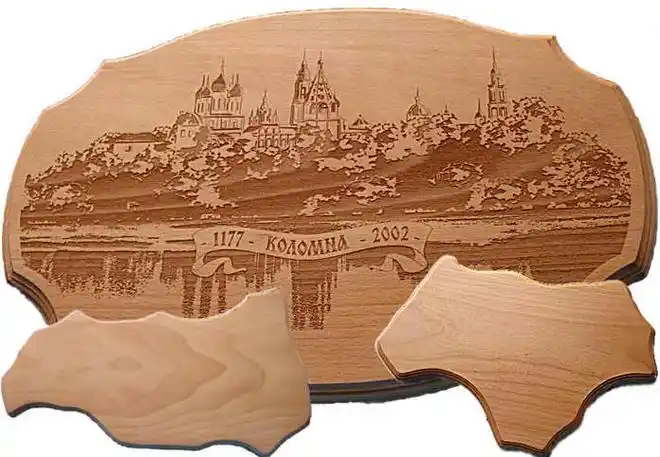
Wood Products Marking Samples
1.Characteristics of Wood Materials
Wood is an organic material with natural variability. Its response to laser processing depends on several factors:
Density (hardwood vs softwood)
Moisture content
Grain direction and structure
Surface treatment (painted, coated, laminated)
For example:
Hardwood (oak, walnut) → higher density, slower engraving, finer detail
Softwood (pine) → faster processing but more prone to uneven burning
Because of these differences, laser parameters must be adjusted for each material, even within the same product category.
2.Key Challenges in Wood Marking and Engraving
2.1 Burn Control
Laser processing on wood is essentially a controlled burning process.
Too much energy → deep charring, black edges
Too little energy → weak contrast
2.2 Inconsistent Color
Natural grain variations cause uneven energy absorption, resulting in:
inconsistent shades
patchy engraving
2.3 Edge Quality
During engraving or cutting:
edges may become rough or over-burned
fine details may be lost
2.4 Surface Coating Effects
Painted or coated wood behaves differently:
coating may melt or peel
marking result depends more on coating than wood itself

Wood Laser Marking Samples
3.Wood Laser Processing Technologies
3.1 CO₂ Laser Marking and Engraving (Recommended Solution)
CO₂ laser is the most widely used technology for wood laser marking and wood engraving.
How It Works
The laser energy is absorbed by the wood surface, causing:
carbonization (dark marking)
material removal (engraving)
Advantages
Excellent absorption on organic materials
Suitable for both marking and deep engraving
High efficiency for production
Clean and precise results
Applications
logos and branding
decorative engraving
signage and labels
packaging customization
Process Control
The final result depends on:
power and speed balance
scanning resolution
focus position
Fine tuning is required to achieve:
consistent color
clean edges
controlled depth
3.2 UV Printing on Wood (Full-Color Solution)
When marking requirements go beyond monochrome engraving, UV printing on wood becomes the preferred solution.
How It Works
UV printers deposit ink directly onto the wood surface and cure it instantly with ultraviolet light.
Advantages
full-color images and gradients
photo-quality printing
no burning or material damage
suitable for flat and some curved surfaces
Applications
decorative panels
personalized products
brand logos with color
promotional items
Important Considerations
Printing quality depends on:
surface smoothness
coating or primer
ink adhesion
For porous wood, pre-treatment may be required.
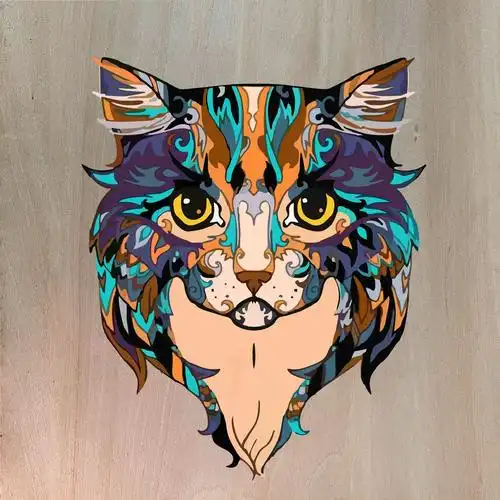
UV Printing On Wood
4.Marking vs Engraving: What’s the Difference?
Understanding the difference helps customers choose the right process.
Wood Laser Marking
shallow surface discoloration
minimal material removal
faster processing
Best for:
logos
serial numbers
light branding
Wood Laser Engraving
deeper material removal
visible depth and texture
stronger visual effect
Best for:
patterns
artistic designs
premium products
5.How to Choose the Right Wood Marking Solution
The correct solution depends on the final application rather than the machine itself.
If the goal is natural, permanent marking, CO₂ laser marking is the most efficient and reliable option.
If the requirement includes depth and texture, CO₂ laser engraving provides better visual impact.
If the goal is color graphics or branding, UV printing is a good solution that can achieve full-color results.
In some cases, combining engraving with color filling or printing can further enhance product value.
6.Production and Automation Solutions
For large-scale production, manual operation is not sufficient to ensure efficiency and consistency.
Automated Wood Marking Systems
Typical configurations include:
conveyor belt systems
vision positioning systems
automatic feeding and alignment
Benefits
higher production efficiency
consistent marking position
reduced labor cost
suitable for batch processing
Typical Applications
wooden tags and labels
packaging production lines
furniture component marking
7.Process Optimization Tips
In real production environments, stable results depend on:
proper focus adjustment
balanced power and speed
avoiding excessive heat accumulation
adapting parameters to different wood types
Because wood is a natural material, sample testing is always recommended before mass production.
8.ZS Machinery Wood Marking Solutions
ZS Machinery provides complete solutions for wood laser marking, engraving, and UV printing, including:
CO₂ laser machines for marking and engraving
UV printers for full-color applications
automated systems with vision and conveyor integration
We help customers:
test different wood materials
optimize processing parameters
improve consistency and efficiency
customize production solutions
Call to Action
Send us your wood samples today, and our engineers will recommend the most suitable laser marking or UV printing solution for your application.