
Laser Marking Brass Guide:Analysis of difficulties and recommended solutions
Brass is widely used in hardware fittings, bathroom products, musical instruments, electronic components, nameplates, decorative crafts, jewelry, valves, and mechanical parts due to its excellent electrical conductivity, corrosion resistance, and good machinability.With the continuous growth of industrial marking and customization demand, more and more customers are asking:
Is Fiber Laser Engraving Brass feasible?
What is the performance of Laser Marking Brass?
Which laser engraving machine should be used for brass processing?
Based on more than ten years of experience in the laser marking industry, ZS Machinery provides a comprehensive analysis of brass laser marking and engraving technology from the perspectives of material properties, processing challenges, equipment recommendations, and parameter suggestions. We first begin with the material characteristics of brass and the difficulties in laser engraving.
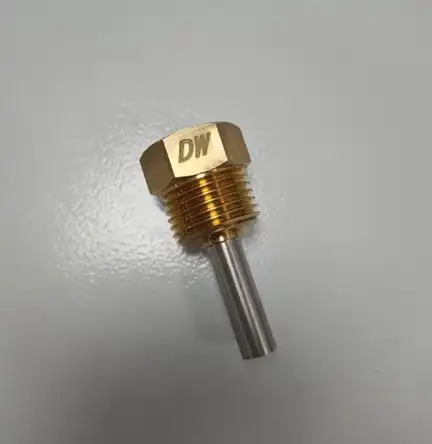
Brass Laser Marking
I. Core Challenges of Laser Processing Brass: Material Limitations
The high reflectivity and high thermal conductivity of copper-based materials (especially pure copper and brass) are the primary obstacles in laser marking, mainly reflected in the following aspects:
1. Low Laser Energy Absorption Efficiency
Brass has a reflectivity of over 80% for mid-infrared lasers (such as 1064nm fiber lasers), meaning most of the laser energy is reflected rather than absorbed. This results in insufficient effective energy acting on the material surface.
If the energy is too low → no clear marking can be formed.
If the power is too high → surface overheating, oxidation, or deformation may occur.
2. Rapid Heat Conduction and Poor Energy Localization
The thermal conductivity of brass is approximately 401 W/(m·K), more than five times that of iron.
During laser irradiation:
Heat spreads rapidly to surrounding areas
It is difficult to reach localized melting or vaporization temperature
Marking lines may become blurry and inconsistent in depth
This is especially obvious in fine marking such as QR codes or small text
3. Surface Sensitivity
Brass surfaces are prone to oxidation, forming oxide layers such as CuO and Cu₂O. The laser absorption characteristics of these oxide layers differ significantly from pure brass, leading to:
Inconsistent marking quality between batches
Surface roughness affecting energy absorption uniformity
Contamination such as oil or dirt further reducing stability
II. Process Parameter Adjustment Challenges
Laser marking quality (clarity, depth, contrast) depends on the coordination of multiple parameters. The unique properties of brass significantly increase the difficulty of process optimization.
1. Balance Between Power and Speed
Insufficient power → shallow marking, easy to erase, or no marking at all
Excessive power → excessive melting, burrs, burn marks, or deformation
Too fast speed → insufficient energy deposition, unclear marking
Too slow speed → excessive heat accumulation, surface damage
Therefore, when laser engraving brass, repeated testing is required to find the “critical energy window.” Different grades of copper alloys (such as T2 copper and H62 brass) show significant parameter differences.
2. Influence of Spot Size and Frequency
Brass marking typically requires:
Small spot size → higher energy density
High frequency (≥100 kHz) → reduced thermal diffusion
However, this also introduces challenges:
Small spot size requires extremely precise focusing; slight defocus causes significant energy loss
High-frequency operation requires matching scan speed to avoid striping or uneven marking
High-frequency operation may increase equipment wear
3. Difficulty in Contrast Enhancement
Brass has a natural golden color. If marking relies only on surface melting or vaporization, the contrast is often limited, especially on polished surfaces.
Common enhancement methods include:
Oxidation coloring
Microstructure modification
However, oxidation is highly temperature-sensitive:
Insufficient temperature → thin oxide layer, low contrast
Excessive temperature → overly thick or peeling oxide layer, resulting in blur
Additional processes such as nitrogen protection or post-treatment (e.g., passivation) are often required, further increasing process complexity.
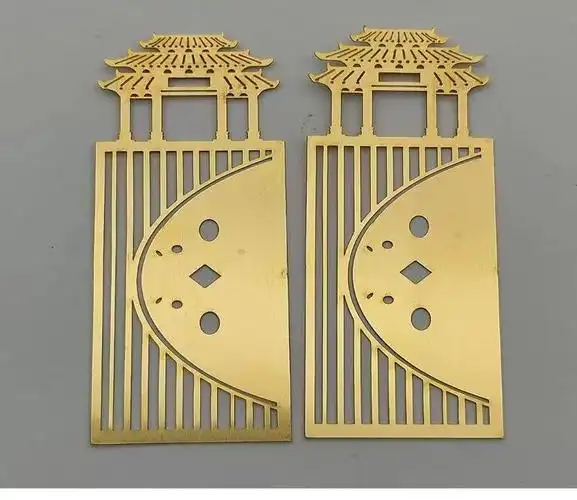
Laser Engraving Brass Plate
III. High Requirements for Laser Equipment Performance
The difficulty of brass marking places strict requirements on laser system hardware, mainly in the following aspects:
1. Laser Source Selection
Different wavelengths show significantly different absorption rates on brass:
1064nm fiber laser
Low cost
Low absorption efficiency
Typically requires ≥50W power for stable processing
532nm green laser
Higher absorption (2–3× that of 1064nm)
Better processing stability
Higher cost (2–5× same-power fiber laser systems)
355nm UV laser
Highest precision
Minimal thermal effect
Shallow marking depth, suitable for fine surface marking
2. Scanning Galvo and Focusing System
Brass marking requires:
High scanning speed (to reduce thermal accumulation)
High stability (to prevent beam drift)
High-transmittance optical lenses (e.g., quartz materials)
Focus tolerance strictly controlled within ±0.1 mm
Otherwise, it may cause:
Energy fluctuation
Uneven marking quality
3. Cooling System Requirements
During long-term high-power laser operation:
Efficient water cooling system is required
Flow rate ≥ 2 L/min
Temperature fluctuation ≤ 5°C
Otherwise:
Laser power instability
Reduced marking consistency
4. Gas Protection System (Optional but Recommended)
Introducing nitrogen or inert gas during marking can:
Reduce surface oxidation of brass (preventing color inconsistency caused by uneven oxide layers)
Suppress plasma formation (plasma generated during laser-material interaction may reflect laser energy and reduce efficiency)
IV. Special Application Challenges
Different applications impose significantly different requirements on brass marking, further increasing process complexity:
1. Precision Electronics (e.g., copper terminals, connectors)
No burrs required
Depth ≤ 0.01 mm
Must not affect electrical conductivity
Requires extremely precise heat control
2. Decorative and Identification Applications
High contrast required
Fine patterns (e.g., logos, serial numbers)
Balance between aesthetics and surface integrity
3. Wear-Resistant Industrial Applications
Marking depth ≥ 0.05 mm
Long-term durability required
Must solve thermal deformation issues during deep engraving
V. ZS Machinery Recommended Solutions
1. Standard Industrial Marking Solution (Cost-Effectiveness Prioritized)
For general standard industrial brass marking, we recommend a 50W fiber laser marking machine. It is suitable for:
copper hardware, nameplates, and general markings.
The machine uses a 1064nm fiber laser (power 50W-200W recommended)
High-speed galvanometer system (≥8000mm/s)
Optimized pulse frequency (50–120kHz range)
Small spot fine focusing configuration
This configuration is recommended because it is stable, reliable, low-cost, and suitable for mass production.
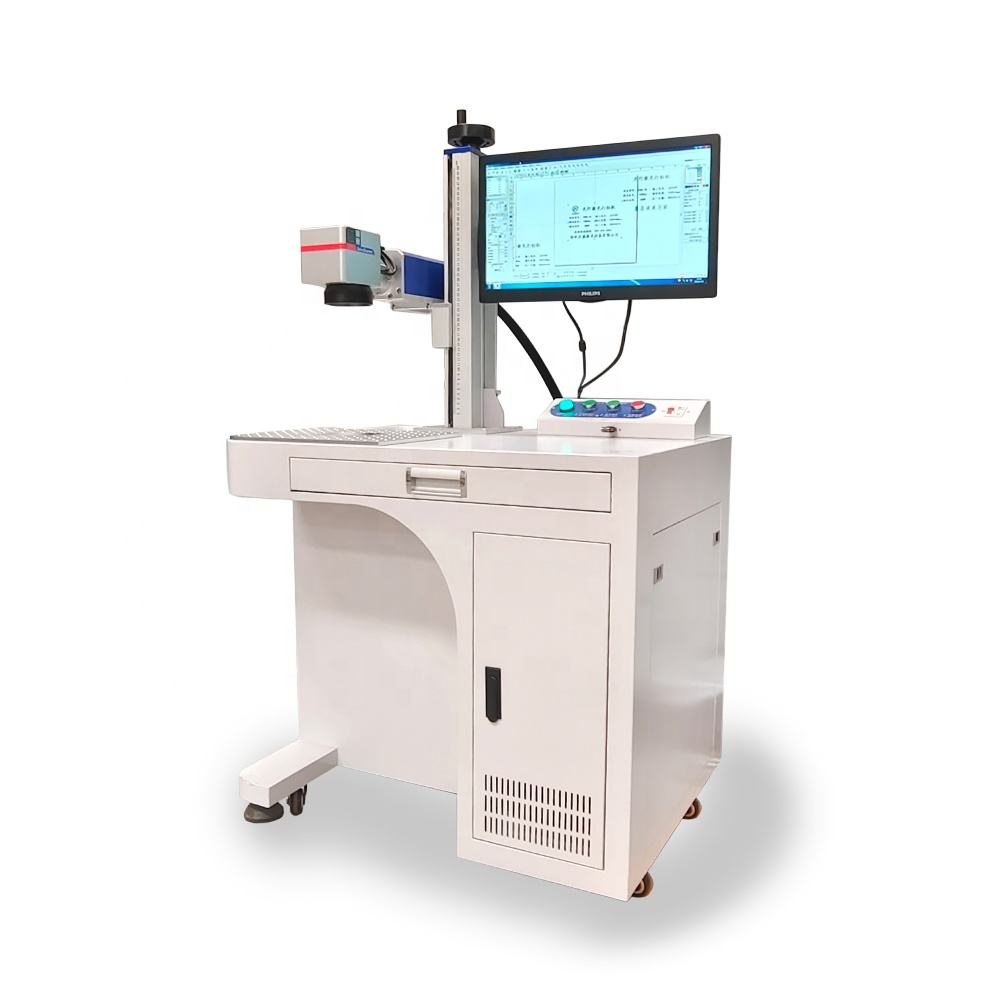
50W Fiber laser marking machine
2. High-Quality, High-Precision Fine Marking Solution
For high-precision brass marking, we recommend a UV laser marking machine. It is suitable for: electronic components, precision marking microstructure processing, decorative processes, etc.
The machine is equipped with a 355nm ultraviolet laser system, a precision galvanometer, and a highly stable cooling system. It features precise spot control (micrometer level). Its characteristics include virtually no heat-affected zone and high precision, but it is also more expensive.
3. Marking solutions for thin or small parts
For marking small workpieces, we recommend using a high-precision fixture (positioning error ≤ 0.02mm) to avoid workpiece displacement during marking. The fixture should also have thermal conductivity (e.g., using copper alloy material) to aid heat dissipation and prevent workpiece deformation from affecting subsequent processing.
For batch marking scenarios, we recommend using a vision system combined with a conveyor belt to improve marking efficiency.
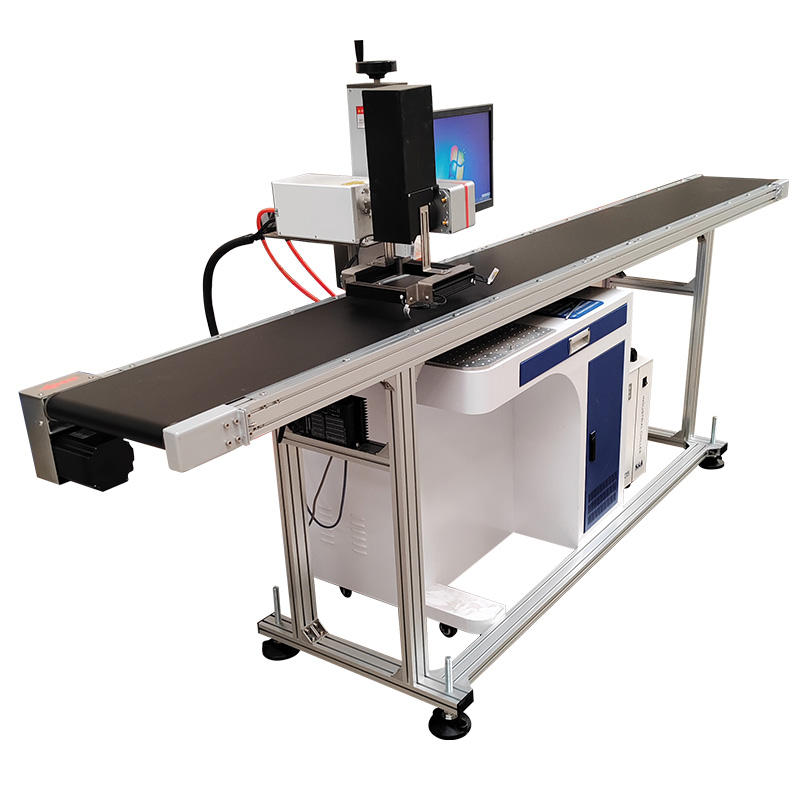
Visual UV Laser Marking Machine
Conclusion
The core challenges of laser marking on brass (also known as Fiber Laser Engraving on Brass) stem from its high reflectivity, high thermal conductivity, and sensitivity to surface oxidation.
These challenges result in brass marking equipment being slightly more expensive than equipment for marking ordinary metals. This is because higher power or additional configurations are required.
If you are unsure which marking system is suitable for your product, please feel free to contact us, and we can recommend the most appropriate system for your application.