Industrial Equipment And Machinery Industry
In the industrial equipment and machinery sector, marking is not optional — it is a core requirement for traceability, compliance, maintenance, and lifecycle management.From large mechanical components to precision-engineered parts, manufacturers require permanent, high-contrast, and machine-readable markings that remain intact under extreme working conditions.
As industries move toward automation and smart manufacturing, marking systems must also support data integration, serialization, and digital traceability.
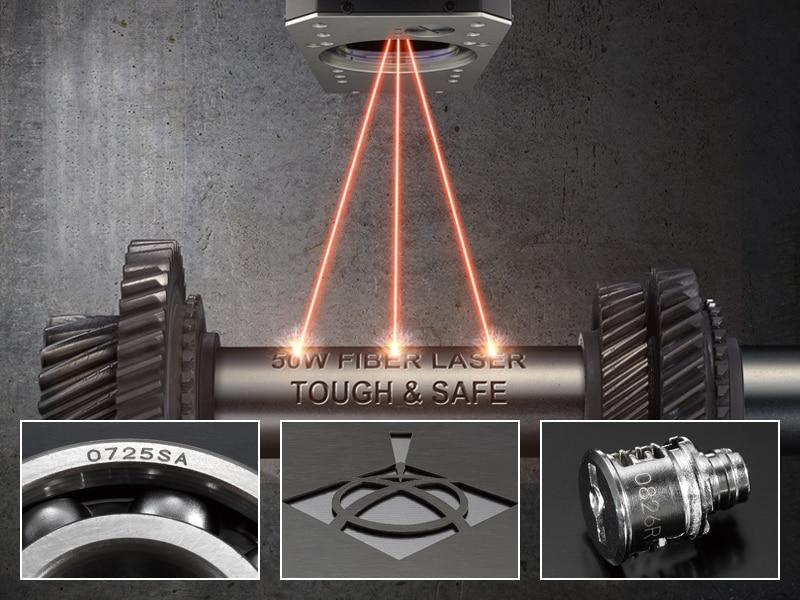
Machinery industry marking
Where is Marking Used in Industrial Equipment & Machinery?
Marking is widely applied across multiple layers of industrial production:
1.Structural Components & Heavy Parts
For structural components and heavy industrial parts such as machine frames, steel structures, and cast or forged components, the marking solution mainly focuses on permanent identification and long-term durability.
Common marking content includes part numbers, batch identification, and manufacturing codes. Since these parts often undergo processes such as sandblasting, painting, or long-term mechanical use, the marking must remain clear and readable even in harsh industrial environments.
2.Precision Machined Parts
For precision machined parts including shafts, gears, bearings, CNC-machined components, and hydraulic or pneumatic parts, the marking solution emphasizes accuracy and surface protection.
Typical marking content includes serial numbers, specification codes, and DataMatrix or QR codes. The marking process should achieve high precision and clean contrast without causing deformation, stress, or damage to the finished surface.
3.Fasteners & Standard Components
For fasteners and standard industrial components such as bolts, nuts, washers, and connectors, the marking solution is designed for high-speed and stable production.
Common marking content includes grade markings, manufacturer identification, and traceability codes. Because the marking area is usually very small and production volume is high, the solution must ensure fast marking speed, clear readability, and consistent quality in mass production.
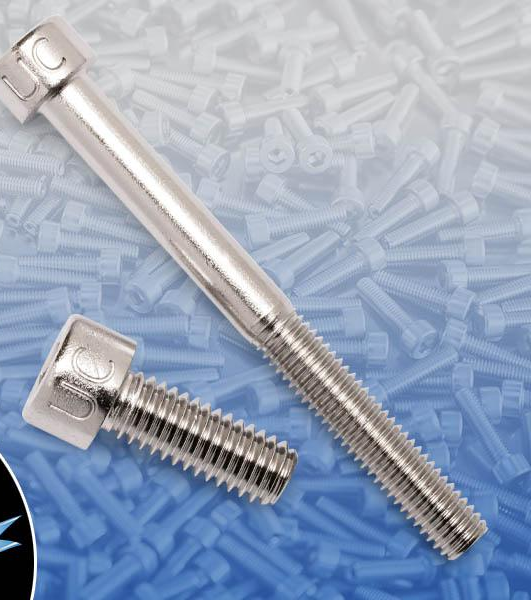
Marking on bolt
4.Electrical & Control Components
For electrical and control components such as control panels, switchgear, and industrial connectors, the marking solution mainly focuses on clarity and long-term readability.
Common marking content includes wiring identification, safety labels, and barcodes or QR codes. Since many of these parts use coated metal or plastic surfaces, the marking must provide strong contrast and maintain clear visibility during long-term industrial use.
5.Nameplates & Compliance Labels
For equipment nameplates and compliance labels such as CE, ISO, or UL certification plates, the marking solution emphasizes permanence and environmental resistance.
These applications usually require clear equipment information, certification details, and machine-readable tracking codes. The marking must remain durable and readable even under exposure to heat, oil, moisture, and outdoor working conditions.
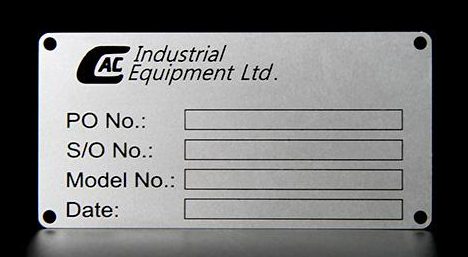
Marking on name plates
Key Challenges in Industrial Equipment And Machinery Marking
ZS Machinery Recommend Marking Technologies
Based on our more than ten years of experience serving customers, we make the following recommendations to meet your production needs.
1.Fiber Laser Marking Machine (Primary Solution)
Based on more than ten years of industry experience, ZS Machinery recommends fiber laser marking machines as the primary solution for most industrial equipment and machinery marking applications. This technology is especially suitable for metal components, precision machined parts, and permanent equipment identification.
Fiber laser systems can achieve high-speed and high-precision marking on materials including stainless steel, carbon steel, aluminum, and other reflective metals. They also support multiple processing effects such as engraving, annealing, and etching, making them ideal for serial numbers, QR codes, traceability information, and long-term product identification.
2.Dot Peen Marking Machine
For large, heavy-duty, or highly durable industrial components, ZS Machinery also recommends dot peen marking machines. This solution is widely used in steel structures, heavy machinery parts, and applications requiring deep and permanent indentation marking.Moreover, fiber laser marking machines are available in various models, including cabinet, desktop, and handheld types, to suit a variety of application scenarios.
Compared with laser systems, dot peen marking is less sensitive to surface conditions and performs reliably even in harsh industrial environments involving oil, rust, dust, or rough surfaces. It is especially suitable for applications where durability and long-term readability are more important than appearance quality.
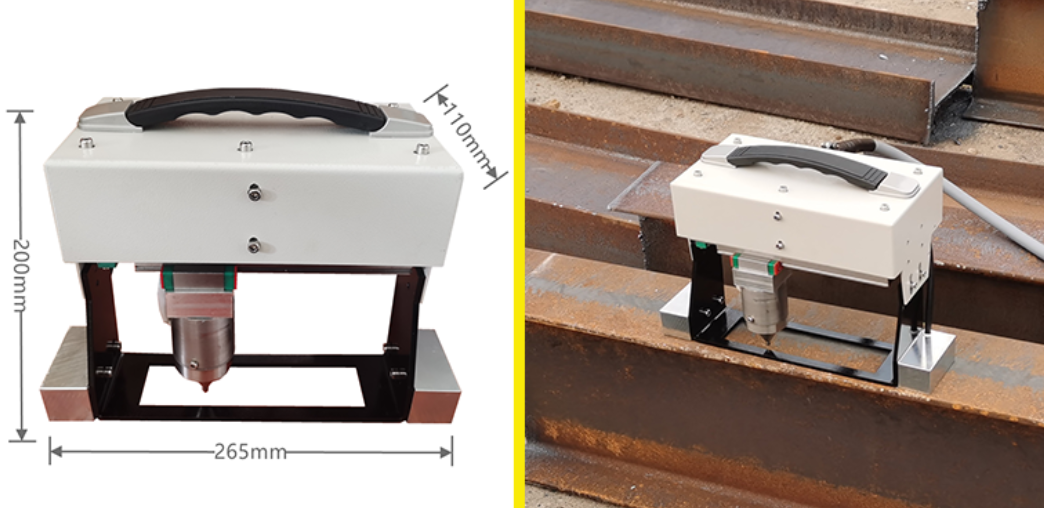
Electric dot peen mark machine
3.CO₂ Laser Marking Machine
For non-metal materials, plastics, and coated surfaces, We recommend CO₂ laser marking machines. This marking solution provides clean, non-contact processing with excellent contrast on organic and non-metal materials.
It is commonly used for electrical components, plastic housings, packaging materials, coated panels, and industrial labels where clear appearance and surface quality are important.
Why Choose ZS Machinery
ZS Machinery provides application-driven marking solutions for industrial equipment manufacturers,we have
Full range of laser marking systems
Custom solutions for large and complex parts
Multi-axis and robotic integration options
Support for automated production lines
Process optimization based on real samples
We help customers not only mark parts —but build efficient, traceable, and scalable marking systems
Conclusion and call to action
Marking in the industrial equipment sector is evolving from simple identification to a critical component of digital manufacturing systems.By selecting the right marking technology, manufacturers can achieve:
Long-term durability
High production efficiency
Full traceability
Seamless integration into smart factories
ZS Machinery delivers marking solutions that meet both industrial demands and future manufacturing trends.Contact us today to get your customized marking solutions for your industrial equipment industry.