
Plastic Marking Solutions
Plastic marking is widely used in electronics, packaging, medical devices, automotive parts, and consumer products.However, unlike metal, plastics vary greatly in composition and heat sensitivity, which makes selecting the right marking method more complex.
This article will help you understand how to mark different plastics and choose the most suitable solution.
1.Characteristics of Plastic Materials
Plastics have several unique properties that affect marking quality:
High sensitivity to heat
Different chemical structures (ABS, PVC, PE, PP, PET, PC, etc.)
Different responses to laser wavelengths
Using the wrong method can easily cause:
Burning or deformation
Poor contrast
Surface damage
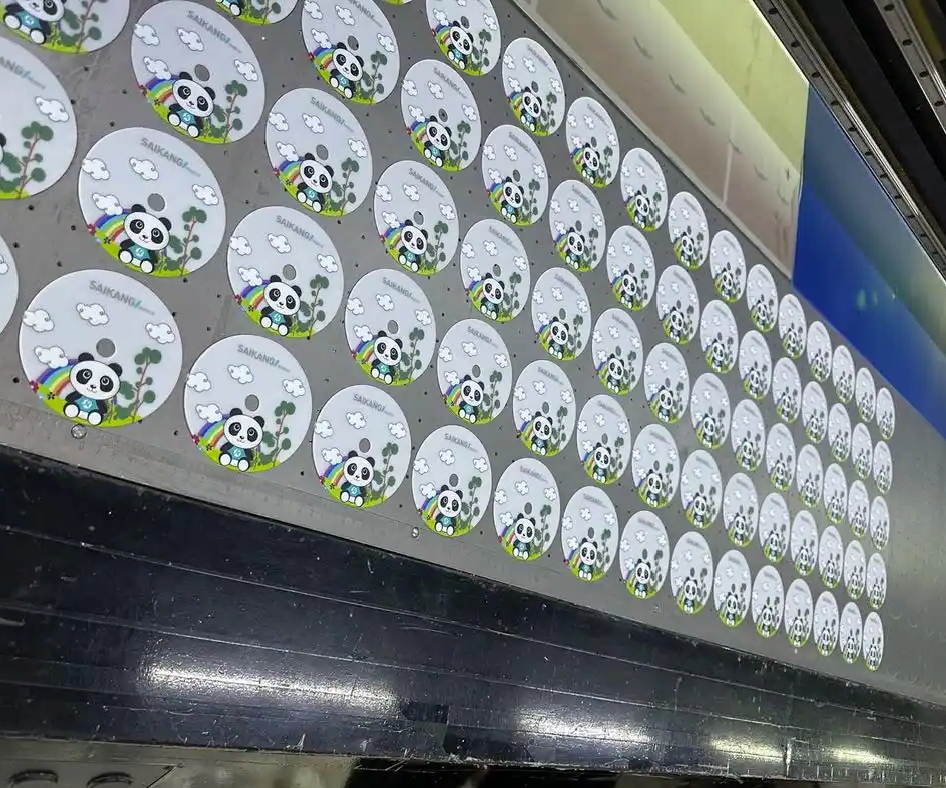
Plastic Marking
2.Can Plastic Be Laser Marked?
Most plastics can be marked, but not all plastics can be marked with the same technology.The correct solution depends on:
Material type
Heat sensitivity
Additives inside the material
2.1 Heat-Sensitive Plastics (UV Laser Recommended)
Typical materials include:
PCB boards
Thin plastic films (PE, PP, PET)
Medical plastics
These materials are very sensitive to heat and require a cold marking process.
UV laser marking uses a short wavelength that minimizes heat impact and prevents deformation.
Best choice: UV laser marking machine
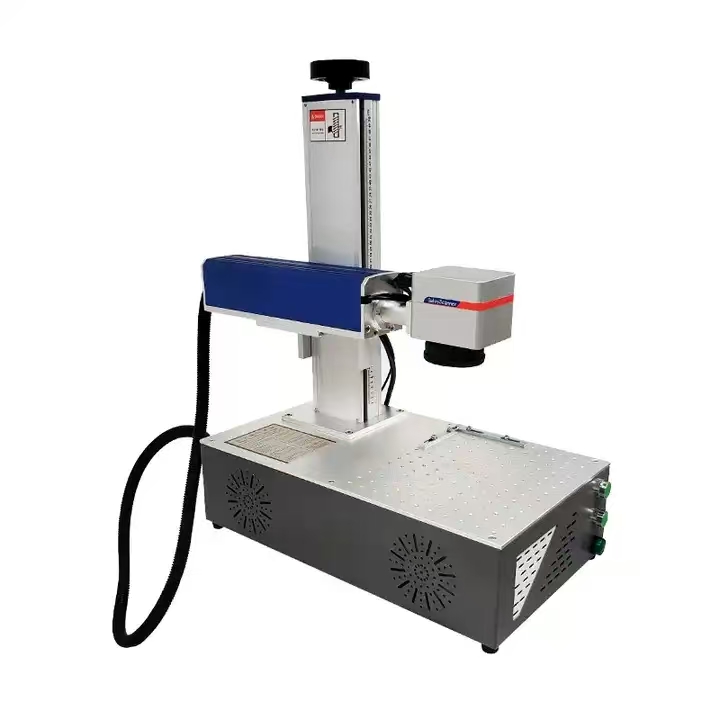
UV Laser Marking Machine
2.2 Engineering Plastics (Fiber Laser Possible)
Some harder plastics can be marked with fiber lasers, especially if they contain laser-sensitive additives.Typical materials:
ABS
Polycarbonate (PC)
Nylon
Marking effects include:
Black marking
White marking (foaming)
Surface engraving
Important note:
Without additives, some plastics may not produce good contrast with fiber lasers.
Best choice: Fiber laser marking machine (20W–50W)
2.3 Transparent Plastics and Special Materials
Examples include:
Acrylic (PMMA)
Transparent PC
PET
These materials are more difficult because laser energy may pass through them.
Solutions include:
UV laser for fine marking
CO₂ laser for engraving or frosting effects
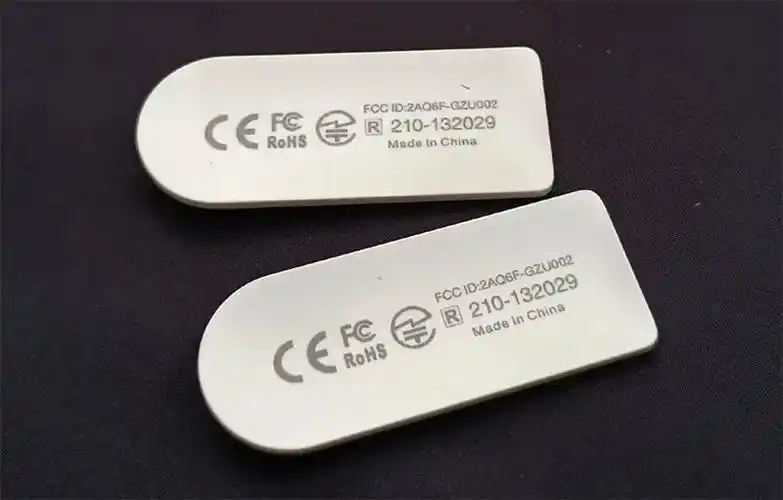
Laser marking effect on hard plastic
3.Plastic Marking Technologies Comparison
| Technology | Advantages | Limitations | Best Applications |
| UV Laser | No heat damage, high precision | Higher cost | PCB, medical, films |
| Fiber Laser | Fast, cost-effective | Not suitable for all plastics | ABS, PC, tags |
| CO₂ Laser | Good for engraving | Heat impact possible | Acrylic, organic plastics |
| UV Printing | Full color printing | Not permanent | Packaging, cups, decorative products |
4.When to Use Laser Marking vs UV Printing
Laser marking and UV printing serve different purposes.
Laser marking is best for:
Permanent identification
Serial numbers and QR codes
Industrial traceability
UV printing is better for:
Full-color logos
Decorative surfaces
Branding and packaging
5.Color Marking on Plastic
Laser marking on plastic is generally limited to:
Black
White
Gray
If your application requires full-color graphics, laser marking is not sufficient.
UV printing provides:
Full color
Image-quality results
Flexible design options
Typical applications include:
Plastic cups
Cosmetic packaging
Plastic bags
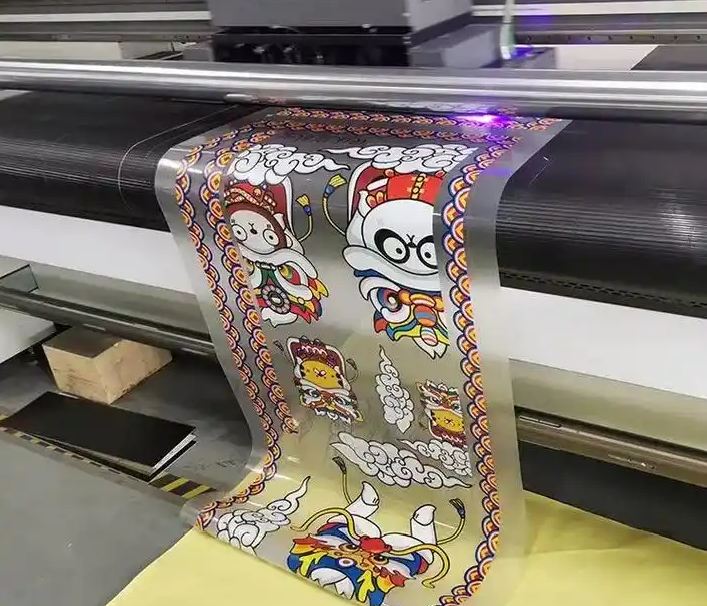
UV printers color print plastic
6.Typical Applications
Plastic marking is used in many industries:
Electronics:
PCB marking
QR codes
Micro components
Animal identification:
Plastic ear tags
Packaging:
Plastic films and bags
Consumer products:
Bottles
Plastic housings
7.How to Choose the Right Solution
The correct approach is to choose based on application needs.
Material-based selection:
Heat-sensitive plastics → UV laser
Hard plastics → Fiber laser
Transparent plastics → UV or CO₂
Requirement-based selection:
| Requirement | Recommended Solution |
| High precision | UV laser |
| Low cost | Fiber laser |
| Engraving | CO₂ laser |
| Full color | UV printing |
Sample testing is strongly recommended, as different plastics behave differently even within the same category.
8.Automated Plastic Marking Solutions
For mass production, automated systems can greatly improve efficiency.
Typical solutions include:
Vision positioning systems
Conveyor belt systems
Automatic loading and unloading
These are widely used in:
Ear tag production
Packaging lines
Electronic components
Conclusion And Call To Action
Plastic marking requires selecting the right technology based on material and application.
UV laser is ideal for sensitive plastics
Fiber laser works well for engineering plastics
CO₂ laser is suitable for engraving
UV printing is the best choice for full-color applications
Choosing the correct method ensures better quality, higher efficiency, and lower long-term cost.
Call to Action
If you are not sure which solution is suitable for your plastic products, contact ZS Machinery for free sample testing and professional advice.
We provide both laser marking and UV printing solutions to help you achieve the best results for your application.