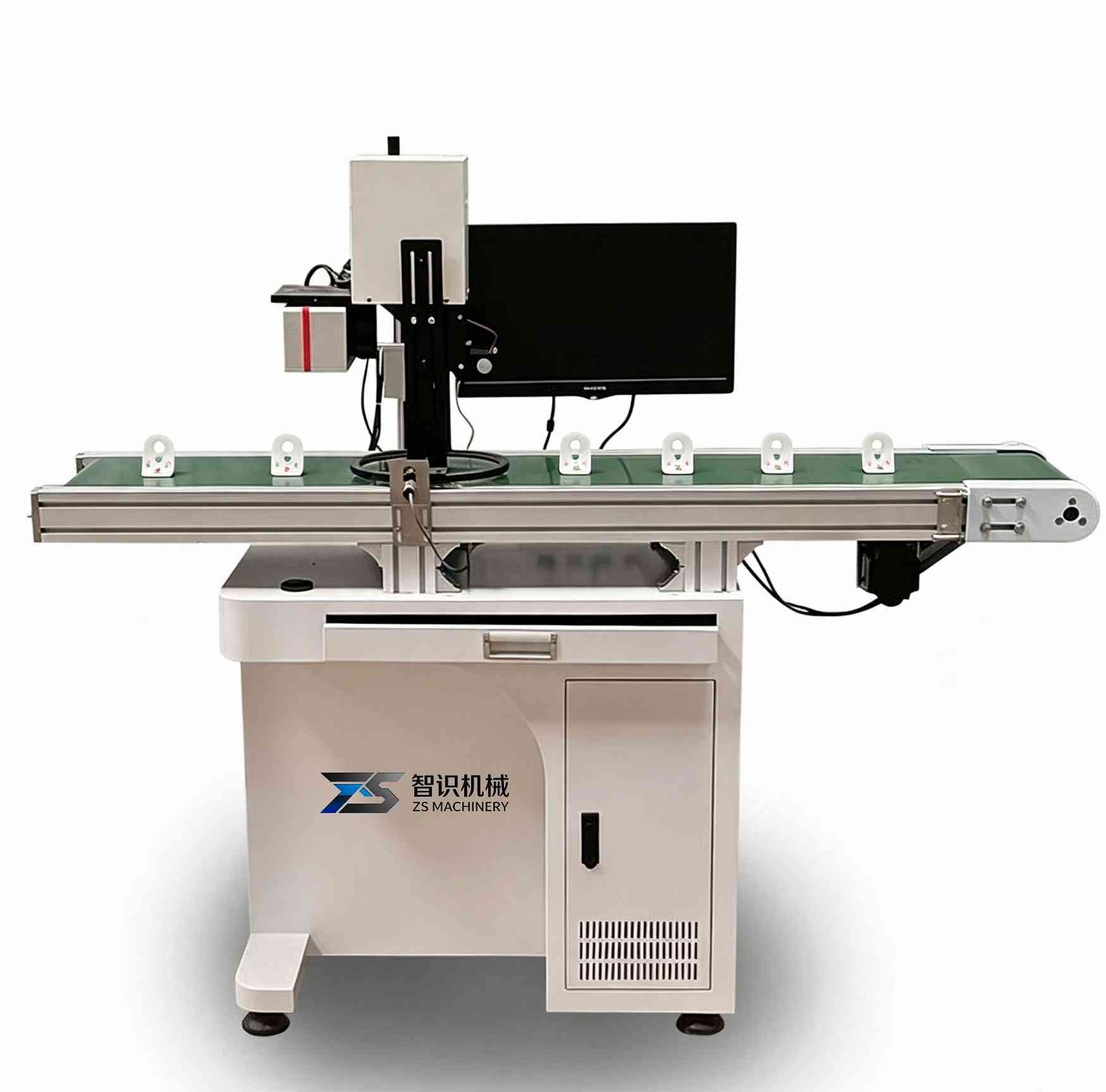
- Product Details
What Is Ear Tag Engraving Machine?
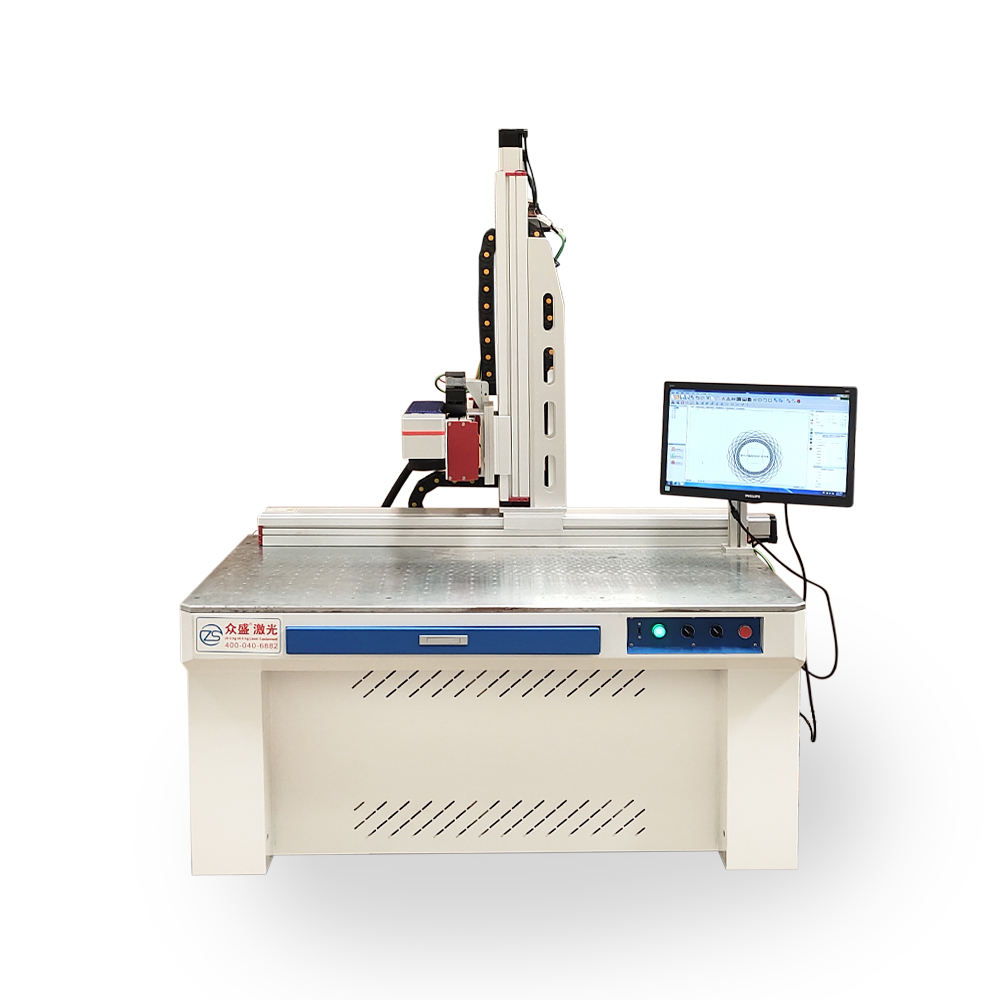
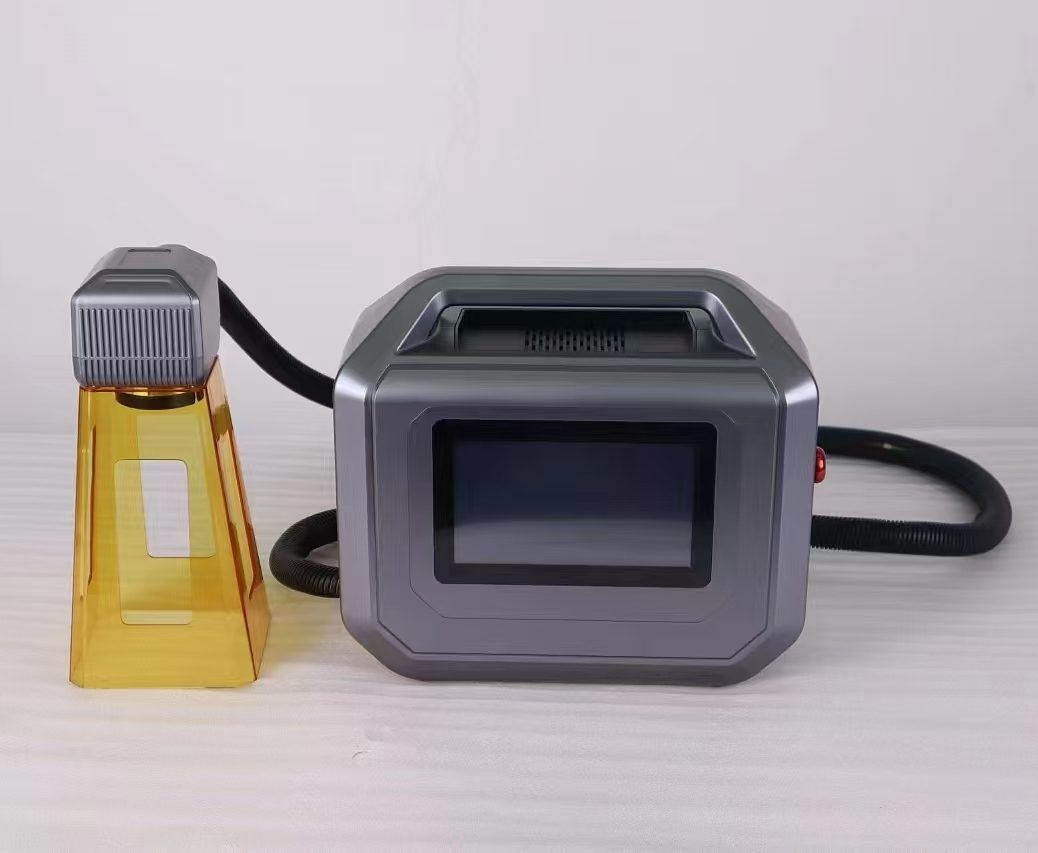
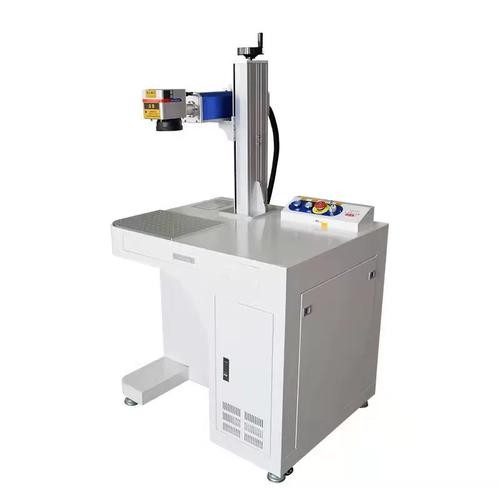
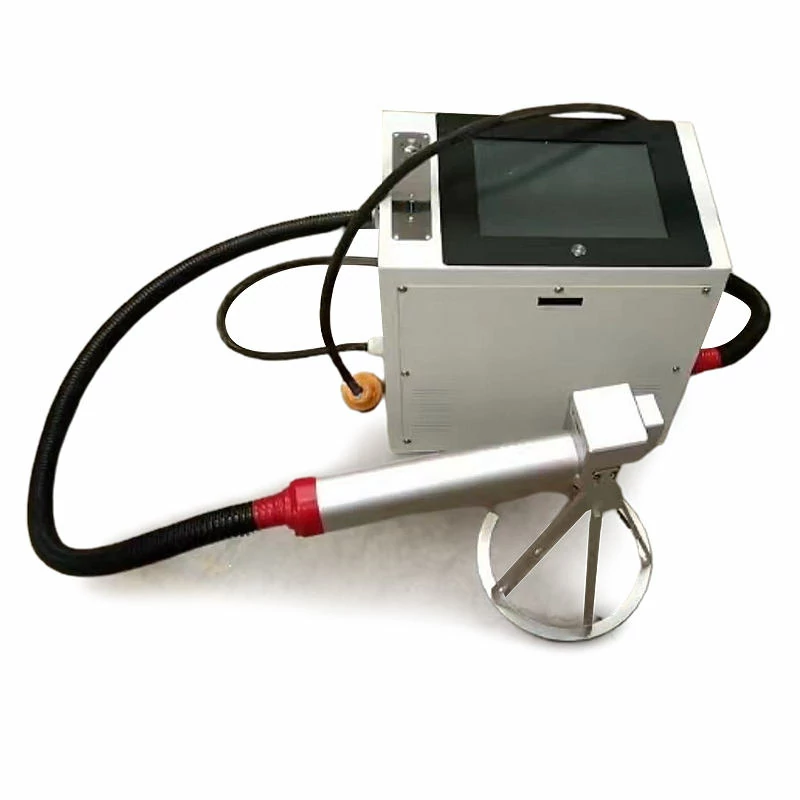
The ear tag engraving machine is a vision-guided automatic fiber laser marking system specifically designed for high-volume livestock ear tag production.Unlike a standard desktop laser marker, this system combines a 30W fiber laser, 5 MP industrial CCD camera, conveyor system, automatic visual positioning, and dedicated marking software into one production line.
The operator simply places the ear tags onto the conveyor. The system transports the tags into the marking area, the camera identifies their position, and the laser automatically marks the required identification information.This makes the machine suitable for continuous production of cattle, sheep, pig, goat, and other livestock ear tags.
Ear tag engraving machine
Designed Specifically for Livestock Ear Tag Marking
Livestock ear tags are different from ordinary plastic products.The material is usually flexible plastic, and different manufacturers may use different formulations, colors, additives, and surface finishes. Some laser-markable ear tags contain special laser-sensitive additives that allow a fiber laser to create a strong color change rather than physically cutting deeply into the plastic.
For this type of application, a 30W fiber laser provides a practical balance between marking speed, contrast, stability, and equipment cost.The goal is not to remove a large amount of plastic. For most standard laser-markable ear tags, the desired result is a clear, permanent, high-contrast identification mark.
ZS Machinery suggest that 30W fiber lasers can be used for single-layer livestock ear tags, with typical starting settings around 50–70% power and 575–1,200 mm/s marking speed. However, the actual setting must be optimized for the specific ear tag material.
How Does the Automatic Ear Tag Engraving Machine Work?
The complete workflow is designed for continuous production:
Load Ear Tags → Conveyor Feeding → CCD Vision Detection → Automatic Positioning → Laser Marking → Finished Tags→Ear tags leave the conveyor belt
The operator does not need to manually position every ear tag under the laser.Simply place the ear tags in batches at fixed locations; the placement of the ear tags is not important and can be done anywhere. Then, a conveyor belt will automatically carry the ear tags to the laser head for marking. After completion, a collection device is usually added to the end of the conveyor belt.
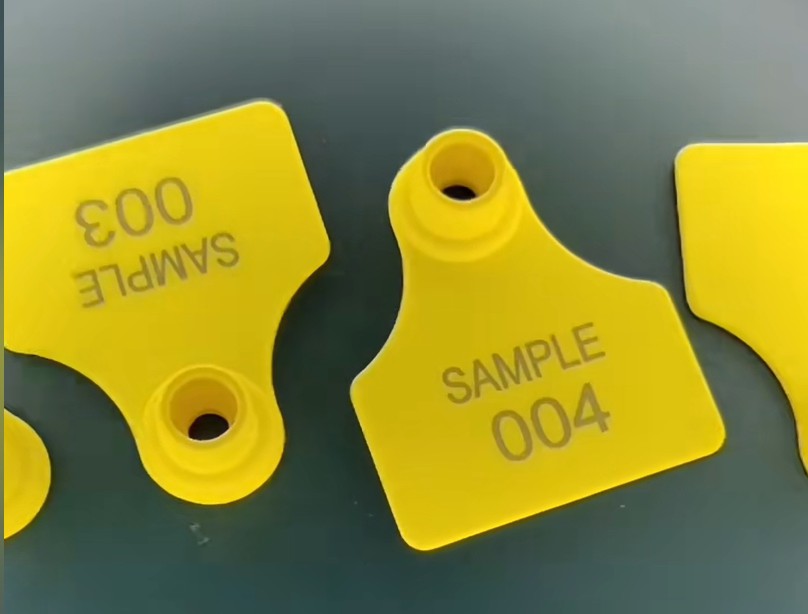
Ear tag engraving
Recommended Laser Parameters for Ear Tag Marking
There is no single parameter that works perfectly for every ear tag.However, for a typical laser-markable plastic ear tag using a 20W–30W fiber laser, the following values can be used as a practical starting point:
| Parameter | Recommended Starting Range |
|---|---|
| Laser power | 50–70% |
| Marking speed | 575–1,200 mm/s |
| Passes | 1 pass |
| Fill / line spacing | Start with relatively dense filling |
| Focus | Precisely focused |
| Frequency | Start around 30–60 kHz and test |
| Marking field | 110 × 110 mm |
| Laser power recommendation | 30W |
This parameter is one that ZS Machinery customers typically use.However, due to the wide variety of plastic materials, specific parameter settings need to be adjusted in real time according to the product. Generally, adjusting these few parameters is sufficient. We will provide a complete parameter adjustment tutorial.
Why Do We Recommend Testing the Material?
An ear tag that looks like ordinary plastic may behave very differently under a laser.The final result depends on:
- Plastic type
- Material formulation
- Laser-sensitive additives
- Tag color
- Surface finish
- Laser source
- Power
- Speed
- Frequency
- Fill spacing
- Focus position
For this reason, the recommended parameters can be fine-tuned according to your actual ear tag material.We strongly recommend testing your own ear tags before production.The purpose of testing is not only to find a mark that is visible, but to find the best combination of:
Contrast + readability + marking speed + surface quality + production stability
Conveyor System for Continuous Ear Tag Production
The conveyor is an important part of this machine because the system is designed for continuous production, not occasional manual marking.The standard conveyor length is 1.5 meters, with customized conveyor dimensions available according to the production line.The conveyor can be integrated with:
- Ear tag loading
- Vision detection
- Automatic marking
- Product collection
- Additional feeding systems
- Production-line automation
The conveyor speed and marking cycle should be coordinated with the actual marking time.For example, a laser may have a maximum scanning speed of up to 11,000 mm/s, but this does not mean an ear tag can be completed at 11,000 mm/s in real production.The actual cycle time also depends on:
- Number of characters
- Font size
- QR/barcode size
- Fill density
- Number of marking areas
- Vision positioning time
- Conveyor movement
- Loading and unloading time
Therefore, production capacity should be evaluated using the complete machine cycle, rather than laser scanning speed alone.
One Operator Can Run Two Machines
For high-volume ear tag production, we often recommend considering two machines for one operator.
Why?
Because one machine may finish marking before the operator has another task ready.With two machines, the operator can alternate between them:
Load Machine A → Machine A Marks → Load Machine B → Machine B Marks → Return to Machine A
While one machine is marking, the operator can prepare the other machine.This makes better use of the operator’s working time and allows the laser systems to operate more continuously.
For customers with large production volumes, two 30W vision conveyor ear tag engraving machines operated by one person can be a practical production configuration.The actual number of machines should still be determined according to the required daily output and the complete cycle time.
What Can You Mark on Livestock Ear Tags?
The system can mark a wide range of identification information, including:
- Animal ID numbers
- Serial numbers
- Farm identification
- Herd numbers
- Batch numbers
- Letters
- Logos
- QR codes
- Barcodes
- Data Matrix codes
- Custom graphics
For variable identification numbers, the marking software can also be configured around the customer’s production data and identification workflow.
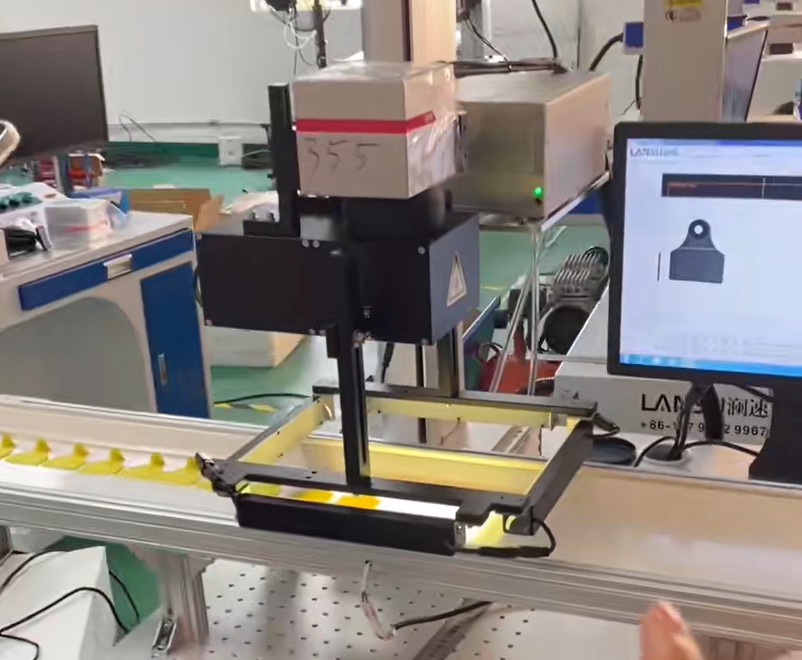
Vision laser marking eartags
Key Advantages of This Ear Tag Engraving Machine
30W Fiber Laser
The 30W fiber laser provides a practical balance between marking speed and equipment cost for many laser-markable ear tag materials.
5 MP Vision System
The industrial CCD camera automatically identifies the ear tag position and allows the system to mark according to the actual position of the product.
Conveyor-Based Production
The 1.5 m conveyor allows the machine to be integrated into a continuous production workflow instead of relying entirely on manual placement.
Automatic Marking
Once the ear tag is detected and positioned, the laser completes the marking automatically.
No Ink or Printing Ribbon
Laser marking does not require traditional ink or printing ribbons, reducing consumable requirements.
Sample Testing
Because plastic formulations vary between ear tag manufacturers, we recommend testing the customer’s actual material before final production.
A Complete Ear Tag Laser Marking Solution
This machine is designed specifically around the production requirements of livestock ear tags.Instead of purchasing a standard fiber laser marker and adding positioning equipment later, the system integrates:
30W Fiber Laser + 5 MP Vision + Conveyor + Automatic Positioning + Visual Marking Softwareinto one production solution.
If you already have your own ear tag material, we recommend sending samples for testing first. We can determine whether the material produces the required color and contrast, then fine-tune the laser parameters for your actual production requirements.
For high-volume production, we can also design the conveyor, feeding system and machine quantity around your target output.