- Product Details
- FAQs
Flexible On-Site Marking Solution for Large and Fixed Workpieces
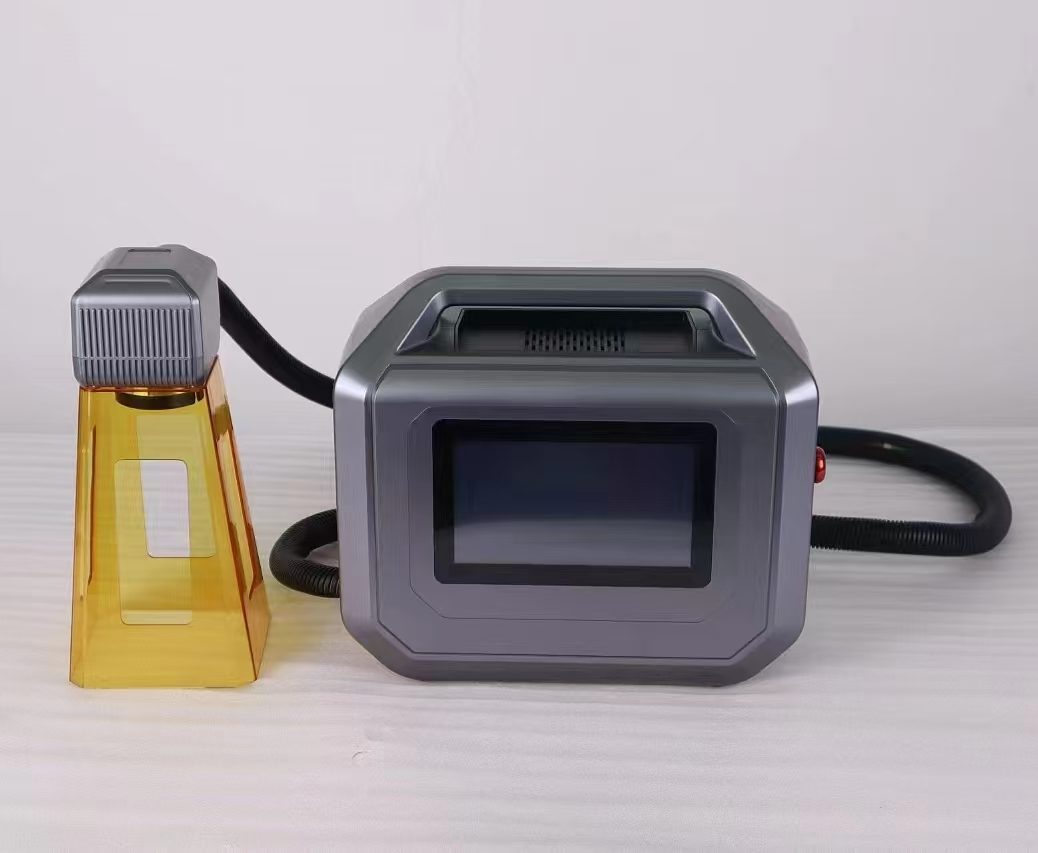
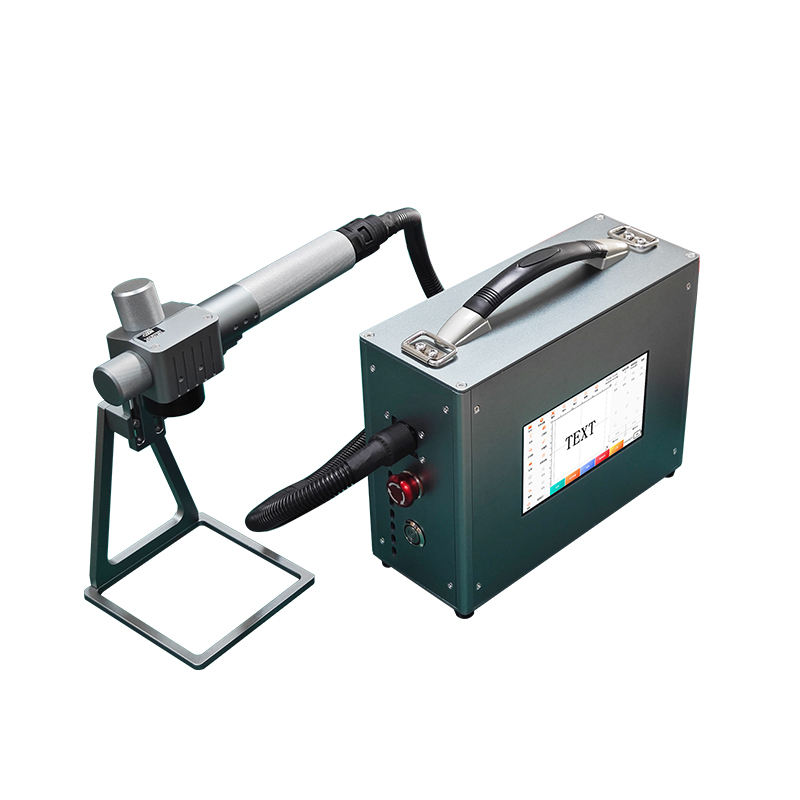
The handheld portable fiber laser marking machine is designed for applications where traditional marking equipment cannot be easily deployed.
In many industrial environments, workpieces are either too large, too heavy, or already installed, making it impractical to move them to a standard marking station. This machine addresses that limitation by allowing the operator to bring the marking system directly to the workpiece.
With a total weight of approximately 10 kg, the system is compact enough to be transported between different work locations. It is available in two power supply configurations: a standard plug-in version and a lithium battery-powered version.
The battery-powered model enables fully independent operation without external power, making it suitable for outdoor work, construction sites, and maintenance tasks where power access is limited.
handheld portable fiber laser marking machine
Power Supply Options and Working Flexibility
This machine is available in two distinct configurations depending on the working environment.
The plug-in version is designed for stable indoor use. It provides continuous operation and is suitable for workshops or factory environments where power supply is readily available. This configuration is ideal for repeated tasks that still require mobility but do not require full independence from power sources.
The lithium battery-powered version is designed for maximum flexibility. It operates without external cables and can typically support around two hours of continuous marking, depending on usage conditions and power settings.
This allows the machine to be used in field operations such as marking large steel structures, pipelines, or installed equipment. It eliminates the need for extension cables or generators, reducing setup time and improving efficiency in on-site applications.
Laser Performance and Power Selection
The machine is equipped with a fiber laser source and is available in 30W and 50W configurations.
30W is suitable for standard surface marking tasks such as serial numbers, identification codes, and logos. It provides stable performance for most common metal marking requirements.
50W offers higher output energy, which improves marking speed and allows for deeper engraving. This is particularly useful when working on harder materials or when higher productivity is required in field operations.
The choice between 30W and 50W should be based on marking depth, material type, and expected workload rather than only power level.
Marking Area and Practical Use
The standard marking area is 100 × 100 mm.
This marking field is optimized for handheld operation. A smaller area allows for better control, higher energy density, and improved marking precision, which is important when operating manually.
Although the marking area is smaller than large-format systems, it is sufficient for most industrial marking tasks such as identification plates, component coding, and logo engraving.
For larger surfaces, the operator can reposition the marking head, making the system suitable for large workpieces that cannot be processed in a single fixed position.
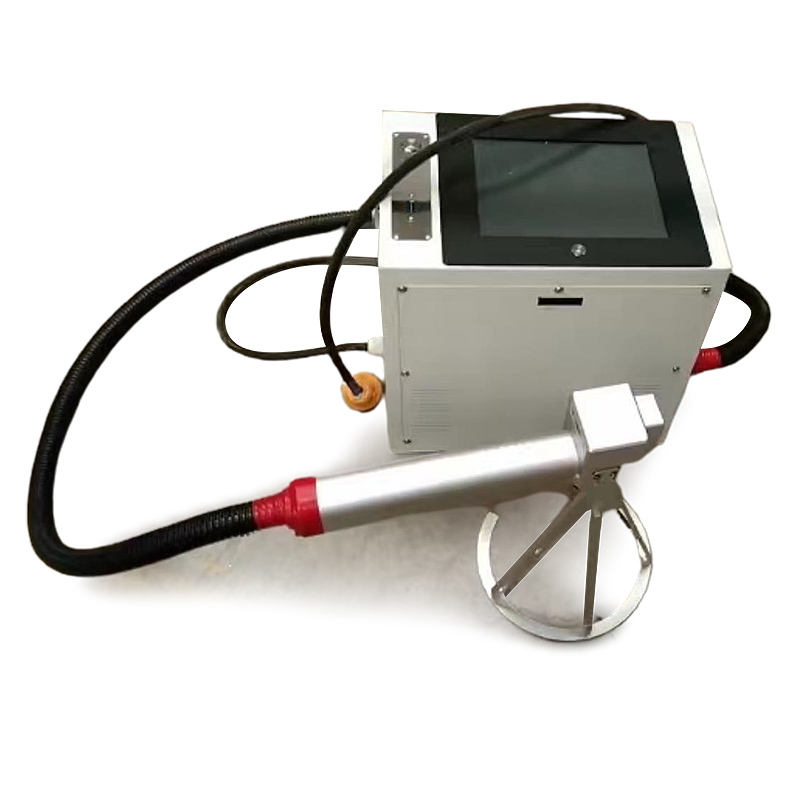
handheld portable fiber laser marking machine
Portable Design and Ergonomics
The machine is designed with portability as a core requirement.
With a total weight of approximately 11 kg, it can be easily carried by a single operator. This allows quick deployment across different work areas without the need for specialized transport equipment.You can refer portable laser engraving machine guide to know more about engraving.
The handheld marking head is designed for stable grip and controlled movement. This is important for maintaining marking accuracy during manual operation.
Compared to stationary systems, this design significantly reduces the time required to position and process large or irregular workpieces.
Materials and Marking Capability
This machine is primarily used for metal marking. It performs effectively on stainless steel, aluminum, carbon steel, brass, and copper.
It can produce a range of marking effects, including surface marking, engraving, and deeper etching, depending on parameter settings.
It is also suitable for marking coated or treated surfaces such as painted metals and anodized aluminum by modifying or removing the surface layer.
The non-contact marking process ensures that the workpiece is not subjected to mechanical stress, which is important for maintaining structural integrity.
Typical Application Scenarios
This type of machine is commonly used in situations where mobility is essential.
It is widely applied in marking large metal structures that cannot be moved, such as frames, tanks, and heavy machinery components.
In construction and infrastructure projects, it is used for on-site marking of steel structures and installation components.
In maintenance and repair operations, it allows re-marking or updating identification directly on installed equipment without disassembly.
It is also suitable for outdoor environments where power supply is unstable or unavailable, particularly when using the battery-powered version.
Limitations and Considerations
The handheld portable design prioritizes flexibility, which introduces certain limitations.
The marking area is relatively small, and large designs require multiple positioning steps.
Manual operation may result in lower repeatability compared to fully fixed systems, especially in high-precision batch production.
Battery operation time is limited, making it more suitable for intermittent or task-based work rather than continuous industrial production.
These factors should be evaluated based on the intended application.
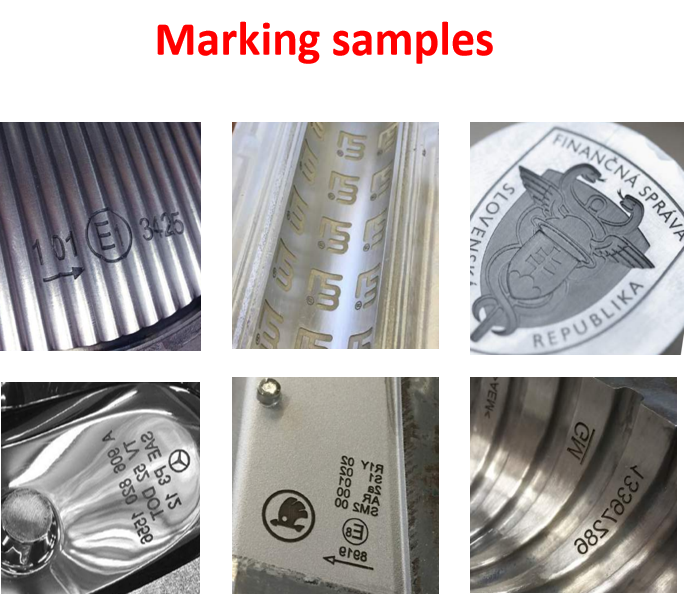
Marking Samples
Get a Quote and Application Support
If your application involves marking large, heavy, or fixed workpieces, selecting the right portable configuration is essential for efficiency and marking quality.
We can evaluate your specific use case and recommend the appropriate power level and power supply configuration based on your working conditions.
Sample testing is available to verify marking results on your materials before purchase. This ensures that the solution meets your requirements in real working environments.
Contact us to discuss your application and receive a tailored portable marking solution.
FAQs
1. What is the main advantage of a handheld laser marking machine?
The main advantage is mobility.
It allows operators to perform marking directly on large, heavy, or fixed workpieces that cannot be moved to a standard marking station.
This significantly reduces handling time and improves efficiency in on-site operations.
2. What is the difference between the plug-in and battery-powered versions?
The plug-in version is suitable for indoor environments with stable power supply and supports continuous operation.
The battery-powered version offers full portability and does not require external power, making it ideal for outdoor or remote applications.
Battery operation typically supports around two hours of use, depending on working conditions.
3. What materials can this machine mark?
The machine is mainly designed for metals such as stainless steel, aluminum, carbon steel, brass, and copper.
It can also mark coated surfaces like painted metals and anodized aluminum by removing or modifying the surface layer.
4. How do I choose between 30W and 50W?
30W is suitable for standard marking tasks such as serial numbers and logos.
50W provides higher energy output, allowing faster marking speed and deeper engraving, especially on harder materials or in demanding field applications.
The choice depends on material hardness, marking depth, and workload.
5. Is the marking permanent?
Yes.
Fiber laser marking creates permanent marks by altering the material surface. The marks will not fade or wear off under normal working conditions.
6. Can this machine mark large workpieces?
Yes.
This machine is specifically designed for large or fixed workpieces.
Although the marking area is limited, the operator can reposition the marking head to cover larger surfaces.
7. Is it difficult to operate a handheld marking head?
No, but it requires basic handling practice.
The marking head is designed for ergonomic use, allowing stable grip and controlled movement.
With proper positioning and parameter setup, operators can achieve consistent marking results.
8. Is the marking accuracy affected by manual operation?
Manual operation may result in lower repeatability compared to fully fixed systems.
However, for most industrial marking tasks such as identification and coding, the accuracy is sufficient when operated properly.
9. How long does the battery last?
The lithium battery-powered version typically supports around two hours of continuous operation.
Actual working time may vary depending on power settings and usage frequency.