- Product Details
- FAQs
Automatic Positioning and High-Efficiency Marking for Batch Metal Parts
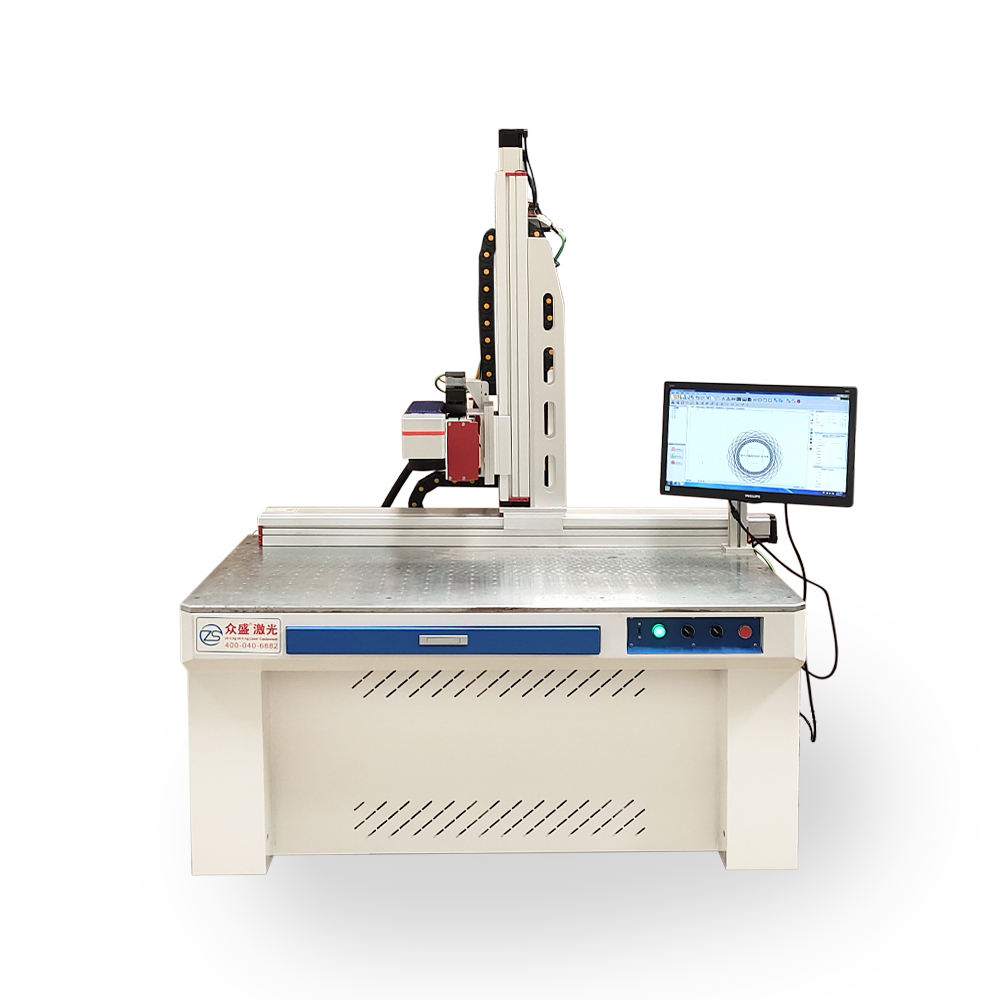
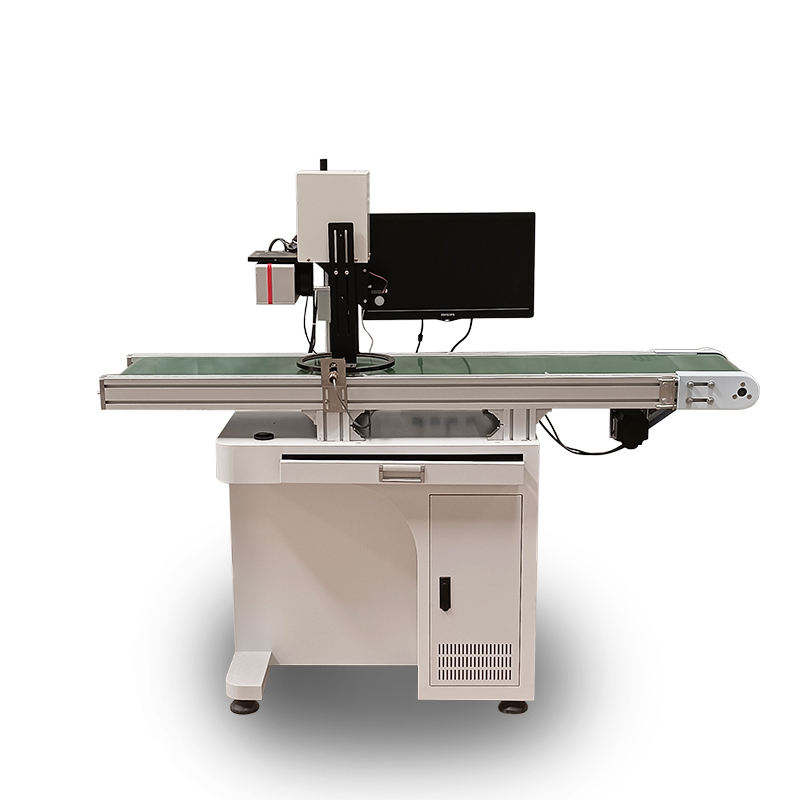
The vision fiber laser marking machine is designed for high-efficiency batch marking of metal components in production environments.
Traditional laser marking systems require manual positioning or dedicated fixtures to ensure accuracy. This process not only increases labor costs but also limits production flexibility when dealing with different product types.
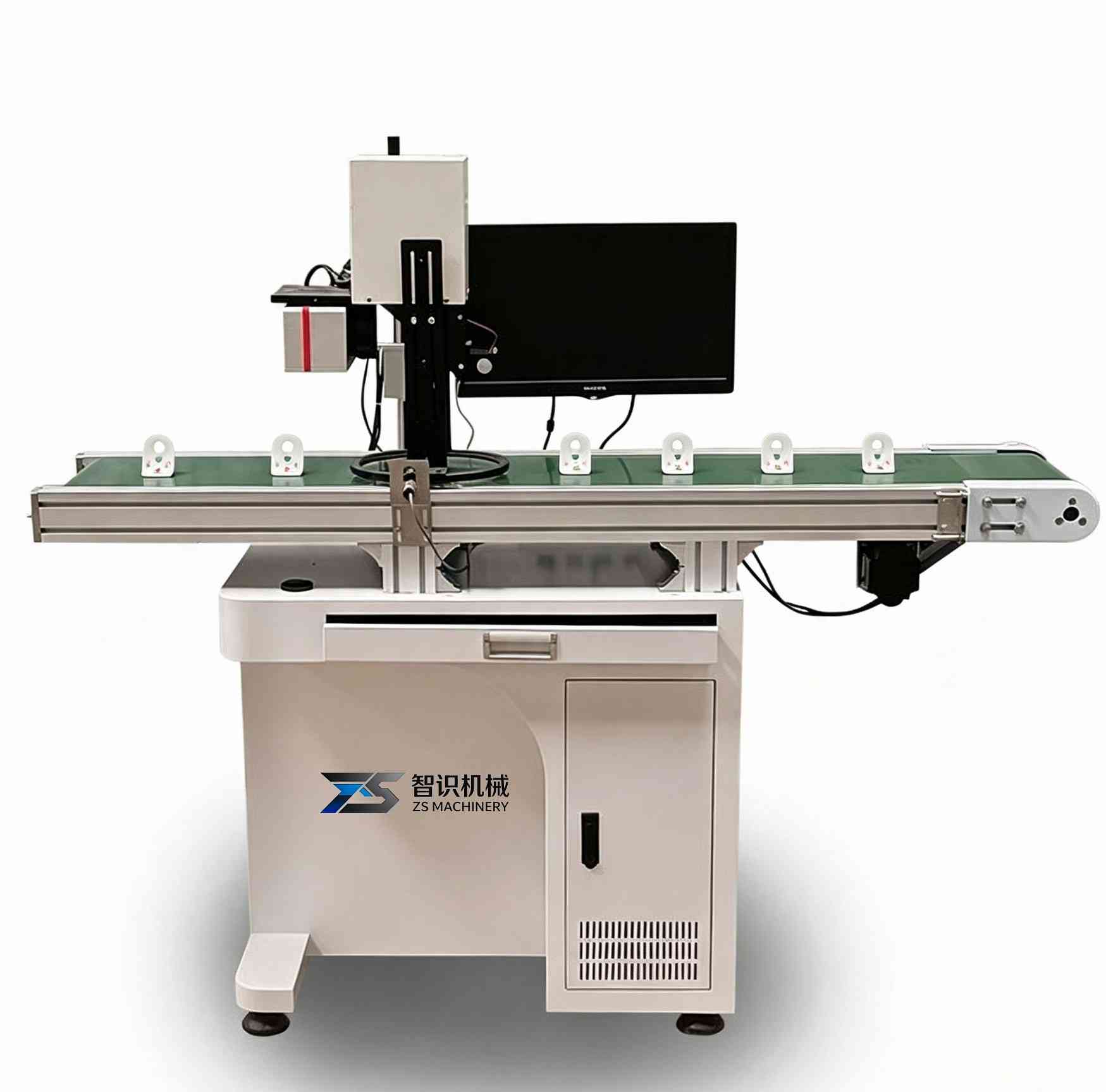
This system integrates a high-speed vision positioning module with a fiber laser marking system and a conveyor platform. Workpieces can be placed randomly on the conveyor without precise alignment. The vision system automatically detects their position and orientation, and the laser performs marking accordingly.
With this approach, the machine significantly reduces manual intervention while maintaining high marking accuracy, making it suitable for continuous production and mixed-product workflows.
Vision Fiber Laser Marking Machine
Working Principle of Vision Positioning System
The system uses an industrial CCD camera combined with a high-speed image processing algorithm to identify the position of each workpiece.
Once the workpiece enters the visual field, the camera captures its image and the software analyzes key features such as edges, contours, or predefined reference points. The system then calculates the exact coordinates and orientation of the part.
Based on this data, the galvanometer adjusts the laser path in real time to ensure the marking is placed in the correct position.
This process eliminates the need for manual alignment or mechanical fixtures, which is particularly beneficial when dealing with irregular shapes or multiple product types.
Conveyor System and Automation Workflow
The machine is equipped with a 1.5-meter conveyor system, which can be customized according to production requirements.
The conveyor enables continuous feeding of parts into the marking area, forming a semi-automatic or fully automatic workflow depending on system configuration.
In a typical operation process, parts are placed on the conveyor, transported into the visual recognition area, automatically positioned, marked, and then moved out for collection.
This continuous process reduces idle time between operations and allows consistent throughput, which is essential for batch production environments.
Key Advantages in Production
Reduced Dependence on Fixtures
The visual positioning system allows parts to be placed freely without precise positioning or custom molds. This reduces setup time and eliminates the cost of manufacturing and maintaining fixtures, especially when product types change frequently.
Improved Production Efficiency
The system performs positioning, marking, and motion control simultaneously through high-speed computation. Compared to manual loading and alignment, the overall cycle time is significantly reduced.
Lower Labor Requirement
The machine supports unattended or minimally supervised operation. One operator can manage multiple machines, which directly reduces labor costs in production environments.
Consistent Marking Quality
Automated positioning ensures that each marking is applied at the correct location with consistent accuracy, reducing human error and improving product uniformity.
Power Options and Application Matching
The system supports 30W, 50W, and 100W fiber laser configurations.
30W is suitable for standard surface marking tasks such as serial numbers, QR codes, and logos on metal parts.
50W provides a balance between speed and marking depth, making it suitable for most industrial applications.
100W is recommended for high-speed production lines or applications requiring deeper engraving, especially on harder materials.
Selecting the appropriate power depends on production speed requirements, material type, and marking depth.
Materials and Application Scope
This machine is primarily used for metal marking, including stainless steel, aluminum, carbon steel, brass, and copper.
It is widely applied in industries such as automotive parts, hardware tools, electronic components, and machinery manufacturing.
The system is particularly suitable for applications where large quantities of similar or mixed parts need to be processed efficiently without frequent manual adjustments.
Visual laser marking machine for animal ear tags
Intelligent Software and Control System
The machine is equipped with dedicated visual marking software that supports automated positioning and marking.
The software allows users to store multiple product templates, which can be quickly recalled for different production tasks. This is especially useful in environments where product types change frequently.
The interface is designed to be intuitive, allowing operators to learn basic operation in a short time.
In addition, the system includes automatic detection functions that can identify missing or incorrectly marked parts, reducing the risk of defective products entering the next stage of production.
Integration Capability
The system is designed with strong compatibility for integration into existing production lines.
It can be connected with upstream and downstream equipment to form a complete automated workflow.
The motion system can be upgraded to support multi-axis positioning, depending on the complexity of the application.
This flexibility allows the machine to adapt to different production environments and automation levels.
Typical Use Case
This machine is commonly used in production lines where large quantities of metal parts need to be marked quickly and accurately.
For example, in automotive component manufacturing, parts can be placed directly on the conveyor without alignment, and the system automatically performs marking based on visual recognition.
In hardware and tool production, where product types may vary, the ability to switch templates quickly without changing fixtures significantly improves efficiency.
In electronics manufacturing, precise and consistent marking ensures traceability and product identification.
Get a Quote and Automation Solution
If your production involves batch marking and you are looking to reduce labor while improving consistency and efficiency, a vision-based laser marking system can provide a practical solution.
We can evaluate your production process and recommend a suitable configuration, including laser power, conveyor size, and integration options.
Sample testing is available to verify marking accuracy and performance on your actual products.
Contact us to discuss your application and receive a customized automated marking solution.
FAQs
1. What is the main advantage of a vision laser marking machine?
The main advantage is automatic positioning.
Workpieces can be placed randomly without precise alignment, and the system will automatically detect their position and perform accurate marking.
This significantly reduces manual work and improves production efficiency.
2. Do I still need fixtures or jigs?
In most cases, no.
The vision system eliminates the need for dedicated fixtures because it can recognize the position and orientation of each part automatically.
This is especially useful when handling multiple product types or irregular shapes.
3. How accurate is the vision positioning system?
The system can achieve positioning accuracy of approximately 0.07–0.1 mm, depending on the application and setup.
This level of accuracy is sufficient for most industrial marking tasks such as QR codes, serial numbers, and logos.
4. What types of products are suitable for this machine?
This machine is ideal for batch marking of metal parts, especially when
Products are placed randomly
Product types change frequently
Manual positioning is inefficient
It is widely used in automotive parts, hardware tools, and electronic components.
5. Can it handle mixed products on the same conveyor?
Yes.
The system can recognize different products based on predefined templates and mark them accordingly, as long as they are within the visual recognition range.
6. How does it improve production efficiency?
The system combines positioning, marking, and movement into one continuous process.
Compared to manual alignment and marking, it reduces cycle time and allows continuous production with minimal interruption.
7. How many operators are required?
Typically, one operator can manage one or multiple machines.
The system supports unattended or semi-automatic operation, which helps reduce labor costs significantly.
8. What is the role of the conveyor system?
The conveyor transports parts into the marking area continuously.
It enables a stable workflow where parts are automatically positioned, marked, and moved out without manual handling between steps.
9. How do I choose between 30W, 50W, and 100W?
30W is suitable for standard marking tasks
50W offers a balance between speed and depth
100W is recommended for high-speed production or deeper engraving
The choice depends on production speed, material, and marking depth requirements.
10. Is the marking permanent?
Yes.
Fiber laser marking creates permanent marks by altering the material surface. The marks are resistant to wear, corrosion, and environmental conditions.