- Product Details
What Is a CO2 Laser Marking Machine
A CO2 laser marking machine uses a carbon dioxide gas laser source with a wavelength of 10.6 μm, which is highly absorbed by non-metal materials. Unlike fiber laser systems designed for metals, CO2 lasers are specifically optimized for organic and non-metal surfaces.
The laser beam interacts with the material by thermal processing, removing or modifying the surface layer to create permanent marks such as text, logos, barcodes, and graphics.
This technology is widely used for engraving, coding, and marking applications where clarity, contrast, and speed are required.
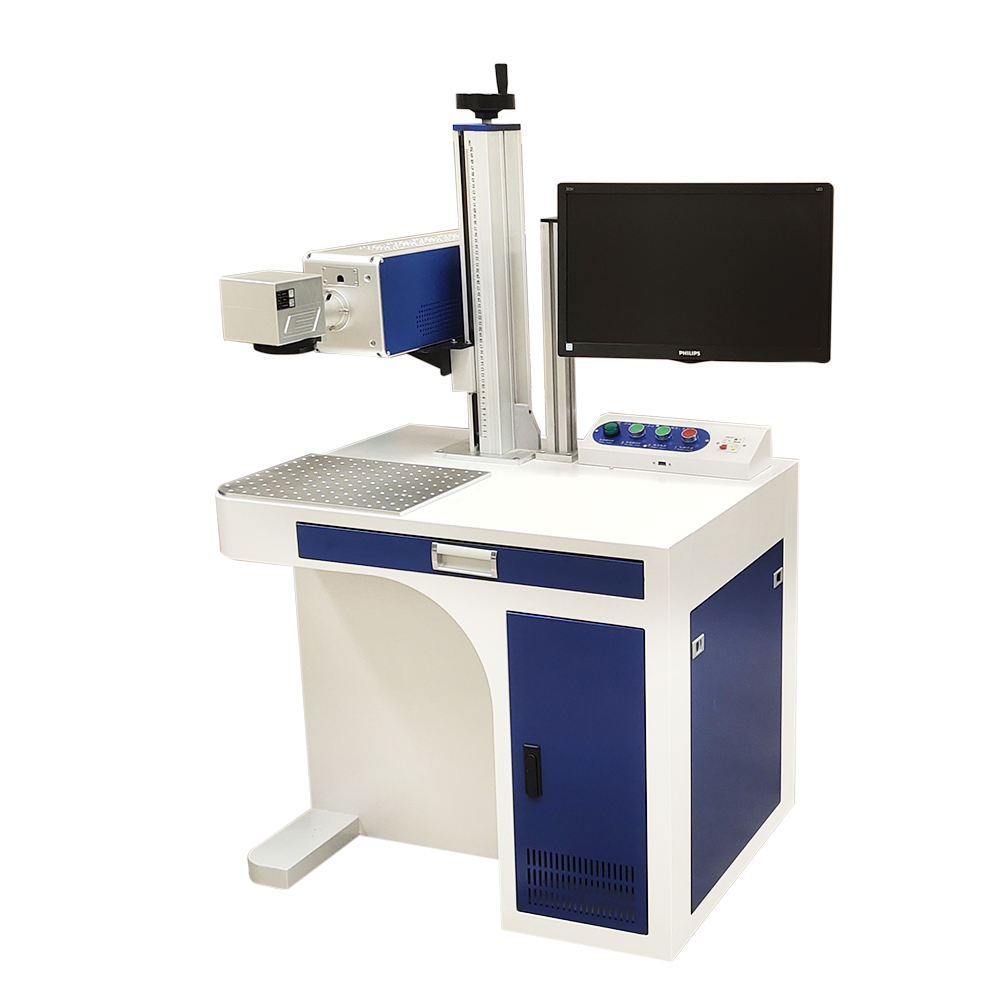
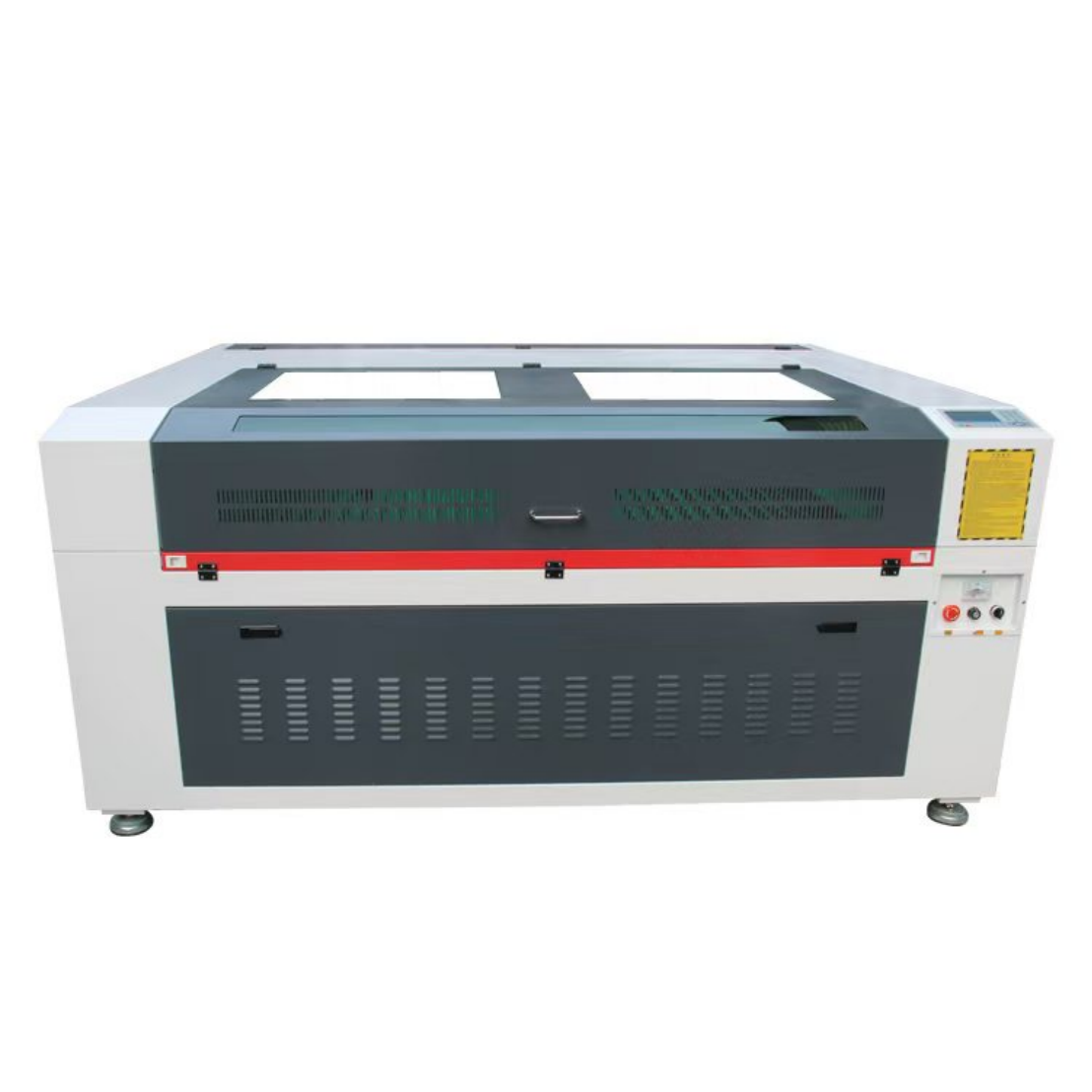
Cabinet-type CO2 laser marking machine
What Materials Can CO2 Laser Mark
CO2 laser marking machines are primarily used for non-metal materials. Due to the wavelength characteristics, they achieve excellent results on materials that do not respond well to fiber lasers.
Common applicable materials include:
Wood and bamboo
Acrylic and plastics
Leather and fabric
Paper, cardboard, and packaging materials
Glass and coated ceramics
Rubber and composite materials
For metal marking, a different laser type such as fiber laser is required.
Why Choose CO2 Laser Marking
CO2 laser marking offers several advantages in non-metal processing environments.
First, it provides excellent marking contrast on organic materials, especially wood, leather, and paper-based products. The marking result is clear and visually appealing, making it suitable for branding and decorative applications.
Second, it supports high-speed marking, particularly in packaging and production lines where efficiency is critical.
Third, it is a non-contact process, meaning there is no mechanical stress or tool wear, which ensures consistent quality over long-term operation.
Finally, CO2 systems are highly adaptable and can be integrated into manual workstations or fully automated production lines.
Types of CO2 Laser Marking Machines
Different production environments require different machine structures. Based on application scenarios, CO2 laser marking machines can be divided into the following types.
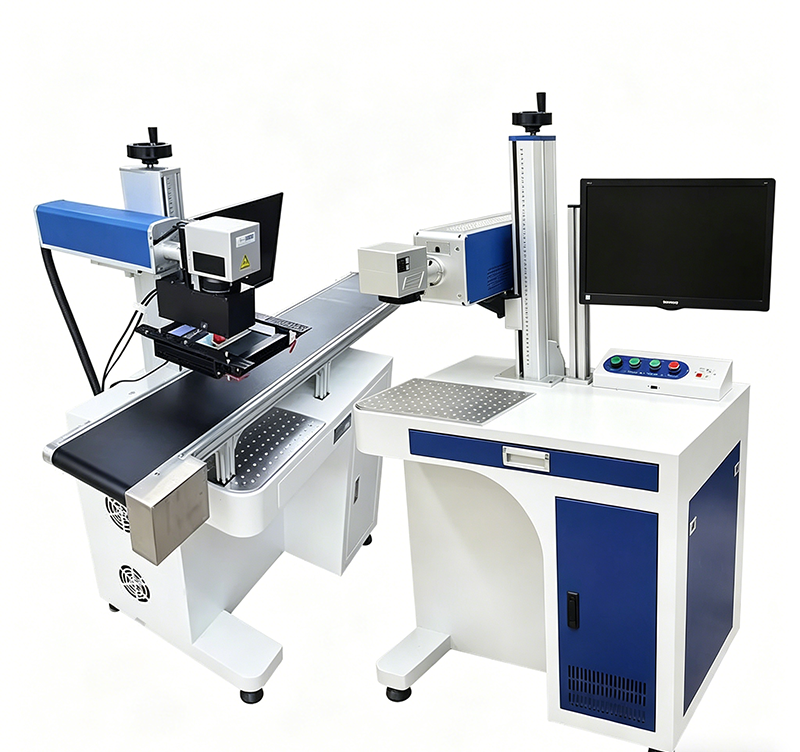
Desktop CO2 Laser Marking Machine
Designed for small-scale production and limited workspace environments.
This type features a compact structure and is easy to install and move. It is suitable for workshops, small factories, and customization businesses.
Typical applications include handicrafts, personalized products, and small batch engraving.
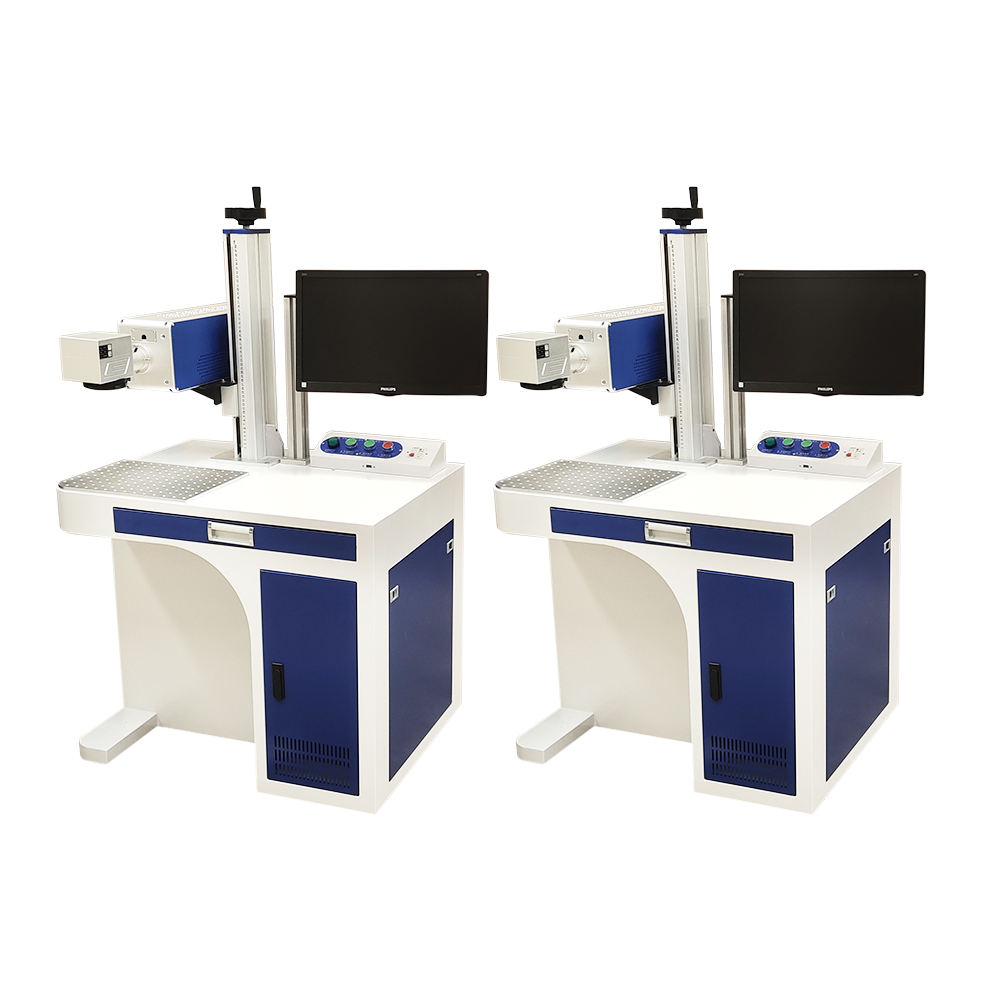
CO2 Laser Marking Machine
Cabinet CO2 Laser Marking Machine
Designed for larger workpieces and more stable operation requirements.
The cabinet structure provides better mechanical stability and supports larger marking areas. It is suitable for industrial environments where precision and consistency are required.
This type is commonly used for larger panels, boards, and medium-scale production.
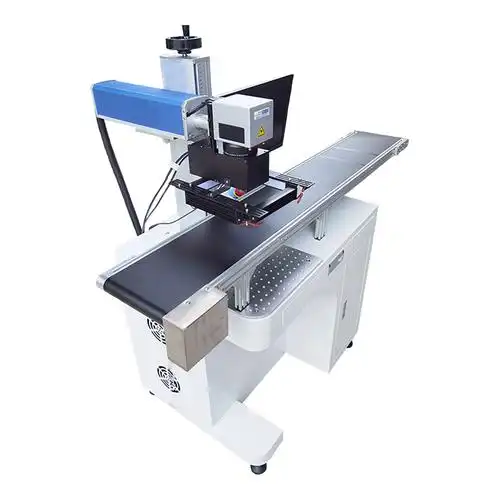
Flying CO2 Laser Marking Machine
Designed for high-speed production lines.
This system is integrated with a conveyor and marking is performed while the product is moving. It is widely used in packaging industries such as food, beverage, cosmetics, and pharmaceuticals.
It supports continuous marking such as dates, batch numbers, and QR codes without stopping the production line.
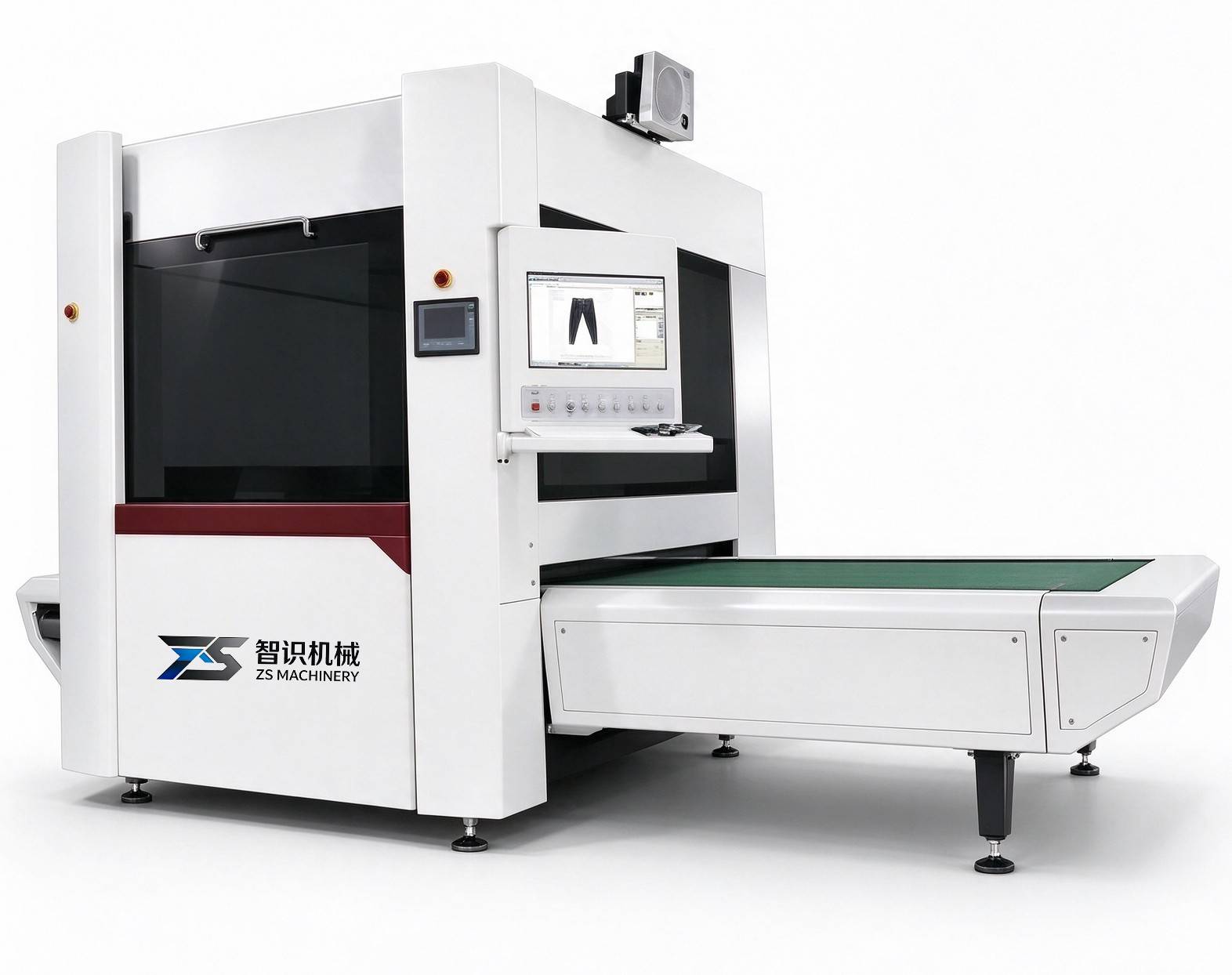
Vision CO2 Laser Marking Machine
Designed for automated positioning and high-precision marking.
This system uses a camera to detect the position and orientation of products, allowing marking without the need for fixtures. Even if products are placed randomly or at different angles, the system can automatically identify and mark them accurately.
It is suitable for complex products and automated production environments.
Other Configurations and Custom Solutions
In addition to standard machine types, CO2 laser marking systems can be configured in various specialized forms to meet different industrial requirements.
Enclosed CO2 Laser Marking Machine
Designed with a fully enclosed structure for enhanced safety and environmental protection. It is suitable for factories with strict safety standards or where operator protection is a priority.
Large Format CO2 Laser Marking Machine
Equipped with an extended working area for processing oversized materials such as large boards, panels, or sheets. It is commonly used in advertising, decoration, and industrial panel marking.
Vision + Flying Integrated System
Combines visual positioning with continuous flying marking. This solution allows automatic correction of product position while maintaining high-speed production, making it suitable for semi-structured production lines.
Fully Customized Solutions
For unique production requirements, machines can be customized in terms of marking area, conveyor design, automation level, and integration with existing production lines.
Custom solutions are typically developed based on specific materials, product shapes, and throughput requirements.
Comparison of CO2 Laser Marking Machine Types
| Type | Best For | Speed | Accuracy | Automation Level |
| Desktop | Small parts / workshops | Medium | High | Low |
| Cabinet | Large parts / stable work | Medium | High | Low |
| Flying | Packaging / production line | Very High | Medium | High |
| Vision | Complex positioning | Medium | Very High | High |
Typical Applications
CO2 laser marking machines are widely used across multiple industries.
In the packaging industry, they are used for coding and labeling on cartons, labels, and flexible packaging.
In the craft and gift industry, they are used for engraving wood, leather, and acrylic products.
In electronics and plastics, they are used for marking housings, buttons, and components.
In the textile industry, they are used for fabric engraving and cutting patterns.
Call to Action
Choosing the right CO2 laser marking solution is not only about the machine type, but also about how it fits into your production process.
We provide customized configurations based on your materials, production speed, and automation requirements.
Send us your product details or samples, and we will recommend the most suitable solution and provide free marking tests.
PREV: Vision CO2 Laser Marking Machine
NEXT: CO2 Laser Engraver