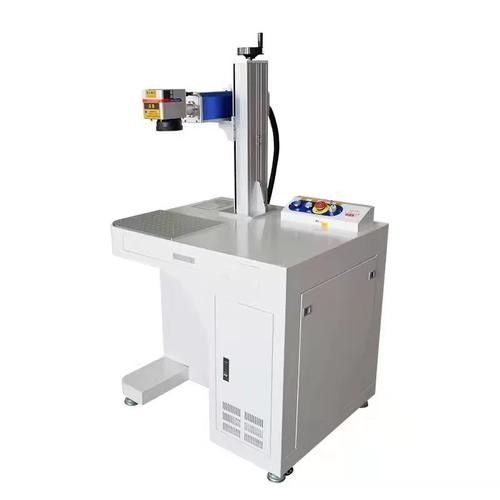
- Product Details
ZS Machinery’s 100W MOPA Fiber Laser is designed for demanding metal marking, engraving, and material-removal applications where standard 20W, 30W, or 50W fiber lasers may not provide enough processing capacity or production efficiency. With higher available laser power and the pulse flexibility of MOPA technology, a 100W system can be used for deep engraving, large-area engraving, high-volume production marking, and specialized processing of metals such as stainless steel, aluminum, brass, copper, titanium, and precious metals.
100W MOPA Fiber Laser Machine Overview
The 100W MOPA fiber laser combines a high-power fiber laser source with MOPA pulse control and a high-speed galvo scanning system.The basic processing principle is:Laser Generation → Beam Delivery → Galvo Scanning → Focused Laser Beam → Material Interaction
The laser beam is focused onto the workpiece surface. Depending on the material and processing parameters, the laser can create a visible surface mark or remove material from the surface to produce a recessed engraving.For deep engraving, the process is usually performed through multiple controlled passes.
The actual achievable depth and processing speed depend on the material, laser source, focus, scanning speed, hatch strategy, pulse settings, and number of passes.
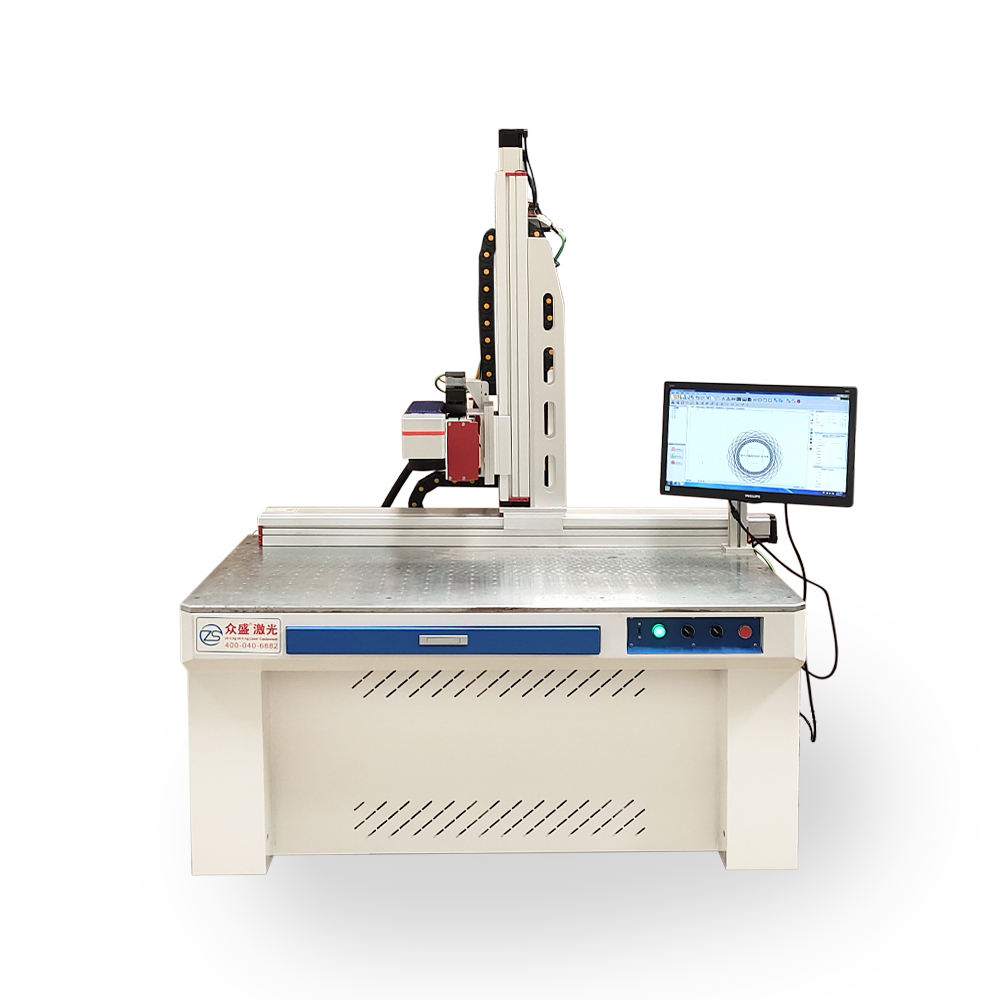
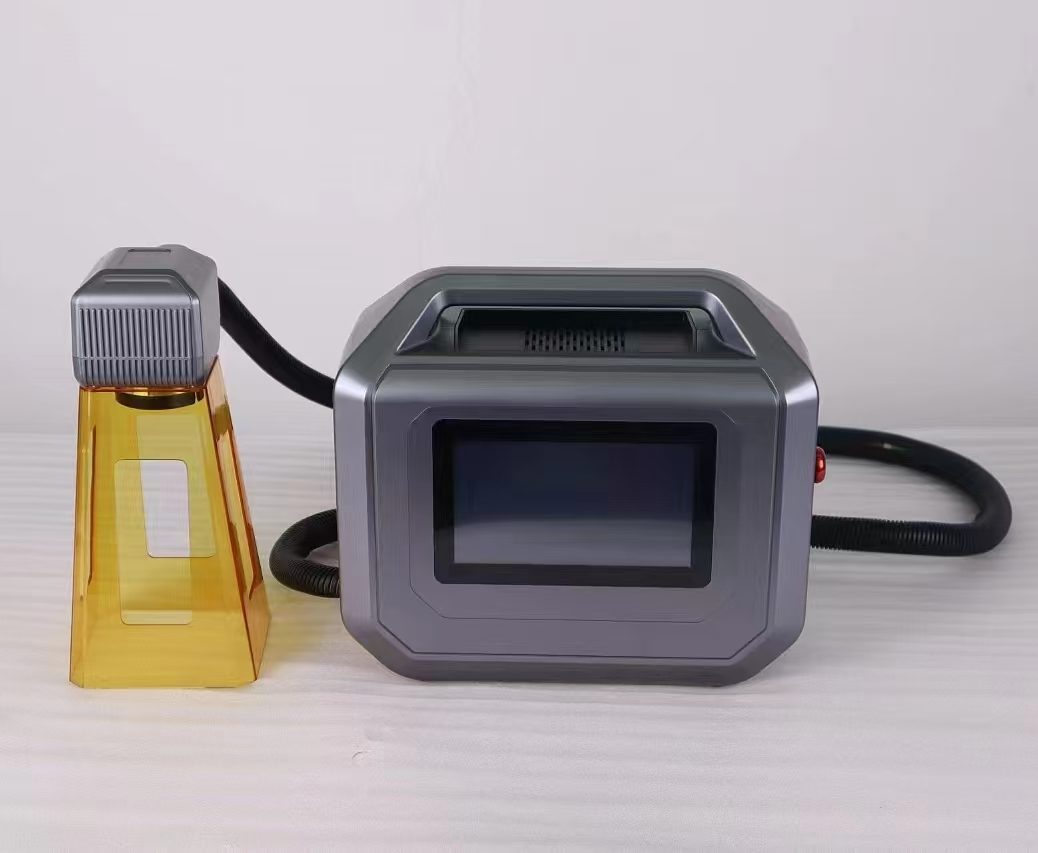
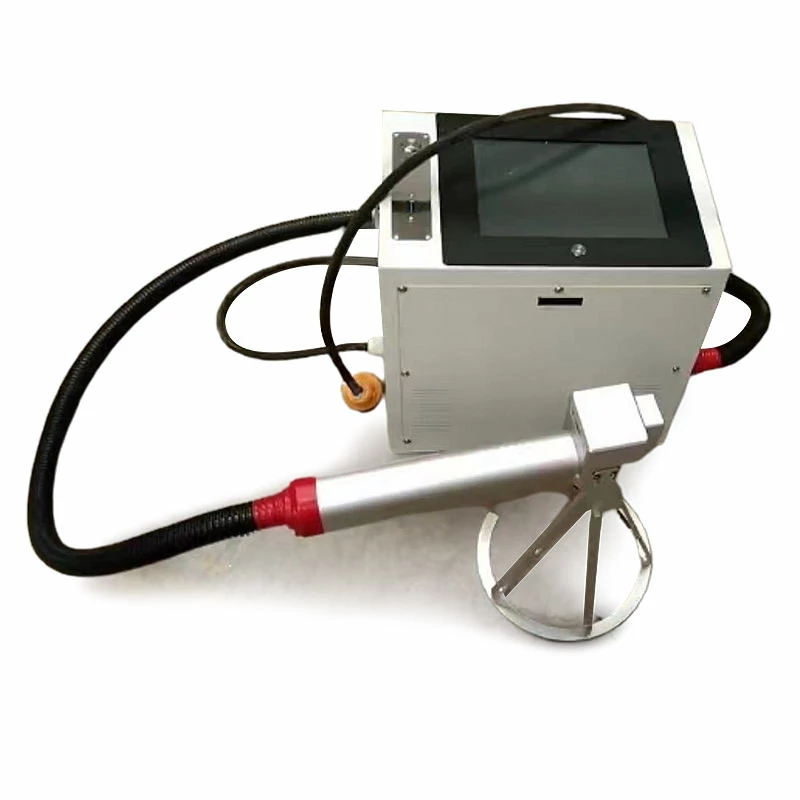
100W MOPA Fiber Laser Marking Mahcine
Why Choose a 100W MOPA Fiber Laser?
Higher Material Removal Efficiency
When a customer needs to remove material from stainless steel or other metals, the laser must deliver sufficient energy to the workpiece.A higher-power laser can provide greater processing capacity, which can reduce the time required for material removal in suitable applications.
Fewer Passes for Some Deep Engraving Applications
Deep engraving commonly requires multiple passes.For example:
50W:Pass → Pass → Pass → Pass → Pass
100W:Higher processing capacity may allow the required depth to be achieved with fewer or more efficient passes.This does not mean that a 100W machine will always be twice as fast as a 50W machine. Actual productivity depends on the material and the complete processing strategy.
Better Productivity for High-Volume Production
For a factory processing hundreds or thousands of parts per day, processing time becomes an important production cost.A small difference in cycle time can become significant when multiplied across a large production volume.This is where a 100W system can make more economic sense than a lower-power machine.
Thin Metal Cutting Capability
Another advantage of the 100W configuration is that it can also be used for certain thin-metal cutting applications when the material thickness and geometry are suitable.This makes it possible to use one machine for:
Marking + Deep Engraving + Thin Metal Cutting
Potential applications include:
- Thin stainless steel tags
- Metal shims
- Thin aluminum sheets
- Small metal plates
- Thin metal components
- Small decorative metal parts
For example, a manufacturer producing small stainless steel tags may be able to cut the tag outline and then mark the logo, serial number, or QR code using the same laser system.
However, a 100W MOPA laser should not be confused with a dedicated industrial fiber laser cutting machine. It is intended for small-format thin-metal cutting, rather than thick-sheet or large-format metal cutting.The actual cutting capability depends on the material, thickness, laser source, focus, pulse settings, scanning strategy, and processing parameters. Sample testing is recommended before confirming a specific cutting application.
What Material Can a 100W MOPA Fiber Laser Process?
A 100W MOPA fiber laser can be used for a wide range of metal applications.
Stainless Steel
Common applications include:
- Deep engraving
- Serial numbers
- Logos
- Industrial identification
- Decorative engraving(Because MOPA can achieve color printing on stainless steel.)
- Machine components
Stainless steel is one of the most common materials for industrial laser marking.
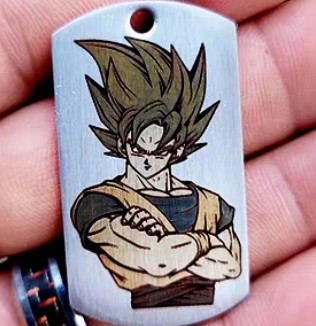
100W MOPA Fiber Laser Color Marking Stainless Steel
Aluminum
100W MOPA systems can process aluminum components and can also be used for various anodized aluminum applications.Because aluminum is a highly reflective material, its laser absorption is not as good as that of stainless steel. A high-power MOPA can effectively address this issue.
Typical applications include:
- Nameplates
- Equipment labels
- Electronic components
- Industrial identification
For anodized aluminum, the objective may be to remove or modify the anodized layer rather than deeply engrave the underlying aluminum.
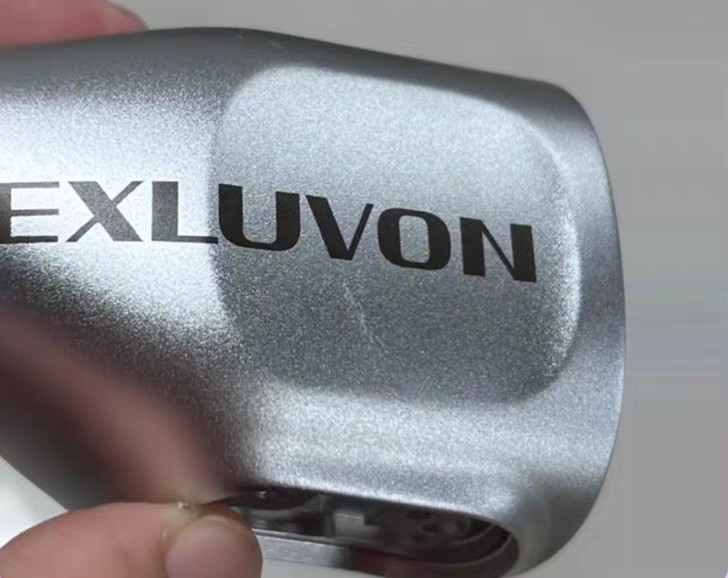
100W MOPA fiber laser alumina blackening
Brass And Copper
Brass and copper present a different processing challenge because of its high reflectivity and thermal conductivity.A suitable laser configuration and carefully optimized parameters are particularly important.For customers processing these components, sample testing should be performed before finalizing the machine configuration.
Titanium
Titanium is used in:
- Medical components
- Aerospace parts
- Industrial components
- Jewelry
MOPA fiber lasers can provide flexible processing options for titanium marking and engraving.
Silver and Other Precious Metals
Precious metals such as silver can also be processed with fiber laser systems.Applications may include:
- Jewelry marking
- Ring engraving
- Bracelet engraving
- Logo engraving
- Decorative patterns
However, high laser power does not automatically mean better jewelry marking.For extremely fine jewelry details, the appropriate lens, focus, pulse parameters, and scanning strategy remain important.
100W MOPA Fiber Laser for Deep Engraving
One of the strongest applications for a 100W MOPA fiber laser is deep engraving.Unlike simple surface marking, deep engraving requires actual material removal.A typical process is:Focus → Scan → Remove Material → Re-focus/Continue → Repeat.A 100W MOPA laser, due to its sufficient power, can reduce the number of repeated processing steps, achieving a deeper engraving effect with fewer processing operations.
Multiple passes progressively create a recessed structure.The final depth depends on:
- Material
- Laser power
- Pulse characteristics
- Scanning speed
- Hatch spacing
- Number of passes
- Focus position
- Graphic size
- Heat accumulation
Therefore, there is no universal statement such as “100W can engrave X mm of every metal.”The correct approach is to test the actual material and required depth.
100W MOPA Fiber Laser Application Case 1: 925 Silver Ring
Jewelry is an excellent example of where the application requirements determine the machine configuration.ZS Machinery used to meet a customer needs to engrave a 925 sterling silver ring with a decorative pattern rather than simply adding a name or date.The requirement include:
- Curved surface
- Fine graphic
- Physical engraving depth
- Consistent appearance
- Repeated production
For this type of application, we supplied him a configuration:
| Parameter | Example |
|---|---|
| Material | 925 Sterling Silver |
| Laser | 100W MOPA Fiber Laser |
| Application | Deep engraving |
| Rotary | 80 mm rotary axis |
| Lens | Selected according to ring size |
| Processing | Multiple passes |
| Marking Content | Text / Logo / Decorative Pattern |
The 80 mm rotary axis allows the ring to rotate during processing.Instead of treating the ring as a flat surface, the rotary system coordinates the rotation of the workpiece with the laser’s scanning movement.
The basic process becomes:
Place Ring → Fix Ring → Rotary Calibration → Focus → Laser Engraving
Why 100W?
If you only want to engrave a small name inside a ring, 20W or 30W may already be enough.But our customer’s requirement is:
Deep Decorative Engraving + Higher Production Efficiency
a 100W MOPA configuration becomes much more attractive.This is an important distinction.The reason to choose 100W is not simply that it can “mark silver.”It is because the production requirement involves more material removal and higher processing efficiency.
100W MOPA Fiber Laser Application Case 2: Stainless Steel Deep Engraving
We also supplied goods to a customer in the UAE whose requirements were:
Stainless steel
Deep engraving
Need color marking
Wear-resistant identification
Multiple production pieces
High consistency
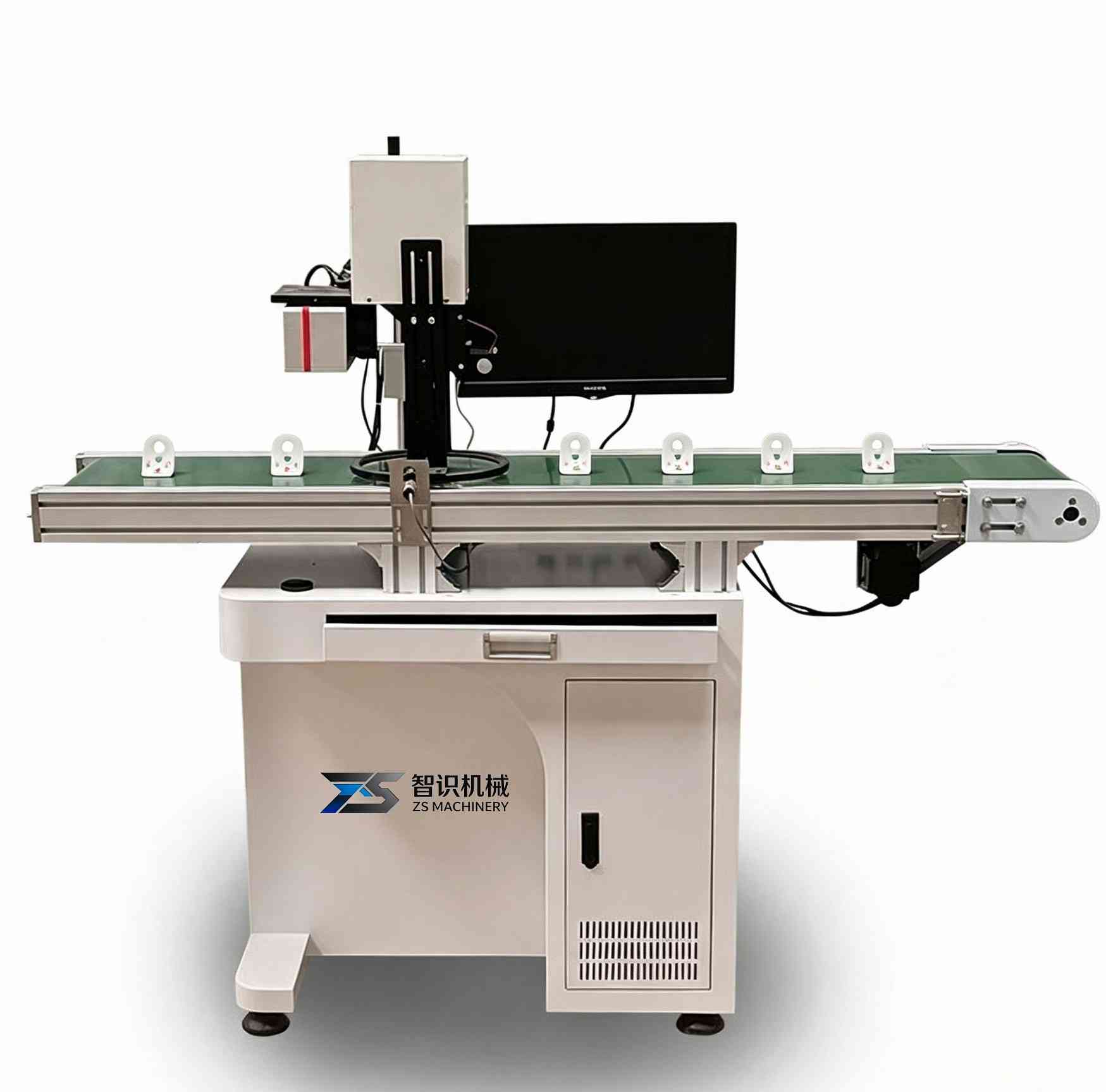
For this client, we also configured a 100W MOPA marking system for them because they needed to mass-produce a type of metal card and frequently required color marking. We recommended a 100W MOPA fiber laser marking machine equipped with a vision conveyor system, which, after testing, perfectly met their needs.
100W MOPA Fiber Laser Application Case 3: Large-Area Metal Engraving
Not every 100W application involves deep engraving.Large-area engraving can also benefit from higher laser power.For example, an industrial manufacturer may need to process a large stainless steel plate containing:
- Large logo
- Text
- Technical information
- Serial number
- Decorative graphics
A large filled area requires significantly more material processing than a small serial number.A 100W system can provide greater processing capacity for this type of application.The lens selection is also important.
For example:
110 × 110 mm
Suitable for:
- Small components
- Fine engraving
- Small jewelry
- High-resolution work
175 × 175 mm / 200 × 200 mm
A good compromise between working area and detail for many applications.
300 × 300 mm
More suitable for:
- Larger plates
- Larger components
- Large-area marking
However, a larger field is not automatically better.As the marking field increases, optical characteristics and spot size also need to be considered.The lens should therefore be selected according to the actual workpiece size and required detail.
100W MOPA Fiber Laser Application Case 4: High-Volume Serial Number Marking
A very different application is high-volume industrial marking.Suppose a manufacturer processes:1,000–5,000 metal components per day.Each component requires:
- Serial number
- QR code
- Data Matrix
- Logo
In this situation, deep engraving may not even be necessary.The main requirement is:High throughput and reliable repeatability.The 100W laser can provide greater processing capacity, while the galvo scanning system allows rapid movement across the marking area.The machine can also be connected to automated material handling or variable-data systems.
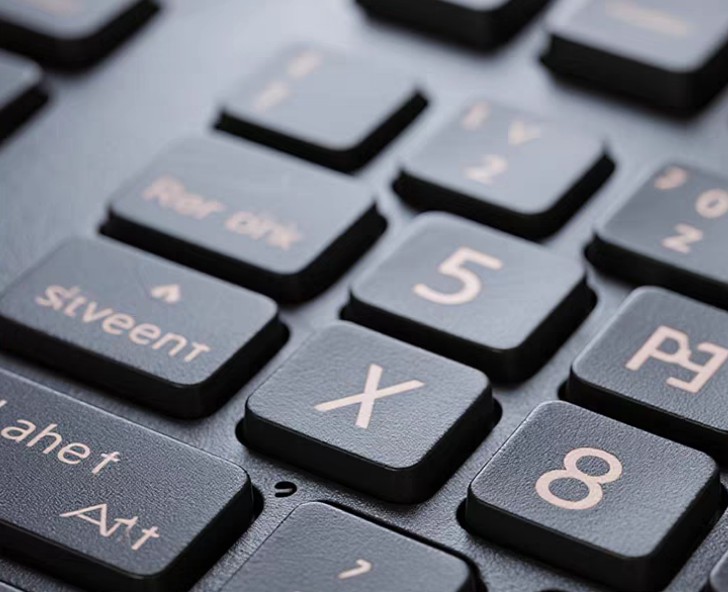
100W MOPA fiber laser for removing electroplating coatings and paint peeling
100W MOPA Fiber Laser vs. 50W MOPA
A common question is whether a customer should buy 50W or 100W.The answer depends on the application.
| Application | 50W MOPA | 100W MOPA |
|---|---|---|
| Standard text marking | ✓ | ✓ |
| Serial numbers | ✓ | ✓ |
| QR codes | ✓ | ✓ |
| Logos | ✓ | ✓ |
| Fine marking | ✓ | ✓ |
| Deep engraving | ✓ | ✓✓ |
| Large-area engraving | ✓ | ✓✓ |
| High-volume production | ✓ | ✓✓ |
| Material removal efficiency | Good | Higher |
| Initial investment | Lower | Higher |
A 50W machine is already capable of handling a large number of industrial marking applications.Moving to 100W makes more sense when the customer has a clear requirement for:
- Deeper engraving
- Faster material removal
- Larger engraved areas
- Higher production throughput
- More demanding production schedules
There is little reason to purchase 100W simply to mark a small serial number if a 20W or 30W system can already complete the job efficiently.
Customized Automation from ZS Machinery
At ZS Machinery, our approach is not simply to sell a 100W laser and ask the customer to manually operate it.For suitable production applications, we can develop customized laser systems around the customer’s actual workflow.For example:
Raw Parts
↓
Automatic Feeding
↓
Automatic Positioning
↓
100W MOPA Laser Marking
↓
Inspection
↓
Automatic Unloading
↓
Next Part
The operator may only need to load the raw products into the designated position.The system can then automatically perform the subsequent operations.For high-volume manufacturing, this can reduce repetitive manual handling and make laser marking part of the production process rather than a separate manual operation.
Is a 100W MOPA Fiber Laser Right for You?
A 100W MOPA fiber laser is generally worth considering when your application involves high production volume, deep engraving, significant material removal, large engraved areas, or demanding industrial processing.It may be unnecessary if your primary requirements are only:
- Simple text
- Small logos
- Occasional marking
- Basic serial numbers
- Low production volume
In those cases, a 20W, 30W, or 50W machine may provide a better balance between investment and capability.The goal should not be to purchase the most powerful machine.The goal is to purchase the right machine for the production process.
Why Choose ZS Machinery for a 100W MOPA Fiber Laser?
At ZS Machinery, we have more than ten years of experience in laser equipment and application projects.Our recommendation starts with the application rather than the machine specification.We look at:
- Material
- Product dimensions
- Required marking result
- Engraving depth
- Production volume
- Cycle time
- Lens requirements
- Rotary processing
- Variable data
- Automation requirements
For a standard application, a conventional 100W MOPA laser marking machine may be sufficient.
For a high-volume application, we can also evaluate customized solutions involving:
Automatic Feeding
Automatic Positioning
Laser Marking
Inspection
Automatic Unloading
For cylindrical or ring-shaped products, rotary systems can also be incorporated into the machine configuration.
Our objective is not simply to increase laser power, but to make sure that the laser source, optical system, workholding, software, and production workflow work together as one solution.
Frequently Asked Questions
What is a 100W MOPA fiber laser used for?
It can be used for industrial metal marking, deep engraving, large-area engraving, high-volume production marking, and specialized processing of materials such as stainless steel, aluminum, brass, titanium, and certain precious metals.
Is 100W better than 50W?
Not necessarily. A 100W machine provides greater processing capacity, but 50W may already be sufficient for many standard marking applications.
Can a 100W MOPA laser engrave stainless steel deeply?
Yes, it can be configured for deep engraving. The actual depth depends on the material, laser parameters, focus, hatch strategy, number of passes, and required processing quality.
Can it engrave silver jewelry?
Yes. A 100W MOPA fiber laser can be used for suitable silver jewelry applications, including deeper decorative engraving. For rings and other curved products, a rotary axis can be added.
What rotary axis should I use for rings?
An 80 mm rotary axis can be suitable for many ring applications, but the final rotary configuration should be selected according to the ring’s diameter, geometry, and clamping requirements.
Do I need 100W for QR codes?
Not necessarily. QR codes can often be marked effectively with lower-power fiber lasers. The reason to choose 100W would generally be related to production efficiency, material processing requirements, or other demanding applications.
Can the machine be automated?
Yes. Depending on the product and production volume, the system can be customized with automatic feeding, picking, positioning, marking, inspection, and unloading.
Final Thoughts
A 100W MOPA Fiber Laser is best understood as a high-capacity industrial processing system rather than simply a more powerful version of a standard laser marker.Its greatest advantages become apparent when the application requires deep engraving, high material removal efficiency, large-area processing, or high production throughput. It can process a wide range of metals, including stainless steel, aluminum, brass, titanium, and selected precious-metal applications.
At ZS Machinery, our approach is to select the laser according to the actual production requirement. With more than ten years of project experience, we can also develop customized systems for customers who need more than a standard marking machine.From a standalone 100W MOPA fiber laser to a customized automated system with feeding, positioning, laser marking, inspection, and unloading, the machine can be configured around the customer’s actual production process.
If you have a specific metal product, engraving depth, production quantity, or automation requirement, sample testing is the most reliable way to determine whether 100W is the right configuration for your application.