Colour Laser Etching: How MOPA Laser Creates Permanent Color Marks on Metal
As manufacturers continue to pursue higher-quality product identification and premium branding, colour laser etching has become one of the most attractive laser processing technologies in recent years. Unlike traditional black laser marking or deep engraving, colour laser etching allows manufacturers to create permanent blue, gold, purple, green, and other metallic colors directly on the surface of certain metals—without using ink, paint, or coatings.
From titanium water bottles and stainless steel tumblers to luxury watches, medical instruments, and premium consumer products, colored laser marking offers an elegant appearance while maintaining excellent durability.
However, many people misunderstand how colour laser etching actually works. Some believe the laser “prints” colors onto the surface, while others assume every metal can produce colorful effects. Neither is true.
In this guide, we’ll explain how colour laser etching works, which materials are suitable, why MOPA fiber lasers have become the industry standard, and when UV printing may actually be the better solution.
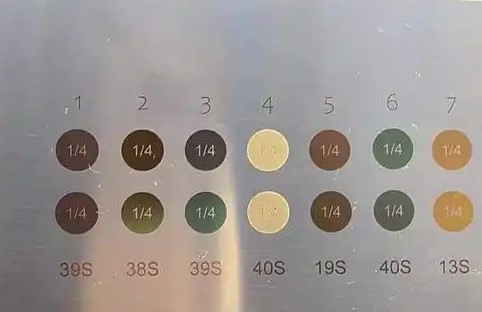
Colour Laser etching On Stainless Steel
What Is Colour Laser Etching?
Colour laser etching is a laser processing technique that produces permanent colors on metal surfaces by precisely controlling the interaction between laser energy and the material.
Unlike conventional printing methods, the laser does not apply pigments, dyes, or ink onto the product. Instead, it modifies the microscopic oxide layer naturally formed on the metal surface. By carefully controlling the thickness of this oxide layer, the surface reflects different wavelengths of visible light, producing various colors.
The resulting color becomes part of the material itself rather than an additional coating.
This means color laser etching offers several important advantages:
- No ink or paint
- No consumables
- Permanent markings
- Excellent wear resistance
- High precision
- Ideal for automated production
Because the color is created through physical changes in the metal surface, it is significantly more durable than painted or printed graphics.
How Does Colour Laser Etching Work?
The principle behind colour laser etching is based on laser-controlled oxidation.
When a laser beam scans across a metal surface, it generates highly localized heat within an extremely short period. By precisely controlling laser parameters such as pulse width, frequency, speed, and energy, the laser forms an oxide layer with a specific thickness.
Different oxide thicknesses reflect different wavelengths of light.As a result, our eyes perceive different colors.Depending on the processing parameters, the same metal surface may display:
- Gold
- Blue
- Purple
- Green
- Bronze
- Brown
- Black
Unlike traditional engraving, the laser usually removes very little material during this process. Instead, it modifies only the surface structure, making colour laser etching particularly suitable for high-value products where appearance is critical.
Which Materials Can Produce Colour Laser Etching?
One of the biggest misconceptions is that any metal can produce colorful laser markings.
In reality, only certain materials respond well to this process.
| Material | Colour Laser Performance |
|---|---|
| Titanium | Excellent ★★★★★ |
| 304 Stainless Steel | Excellent ★★★★☆ |
| 316L Stainless Steel | Excellent ★★★★☆ |
| Anodized Aluminum | Moderate ★★★☆☆ |
| Copper | Limited ★★☆☆☆ |
| Brass | Limited ★★☆☆☆ |
| Gold | Not Recommended |
| Silver | Not Recommended |
Among all materials, titanium delivers the richest and most stable color effects because it forms an extremely uniform oxide layer.
High-quality stainless steel is another popular choice for color laser marking, especially for premium kitchenware, medical instruments, consumer electronics, and decorative products.
Although gold and silver can certainly be laser marked, they generally cannot produce stable multi-color effects using oxidation technology. Most applications on precious metals focus on black marking, engraving, or high-contrast logos instead.
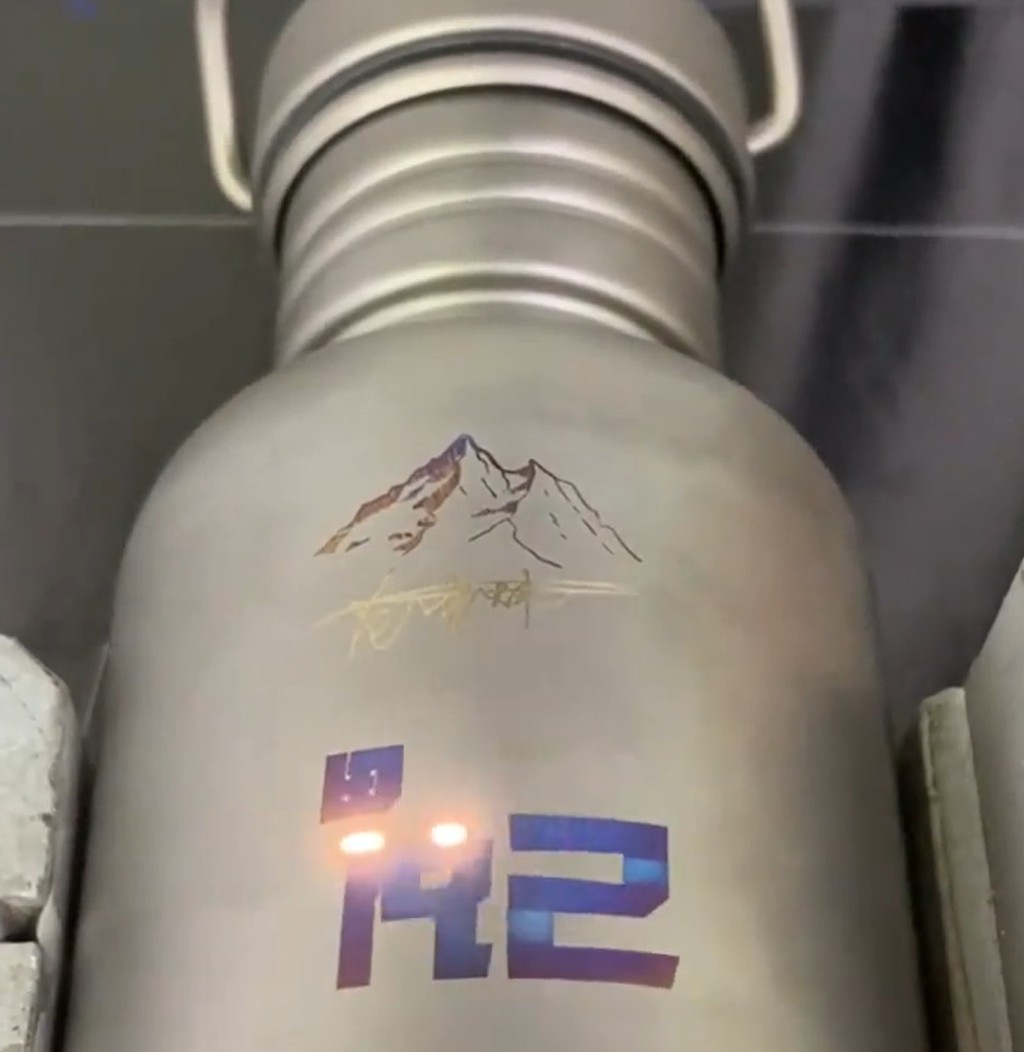
Laser marking of titanium alloy cups
Why MOPA Fiber Laser Is the Best Choice
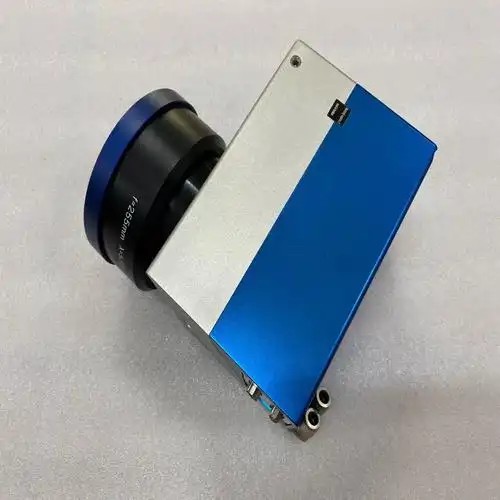
Although several types of laser systems exist, MOPA fiber laser marking machines have become the preferred solution for colour laser etching.
The key advantage of a MOPA laser lies in its adjustable pulse width.
Unlike standard fiber lasers, which operate within a relatively fixed pulse range, MOPA lasers allow users to precisely control:
Pulse width
Pulse frequency
Peak power
Energy distribution
This greater flexibility allows the laser to generate more stable oxide layers while minimizing unwanted heat accumulation.
The result is:
More vivid colors
Better color consistency
Cleaner edges
Reduced heat affected zone
Higher repeatability in mass production
For manufacturers producing premium products where appearance matters, MOPA technology provides a significant advantage.
Typical applications include:
- Titanium water bottles
- Stainless steel tumblers
- Medical instruments
- Premium cookware
- Luxury watches
- Knife logos
- Consumer electronics
- Personalized gifts
The Limitations of Colour Laser Etching
Although colour laser etching produces beautiful results, it is important to understand its limitations.
Color consistency depends on several factors, including:
- Material composition
- Surface finish
- Polishing quality
- Laser parameters
- Focus accuracy
- Ambient conditions
Even stainless steel from different suppliers may produce slightly different colors due to variations in alloy composition.
Mirror-polished surfaces generally provide more vivid colors than rough surfaces.
In addition, laser colors may appear slightly different under various lighting conditions or viewing angles because they are produced through optical interference.
For this reason, experienced parameter optimization is often more important than simply owning an expensive laser machine.
When UV Printing Is a Better Choice
Although colour laser etching is an excellent solution for permanent metal marking, it is not always the best option.
If your goal is to reproduce rich corporate colors, full-color logos, photographs, or highly saturated graphics, a UV printer is usually the better choice.
Unlike laser technology, UV printing applies colored UV-curable ink directly onto the product surface.
This allows manufacturers to reproduce:
- Full-color logos
- Brand color standards
- CMYK graphics
- Gradient effects
- Photo-quality images
- Multi-color artwork
For promotional products, advertising items, decorative gifts, and products where visual impact is more important than extreme durability, UV printing offers significantly greater color flexibility.
In simple terms:
If your priority is permanent, elegant metallic colors on metal surfaces, choose MOPA colour laser etching.
If your priority is bright, unlimited full-color graphics, choose a UV printer.
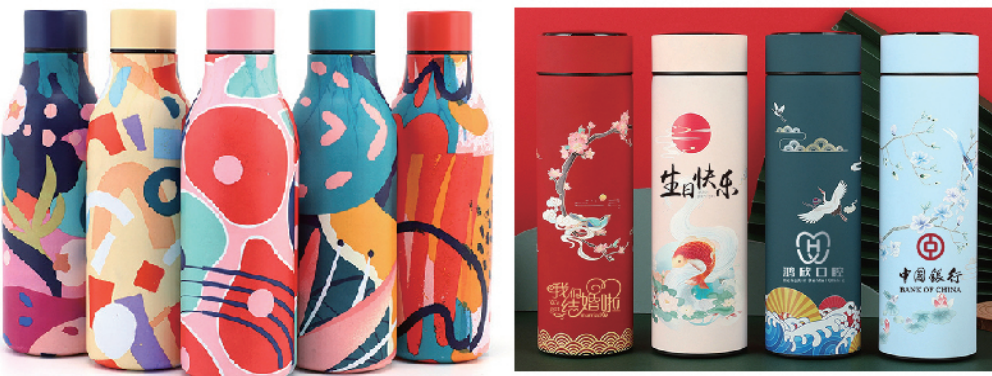
Cylindrical cup UV color printing sample
Colour Laser Etching vs UV Printing
| Feature | MOPA Colour Laser Etching | UV Printing |
|---|---|---|
| Permanent Marking | Excellent | Moderate |
| Full Color Capability | Limited | Excellent |
| Wear Resistance | Excellent | Moderate |
| Heat Resistance | Excellent | Moderate |
| Metal Appearance | Natural Metallic | Printed Surface |
| Consumables | None | UV Ink Required |
| Maintenance | Low | Moderate |
Neither technology replaces the other—they simply serve different manufacturing needs.
Our Experience: Successful Colour Laser Etching Depends More on Process Than Machine
Many customers assume that purchasing a MOPA laser automatically guarantees beautiful color results.In reality, the machine is only part of the equation.At ZS Machinery, we have found that stable color production depends on a combination of factors:
- Material quality
- Surface preparation
- Polishing consistency
- Laser parameter optimization
- Pulse width adjustment
- Frequency control
- Focus position
Even a small adjustment to one parameter can change the final color dramatically.
For example, increasing the marking speed slightly may shift a blue mark toward purple, while a different pulse width may produce bronze instead of gold.
This is why experienced process development is essential, especially for customers producing high-value products where consistency is critical.
Conclusion
Colour laser etching has become one of the most advanced surface marking technologies for premium metal products. By using controlled laser oxidation rather than inks or coatings, manufacturers can create elegant, permanent metallic colors that combine durability with a high-end appearance.
For titanium and stainless steel products, MOPA fiber laser marking machines provide the most reliable solution for producing stable color effects. Meanwhile, manufacturers seeking vibrant full-color graphics should consider UV printing, which offers greater flexibility for complex branding and decorative applications.
At ZS Machinery, we specialize in complete laser marking solutions for both metal and non-metal applications. Whether you need color laser marking for premium stainless steel products, titanium components, medical devices, or luxury consumer goods, our experienced engineering team can recommend the most suitable equipment and optimize processing parameters for your specific application.
Contact ZS Machinery today to learn more about our MOPA fiber laser marking systems, UV printing solutions, and professional sample testing services.
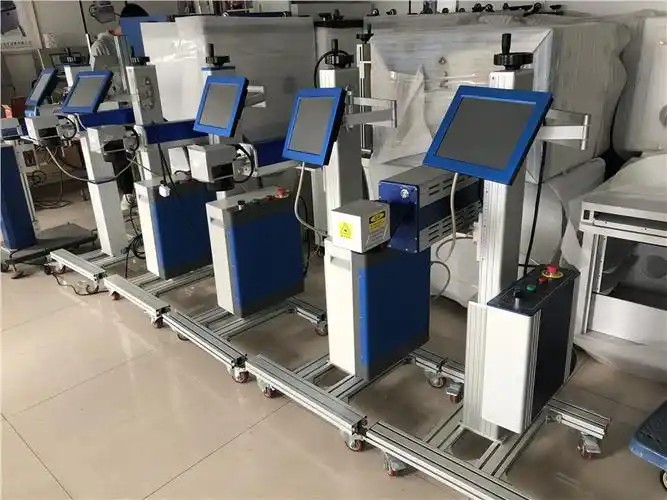
Industrial Laser Engraver for Automated Production Lines