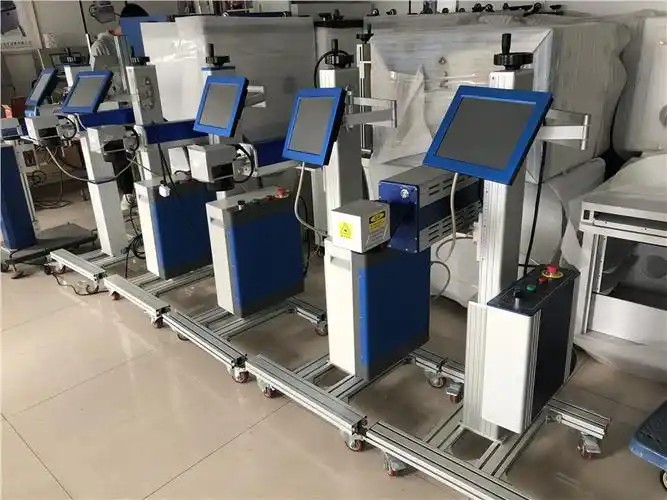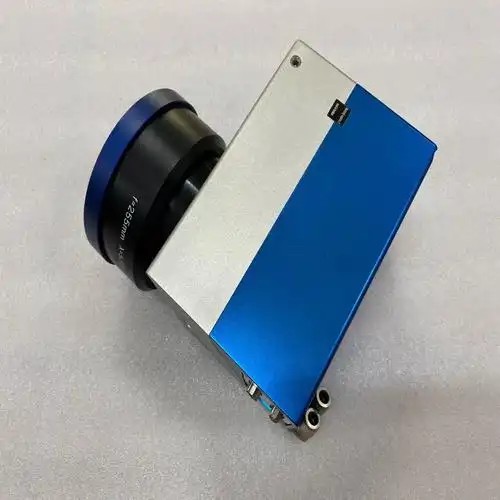
Is UV Laser Marking Really “Universal”? A Deeper Look at UV Laser Marking Technology
In many industrial discussions, UV Laser Marking is often called the “universal marking solution.” You’ll see this claim across multiple high-ranking resources—and it’s not entirely wrong. UV lasers can process an exceptionally wide range of materials with high precision and minimal damage.
But here’s the reality: “universal” is an oversimplification.
To truly understand UV laser marking, you need to look at both its strengths and its limitations.
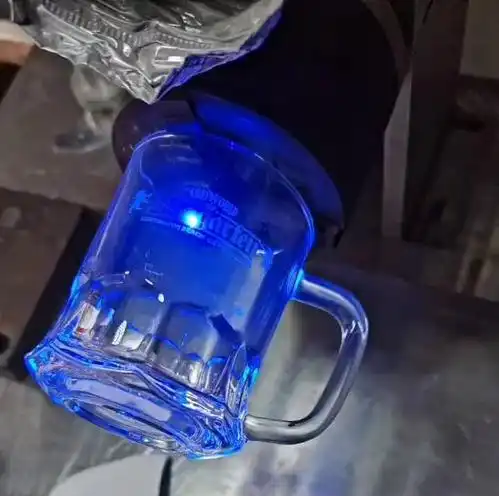
UV Laser Marking On Glass Cup
What Makes UV Laser Marking So Special?
At the core of UV laser marking is a short wavelength (typically 355 nm) laser beam. This wavelength carries higher photon energy compared to infrared or CO₂ lasers, allowing it to interact with materials in a fundamentally different way.
Instead of relying on heat, UV lasers use a photochemical process—often described as “cold processing.” This means the laser can directly break molecular bonds without significantly heating the surrounding material.
The result?
Extremely fine and clean markings
Minimal heat-affected zone (HAZ)
No burning, deformation, or discoloration
This is why UV laser marking has become a preferred solution in high-precision industries.
Why Is UV Laser Marking Called “Universal”?
The reputation comes from one key capability: material versatility.
1.Works on Almost All Materials
UV laser marking can process:
Plastics (ABS, PVC, PP, PE)
Acrylic
Glass and ceramics
Silicon and electronic components
Coated metals
Films and flexible materials,etc
Because UV light has higher absorption across many materials, it performs consistently even on surfaces that are difficult for other lasers.
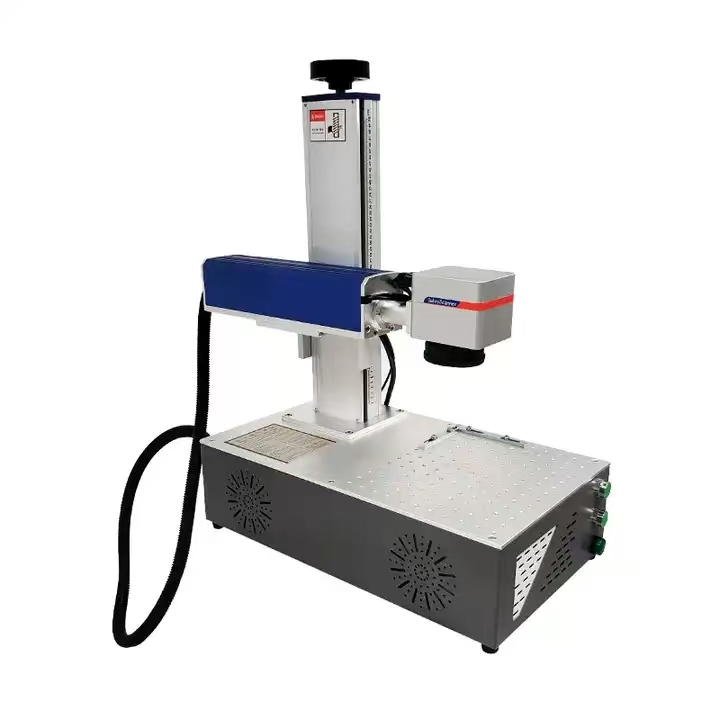
This broad compatibility is one of the biggest reasons it’s labeled “universal.”
2.Ideal for Heat-Sensitive Materials
Traditional lasers (like fiber or CO₂) rely on thermal energy, which can cause:
Burning
Warping
Material degradation
UV lasers avoid these issues entirely. Their cold processing capability ensures no thermal damage, making them ideal for delicate materials such as plastics, glass, and medical components.
3.Ultra-High Precision
The short wavelength allows UV lasers to focus into a very small spot size, enabling:
Micron-level marking
High-resolution QR codes
Micro text and fine patterns
This is why UV laser marking is widely used in electronics, semiconductors, and medical devices, where precision is critical.
4.High-Quality Visual Results
UV laser marking produces:
Sharp edges
High contrast
Clean surface finish
Unlike thermal marking, there’s no carbonization or burnt edges, which is especially important for consumer products and premium packaging.
The Truth: UV Laser Marking Is Not Fully “Universal”
Now let’s address the part that many marketing pages avoid.
1.Limited Power = Limited Depth
Most UV laser systems operate at relatively low power levels (commonly 3W–10W).
That means:
They are not suitable for deep engraving
Material removal capability is limited
Marking is typically surface-level
If your application requires depth, cutting, or heavy engraving, UV laser marking is not the right choice.
2.Not Ideal for Heavy Industrial Work
UV lasers are designed for precision, not brute force.
They are less efficient in applications such as:
Thick material engraving
Large-area marking
High-speed bulk processing
In these cases, fiber lasers or CO₂ lasers are more practical.
3.Higher Cost and Complexity
UV systems typically involve:
More complex laser generation (frequency conversion)
Cooling systems (often water cooling)
Higher initial investment
While the quality is superior, the cost-performance ratio depends heavily on your application.
So, When Is UV Laser Marking the Right Choice?
UV laser marking is the best solution when your priority is:
High precision
No thermal damage
Clean and aesthetic marking
Compatibility with sensitive materials
Typical applications include:
Electronics (PCB, chips, connectors)
Medical devices and packaging
Glass and optical components
Cosmetics and food packaging
Final Verdict: “Universal” — But With Boundaries
Calling UV Laser Marking “universal” isn’t entirely wrong—but it’s incomplete.
It is better described as:
The most versatile precision marking technology available today
It can handle almost any material—but not every application.
If your goal is fine detail, clean marking, and material safety, UV laser marking is unmatched.
If your goal is depth, speed, or heavy-duty processing, you’ll need another solution.
Conclusion
The real value of UV laser marking lies in understanding its positioning:
Not the most powerful
Not the fastest
But arguably the most precise and adaptable
And in modern manufacturing—where precision, traceability, and product quality matter more than ever—that’s exactly why UV laser marking continues to grow in importance.
If you are unsure which marking solution is best for your product, please feel free to contact us. ZS Machinery will recommend the most suitable solution based on your needs.
How to Choose a Laser Marking Machine in 2026