How to Achieve Deep Engraving on Steel with a Portable Laser Engraver?
Deep engraving on steel is often seen as a task that requires large, high-power industrial machines. However, with the right process strategy, a portable laser engraver can also achieve effective and stable deep engraving results on metal.
For many users looking for a laser engraver for steel, the key challenge is not whether the machine can engrave—but how to achieve sufficient depth, quality, and efficiency.
In this guide, we will explain the core technical principles behind deep engraving and show how to optimize a fiber-based portable laser engraver for steel applications.
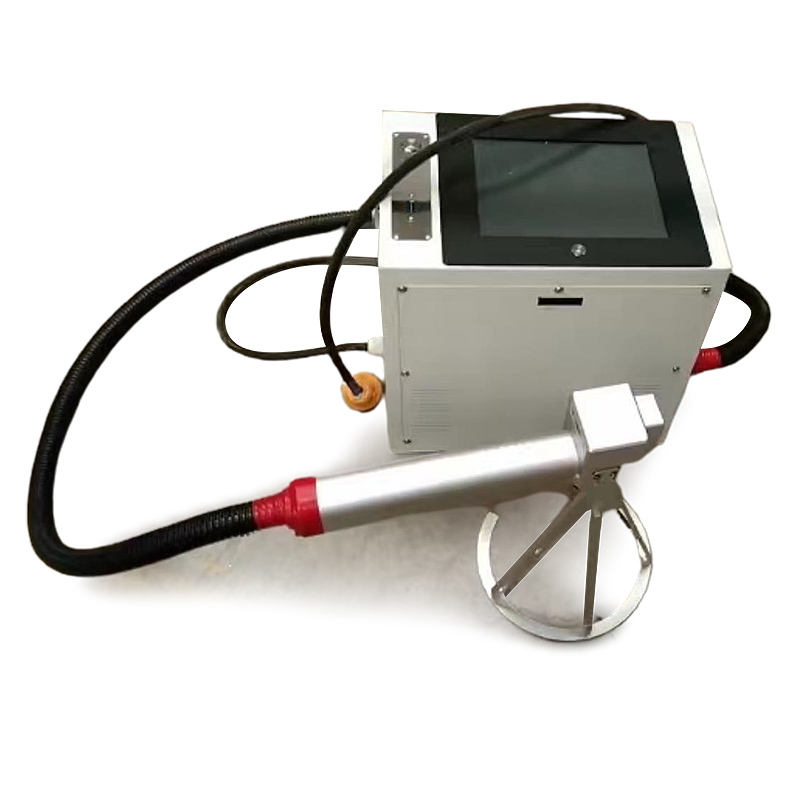
handheld portable fiber laser marking machine
1. Why Portable Laser Engravers Are Fiber Lasers
When discussing a portable laser engraver, it’s important to understand that portability is closely tied to laser type.
In practice, almost all portable systems are based on fiber laser technology, and this is not accidental.
Compact Structure and Easy Integration
Fiber lasers use a highly integrated design with fiber-optic beam delivery, eliminating complex optical paths. This allows the entire system to be compact and suitable for portable use.
Air Cooling Instead of Water Cooling
Other laser types have limitations:
- UV lasers typically require water chillers
- CO₂ lasers rely on large tubes and cooling systems
These make them difficult to miniaturize.
In contrast, fiber lasers are usually air-cooled, making them ideal for compact, portable machines.
Best Performance for Steel
A fiber laser (1064 nm wavelength) is highly absorbed by metal materials, especially steel.
This makes it the most suitable solution for a laser engraver for steel, particularly in portable applications.
2. How Laser Engraving Removes Material from Steel
To achieve deep engraving, it’s essential to understand the material interaction process.
When a fiber laser hits steel, it causes:
- Rapid energy absorption
- Localized melting
- Material vaporization (ablation)
Surface marking only modifies the top layer, but deep engraving requires continuous material removal, layer by layer.
👉 This means process control is more important than simply increasing power.

Automotive parts marking samples
3. Multiple Passes vs Single High Power
One of the most common mistakes in laser engraving for steel is relying on maximum power in a single pass.
Single High Power (Not Recommended)
Using high power in one pass often results in:
- Excessive heat input
- Surface oxidation or burning
- Poor edge definition
- Unstable engraving depth
👉 High power alone does not guarantee good results.
Multiple Pass Engraving (Recommended Method)
A portable laser engraver achieves better deep engraving through multiple controlled passes.
Each pass removes a thin layer of material, which provides:
- Better depth control
- Cleaner engraving edges
- Reduced thermal damage
- More consistent results
👉 This method is similar to precision machining rather than aggressive material removal.
4. Thermal Accumulation Effect
During repeated passes, heat does not fully dissipate between cycles. This creates a thermal accumulation effect.
Positive Effects
- Improves material removal efficiency
- Reduces required energy per pass
- Helps achieve deeper engraving faster
Negative Effects
- Excessive oxidation
- Surface discoloration
- Potential material deformation
Optimization Tips
To control thermal accumulation:
- Avoid maximum continuous power
- Use moderate scanning speeds
- Adjust frequency based on material response
- Introduce short pauses if necessary
👉 Proper heat control is essential for stable deep engraving.
5. Focus Adjustment: A Critical Factor
As engraving depth increases, the distance between the laser focus and the material surface changes.
If the focus is not adjusted:
- Energy density decreases
- Engraving efficiency drops
- Bottom surface quality deteriorates
Layer-by-Layer Focus Strategy
To maintain performance:
👉 Gradually adjust the focus downward as the engraving depth increases
This approach is similar to 3D laser marking, where the focal point follows the surface contour.
Practical Approach
- Perform several passes
- Slightly adjust focus position
- Repeat the process
👉 This significantly improves both depth and engraving quality.
6. Oxidation Layer: Control Is Key
During deep engraving, oxidation naturally occurs due to high temperatures.
Challenges
- Surface discoloration
- Irregular texture
- Reduced consistency
Potential Benefits
- Increased contrast
- Improved marking visibility
How to Manage Oxidation
- Optimize power and speed settings
- Avoid excessive heat buildup
- Use air assist if available
👉 The goal is controlled oxidation, not uncontrolled burning.
7. Recommended Parameter Strategy
Although parameters vary depending on the machine, a general guideline for a portable laser engraver for steel is:
- Power: Medium to high (avoid maximum output)
- Speed: Moderate
- Frequency: Adjust for material response
- Passes: Multiple (depending on depth requirement)
- Focus: Dynamically adjusted
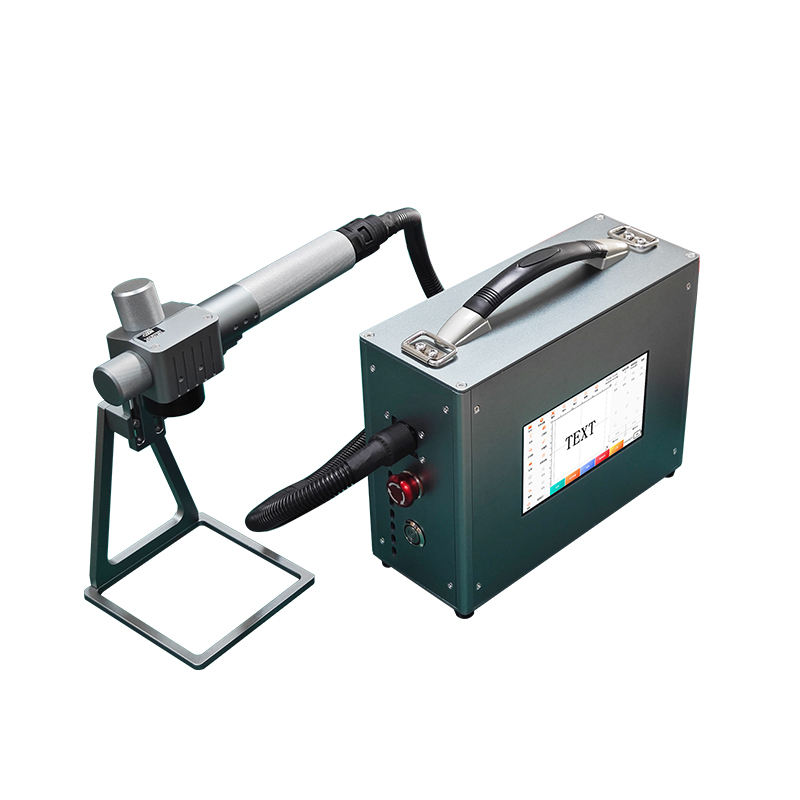
handheld portable fiber laser marking machine
8. Common Mistakes to Avoid
❌ Using maximum power in a single pass
❌ Ignoring focus adjustment
❌ Overheating the material
❌ Expecting deep engraving in one step
👉 Deep engraving is always a controlled, multi-step process
9. Can a Portable Laser Engraver Achieve Deep Engraving on Steel?
The answer is:
👉 Yes, with the right method
A fiber portable laser engraver, especially in the 50W–100W range, can:
- Perform functional deep engraving
- Create durable markings
- Handle most industrial marking needs
However, for:
- Large-area engraving
- Extremely deep material removal
A higher-power system may be more efficient.
Conclusion
Achieving deep engraving on steel with a portable laser engraver is not about using the highest power—it’s about mastering the process.
By combining:
- Multiple-pass engraving
- Thermal control
- Focus adjustment
- Oxidation management
you can significantly improve engraving performance on steel.
Get the Right Laser Engraving Solution
At ZS Machinery, we specialize in fiber laser systems for metal applications, including portable solutions for on-site marking and deep engraving.
Whether you need:
- A portable laser engraver for steel
- Parameter optimization support
- A higher-power solution for deeper engraving
We can help you choose the right configuration based on your material and application.
Contact us today to get a customized laser engraving solution.
CE Certification for Laser Machines: What Really Matters (Standards, Process & Key Documents)