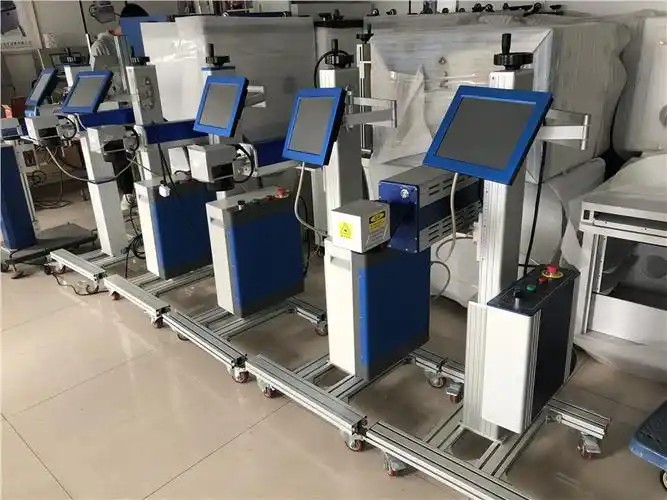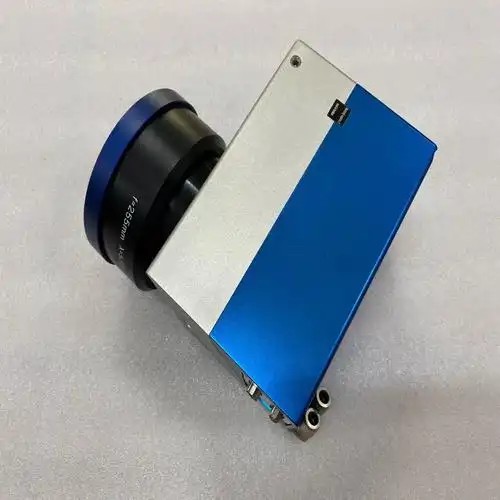
Fiber Laser vs CO₂ Laser vs UV Laser: Complete Guide to Principles, Wavelengths, and Applications
Laser technology has become one of the most important manufacturing tools in modern industry. However, many buyers are often confused when choosing between Fiber Lasers, CO₂ Lasers, and UV Lasers because these three laser types differ significantly in wavelength, laser generation principles, material compatibility, and application scenarios.
Understanding these differences can help you select the most suitable laser marking, engraving, cutting, or welding solution.
What Is a Laser?
LASER stands for Light Amplification by Stimulated Emission of Radiation.
A laser beam is generated when an active medium is excited and emits photons of a specific wavelength. These photons are amplified through an optical resonator to produce a highly concentrated beam of coherent light.
The type of active medium determines the laser wavelength and ultimately the materials the laser can process effectively.
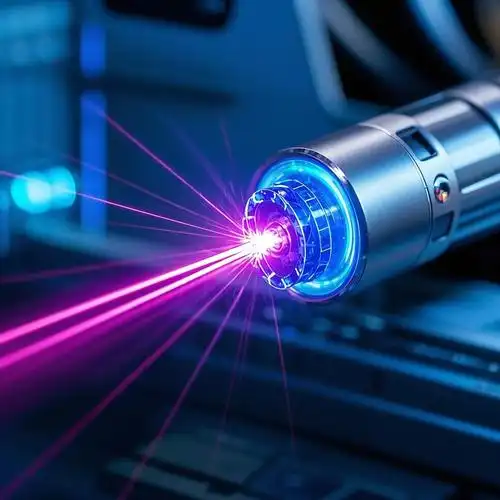
Industry laser
1. Fiber Laser
How Does a Fiber Laser Work?
A fiber laser uses a specially doped optical fiber as the gain medium.
The fiber core is typically doped with rare-earth elements such as:
- Ytterbium (Yb)
- Erbium (Er)
- Neodymium (Nd)
A semiconductor pump diode injects energy into the fiber. The excited rare-earth ions emit photons, which are amplified inside the optical fiber until a high-energy laser beam is produced.
Because the laser is generated entirely inside optical fiber, fiber lasers offer excellent beam quality and stability.
Fiber Laser Wavelength
Fiber laser wavelength:
1064 nm (1.064 μm)
This wavelength belongs to the near-infrared spectrum.
Fiber Laser Characteristics
High Electrical Efficiency
Typically:
- Fiber Laser: 30%–50%
- CO₂ Laser: 8%–15%
Lower power consumption means lower operating costs.
Excellent Beam Quality
Very small focal spot size:
- High precision
- High energy density
- Suitable for micro-marking
Long Lifetime
Laser source lifetime:
- 100,000+ hours
Minimal maintenance requirements.
Low Maintenance
No mirrors
No laser gas replacement
Only periodic lens cleaning is usually required.
Fiber Laser Applications
Fiber lasers are ideal for metals and some engineering plastics.
Metal Marking
- Stainless steel
- Aluminum
- Brass
- Copper
- Titanium
- Gold
- Silver
Common Products
- Nameplates
- Serial numbers
- QR codes
- Data Matrix codes
- Automotive parts
- Aerospace components
- Medical devices
- Tools and hardware
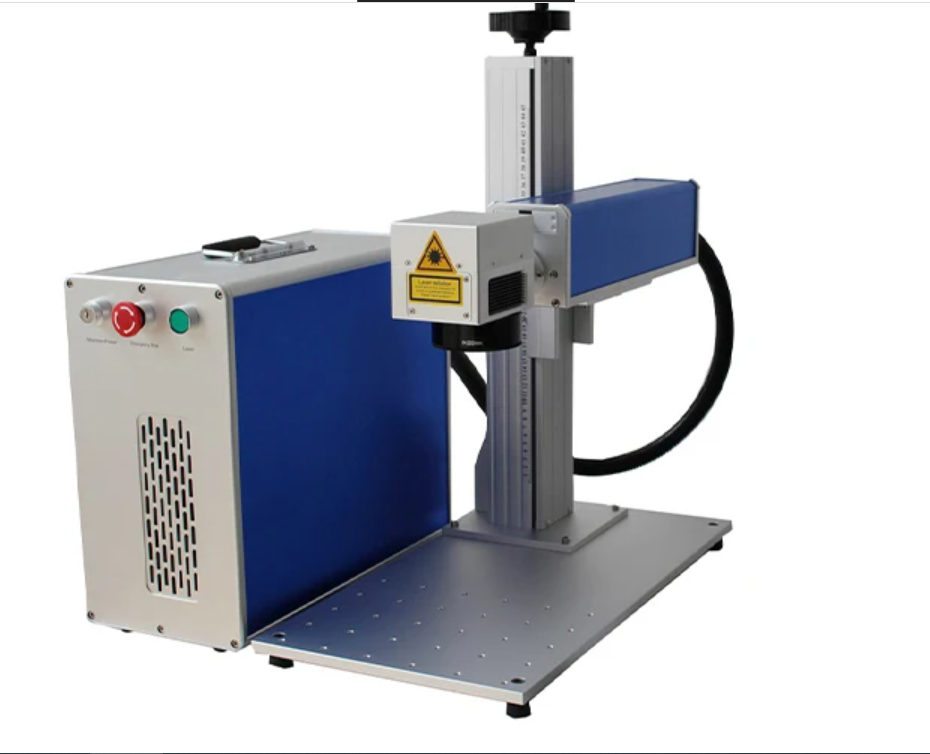
30W Fiber Laser Marking Machine
Fiber Laser Welding
Widely used in:
- Sheet metal fabrication
- Stainless steel welding
- Aluminum welding
- Battery manufacturing
Materials Not Suitable for Fiber Lasers
Poor absorption on:
- Wood
- Acrylic
- Paper
- Leather
- Fabric
- Glass
For these materials, CO₂ lasers are usually preferred.
2. CO₂ Laser
How Does a CO₂ Laser Work?
A CO₂ laser is a gas laser.
The laser tube contains a mixture of gases:
- Carbon dioxide (CO₂)
- Nitrogen (N₂)
- Helium (He)
When a high-voltage electrical discharge passes through the gas mixture:
- Nitrogen molecules become excited.
- Energy transfers to CO₂ molecules.
- CO₂ molecules emit infrared laser radiation.
- Mirrors amplify the beam.
- The laser exits through the output coupler.
CO₂ Laser Wavelength
CO₂ laser wavelength:
10.6 μm (10,600 nm)
This wavelength is far infrared.
CO₂ Laser Characteristics
Excellent Absorption by Organic Materials
Materials containing:
- Carbon
- Hydrogen
- Oxygen
typically absorb CO₂ laser energy very efficiently.
Smooth Cutting Edges
Especially on:
- Acrylic
- MDF
- Plywood
CO₂ lasers often produce polished edges.
Large Processing Area
Suitable for:
- Sign making
- Furniture production
- Packaging manufacturing
CO₂ Laser Applications
Wood Processing
- Wood laser marking
- Wood engraving
- Wood cutting
Acrylic Processing
- Acrylic laser cutting
- Acrylic laser engraving
Leather Processing
- Leather engraving
- Leather cutting
Textile Industry
- Fabric cutting
- Denim engraving
Paper Products
- Packaging
- Greeting cards
- Invitation cards
Common Industries
- Advertising signs
- Gift production
- Wood crafts
- Furniture manufacturing
- Packaging industry
Materials Not Suitable for CO₂ Lasers
CO₂ lasers can mark metal only with special marking compounds.
Not ideal for:
- Deep metal engraving
- Metal welding
Fiber lasers are much better for metals.
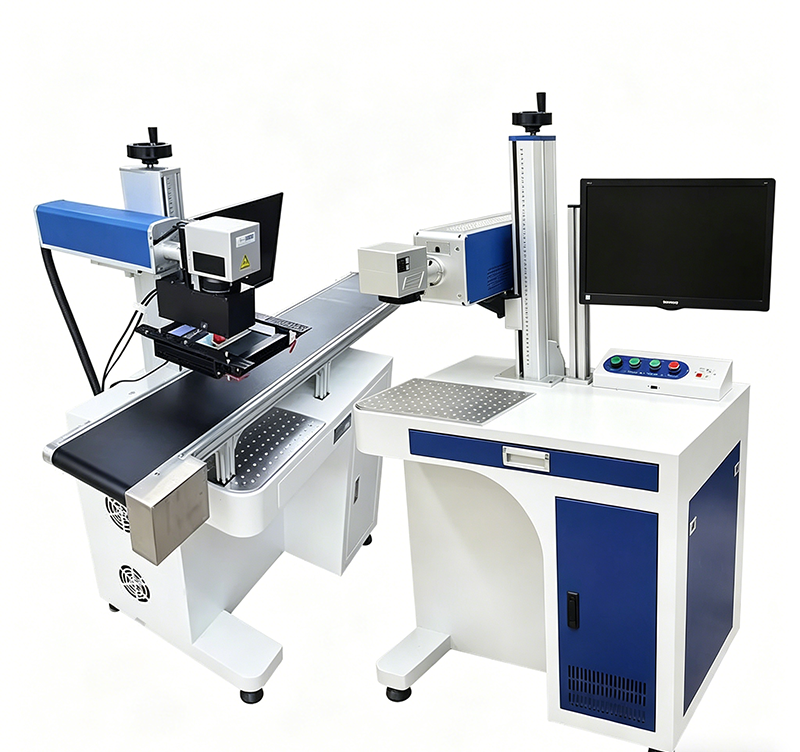
CO2 Laser Marking Machines
3. UV Laser
How Does a UV Laser Work?
A UV laser is usually derived from a solid-state laser.
The process typically involves:
Step 1
Generate a 1064 nm infrared laser.
Step 2
Pass through a nonlinear crystal.
Wavelength becomes:
532 nm
Step 3
Pass through another crystal.
Wavelength becomes:
355 nm
This process is called:
Third Harmonic Generation (THG)
The final output is an ultraviolet laser beam.
UV Laser Wavelength
UV laser wavelength:
355 nm
This is approximately:
- 1/3 of fiber laser wavelength
- 1/30 of CO₂ laser wavelength
UV Laser Characteristics
Cold Marking Technology
UV lasers rely more on photochemical reactions than thermal effects.
This greatly reduces:
- Burning
- Melting
- Carbonization
Extremely Small Spot Size
Provides:
- Ultra-high precision
- Fine graphics
- Micro-text marking
Minimal Heat-Affected Zone
Perfect for heat-sensitive materials.
UV Laser Applications
Plastic Marking
- ABS
- PVC
- PP
- PE
- PC
Electronics Industry
- PCB boards
- Mobile phone components
- Electronic connectors
Medical Industry
- Syringes
- Medical packaging
- Surgical instruments
Glass Marking
- Bottles
- Screens
- Optical glass
Precision QR Codes
Suitable for:
- Tiny QR codes
- Electronic traceability labels
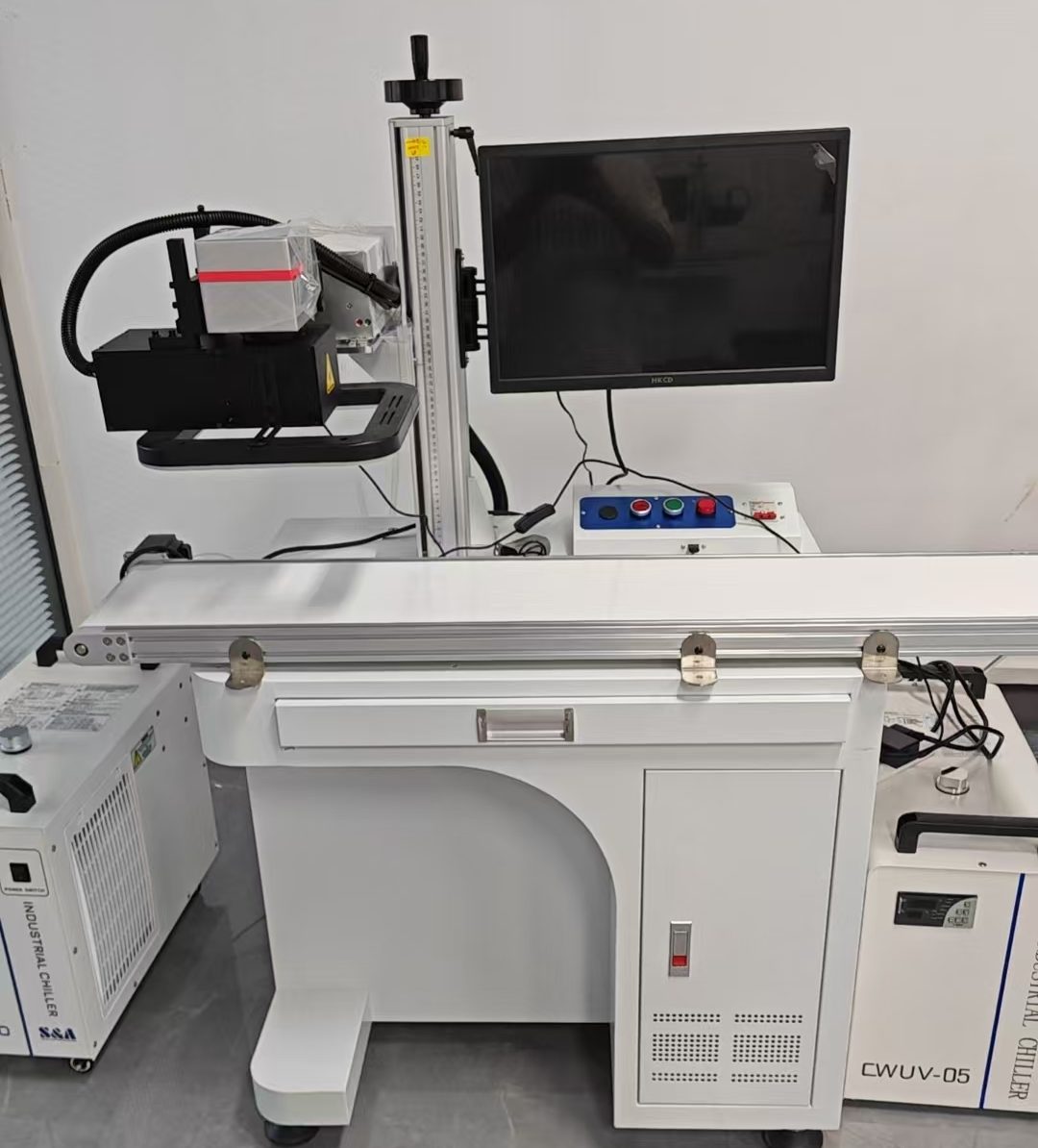
Visual UV Laser Marking Machine
Comparison Table
| Feature | Fiber Laser | CO₂ Laser | UV Laser |
|---|---|---|---|
| Wavelength | 1064 nm | 10.6 μm | 355 nm |
| Laser Medium | Optical Fiber | CO₂ Gas | Crystal + Frequency Conversion |
| Processing Method | Thermal | Thermal | Photochemical + Thermal |
| Metal Marking | Excellent | Poor | Good |
| Wood Engraving | Poor | Excellent | Good |
| Acrylic Cutting | Poor | Excellent | Poor |
| Plastic Marking | Good | Limited | Excellent |
| QR Code Marking | Excellent | Good | Excellent |
| Precision | High | Medium | Very High |
| Heat-Affected Zone | Medium | Large | Very Small |
| Maintenance | Very Low | Medium | Low |
| Initial Cost | Medium | Low-Medium | High |
Which Laser Should You Choose?
Choose a Fiber Laser if:
- You mainly process metals
- You need serial numbers or QR codes
- You require high-speed industrial production
- You need metal welding capability
Choose a CO₂ Laser if:
- You process wood
- You engrave or cut acrylic
- You work with leather, fabric, or paper
- You manufacture signs, crafts, or packaging
Choose a UV Laser if:
- You need ultra-fine marking
- You process plastics
- You manufacture electronics
- You need high-precision QR codes
- You work with heat-sensitive materials
For most industrial applications, Fiber Lasers dominate metal processing, CO₂ Lasers dominate non-metal engraving and cutting, and UV Lasers dominate high-precision and heat-sensitive marking applications. This is why these three laser technologies remain the mainstream choices in the global laser equipment market.
Laser Marking Fabric: Complete Guide to Textile Laser Marking Technology