Laser Marking Titanium: A Complete Guide to Titanium Laser Marking
What Is Titanium Laser Marking?
Titanium is a high-performance metal material that combines lightweight properties, high strength, corrosion resistance, and biocompatibility. Laser Marking Titanium is a processing method that uses a laser beam to create permanent markings on the surface of titanium materials. It enables high-precision marking of text, serial numbers, QR codes, certification marks, and brand logos.
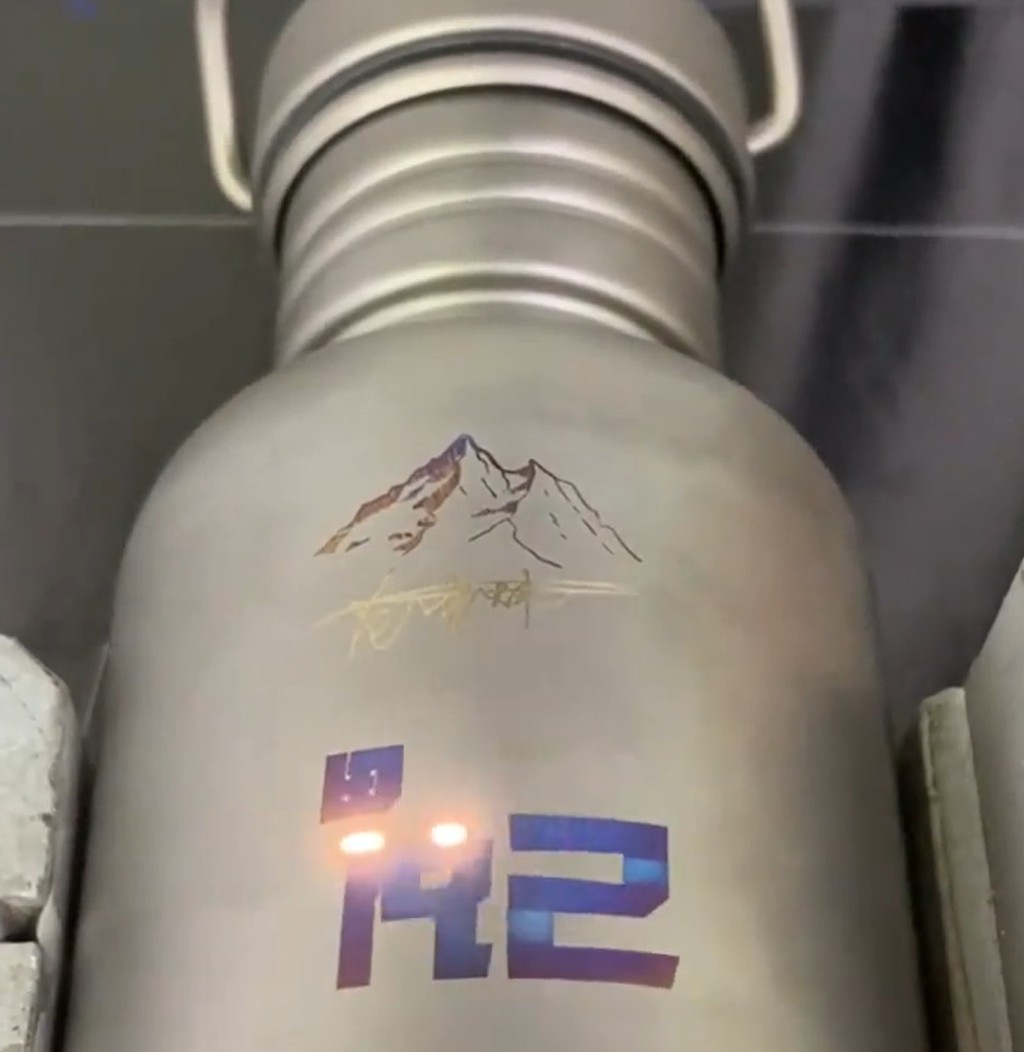
Laser marking of titanium alloy cups
Why Is Titanium Becoming More Popular?
In the past, when titanium was mentioned, it was often associated with aerospace applications as a specialized material. In the medical field, titanium was also widely used for artificial bones and implants because of its excellent biocompatibility and low rejection rate within the human body.
However, during a recent visit to supermarkets in China, I noticed a growing number of titanium consumer products, such as:
Titanium vacuum flasks
Titanium water bottles
Titanium cookware
Titanium tableware
Titanium knives and forks
Titanium eyeglass frames
Titanium watches
Titanium jewelry
At that moment, I realized that as manufacturing costs continue to decrease and consumer demand for healthier and lighter products continues to grow, titanium has rapidly entered the daily consumer market.
These emerging consumer products not only require brand identification but also permanent product information and anti-counterfeiting traceability codes. As a result, the demand for laser marking titanium is increasing year by year.
What Effects Can Be Achieved with Titanium Laser Marking? Which Equipment Should Be Chosen?
Titanium is a metal material that is highly suitable for laser marking. Depending on product requirements and desired visual effects, laser marking can generally achieve three different results: standard marking, black marking, and color marking. Different effects require different laser equipment.
1.Standard Marking
Standard marking is the most common marking method for titanium. The laser creates permanent light-colored or dark-colored markings on the material surface.
This method is mainly used for:
- Product logos
- Brand names
- Model information
- Serial numbers
- QR codes
- Certification marks
The markings are clear and aesthetically pleasing while having minimal impact on the material itself, making them suitable for most industrial products and consumer goods.
For these applications, a standard fiber laser marking machine can already achieve excellent marking results.
If the product requires lower thermal impact, such as precision electronic products, medical devices, or high-end consumer goods, a UV laser marking machine can also be selected to achieve finer marking quality and a smaller heat-affected zone.
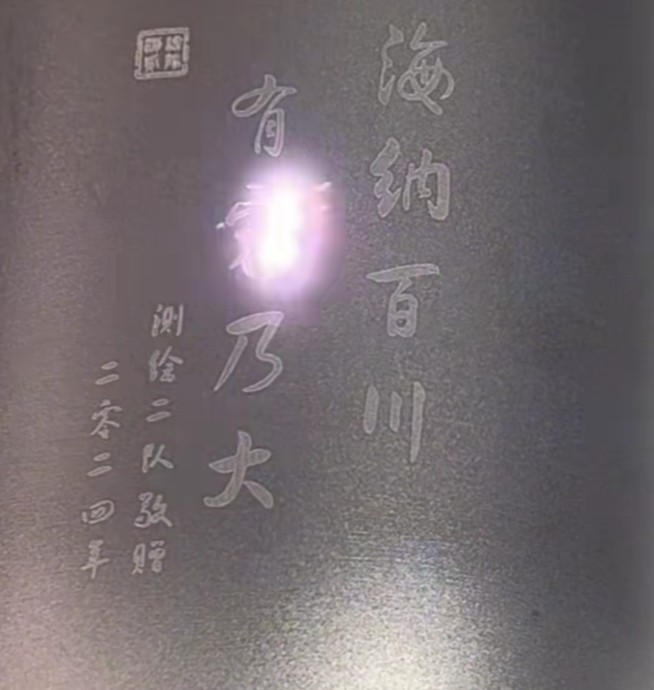
Titanium alloy laser shallow marking
2.Black Marking
Black marking is a highly popular process in titanium laser marking applications.
By precisely controlling laser parameters, a uniform and stable oxide layer is formed on the titanium surface, creating high-contrast black markings.
Compared with standard marking, black marking offers:
- Higher contrast
- Better barcode and QR code readability
- Stronger visual impact
- Greater suitability for high-precision traceability requirements
Therefore, it is widely used for:
- Medical devices
- Surgical instruments
- Medical implants
- Aerospace components
- High-end industrial products
Because standard fiber lasers have limited pulse parameter adjustment capabilities, MOPA laser marking machines are generally recommended for black marking applications.
MOPA lasers can precisely control pulse width and frequency, enabling more uniform and stable black marking results.
3.Color Marking
Color marking is one of the most distinctive laser applications for titanium.
Similar to color laser marking on stainless steel, different oxide layer thicknesses are generated on the titanium surface by controlling laser energy. These oxide layers reflect different wavelengths of light, producing a wide range of colors, including:
- Gold
- Blue
- Purple
- Green
- Red
- Bronze
These colors are not created by ink or coatings. Instead, they are formed directly on the titanium surface, eliminating concerns about peeling or fading.
In recent years, color laser marking has been widely used for:
- Titanium vacuum flasks
- Titanium water bottles
- Titanium cookware
- Titanium tableware
- Titanium eyeglass frames
- Jewelry
- Premium gifts
For manufacturers seeking to enhance product value and brand recognition, color marking can create a more attractive and premium product appearance.
Achieving stable color marking also requires a MOPA laser marking machine, as it provides more precise control over laser pulse parameters, resulting in richer and more consistent color performance.
Reference Parameters for Titanium Marking with a 50W MOPA Laser Marking Machine
Achieving different marking effects requires precise control of laser parameters. Based on more than ten years of experience in the laser marking industry, ZS Machinery provides the following parameter recommendations using a 50W MOPA fiber laser marking machine, an F160 lens, and TC4 titanium alloy as an example.
Please note that for titanium color marking, these parameters should only be used as references. The final color effect depends on the laser source model, pulse width range, material composition, surface finish, and environmental conditions. Therefore, sample testing and parameter optimization are usually required before formal production.
1.Standard Marking
Reference Parameters:
- Power: 60%-80%
- Frequency: 80-150 kHz
- Pulse Width: 100-200 ns
- Speed: 800-1500 mm/s
- Hatch Spacing: 0.02-0.05 mm
Characteristics:
The marking appears light gray or dark gray, has minimal impact on the material, offers high processing speed, and is suitable for mass production.
2.Black Marking
Reference Parameters:
- Power: 20%-40%
- Frequency: 200-400 kHz
- Pulse Width: 150-250 ns
- Speed: 100-300 mm/s
- Hatch Spacing: 0.01-0.03 mm
Characteristics:
A deep black marking is achieved by forming a uniform oxide layer. The surface shows almost no visible engraving depth and provides excellent barcode and QR code readability.
Titanium alloy laser blackening
3.Blue Marking
Reference Parameters:
- Power: 15%-25%
- Frequency: 100-200 kHz
- Pulse Width: 50-150 ns
- Speed: 200-600 mm/s
Characteristics:
A blue oxide layer is formed on the surface, creating a vivid color effect suitable for premium consumer products and decorative applications.
4.Gold Marking
Reference Parameters:
- Power: 10%-20%
- Frequency: 80-150 kHz
- Pulse Width: 50-120 ns
- Speed: 300-800 mm/s
Characteristics:
Produces a golden or champagne-gold appearance and is frequently used for titanium vacuum flasks, eyeglass frames, and gift products.
5.Purple Marking
Reference Parameters:
- Power: 15%-30%
- Frequency: 120-250 kHz
- Pulse Width: 80-150 ns
- Speed: 200-500 mm/s
Characteristics:
Offers rich color variation and strong visual impact, making it ideal for customized and personalized products.
6.Rainbow Color Marking
Reference Parameters:
- Power: 10%-35%
- Frequency: 100-300 kHz
- Pulse Width: 50-200 ns
- Speed: Gradient parameter scanning
Characteristics:
Creates a multi-color gradient effect by continuously adjusting the oxide layer thickness. It is currently one of the most visually attractive applications in titanium laser processing.
Conclusion
Titanium laser marking provides a reliable solution for product identification, traceability, certification compliance, and brand enhancement. With the right laser system and process parameters, you can achieve durable, high-contrast markings while maintaining the excellent properties of titanium materials.
If you are looking for a suitable titanium laser marking solution, please contact ZS Machinery. We will provide professional technical consultation and equipment recommendations.
What Are the Methods for Marking a Logo? A Comprehensive Comparison of Laser Marking and Etch Marking