What Are the Methods for Marking a Logo? A Comprehensive Comparison of Laser Marking and Etch Marking
In modern manufacturing, whether for industrial components, premium consumer products, or medical devices, companies want to permanently mark their brand logo on the product surface. A clear logo not only enhances brand image but also improves product recognition. So, how can you mark a logo on metal products?
Currently, common logo marking methods include laser marking, chemical etching, electrochemical etching, mechanical engraving, and printing. Different processes have different characteristics and are suitable for different materials and application scenarios.
In this article, ZS Machinery will introduce various logo marking methods in detail and provide a comprehensive comparison between Laser Marking and Etch Marking, which have become increasingly popular in recent years.
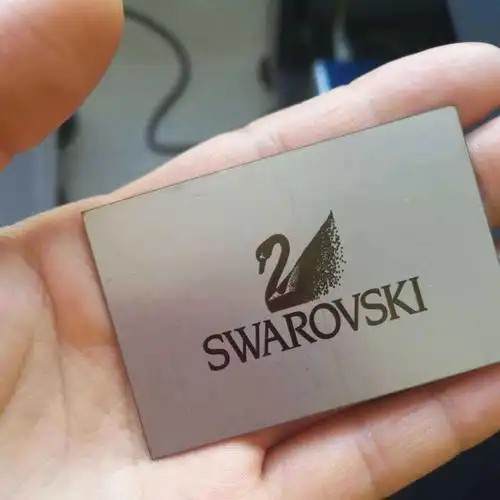
LOGO Marking On Metal Plate
Why Do Products Need Logo Marking?
A logo is an important part of a company’s brand identity. It usually consists of text, graphics, symbols, or a combination of these elements, helping consumers quickly recognize a brand. For many companies, a logo not only represents the company’s name and image but also reflects brand reputation, product quality, and market value.
In commercial activities, many logos are registered as trademarks and protected by law. For example, Apple’s apple symbol, Nike’s swoosh logo, and various well-known brand logos are valuable intangible assets of their respective companies. Therefore, permanently marking logos on products has become a common practice in modern manufacturing.
Logo marking helps companies achieve the following objectives:
Improve Brand Recognition
When consumers see a brand logo on a product, they can quickly identify its source and strengthen brand recall. For premium consumer goods, cookware, outdoor products, and electronic products, a clear logo often enhances the product’s perceived quality and brand image.
Protect Brand and Trademark Rights
In a highly competitive global market, marking a company logo on products helps prove product origin, prevents counterfeiting and infringement, and strengthens trademark value.
Increase Customer Trust
Consumers are generally more willing to purchase products with clear brand identification. Permanent logo marking conveys a professional, reliable, and responsible brand image.
Enable Product Traceability
Many manufacturers combine logos with serial numbers, QR codes, or production information to achieve product traceability and quality management. This approach is particularly important in medical devices, automotive parts, and industrial manufacturing.
Increase Product Value
For stainless steel cookware, titanium water bottles, tumblers, knives, and premium metal products, a high-quality permanent logo can significantly enhance product appearance and market competitiveness.
For these reasons, more and more manufacturers are adopting permanent marking technologies such as laser marking and etching to apply logos directly onto product surfaces instead of relying on stickers or printed labels that can wear out or peel off.
ZS Machinery LOGO
What Are the Common Methods for Logo Marking?
Laser Marking
Laser marking is currently one of the most widely used logo marking technologies. It works by directing a high-energy laser beam onto the material surface, causing color changes, oxidation reactions, or slight material removal to create permanent markings.
Laser marking is suitable for a wide range of materials, including:
- Stainless steel
- Aluminum alloy
- Titanium alloy
- Copper
- Plastics
- Carbon fiber
Main advantages include:
- No ink or chemicals required
- Permanent markings that do not fade or peel
- High precision
- Capable of creating complex logos
- Supports QR codes and serial numbers
- Easy integration into automated production
Disadvantages:
For colorful logos, laser marking is generally less versatile than printing. Although stainless steel and titanium can achieve color marking effects, the color richness is still limited compared with UV printing.
Chemical Etching
Chemical etching is a traditional marking process that uses chemical agents to corrode the material surface and create patterns or text.
This process is commonly used for:
- Metal nameplates
- Stainless steel decorative parts
- Craft products and gifts
Advantages:
- Uniform marking quality
- Suitable for batch processing
Disadvantages:
- Requires chemical agents
- Environmental treatment is necessary
- More complex production process
Electrochemical Etching
Electrochemical etching uses electric current and electrolyte solutions to create markings on metal surfaces.
Common applications include:
- Medical devices
- Hardware tools
- Knife manufacturing
Advantages:
- Lower equipment cost
- Stable marking quality
Disadvantages:
- Lower production efficiency
- Not ideal for large-scale automated production
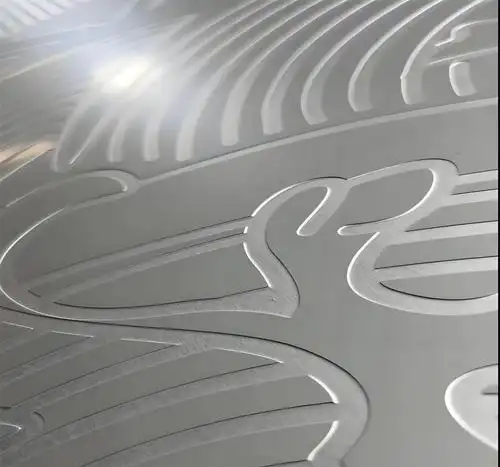
Chemical etching of stainless steel plates
Mechanical Engraving
Mechanical engraving creates logos by physically cutting the material surface with cutting tools.
Characteristics:
- Deep engraving depth
- Highly durable markings
However, processing speed is relatively slow, especially for complex patterns.
Printing
Printing methods include screen printing, pad printing, and UV printing.
Advantages:
- Lower cost
- Rich color options
Disadvantages:
- Easy to wear or fade
- Poor corrosion resistance
- Limited service life
What Is Etch Marking?
Etch Marking generally refers to a group of marking processes that create permanent patterns by removing material from the surface.
According to the process principle, Etch Marking can mainly be divided into three categories:
Chemical Etching
Uses chemical corrosion reactions to remove material from the surface.
Electrochemical Etching
Uses electrical current and electrolytes to create etched markings.
Laser Etching
Uses a laser beam to remove an extremely thin layer of material from the surface.
In recent years, with the development of laser technology, more manufacturers have begun using Laser Etching to replace traditional chemical etching processes.
Compared with traditional etching methods, laser etching does not require chemicals, offers faster processing speeds, and can produce finer graphics and QR code markings.
What Is the Difference Between Laser Marking and Etch Marking?
Although both Laser Marking and Etch Marking can create permanent markings, there are significant differences between them.
Laser Marking Features
- Non-contact processing
- No consumables required
- High precision
- Easy automation
- Supports QR codes and serial numbers
Traditional Etching Features
- Requires chemicals or electrolytes
- More processing steps
- Higher environmental requirements
- Lower automation level
For modern manufacturers, laser marking generally provides higher production efficiency and lower long-term operating costs.
Which Logo Marking Method Is Best for Your Product?
The best logo marking technology depends on three key factors:
- Material type
- Required durability
- Brand appearance requirements
For products that are frequently handled, cleaned, exposed to outdoor environments, or subject to wear and tear, permanent marking is usually more important than decorative color effects.
For example:
- Stainless steel cookware
- Titanium water bottles
- Vacuum flasks and tumblers
- Medical devices
- Hardware tools
- Industrial components
For these products, laser marking is usually the preferred solution.
Unlike UV printing, labels, or stickers, laser marking permanently alters the material surface. The logo becomes part of the product itself rather than an additional layer applied to the surface.
This gives laser marking excellent resistance to:
- Scratches
- Wear
- Chemicals
- High temperatures
- Long-term outdoor exposure
Why Manufacturers Prefer Fiber Laser Marking
For metal products, fiber laser marking machines have become the industry standard for logo marking because they combine durability, precision, and production efficiency.
Fiber laser marking machines can create:
- Permanent company logos
- High-precision QR codes
- Data Matrix codes
- Product serial numbers
- Brand graphics
- Traceability information
The process is fast, maintenance-free, and easy to integrate into automated production lines, making it ideal for both small-batch and mass production.
When Is UV Printing a Better Choice?
If the primary goal is maximum color recognition rather than permanent marking, UV printing may be a better option.
UV printers can reproduce:
- Full-color logos
- Corporate color schemes
- Multi-color graphics
- Photo-quality images
This makes UV printing highly attractive for promotional products, decorative items, and applications where visual impact is more important than long-term wear resistance.
In short, for most metal products, laser marking remains the most durable and cost-effective solution for logo marking, while UV printing is a better choice when vibrant color reproduction is the highest priority.
Conclusion
As manufacturing industries continue to place greater emphasis on brand building, product traceability, and automated production, Logo Marking is no longer simply a form of brand display. It has become an essential part of product identification, anti-counterfeiting management, and quality traceability.
If you are looking for a Logo Marking solution for metal products, ZS Machinery can provide professional marking equipment and technical support for logo marking, QR code marking, serial number marking, and product traceability applications.
Contact our technical team today to find the most suitable marking solution for your products and production line.
PCB Laser Marking Guide: An Efficient Solution for Product Traceability in the Electronics Manufacturing Industry