A Complete Guide to Certification Marks: Types, Industry Applications, and Laser Marking Solutions
What is a Certification Mark?
A certification mark is a mark authorized by government agencies, industry associations, or third-party certification bodies to prove that a product has passed testing according to specific standards, regulations, or safety requirements. Simply put, a certification mark is a product’s “passport” to the market. Consumers can quickly determine whether a product meets:
Safety standards
Quality standards
Environmental standards
Energy efficiency standards
Industry regulations
For manufacturers, certification marks are not only market access requirements but also proof of product quality and compliance. Today, from electronics to automotive parts, from medical devices to aerospace equipment, almost all industrial products require the corresponding certification marks.
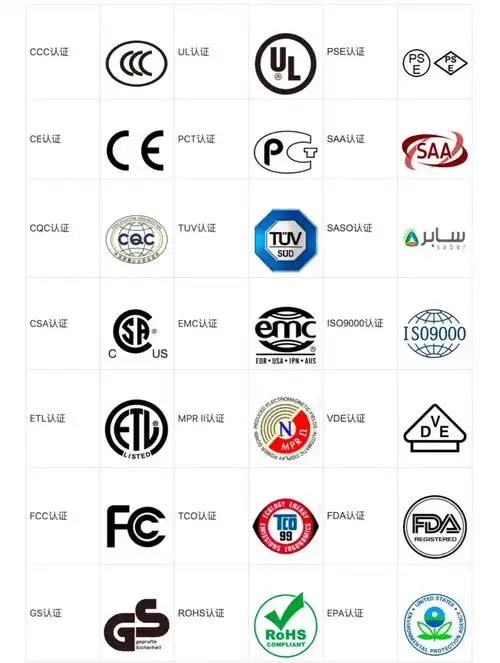
All kinds of cerfication mark
Why are certification marks so important?
In the global trade system, countries have established their own product certification systems. If a product does not obtain the corresponding certification, it may face the following problems:
Inability to enter the target market
Customs detention
Sales ban
Product recall
Legal liability, etc.
Therefore, certification marks are not only related to product sales, but also to a company’s brand reputation and market competitiveness. Especially in the European and American markets, certification marks have become one of the important criteria for buyers to evaluate suppliers.
What Are the Common Certification Marks?
As global trade and product safety regulatory systems continue to evolve, countries and industries around the world have established their own certification standards. Manufacturers must mark the appropriate certification symbols on products, nameplates, or packaging according to the requirements of their target markets. These marks not only demonstrate compliance with relevant regulations but also directly affect whether products can successfully enter and be sold in the market.
CE Mark
The CE Mark is the most common product compliance mark within the European Economic Area (EEA). CE stands for the French term “Conformité Européenne,” meaning “European Conformity.” For most industrial products, electrical equipment, and machinery exported to the European Union, CE certification is almost a basic requirement for market entry. The presence of a CE mark indicates that a product complies with EU regulations regarding safety, health, environmental protection, and consumer protection. Common applications include industrial machinery, laser equipment, electronic products, electrical control systems, medical devices, and automation equipment.
CE Mark
UL Mark
The UL Mark is issued by Underwriters Laboratories (UL) and is one of the most influential safety certifications in the North American market. UL certification is primarily used to evaluate a product’s electrical safety, fire resistance, and long-term reliability. Many buyers in the United States and Canada prefer products with UL certification when sourcing equipment. Common application areas include industrial control cabinets, power supply equipment, wires and cables, power tools, household appliances, and industrial automation systems.
UL Mark
FCC Mark
FCC certification is a certification system established by the Federal Communications Commission (FCC) in the United States for electronic and wireless communication devices. Any electronic product that may generate radio frequency interference is typically required to obtain FCC certification before entering the U.S. market. Common products include wireless communication devices, Bluetooth products, WiFi routers, industrial wireless control systems, consumer electronics, and various smart devices. The FCC mark indicates that the product complies with U.S. requirements for electromagnetic compatibility and radio frequency management.
FCC Mark
RoHS Mark
RoHS certification mainly focuses on the restriction of hazardous substances in electrical and electronic products. The regulation limits the use of lead, cadmium, mercury, hexavalent chromium, and certain flame retardants in products to reduce the impact of electronic waste on the environment and human health. Today, RoHS has become one of the most important environmental standards in the global electronics manufacturing industry and is widely applied to PCB circuit boards, electronic components, power supply products, consumer electronics, and industrial control equipment.
RoHS Mark
UKCA Mark
UKCA (UK Conformity Assessed) is a new product certification system established after Brexit and is intended to replace certain previous CE certification requirements. For machinery, electrical products, construction products, and industrial equipment sold in the UK market, an increasing number of products are adopting UKCA certification. Although many technical requirements are similar to those of CE certification, UKCA has gradually become an independent compliance mark for the UK market.
UKCA Mark
CCC Mark
CCC (China Compulsory Certification) is an important market access system for products entering the Chinese market. Products within the certification scope must pass the relevant testing procedures and obtain CCC certification before they can be sold. Certified products include electrical equipment, household appliances, automotive components, safety protection equipment, and certain industrial products. The CCC mark is one of the most common compliance certification marks in China.
CCC Mark
CSA Mark
CSA certification is issued by the Canadian Standards Association (CSA) and is a widely recognized safety certification system in Canada. CSA certification is mainly applied to electrical equipment, industrial machinery, control systems, and energy equipment. For manufacturers exporting equipment to the Canadian market, CSA certification often carries significant commercial value and market recognition.
CSA Mark
GS Mark
The GS Mark originates from Germany. GS stands for “Geprüfte Sicherheit,” meaning “Tested Safety.” Unlike self-declaration by manufacturers, GS certification requires product safety testing by an independent third-party organization, giving it a high level of credibility in the European market. This certification is commonly found on machinery, power tools, household appliances, and industrial equipment.
GS Mark
Energy Star Mark
Energy Star is an internationally recognized energy-efficiency certification mark used to indicate that a product offers high energy performance. Products that obtain this certification can typically reduce energy consumption and lower carbon emissions. Energy Star certification is widely applied to computers, monitors, printers, air conditioners, lighting equipment, and industrial energy systems.
Energy Star Mark
FDA Approved Mark
FDA certification primarily applies to products regulated by the U.S. Food and Drug Administration (FDA), including medical devices, pharmaceutical products, biotechnology products, and food-contact materials. For the medical industry, FDA certification is often one of the key requirements for entering the U.S. market. Many manufacturers of medical devices and equipment permanently mark FDA-related certification information on product nameplates or equipment housings to meet regulatory and traceability requirements.
FDA Mark
How Are Certification Marks Applied to Products?
After obtaining certification, manufacturers must accurately display certification marks on products, nameplates, or packaging to meet regulatory requirements and market access standards. Common methods for applying certification marks include screen printing, label application, inkjet printing, mechanical engraving, and laser marking.
In the early manufacturing industry, screen printing and label application were the most commonly used methods. These approaches offered low costs and simple operation, making them suitable for mass production. However, as product service life has increased, their limitations have become more apparent. For example, printed information may wear away due to friction, chemical exposure, or long-term use, while labels may peel off, curl, age, or become damaged over time, affecting product identification and the integrity of certification information.
Inkjet printing technology is widely used in food packaging, consumer electronics, and daily consumer goods industries due to its high speed and automation capabilities. However, inkjet marking typically relies on consumables such as ink. In high-temperature, humid, or outdoor environments, printed marks may fade or become blurred, resulting in relatively limited long-term durability.
Mechanical engraving can create permanent marks and was once widely adopted in industrial equipment and metal component manufacturing. However, the process is relatively slow, causes significant tool wear, and involves higher maintenance costs. As a result, it is not well suited for large-scale applications in modern automated production lines.
As global requirements for product traceability, quality management, and regulatory compliance continue to increase, more manufacturers are adopting laser marking technology to mark certification symbols such as CE, UL, FCC, and RoHS.
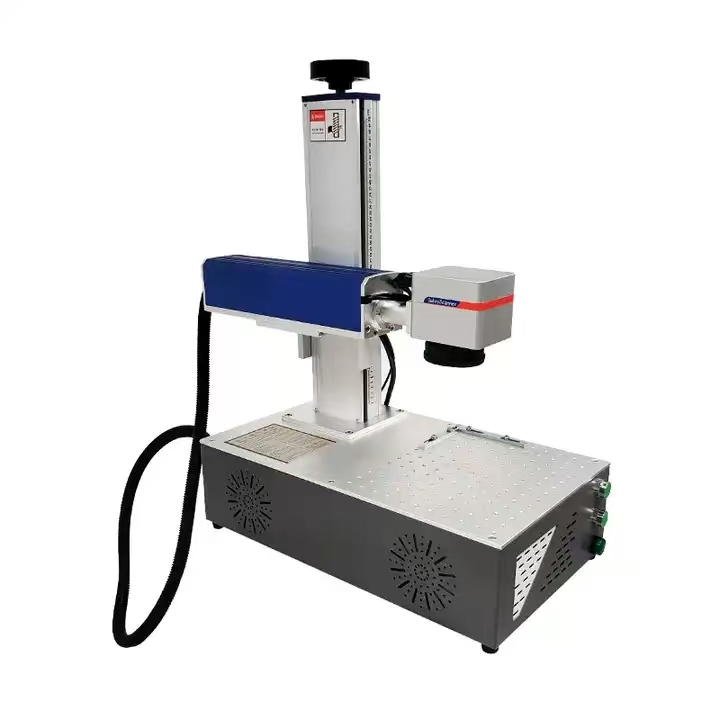
Desktop UV Laser Marking Machine
Why Are More Manufacturers Choosing Laser Marking for Certification Marks?
Laser marking uses a high-energy laser beam to interact directly with the material surface, creating permanent marks through engraving, discoloration, foaming, or other material modification processes. Compared with traditional marking methods, laser marking provides higher reliability and a longer service life.
First, laser marks are permanent and will not peel off or fade due to friction, cleaning processes, UV exposure, or long-term use. This ensures that certification information remains clearly visible throughout the entire lifecycle of the product.
Second, laser marking offers extremely high precision and can accurately produce complex graphics and very small characters, including CE logos, UL logos, FCC symbols, serial numbers, QR codes, and Data Matrix codes. Even on small electronic components or precision parts, laser marking can deliver excellent readability and identification performance.
In addition, laser marking requires no consumables such as ink, labels, or ribbons. This significantly reduces routine maintenance requirements and lowers long-term operating costs compared with conventional printing technologies. Laser systems can also be easily integrated into automated production lines, enabling high-speed continuous operation and meeting the mass production requirements of modern manufacturing facilities.
For industries that require product traceability and anti-counterfeiting management, laser marking provides enhanced security. Because the mark is created directly on the material surface, it is difficult to alter, remove, or replicate, helping manufacturers improve product credibility and strengthen brand reputation.
Thanks to its advantages of permanence, high precision, low operating costs, and automation compatibility, laser marking has become an important solution for applying certification marks in industries such as electronics manufacturing, medical devices, automotive components, industrial equipment, aerospace, and food packaging.
Laser Marking Applications for Certification Marks Across Different Industries
Laser Marking Certification Marks in Electronics
When examining phone chargers, routers, laptops, or smart home devices, it is common to find certification marks such as CE, FCC, RoHS, and UL. These markings not only indicate compliance with relevant regulations but also serve as essential requirements for entering international markets.
As electronic products continue to become smaller and more compact, certification information often needs to be displayed clearly within limited space. At the same time, the markings must remain readable throughout the product’s lifecycle.
For plastic housings, PCB boards, and electronic components, UV laser marking machines can achieve high-precision cold processing, allowing certification marks, QR codes, and serial numbers to be marked clearly without damaging the material. For metal components such as aluminum alloy housings and stainless steel nameplates, fiber laser marking machines can create permanent, high-contrast marks that meet long-term durability requirements.
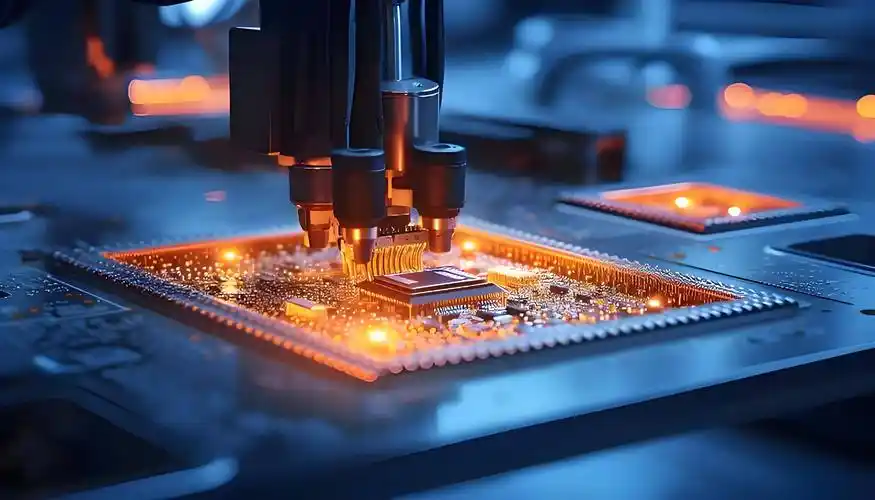
Laser marking in the electronics industry
Laser Marking Certification Marks in the Automotive Industry
Modern vehicles consist of tens of thousands of components, and each critical part must comply with strict quality and safety standards. Whether it is an engine component, braking system, or electronic control module, certification information and traceability codes play an important role.
During automotive manufacturing, information such as E-Mark certification, product models, production batches, and Data Matrix codes often needs to be marked. These markings not only support regulatory compliance but also help manufacturers quickly trace product origins and production records.
Because automotive components are exposed to high temperatures, vibration, oil contamination, and other harsh operating conditions, traditional labels can easily peel off or become damaged. Fiber laser marking machines can permanently engrave certification marks directly onto steel, aluminum alloy, and stainless steel surfaces, ensuring long-term traceability. For new energy vehicle battery components and precision electronic modules, MOPA laser marking machines can produce high-contrast QR codes that improve automated identification efficiency.
Laser Marking Certification Marks in the Medical Device Industry
The medical industry has extremely high requirements for product safety and traceability. Many countries and regions require medical devices to carry UDI (Unique Device Identification) codes, as well as certification information such as FDA and CE Medical markings.
For surgical instruments, orthopedic implants, dental tools, and medical equipment housings, markings must withstand repeated sterilization, chemical disinfection, and long-term use.
MOPA fiber laser marking machines have become an important solution for the medical device industry. They can create high-precision permanent markings on stainless steel and titanium surfaces while generating high-contrast black QR codes and certification marks, ensuring readability throughout the entire lifecycle of the device.

Marking on the surface of medicine bottles
Laser Marking Certification Marks in the Food and Packaging Industry
Food safety has become a major concern for consumers worldwide. To comply with regulatory requirements, food packaging often needs to display food-grade certifications, FDA approvals, HACCP certifications, recycling symbols, and production batch information.
Although inkjet printing is widely used, it involves ongoing ink consumption, higher maintenance costs, and marks that may wear over time. In humid environments or cold-chain transportation conditions, printed information can gradually become unclear.
CO₂ laser marking machines can create permanent marks directly on cartons, cardboard boxes, wooden packaging, and food packaging materials without using ink or chemical consumables. For PET bottles, pharmaceutical packaging, and transparent packaging materials, UV laser marking machines provide a more precise and environmentally friendly solution for marking certification information.
Laser Marking Certification Marks in the Wire and Cable Industry
Wire and cable products are often required to comply with international standards such as UL, CSA, CE, and VDE. Certification information is important not only for product sales but also for installation, maintenance, and safety inspections.
Traditional printing methods can wear away due to repeated bending, friction, and environmental exposure. As production automation continues to advance, more cable manufacturers are adopting online laser marking systems.
UV laser marking machines can mark certification logos, specifications, and production batch numbers at high speed on PVC, PE, rubber, and specialty insulation materials, enabling continuous production and automated traceability management.
Laser Marking Certification Marks in Industrial Equipment and Machinery Manufacturing
Large industrial equipment often requires permanent certification information to be marked on nameplates or directly on the equipment itself. CE, UL, UKCA, and various ISO-related markings are commonly found on machinery, automated production lines, control cabinets, and industrial robots.
These products typically have service lives exceeding ten years, making long-term durability of certification marks essential. Traditional labels can be affected by oil contamination, corrosion, and mechanical wear, whereas laser marking creates permanent marks directly on stainless steel nameplates, aluminum nameplates, or equipment surfaces.
Today, fiber laser marking machines have become the mainstream solution for industrial nameplate production and certification mark engraving. In addition to certification logos, laser marking systems can also generate serial numbers, QR codes, and traceability information, providing reliable data support for equipment management and after-sales service.
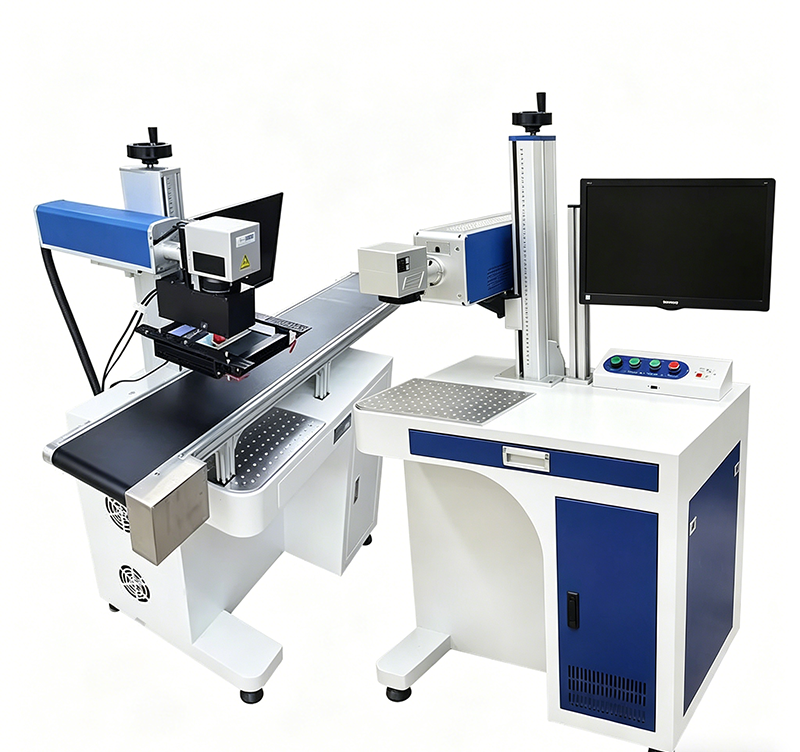
CO2 Laser Marking Machines
Laser Marking Certification Marks in Aerospace and Defense Industries
The aerospace industry has extremely stringent requirements for product reliability and traceability. Aircraft engine components, avionics equipment, and defense products often require UID codes, AS9100-related information, and specialized certification markings.
These components frequently operate under high temperatures, high pressures, and extreme environmental conditions, making long-term marking stability essential.
High-precision fiber laser marking systems can create permanent marks on titanium alloys, nickel-based alloys, and aerospace-grade aluminum materials. Even after years of service, the markings remain clear and readable. This is one of the key reasons why laser marking technology has been widely adopted in the aerospace industry.
Conclusion
As an efficient, environmentally friendly, and permanent marking technology, laser marking can meet the strict certification marking requirements of various industries while helping manufacturers achieve product traceability, anti-counterfeiting management, and brand protection.
By selecting the right laser marking equipment, manufacturers can not only comply with international certification standards but also improve production efficiency, reduce operating costs, and strengthen competitiveness in global markets.
If you are looking for a laser marking solution for certification marks, serial numbers, QR codes, or product traceability information, ZS Machinery can provide professional equipment recommendations and customized marking solutions based on your materials, production requirements, and industry standards.
Laser Marking Carbon Fiber: Methods, Challenges and Best Practices