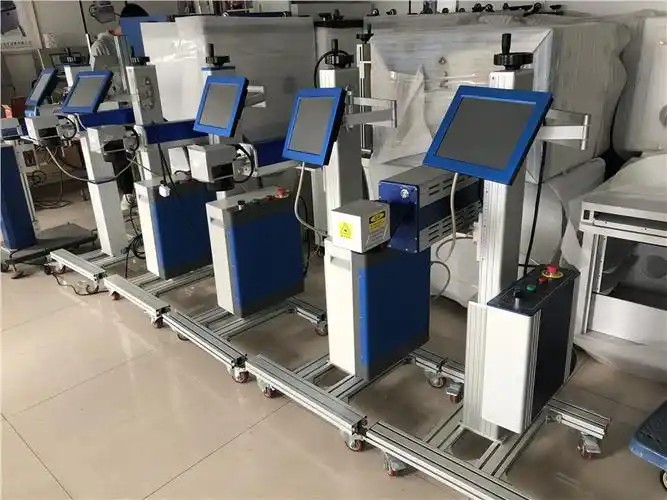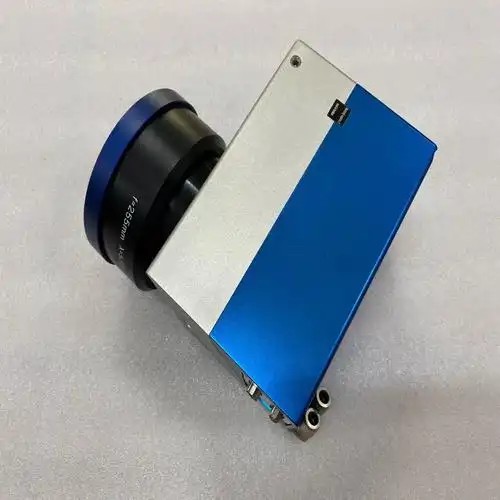
MOPA Laser Engraver vs Fiber Laser Engraver: Which One Should You Buy?
Choosing between a MOPA laser engraver and a standard fiber laser engraver is one of the most common questions we receive from customers.At first glance, the two machines look almost identical.
Both use a 1064 nm fiber laser.
Both can mark stainless steel, aluminum, brass, titanium, plastics, and many other materials.
Both are capable of engraving logos, serial numbers, QR codes, and permanent product identification.
So why is a MOPA laser engraver usually more expensive? More importantly,is it actually worth paying the extra cost?
The answer depends entirely on what you plan to produce.
After helping hundreds of manufacturers choose laser marking equipment, we’ve found that most customers don’t actually need a MOPA laser.But for certain applications, a standard fiber laser simply cannot deliver the same results.
This guide explains the real differences from an engineering perspective rather than just comparing specifications.
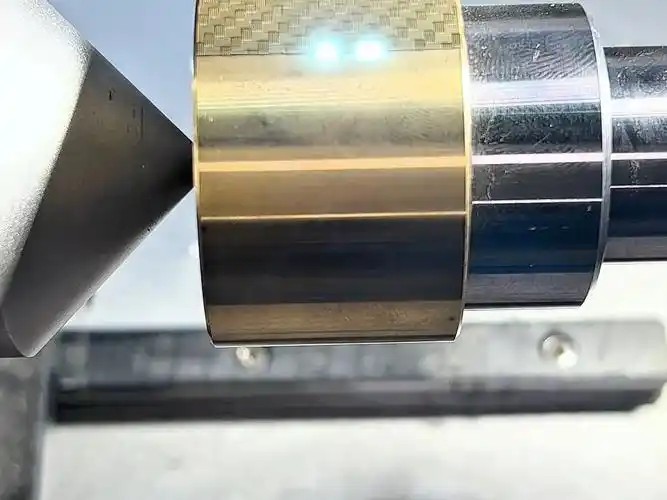
MOPA Laser Marking On Copper
What Is a Standard Fiber Laser Engraver?
A standard fiber laser engraver uses a fixed pulse laser source to generate high-energy laser beams for permanent marking and engraving.It has become the most widely used industrial laser marking technology because it offers:
- Excellent reliability
- Fast marking speed
- Low maintenance
- Long service life
- Competitive cost
It is commonly used for:
- Stainless steel marking
- Carbon steel engraving
- Aluminum marking
- Brass engraving
- Copper marking
- QR codes
- Data Matrix codes
- Nameplates
- Industrial identification
- Product traceability
For general industrial marking, a standard fiber laser already meets the requirements of most factories.
What Makes a MOPA Laser Engraver Different?
The biggest difference is pulse control.
Unlike conventional fiber lasers, a MOPA laser allows the operator to adjust both pulse width and pulse frequency over a much wider range.This gives far greater control over how laser energy interacts with the material.Instead of simply increasing power, a MOPA laser can precisely control:
- Heat input
- Peak power
- Pulse duration
- Surface oxidation
- Material removal
Although both machines use the same wavelength, the marking results can be completely different.
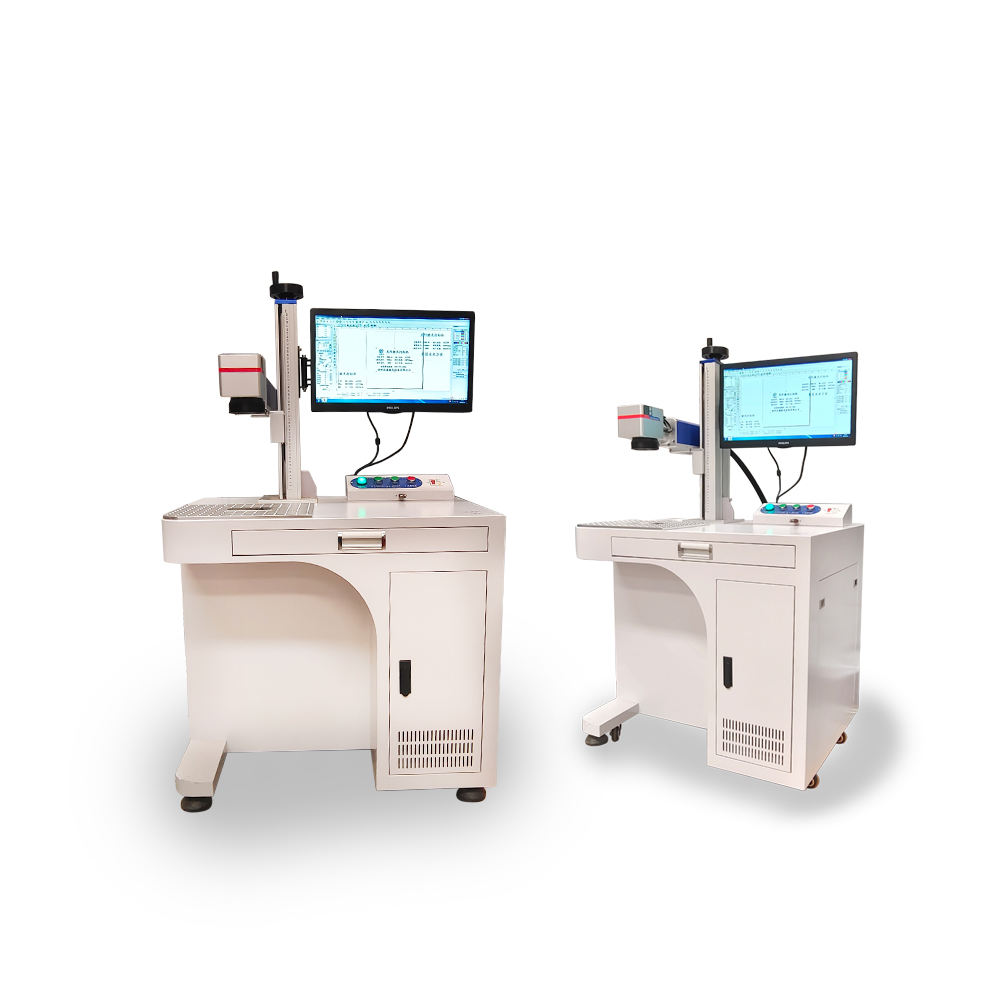
MOPA Laer Marking Machine
Standard Fiber Laser vs MOPA Laser
The following table summarizes the main differences.
| Feature | Standard Fiber Laser | MOPA Laser |
|---|---|---|
| Wavelength | 1064 nm | 1064 nm |
| Pulse Width Adjustment | Fixed | Adjustable |
| Frequency Range | Limited | Wide |
| Stainless Steel Black Marking | Good | Excellent |
| Color Marking | Not supported | Supported |
| Plastic Marking | Good | Better |
| Heat Affected Zone | Larger | Smaller |
| Fine Detail | Good | Excellent |
| Machine Cost | Lower | Higher |
At first glance, the differences seem small.
In actual production, however, they can completely change the final appearance of the product.
When a Standard Fiber Laser Is the Better Choice
For many manufacturers, a standard fiber laser remains the smartest investment.
If your daily work mainly involves:
- Company logos
- Serial numbers
- QR codes
- Nameplates
- Industrial labels
- Stainless steel marking
- Aluminum identification
- General metal engraving
there is often no practical reason to purchase a MOPA laser.
A standard fiber laser provides:
- Faster return on investment
- Lower equipment cost
- Easier maintenance
- Higher production efficiency
This is why it remains the most popular choice for industrial production.
When You Should Choose a MOPA Laser Engraver
Some applications require much more than simply creating a permanent mark.
This is where MOPA technology becomes valuable.
1.Color Marking on Stainless Steel
One of the best-known advantages of MOPA lasers is their ability to produce multiple colors on stainless steel.
By carefully controlling pulse width and frequency, the laser creates different oxide layer thicknesses.
Instead of removing material, the laser changes the way light reflects from the surface.
This makes it possible to produce colors such as:
- Gold
- Blue
- Purple
- Red
- Green
without using inks or coatings.
Standard fiber lasers cannot achieve this effect consistently.

MOPA Laser On Stainless Steel
2.High-Quality Black Marking
Many industries require deep black markings rather than ordinary gray engraving.
Typical examples include:
- Medical instruments
- Surgical tools
- Consumer electronics
- Automotive components
A MOPA laser produces darker, smoother black marks because it generates less heat while controlling oxidation more precisely.
The result is higher contrast with minimal surface damage.
3.Better Plastic Marking
Plastic behaves very differently from metal.
Too much heat may cause:
- Yellowing
- Burning
- Bubbling
- Cracks
- Surface deformation
Because MOPA lasers allow finer energy control, they often produce cleaner marks on engineering plastics.
Industries such as electronics, automotive, and medical manufacturing frequently benefit from this capability.
4.Fine Graphics and Tiny QR Codes
For very small characters or high-density Data Matrix codes, edge quality becomes critical.
MOPA lasers generate smoother edges with less thermal distortion, improving code readability and overall appearance.
Does a MOPA Laser Engrave Deeper?
This is another common misconception.Many buyers assume MOPA lasers are better for deep engraving.
That isn’t necessarily true.
If your goal is removing as much material as possible—such as mold engraving, stamp engraving, or metal relief engraving—a higher-power standard fiber laser (50W or even 100W) is often the better choice.
Deep engraving depends more on:Laser power,Marking speed,Number of engraving passes,Material properties than on pulse width control.
MOPA technology focuses on surface quality rather than maximum engraving depth.
Which Materials Benefit Most from MOPA?
MOPA lasers perform particularly well on:
- Stainless steel
- Anodized aluminum
- Titanium
- Engineering plastics
- Electronic components
- Medical devices
For ordinary carbon steel, brass, or aluminum identification marks, a standard fiber laser usually delivers nearly identical results at a lower cost.
Can a Standard Fiber Laser Replace a MOPA Laser?
Yhe direct answer is sometimes yes and sometimes not.
For standard industrial marking, the answer is usually yes.
For applications involving:
- Color marking
- Decorative engraving
- Premium product appearance
- Medical instruments
- Luxury goods
- Electronics with strict cosmetic requirements
the answer is generally no.
The extra flexibility of a MOPA laser becomes immediately visible in the finished product.
Which Machine Do We Recommend?
At ZS Machinery, we rarely recommend equipment simply because it is more expensive.Instead, we recommend the machine that best matches the customer’s production requirements.
Choose a Standard Fiber Laser Engraver if:
- You mainly mark metal parts.
- You produce logos, serial numbers, QR codes, and product IDs.
- Production efficiency is your priority.
- You want the best cost-performance ratio.
Choose a MOPA Laser Engraver if:
- You need color marking on stainless steel.
- You require high-quality black marking.
- You frequently mark plastics.
- Appearance is just as important as functionality.
- You manufacture premium products where cosmetic quality adds value.
MOPA Laser or UV Printer?
Some customers ask whether a MOPA laser can replace a UV printer.
The answer is no.
A MOPA laser creates colors by controlling the oxide layer on certain metals, especially stainless steel. The available color range depends on the material itself and the laser parameters.
If your goal is to print full-color logos, photographs, gradients, or vibrant graphics on a wide variety of materials, a UV printer is the better solution. UV printing supports CMYK and white inks, making it suitable for plastics, glass, wood, leather, acrylic, packaging, promotional products, and many other substrates.
In simple terms:
- Choose a MOPA laser for permanent, wear-resistant color marking on compatible metals.
- Choose a UV printer when you need rich, full-color graphics on multiple materials.
Final Thoughts
Both standard fiber laser engravers and MOPA laser engravers are excellent industrial marking solutions.
The right choice is not determined by which machine is more advanced, but by what you need to produce.
For most manufacturers, a standard fiber laser offers the best balance between performance and investment.
For businesses focused on premium finishes, color marking, black marking, or high-end products, a MOPA laser can create results that a conventional fiber laser simply cannot achieve.
At ZS Machinery, we help customers select laser systems based on their materials, production goals, and long-term business plans—not just technical specifications. If you’re unsure which technology is right for your application, our engineers can recommend the most suitable solution and provide free sample marking before you make a decision.
Cable Laser Marking: The Complete Guide to Laser Cable Identification