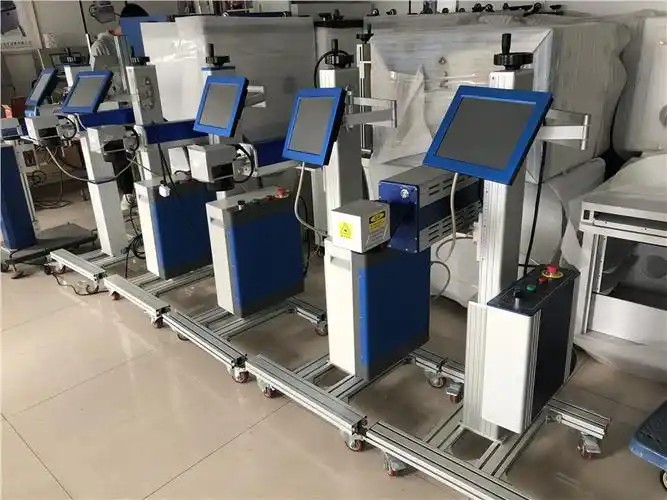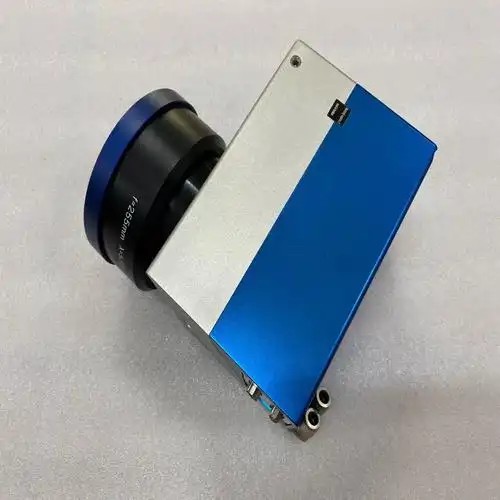
Barcode Laser Marking Guide:From the History of Barcodes to Industrial Traceability Solutions
In modern manufacturing, barcodes are almost everywhere. From price labels on supermarket products to traceability codes on automotive components, from Unique Device Identification (UDI) codes on medical devices to identification marks on aerospace parts, barcodes have become a fundamental part of modern industrial information management.
With the development of Industry 4.0, smart manufacturing, and product lifecycle traceability systems, companies are demanding higher durability, readability, and automation capabilities for barcode identification. Although traditional methods such as paper labels, inkjet printing, and thermal transfer printing are still widely used, they often suffer from wear, peeling, fading, or unreadable markings when exposed to high temperatures, corrosion, friction, or long-term use.
As a result, more and more manufacturers are adopting Barcode Laser Marking technology. By permanently marking barcodes directly onto product surfaces with laser technology, companies can achieve more stable, efficient, and reliable product traceability management.
This article provides a comprehensive introduction to the history of barcodes, common barcode types, the limitations of traditional marking methods, the principles of laser barcode marking, and how to choose the right laser marking equipment.

QR code laser marking samples of automotive parts
What Is Barcode Laser Marking?
Barcode laser marking is a manufacturing process that uses a high-energy laser beam to create permanent barcode markings on a product surface.Unlike traditional labels or inkjet printing, laser marking acts directly on the material itself. Through processes such as oxidation, annealing, engraving, etching, or foaming, the laser creates permanent markings on the product.
Laser marking can generate:
1D Barcodes
QR Codes
Data Matrix Codes
Serial Numbers
UID Codes
Product Traceability Codes
Because the marking is permanently embedded into the product itself, it cannot easily peel off, fade, or be tampered with.
In modern manufacturing, this technology is also known as:
Direct Part Marking (DPM)
Today, DPM is widely used in industries such as automotive, aerospace, electronics, medical devices, new energy, and defense manufacturing.
The History of Barcode Technology
The Birth of the Barcode (1948–1974)
In 1948, American engineers Norman Woodland and Bernard Silver began researching methods for automatically identifying products.
Inspired by Morse code, they extended dots and dashes into black-and-white lines of varying widths.
In 1952, they obtained the world’s first barcode-related patent.
However, because computer and scanning technologies were still immature at the time, barcode technology was not immediately adopted on a large scale.
It was not until 1974 that a supermarket in Ohio, USA successfully scanned a UPC barcode for the first time, officially marking the beginning of the modern barcode era.
The first product ever scanned was a pack of chewing gum.
This historical event became a major milestone in the development of retail automation.
The Arrival of the Industrial Traceability Era
Beginning in the 1980s, barcode technology expanded from retail into industrial manufacturing.
More companies began using barcodes to manage:
- Raw materials
- Components
- Semi-finished products
- Finished products
- Warehouse and logistics operations
Particularly in the automotive and electronics industries, barcodes became essential tools for product traceability.
By scanning a barcode, companies can quickly access:
- Product models
- Production dates
- Batch information
- Manufacturing records
- Quality inspection results
This significantly improves production efficiency and management capabilities.
Barcode Systems in the Industry 4.0 Era
Today, barcodes have become a key component of smart manufacturing.
MES systems, ERP systems, and warehouse management systems all rely on barcode data collection.
Barcodes are no longer just simple labels; they have become critical links connecting products, equipment, production lines, and databases.
In industries such as electric vehicles, lithium batteries, semiconductors, and medical devices, barcode traceability has already become an industry standard.
Common Types of Barcodes
Depending on the encoding method, barcodes are generally divided into two categories: one-dimensional barcodes and two-dimensional barcodes.
One-Dimensional Barcodes (1D Barcodes)
One-dimensional barcodes store information through black and white lines of varying widths.Common types include:
UPC
Widely used in retail product management.
EAN
International Article Numbering System.
Code 39
Commonly used in industrial manufacturing.
Code 128
Provides higher data capacity and is widely used in logistics applications.
Characteristics of 1D barcodes:
Simple structure
Fast scanning speed
Low cost
Limited data capacity
Typically, they can only store dozens of characters.
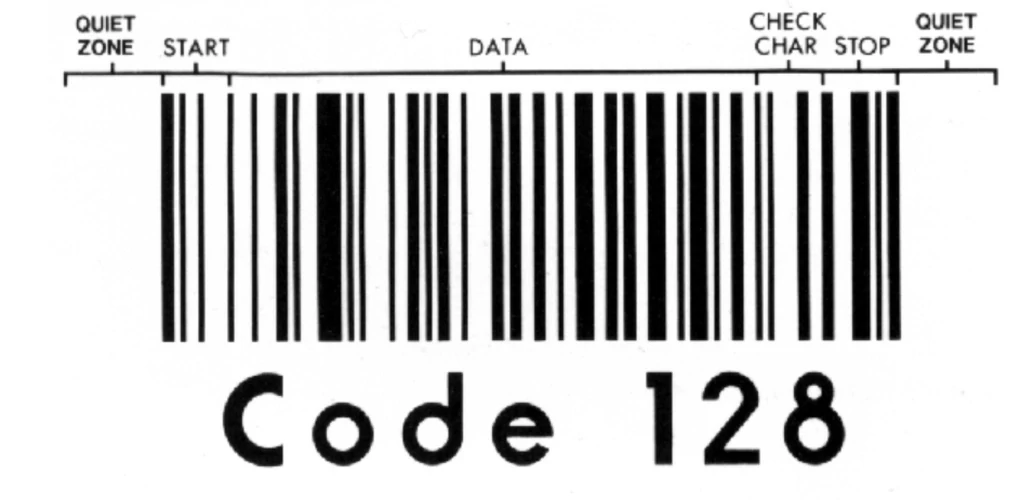
1D barcode
Two-Dimensional Barcodes (2D Barcodes)
As industrial traceability requirements continue to increase, two-dimensional barcodes have become the mainstream choice.
Common types include:
QR Code
The most widely used 2D barcode.It can store:
Website URLs
Product information
Contact information
Serial numbers
Data Matrix
Compared with traditional 1D barcodes, 2D codes offer:
Larger data capacity
Smaller marking area
Error correction capability
Higher scanning tolerance
For this reason, modern industrial traceability systems increasingly rely on QR Codes and Data Matrix Codes.
Why Traditional Barcode Marking Methods Can No Longer Meet Modern Manufacturing Requirements?
Although paper labels, inkjet printing, thermal transfer printing, and mechanical engraving are still widely used, they face increasing challenges in modern industrial production.
Paper labels are prone to peeling, moisture damage, aging, and wear, making them unsuitable for harsh industrial environments.
Inkjet printing is commonly used for packaging and consumer goods, but it requires continuous ink consumption, regular maintenance, and often suffers from fading and poor wear resistance over time.
Thermal transfer printing provides higher print quality but still depends on consumables such as ribbons and labels, resulting in higher operating costs and potential durability issues.
Mechanical engraving can create permanent marks, but its relatively slow processing speed, tool wear, maintenance requirements, and limited automation capabilities make it less suitable for mass production environments.
Why Is Laser Barcode Marking Becoming the Industry Standard?
Although traditional labels and printing technologies can meet basic identification requirements, they are increasingly showing limitations in durability, automation, and long-term performance.
In contrast, laser barcode marking is becoming the preferred solution for a growing number of manufacturers.
Permanent Marking
One of the biggest advantages of laser marking is permanence.
Traditional labels may peel off, become blurry, or even be completely destroyed due to friction, high temperatures, chemical exposure, or long-term use.
Laser marking modifies the material surface itself, creating marks that are highly resistant to wear.
Even in:
- High-temperature environments
- Humid environments
- Chemically corrosive environments
- Outdoor environments
- High-friction environments
the barcode remains clearly readable.
This is particularly important for automotive parts, aerospace components, medical devices, and industrial equipment.
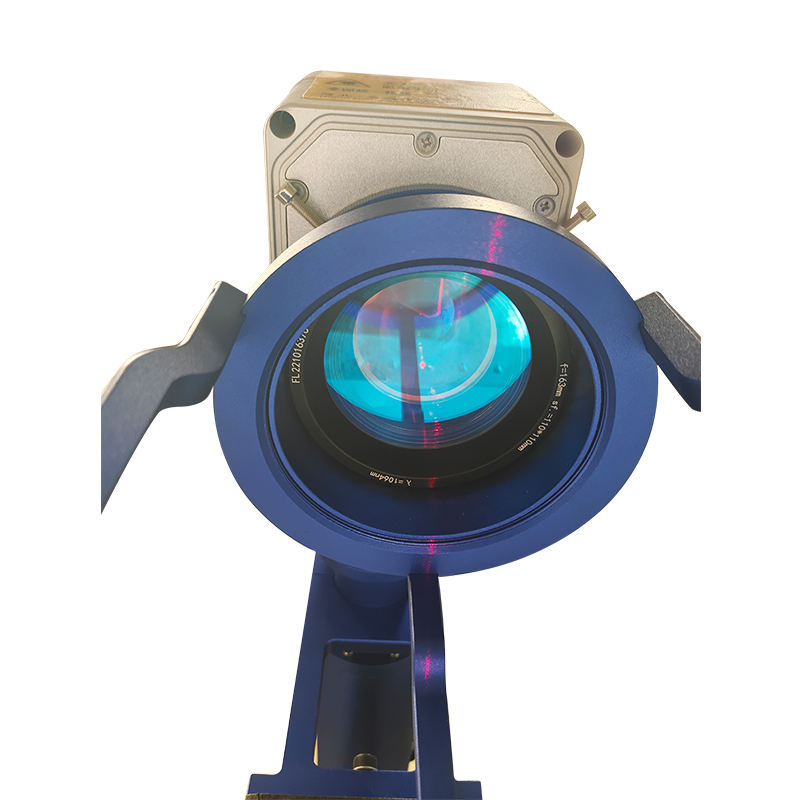
Laser Marking Machine Galvanometer
High Precision Processing
Laser marking systems can achieve micron-level precision.
Even within a marking area of only a few millimeters, complex QR codes can be produced with excellent clarity.
Compared with inkjet and printing technologies, laser marking provides higher contrast and superior edge quality, significantly improving scanning success rates.
Non-Contact Processing
Laser marking is a non-contact technology.
During processing:
- No tool contact
- No mechanical stress
- No workpiece deformation
This helps prevent damage that may occur with traditional mechanical engraving methods.
Consumable-Free Production
Traditional marking methods require ongoing purchases of:
- Labels
- Ink
- Ribbons
- Chemicals
Laser marking requires only electricity to operate.
Over the long term, this significantly reduces operating costs.
Easy Automation Integration
Modern factories increasingly focus on automation and smart manufacturing.
Laser marking systems can be directly connected to:
- ERP Systems
- MES Systems
- WMS Systems
- Database Systems
This enables:
- Automatic serial number generation
- Automatic QR code generation
- Automatic production data upload
- Automatic product record association
As a result, manufacturers can establish a complete product traceability system.
Industry Applications: Which Industries Rely Most on Barcode Laser Marking?
Automotive Industry
The automotive industry is one of the largest users of barcode laser marking technology.
A single vehicle typically consists of tens of thousands of components, and every critical part requires identification and quality traceability.
Common applications include:
- VIN (Vehicle Identification Number)
- Engine serial numbers
- Transmission nameplates
- Motor serial numbers
- Battery traceability codes
- Airbag identification markings
- Chassis component markings
In the automotive industry, components may be exposed to:
- High-temperature environments
- Oil and grease contamination
- Vibration
- Long-term outdoor use
Therefore, the markings must remain permanently clear and readable.
Laser-marked barcodes can remain readable throughout the entire product lifecycle, meeting the strict traceability requirements of the automotive industry.
Aerospace Industry
The aerospace industry has extremely stringent requirements for product identification.
Every aerospace component must have a unique identification code.
Examples include:
- Aircraft structural components
- Engine blades
- Landing gear parts
- Turbine disks
- Hydraulic system components
The marking information typically includes:
- Part numbers
- Manufacturer codes
- Batch information
- Maintenance records
- Data Matrix codes
The aerospace industry widely adopts the Direct Part Marking (DPM) standard.
Because aerospace components operate under high temperatures, high pressures, and severe vibration conditions, traditional labels cannot meet industry requirements. As a result, laser marking has become a standard process in aerospace manufacturing.
Medical Industry
In recent years, regulatory authorities around the world have strengthened product traceability requirements.
Examples include:
- FDA UDI (Unique Device Identification) System
- European Medical Device Regulation (MDR)
Both require medical products to carry unique identification codes.
Common applications include:
- Surgical instruments
- Orthopedic implants
- Medical equipment
- Dental instruments
- Medical consumables
Medical devices are frequently subjected to:
- High-temperature sterilization
- Chemical disinfection
- Ultrasonic cleaning
Traditional labels can easily become damaged during these processes.
Laser marking creates permanent identification codes on stainless steel, titanium alloys, and medical-grade plastics, making it one of the most important marking technologies in the medical industry.
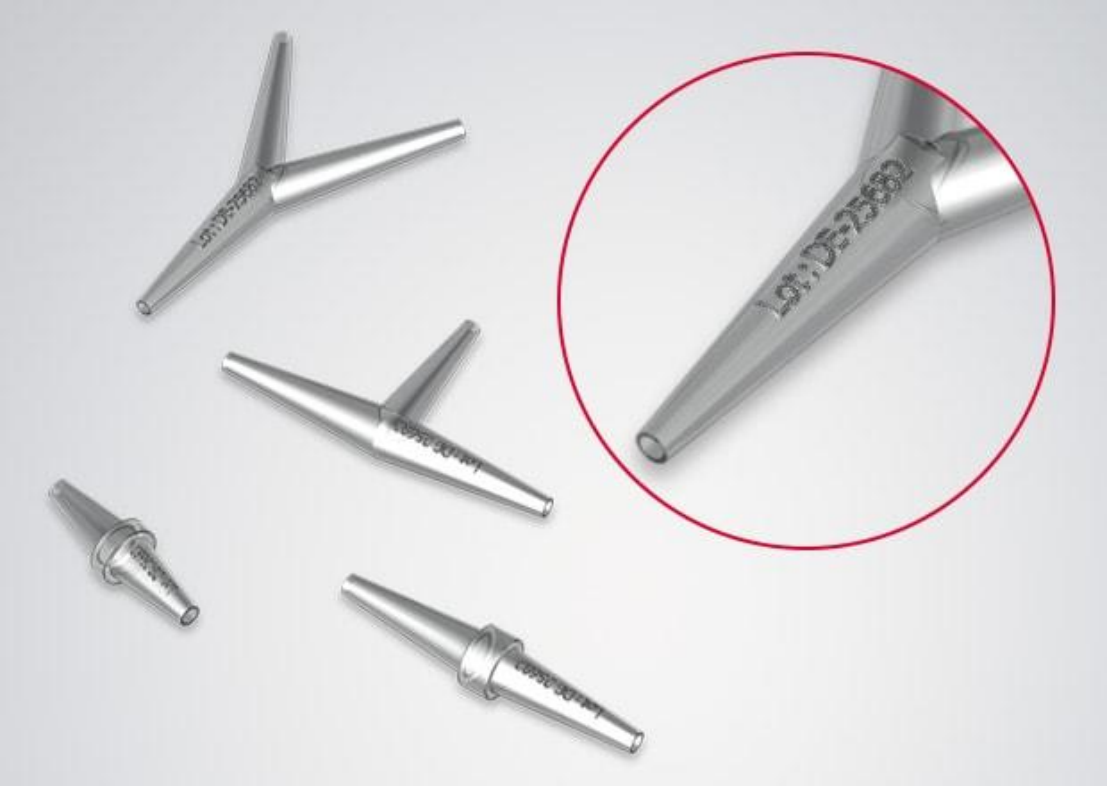
Medical implant marking
Electronics Industry
The electronics industry is one of the most intensive users of QR code technology.
Typical products include:
- Printed Circuit Boards (PCBs)
- Semiconductor chips
- Semiconductor devices
- Connectors
- Sensors
- Display modules
As products become increasingly compact, many marking areas are only a few millimeters in size—or even smaller.
Therefore, electronics manufacturers commonly use:
- UV Laser Marking Machines
- High-Precision Fiber Laser Marking Systems
to produce ultra-small QR codes and Data Matrix codes.
Modern electronics factories widely utilize MES systems to manage production processes, and QR codes have become a critical link between products and manufacturing databases.
New Energy Industry
The rapid growth of electric vehicles and energy storage systems has significantly increased the demand for barcode traceability.
Many critical components require full lifecycle traceability.
For example:
Power Batteries
Typical marking content includes:
- Battery cell codes
- Production batches
- Manufacturing dates
- QR codes
Energy Storage Systems
Typical marking content includes:
- Module numbers
- PACK numbers
- Product traceability codes
Photovoltaic Modules
Typical marking content includes:
- Product serial numbers
- Manufacturing information
- Anti-counterfeiting codes
The new energy industry has become one of the fastest-growing markets for barcode laser marking applications.
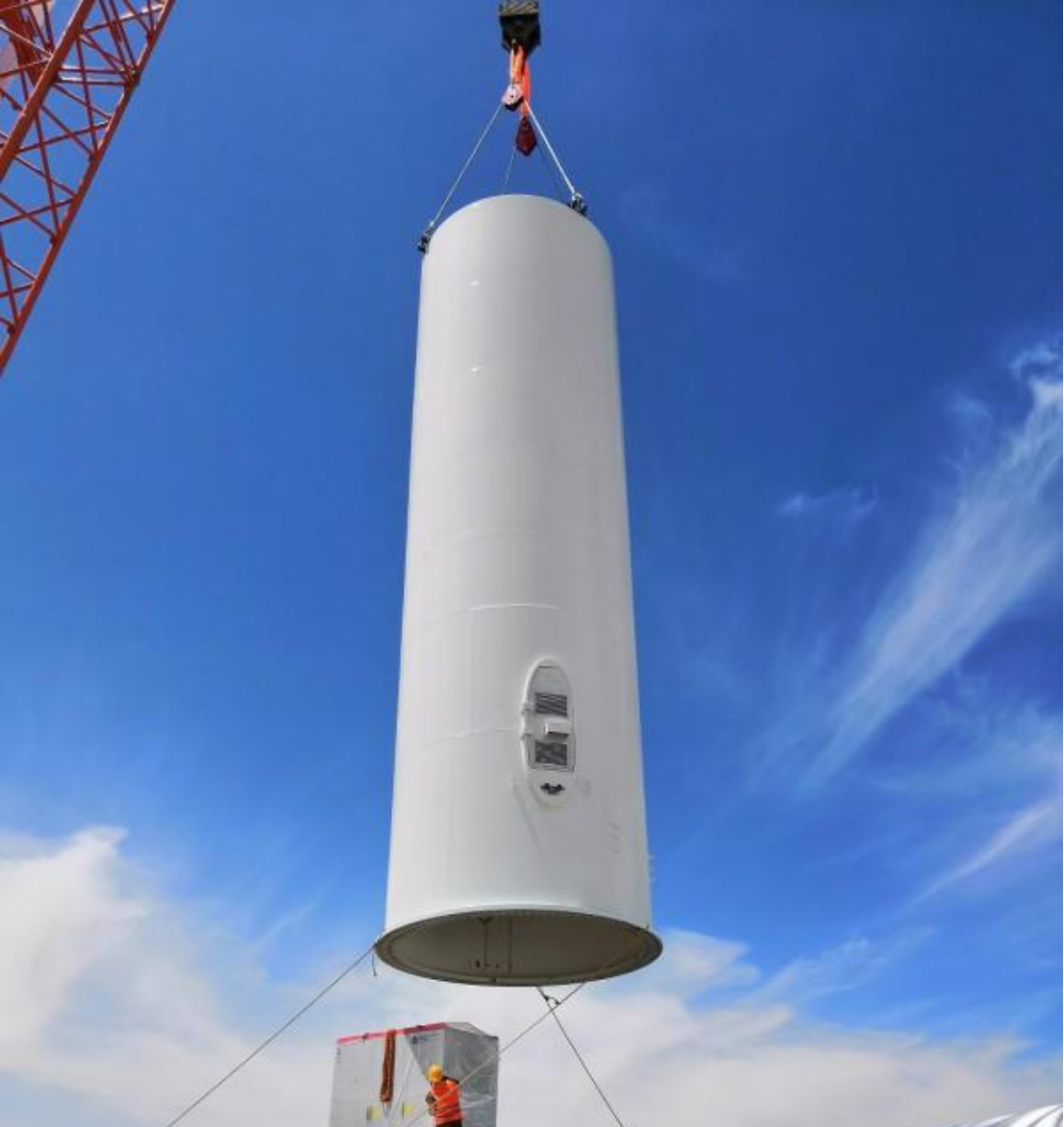
New energy wind power industry marking
How to Choose a Barcode Laser Marking Machine?
Different materials require different types of laser systems. Choosing the right laser source not only ensures barcode and QR code quality but also improves production efficiency and reduces long-term operating costs.
Fiber Laser Marking Machine
Fiber laser marking machines are currently the most widely used barcode marking systems in industrial manufacturing.
They are primarily used for metal materials such as:
- Stainless steel
- Aluminum alloys
- Carbon steel
- Brass
- Copper
- Titanium alloys
Key advantages include:
- High marking speed
- Excellent precision
- Long service life
- Low maintenance costs
For most metal barcode and QR code marking projects, fiber laser marking machines are the preferred solution.
Common power options include:
- 20W
- 30W
- 50W
- 100W
Among them, 50W has become the mainstream configuration for industrial production.
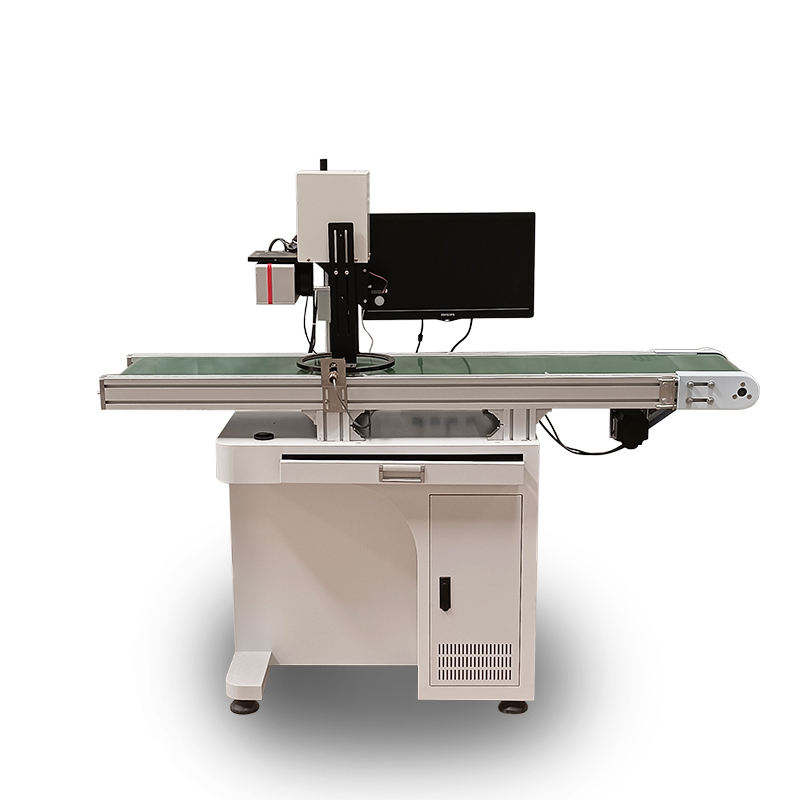
Vision Fiber Laser Marking Machine
MOPA Laser Marking Machine
MOPA laser systems are an upgraded version of traditional fiber laser technology.
Their biggest advantage is adjustable pulse width, allowing higher contrast marking results.
They are particularly suitable for:
- Black marking
- Color marking
- High-contrast QR codes
- Precision electronic components
Compared with standard fiber lasers, MOPA lasers produce barcodes and QR codes that are easier for scanners and machine vision systems to recognize.
As a result, MOPA laser technology is becoming increasingly popular in industries such as:
- Electric vehicles
- Lithium batteries
- Consumer electronics
UV Laser Marking Machine
UV laser marking machines operate at a wavelength of 355nm.
They are considered a cold processing technology because they generate minimal heat-affected zones and cause very little damage to the material surface.
Typical applications include:
- Plastic products
- Medical devices
- PCB circuit boards
- Electronic components
- Glass products
For very small QR codes and Data Matrix codes that require extremely high precision, UV lasers often provide the finest and clearest marking quality.
CO₂ Laser Marking Machine
CO₂ laser marking machines operate at a wavelength of 10.6μm.
They are primarily used for non-metal materials, including:
- Wood
- Paper
- Leather
- Acrylic
- Textiles
- Rubber
For barcode and QR code marking on packaging materials, wooden products, and other non-metal applications, CO₂ laser systems are often the most economical and mature solution.
Choosing the Right Laser Technology
In simple terms:
For metal products, Fiber Laser or MOPA Laser is usually the best choice.
For plastics and electronic products, UV Laser generally delivers superior results.
For wood, paper, leather, and other non-metal materials, CO₂ Laser is the recommended solution.
Selecting the appropriate laser technology according to the material characteristics is the key to achieving optimal barcode quality and long-term performance.
Looking for a Professional Barcode Laser Marking Solution?
ZS Machinery provides a complete range of industrial laser marking solutions, including Fiber Laser Marking Machines, MOPA Laser Marking Machines, UV Laser Marking Machines, and CO₂ Laser Marking Systems for applications such as barcodes, QR codes, Data Matrix codes, serial numbers, and traceability markings.
Whether you need to mark metal parts, plastic products, electronic components, medical devices, automotive components, or industrial nameplates, our team can recommend the most suitable laser marking solution based on your material, production volume, marking requirements, and automation needs.
Contact ZS Machinery today to discuss your barcode marking project. We will provide a customized laser marking solution tailored to your specific application requirements.
Laser Marking Systems: Complete Guide to Components, Technologies and Industrial Applications