CerMark Alternatives: Better Solutions for Permanent Metal Laser Marking
If you’ve searched for CerMark alternatives, you’re probably looking for a better, more cost-effective way to create permanent black markings on stainless steel, aluminum, glass, or other materials.
CerMark has long been one of the most recognized laser marking sprays in the industry. However, with the rapid development of fiber laser technology, many manufacturers are beginning to replace CerMark with more efficient and economical laser marking solutions.
In this guide, we’ll explain what CerMark is, why many businesses are searching for alternatives, and when technologies like fiber laser marking and MOPA laser marking may be the better choice.
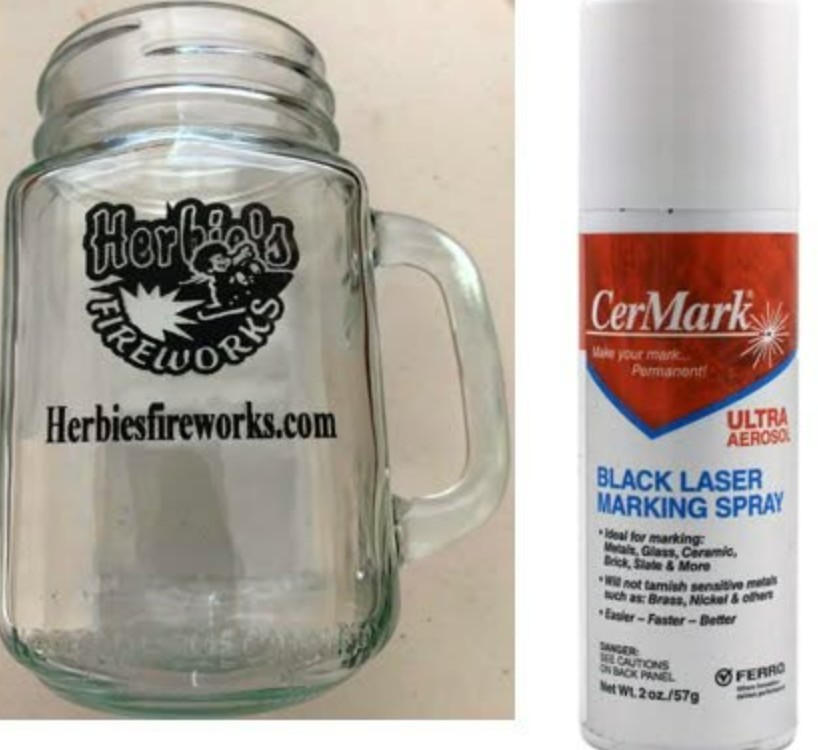
Cermark on bottles
What Is CerMark?
CerMark is a laser marking compound (also known as a laser marking spray or paste) designed primarily for CO₂ laser engraving machines.
Unlike direct laser engraving, CerMark is first sprayed onto the surface of the workpiece. During laser processing, the laser bonds the marking compound to the material surface, creating a permanent black mark.
It is commonly used on materials such as:
- Stainless steel
- Aluminum
- Brass
- Copper
- Glass
- Ceramics
- Chrome-plated products
- Nickel-plated surfaces
Typical applications include:
- Company logos
- Serial numbers
- QR codes
- Industrial labels
- Medical instruments
- Awards and gifts
Because the laser bonds the coating to the surface rather than engraving deeply into the material, CerMark can produce high-contrast black markings even on materials that are difficult to mark with a CO₂ laser alone.
Why Are More Manufacturers Looking for CerMark Alternatives?
Although CerMark has been widely used for years, it also has several limitations—especially for manufacturers with medium- or high-volume production.
The most common reasons include:
High Operating Cost
CerMark is a consumable product. Every part requires additional spray, which increases production costs over time.
For companies producing hundreds or thousands of parts every day, the cost of consumables becomes significant.
Additional Production Steps
Using CerMark usually requires several operations:
- Clean the workpiece.
- Spray the CerMark coating evenly.
- Wait for it to dry.
- Perform laser marking.
- Wash away excess coating.
- Dry and inspect the finished product.
Compared with direct laser marking, this workflow is considerably more time-consuming.
Difficult to Automate
Modern factories increasingly rely on automated production lines.
Because CerMark requires spraying and post-cleaning, it is much harder to integrate into automated manufacturing systems than direct laser marking.
Environmental and Workplace Considerations
Although CerMark is designed for industrial use, spraying operations still require proper ventilation and handling.
Many manufacturers today prefer cleaner production methods that eliminate chemicals and reduce maintenance.
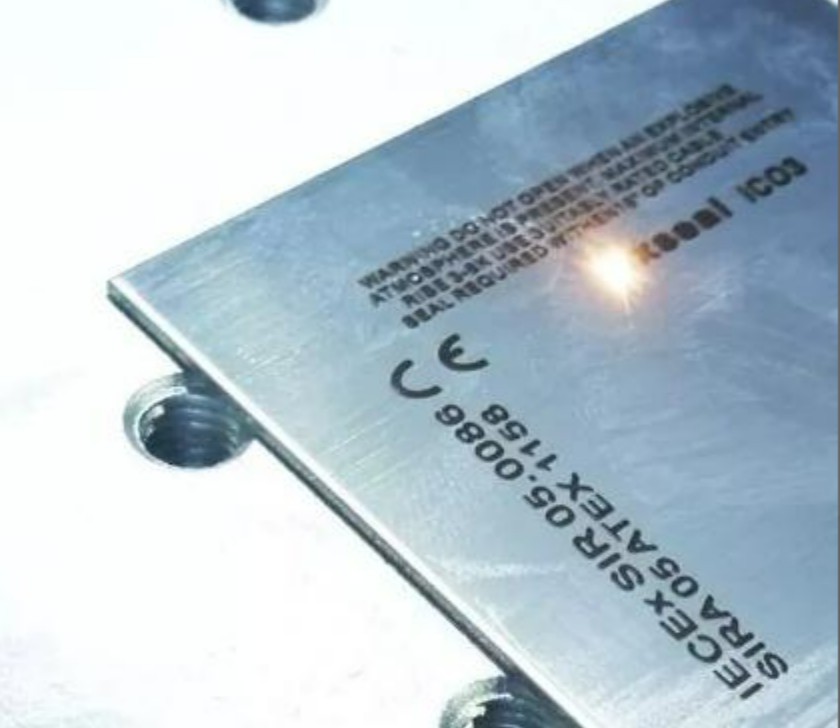
Black Laser Marking On Metal Board
What Are the Best CerMark Alternatives?
The ideal alternative depends on your material, production volume, appearance requirements, and budget.
Below are the most common options used in today’s manufacturing industry.
Alternative 1: Fiber Laser Marking (Best Choice for Most Metal Products)
For most industrial metal applications, a fiber laser marking machine is the most practical replacement for CerMark.
Instead of relying on an external coating, the laser directly modifies the surface of the metal to create a permanent mark.
Fiber laser marking is suitable for:
- Stainless steel
- Carbon steel
- Aluminum
- Brass
- Copper
- Titanium
- Nickel
- Tool steel
It can permanently mark:
- Company logos
- Product information
- Serial numbers
- QR codes
- Data Matrix codes
- Barcodes
- Traceability information
Advantages
- No consumables
- No chemicals
- High marking speed
- Low maintenance
- Easy automation
- Permanent results
- Low operating cost
For manufacturers focused on productivity and long-term cost savings, fiber laser marking has become the preferred solution.
Alternative 2: MOPA Fiber Laser (Ideal for High-Contrast Black Marking)
If your goal is to achieve deep black markings similar to CerMark—especially on stainless steel or anodized aluminum—a MOPA fiber laser is often an even better solution.
Unlike standard fiber lasers, MOPA lasers feature adjustable pulse widths, allowing much finer control over laser energy.
This makes it possible to create:
- Deep black logos
- High-contrast text
- Fine QR codes
- Decorative graphics
- Color marking on titanium
- Black marking on anodized aluminum
Compared with CerMark, MOPA laser marking requires no coating, no cleaning, and no consumables.
It also provides excellent consistency for premium products such as:
- Medical devices
- Luxury goods
- Electronics
- Consumer products
- Precision components
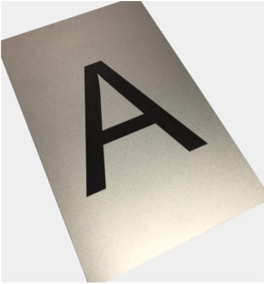
MOPA Laser Marking On Aluminium
Alternative 3: Laser Annealing
Laser annealing is another popular alternative, especially in industries where preserving the material surface is important.
Instead of removing material, laser annealing changes the oxide layer on stainless steel through carefully controlled heat.
This process creates a dark, permanent mark while maintaining excellent corrosion resistance.
Laser annealing is widely used for:
- Surgical instruments
- Medical implants
- Aerospace components
- Food processing equipment
Because the surface remains smooth and intact, it is ideal for products that require hygienic or corrosion-resistant finishes.
Alternative 4: Other Laser Marking Sprays
If you’re already using a CO₂ laser and prefer a spray-based solution, several products compete directly with CerMark.
Common alternatives include:
- LaserBond
- TherMark
- Brilliance Laser Inks
These products work in a similar way by bonding a ceramic-based coating to the material surface during laser processing.
However, they still share the same disadvantages:
- Consumable cost
- Spraying process
- Cleaning requirements
- Lower production efficiency
Alternative 5: UV Printing
In some applications, customers are looking for colorful logos rather than permanent black marks.
In these cases, UV printing may be a better option.
UV printers can reproduce:
- Full-color logos
- Corporate branding
- Photographic images
- Decorative graphics
However, UV printing applies ink to the surface rather than modifying the material itself.
Compared with laser marking, UV printing generally offers:
- Better color reproduction
- Lower wear resistance
- Less chemical resistance
- Shorter service life
For industrial traceability or long-term identification, laser marking remains the more durable solution.
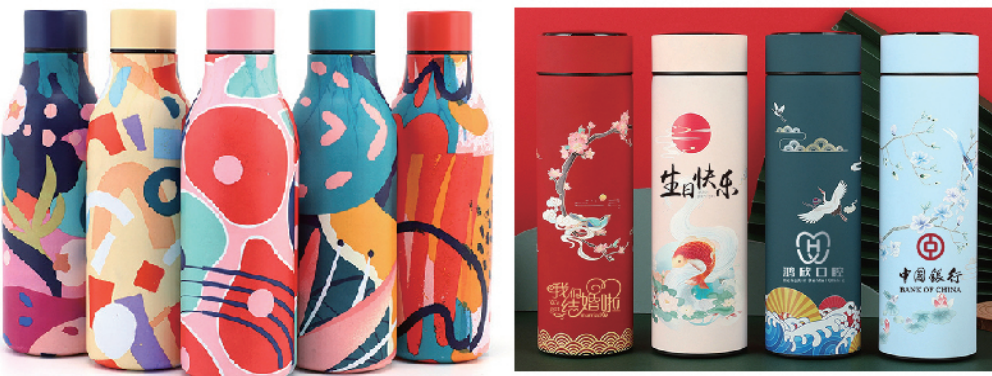
Cylindrical cup UV color printing sample
CerMark vs Fiber Laser Marking
| Feature | CerMark | Fiber Laser | MOPA Fiber Laser |
|---|---|---|---|
| Permanent Mark | Yes | Yes | Yes |
| Consumables Required | Yes | No | No |
| Production Speed | Medium | Very Fast | Very Fast |
| Cleaning Required | Yes | No | No |
| Automation Friendly | Limited | Excellent | Excellent |
| Operating Cost | High | Low | Low |
| Black Marking Quality | Excellent | Good | Excellent |
| Long-Term ROI | Medium | Excellent | Excellent |
When Should You Still Choose CerMark?
Despite the growing popularity of fiber laser systems, CerMark is still a suitable solution in certain situations.
It remains a good choice when:
- You already own a CO₂ laser system.
- Production volume is relatively low.
- You need occasional black marking on glass or ceramics.
- Purchasing a new laser system is not economically justified.
For hobbyists, custom engraving shops, or small-batch production, CerMark can still deliver excellent results.
When Is Fiber Laser a Better Investment?
For manufacturers producing metal parts every day, investing in a fiber laser marking machine usually makes much more economic sense.
Fiber laser systems eliminate:
- Spray materials
- Chemical handling
- Cleaning operations
- Consumable replacement
At the same time, they offer:
- Higher production efficiency
- Stable marking quality
- Lower operating costs
- Easy integration into automated production lines
- Minimal maintenance
Over the life of the machine, these advantages often outweigh the initial equipment investment.
Why More Manufacturers Are Replacing CerMark
The manufacturing industry has changed significantly over the past decade.
Today’s factories prioritize:
- Automation
- Lean manufacturing
- Environmental protection
- Production efficiency
- Traceability
- Lower operating costs
As a result, direct laser marking has become the preferred solution for many industrial applications.
Instead of relying on consumable sprays, manufacturers can permanently mark metal parts directly with fiber laser technology, improving productivity while reducing long-term expenses.
Why Choose ZS Machinery?
At ZS Machinery, we believe that choosing a laser marking solution should focus on long-term production efficiency rather than simply replacing one consumable with another.
We specialize in providing complete one-stop laser marking solutions for metal and non-metal processing industries worldwide.
Our product portfolio includes:
- Fiber Laser Marking Machines
- MOPA Fiber Laser Marking Machines
- UV Laser Marking Machines
- CO₂ Laser Marking Systems
- Handheld Laser Marking Machines
- Fully Enclosed Industrial Laser Marking Systems
- Automated Laser Marking Solutions
Whether you’re upgrading from CerMark, replacing an older CO₂ system, or building a fully automated production line, our engineering team can recommend the most suitable laser solution based on your materials, production volume, marking requirements, and budget.
If you’re looking for a practical CerMark alternative that reduces operating costs while improving production efficiency, contact ZS Machinery today. We offer professional application advice, free sample testing, and customized laser marking solutions designed to help your business grow.
Laser Marking Steel: The Complete Guide to Steel Laser Marking