UV Laser Marking vs UV Printing: What’s the Difference and Which One Should You Choose?
UV laser marking and UV printing are often confused because they both involve “UV.” However, they are fundamentally different technologies used for completely different industrial purposes.
Short answer:
UV laser marking uses a high-energy ultraviolet laser to permanently modify the material surface
UV printing uses UV-curable ink that is deposited and instantly cured on the surface
If you need permanent, high-precision marking, choose UV laser.
If you need color graphics or surface decoration, choose UV printing.
The rest of this guide explains the differences in detail, from technology to real-world applications.
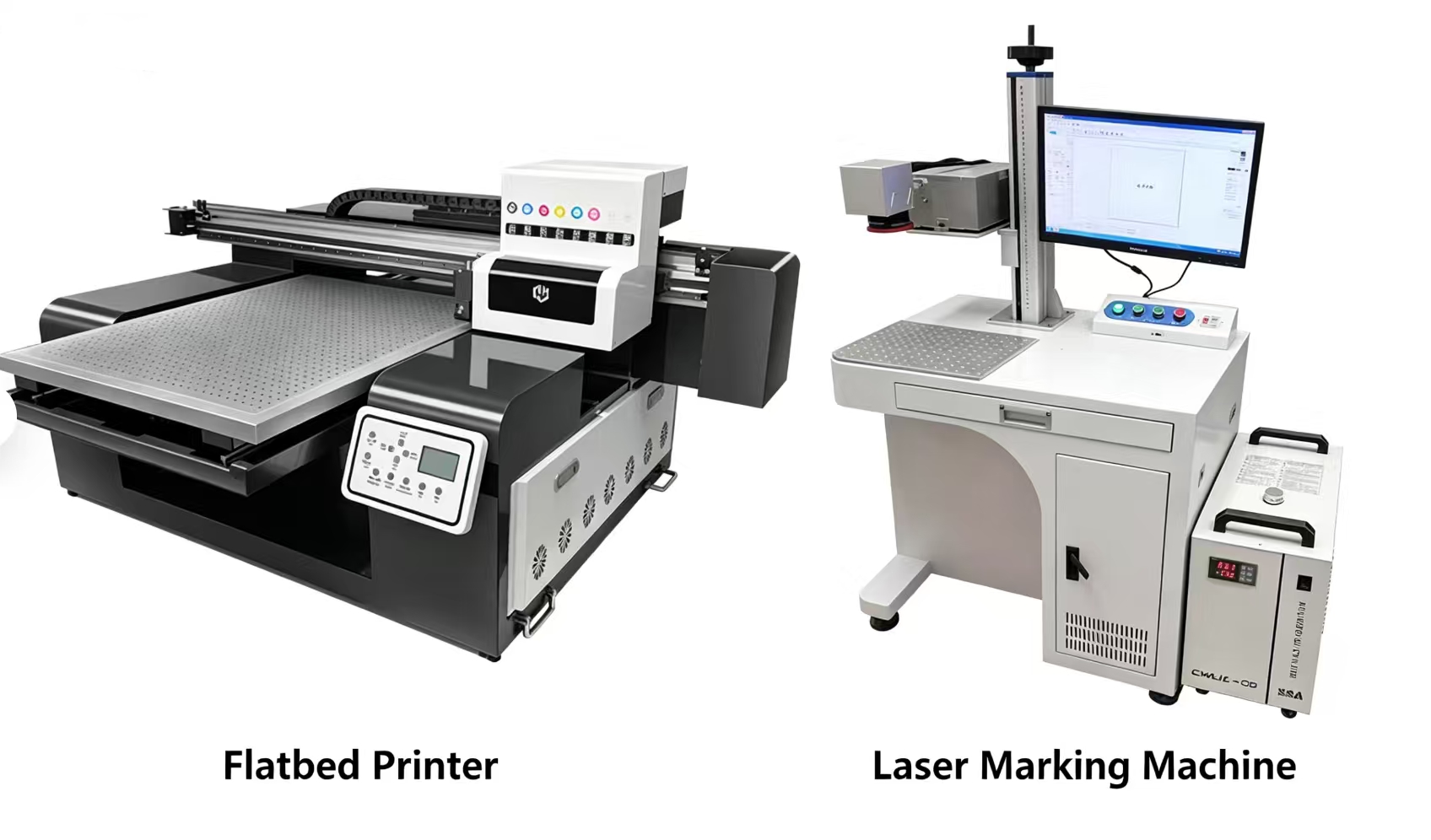
VU Printer And UV Laser Marker
1.What Is UV Laser Marking?
UV laser marking is a non-contact material processing technology that uses a 355 nm ultraviolet laser beam.Unlike fiber or CO₂ lasers, UV laser works through photochemical interaction, meaning:
It breaks molecular bonds directly
Generates minimal heat
Causes almost no material deformation
Because of this, it is widely used for high-precision and heat-sensitive materials.
Key characteristics:
Permanent marking (cannot be removed)
No consumables (no ink, no chemicals)
Extremely fine detail (micro text, QR codes)
Suitable for plastics, glass, and thin films
2.What Is UV Printing?
UV printing is a digital inkjet process combined with ultraviolet curing.The process works as follows:
(1)Ink droplets are sprayed onto the surface using piezoelectric printheads
(2)UV light immediately cures the ink
(3)A solid polymer layer forms on the material
Unlike laser marking, UV printing adds material instead of modifying it.
Key characteristics:
Full-color printing (CMYK, white, varnish)
Works on non-absorbent materials
Ink forms a layer on the surface
Suitable for decorative and visual applications
3.Core Difference: Material Modification vs Material Deposition
This is the most important distinction.
| Aspect | UV Laser Marking | UV Printing |
| Processing Type | Material modification | Material deposition |
| Mechanism | Photochemical reaction | Ink + UV curing |
| Surface Impact | Changes material itself | Adds a coating layer |
| Permanence | Permanent | Semi-permanent |
UV laser becomes part of the material.
UV printing stays on top of the material.
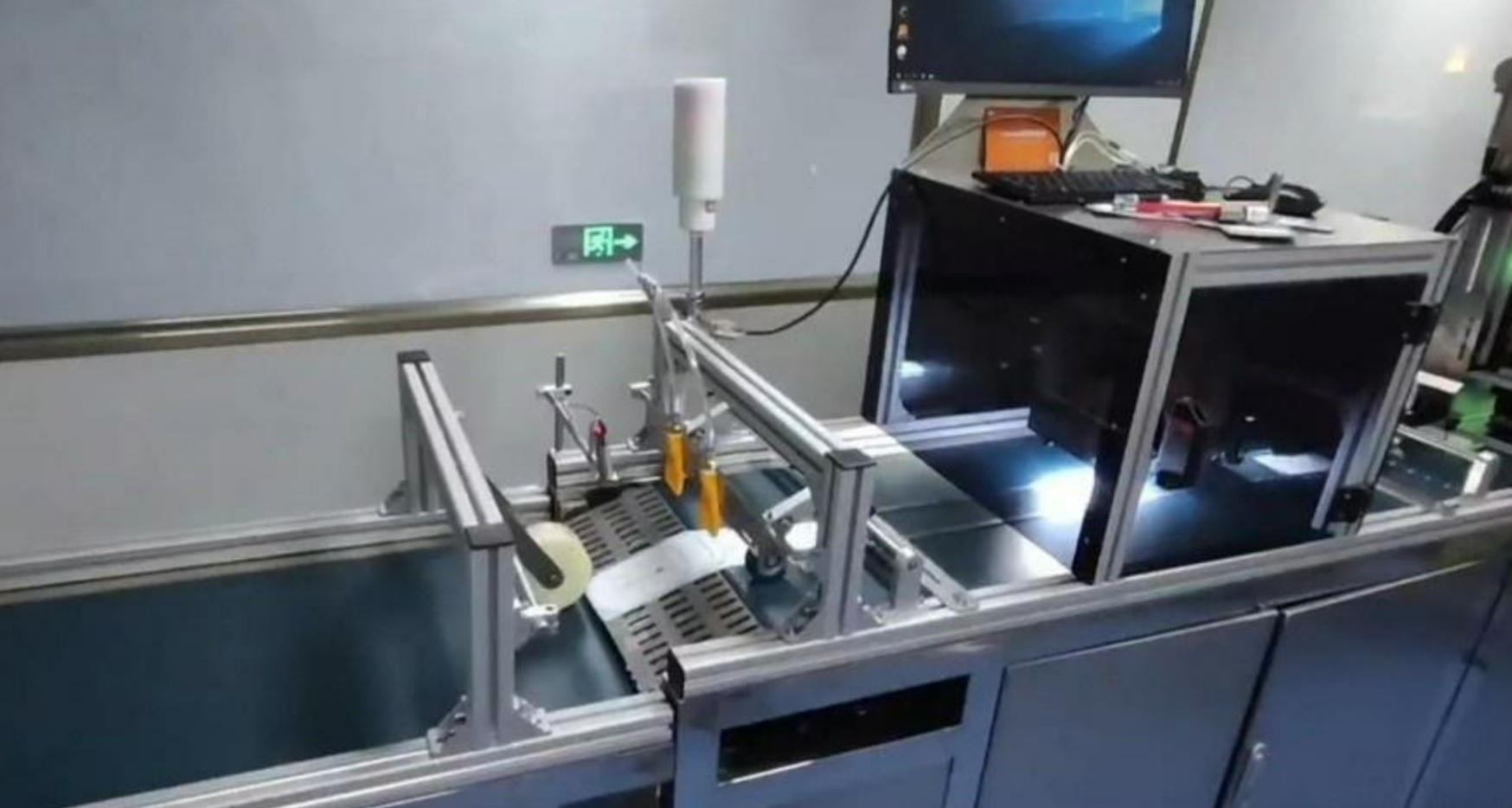
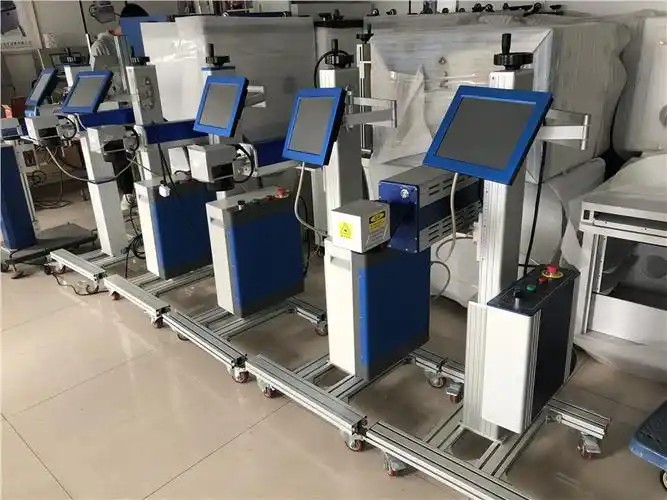
Continuous UV inkjet printer
4.Technology and System Comparison
UV Laser System
UV laser source (355 nm)
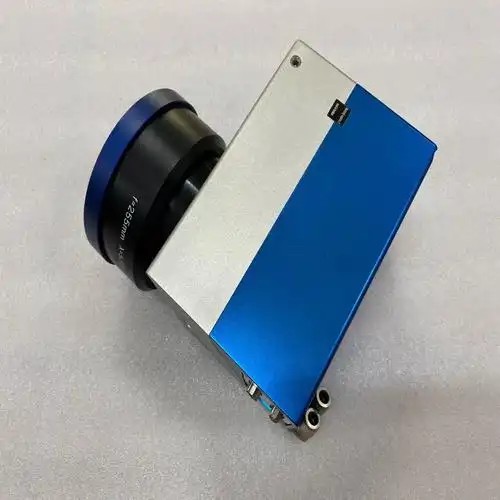
Galvo scanning system
High energy density, micron-level precision
Advantages:
Extremely stable
Minimal maintenance
Easy integration into production lines
UV Printing System
Printhead + ink supply system
UV LED curing unit
Motion platform (flatbed or conveyor)
Challenges:
Requires ink management
Sensitive to environment
Higher maintenance needs
5.Marking vs Printing Results
UV Laser Marking Results
No thickness (no added layer)
Highly resistant to wear, chemicals, and heat
Ultra-fine details possible
Clean and precise
Typical effects:
Frosted marking on plastics
Micro engraving on glass
High-contrast coding
UV Printing Results
Visible ink layer on the surface
Supports full-color images
Can create texture (raised effect)
Strong visual impact
Limitations:
Can wear off under friction
Adhesion depends on material
May require pre-treatment
6.Application Comparison
UV Laser Marking Applications
Electronic components (PCB, chips)
Medical devices
Cosmetic packaging coding
Industrial traceability systems
Best for:
Permanent identification
High precision marking
Clean production environments
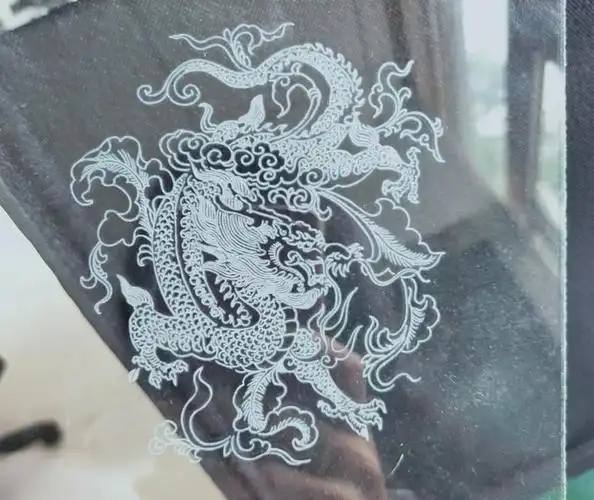
Glass UV Laser Marking Samples
UV Printing Applications
Product packaging
Promotional items
Signage and decoration
Custom product branding
Best for:
Visual design
Multi-color graphics
Flexible customization
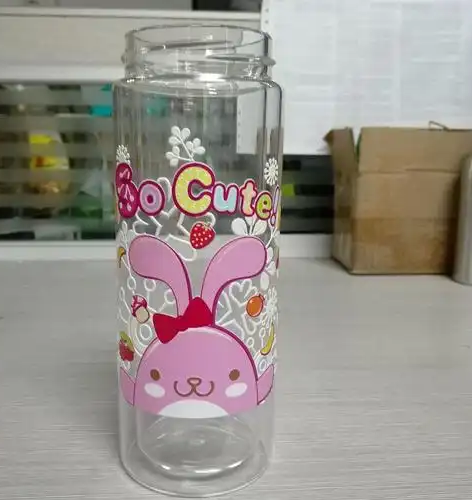
UV Printing On Glass Cups
7.Cost and Production Considerations
UV Laser
Higher initial investment
Almost zero consumable cost
Long service life
Ideal for mass production
UV Printing
Lower initial cost (in some cases)
Continuous ink cost
Regular maintenance required
Better for small batches and customization
8.UV Laser Marking vs UV Printing: Complete Comparison
| Category | UV Laser Marking | UV Printing |
| Core Principle | Photochemical material modification | Ink deposition + UV curing |
| Processing Type | Non-contact, no consumables | Non-contact, requires ink |
| Result | Permanent mark (part of material) | Ink layer on surface |
| Color Capability | Mostly monochrome | Full color (CMYK, white, varnish) |
| Precision | Extremely high (micron level) | High (limited by DPI and ink spread) |
| Durability | Excellent (wear, chemical, heat resistant) | Good (depends on ink and adhesion) |
| Surface Impact | No thickness, no coating | Adds thickness (coating layer) |
| Materials | Plastics, glass, metals, films | Almost all materials (with proper adhesion) |
| Speed | Very high (suitable for mass production) | High (depends on printing mode) |
| Maintenance | Low | Medium to high |
| Running Cost | Very low (no consumables) | Higher (ink + maintenance) |
| Best Use | Traceability, coding, precision marking | Graphics, branding, decoration |
Summary:
UV laser marking is ideal for permanent, high-precision industrial identification, while UV printing is better suited for visual customization and color applications.
9.Which One Should You Choose?
Choose UV laser marking if you need:
Permanent marking
High precision (micro marking)
No consumables
Industrial traceability
Choose UV printing if you need:
Full-color output
Surface decoration
Flexible design changes
Branding and packaging
10.FAQ
Is UV laser marking better than UV printing?
Not necessarily. UV laser is better for permanent marking, while UV printing is better for color and appearance.
Can UV printing replace laser marking?
No. UV printing cannot achieve the same level of permanence and precision as laser marking.
Can UV laser produce color?
Generally no. UV laser marking is typically monochrome, depending on material reaction.
Which is more durable?
UV laser marking is significantly more durable because it modifies the material itself.
11.ConclusionAnd Call To Action
Although both technologies use ultraviolet energy, their roles in manufacturing are completely different:
UV laser marking is designed for precision, permanence, and industrial reliability
UV printing is designed for visual impact, flexibility, and surface customization
In real production environments, many companies use both technologies together—one for identification, the other for appearance.
Contact us now
In many industrial scenarios, the best solution is not choosing one over the other, but selecting the right combination.
We help manufacturers determine:
Whether your material is suitable for laser marking or requires printing
Which solution offers better long-term cost efficiency
How to integrate the system into your production line
The optimal configuration based on your application
If you are evaluating equipment for your production, feel free to share:
Your material (metal, plastic, glass, etc.)
Marking or printing requirements
Production environment or workflow
Our team can provide a practical recommendation based on real industrial experience, not just theory.
Laser Marking in 2026: What You Need to Know About Technology, Processes, Materials, and Industrial Applications