A Complete Guide to Laser Engraving and Cutting Acrylic: Equipment Selection, Processing Techniques, and Application Analysis
Acrylic, also known as PMMA (Polymethyl Methacrylate) or plexiglass, is a synthetic polymer material that was first developed in the early 20th century and became widely used in commercial applications during the 1950s. With the advancement of laser technology, more and more manufacturers are using laser engraving and laser cutting to replace traditional mechanical processing methods.
Compared with sawing, CNC routing, and manual fabrication, laser processing is a non-contact technology that requires no physical tool contact with the material. As a result, it offers higher precision, greater design flexibility, more complex pattern capabilities, and superior edge quality. Today, laser engraving acrylic and laser cutting acrylic have become standard manufacturing methods in industries such as signage, advertising, displays, custom gifts, retail fixtures, and architectural decoration.
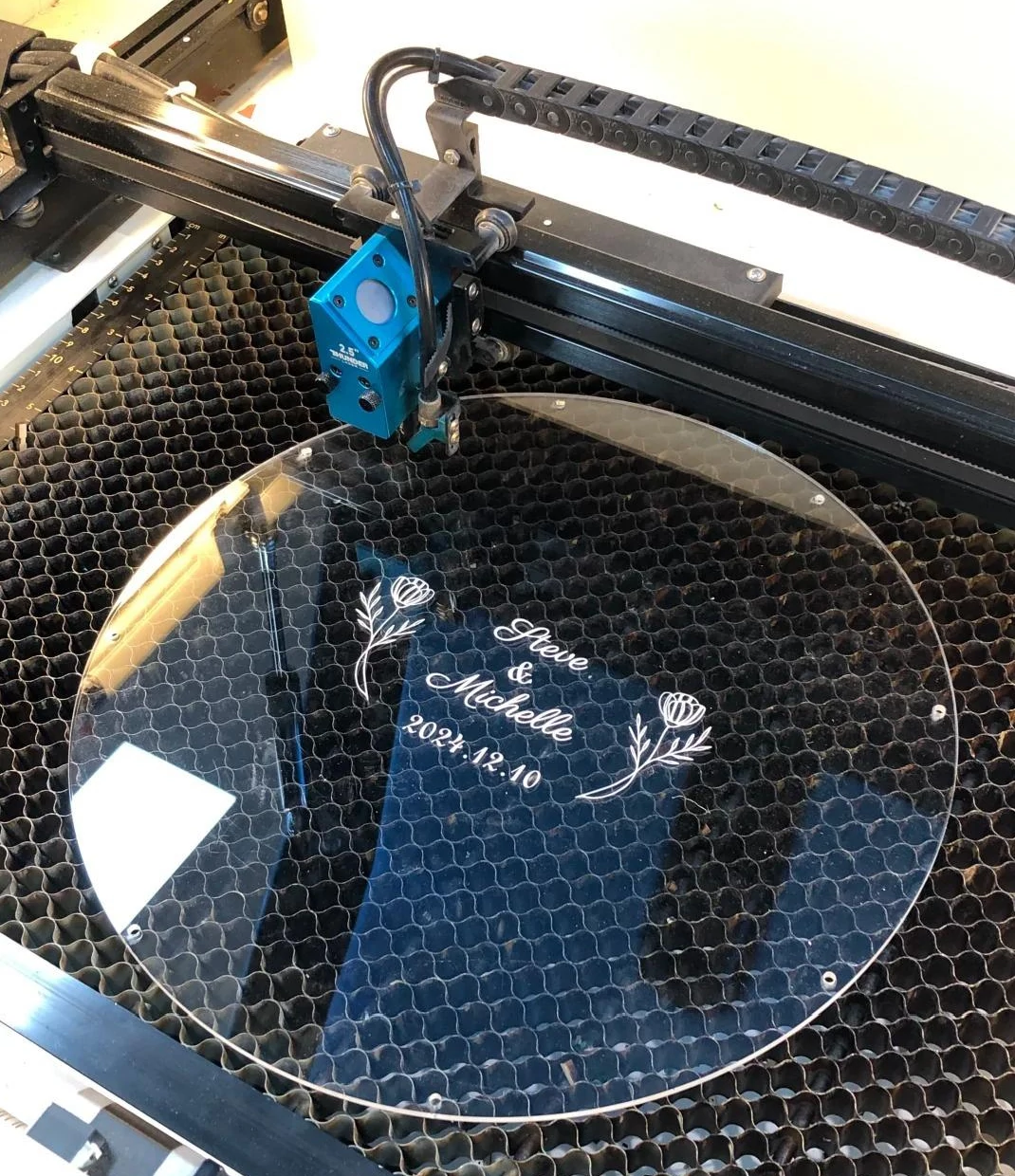
Laser engraving arcylic
Why Is Acrylic Ideal for Laser Processing?
Acrylic is widely regarded as one of the best materials for laser processing. This is not only because it is easy to cut, but also because laser technology can fully utilize the unique characteristics of acrylic.
1. Excellent Optical Properties for Superior Engraving Effects
Acrylic has extremely high transparency, with light transmission rates exceeding 92%. When processed with an acrylic laser engraving machine, engraved areas develop a uniform frosted appearance that creates a strong contrast against the transparent surface. This makes logos, text, graphics, and decorative patterns highly visible and visually appealing.
2. Good Thermal Stability and Low Flammability
Acrylic offers good thermal stability and relatively low flammability, allowing clean and precise laser engraving and cutting results. Its durability and scratch resistance also make it suitable for long-lasting products such as awards, trophies, and display items.
3. Wide Range of Colors and Material Options
Acrylic is available in transparent, translucent, colored, mirrored, and specialty finishes. It also accepts paints, inks, and surface treatments very well, providing additional customization possibilities after laser processing.
4. Lightweight and Durable
Compared with glass, acrylic is lightweight, impact-resistant, and easier to fabricate. It is ideal for personalized products, commercial displays, retail signage, and decorative applications.
How Does Laser Engraving Acrylic Work?
Laser engraving acrylic works by focusing a high-energy laser beam onto the surface of the material. The concentrated energy causes localized vaporization or microscopic structural changes, creating permanent graphics, text, logos, or textures.
Unlike cutting, laser engraving does not penetrate the entire material thickness. Instead, the laser removes material at a controlled depth. By adjusting laser power, frequency, and engraving speed, operators can achieve different engraving depths and visual effects.
Laser engraved acrylic typically produces a frosted appearance with excellent contrast and dimensional depth. This makes laser marking acrylic suitable for:
- Company logos
- Product identification
- QR codes
- Awards and trophies
- Display signs
- Souvenirs
- Personalized gifts
Compared with traditional mechanical engraving, acrylic laser etching provides finer details, greater consistency, and eliminates the need for tool changes when processing different designs.
How Does Laser Cutting Acrylic Work?
Laser cutting acrylic uses a focused laser beam to completely penetrate the material and create precise contour cuts.
During processing, the laser rapidly melts and vaporizes the acrylic along the cutting path. An air assist system then removes molten material from the kerf, producing smooth and clean cut edges.
Compared with traditional mechanical cutting methods, laser cutting acrylic offers several advantages:
- No mechanical stress
- No tool wear
- High cutting speed
- Ability to process complex shapes
- Excellent edge quality
- High material utilization
For signage manufacturers, display fabricators, and custom product businesses, laser cutting has become one of the most efficient production methods available.
Tips for Laser Processing Acrylic
When performing laser marking acrylic, laser engraving acrylic, or laser cutting acrylic, the following factors should be considered.
1. Basic Laser Settings
Laser Power
Choose laser power according to the thickness of the acrylic sheet. Thicker materials require higher power levels.
For example:
- 3 mm acrylic: 30–40W
- 5 mm acrylic: 50–80W
- 10 mm acrylic: 60–100W or higher
Cutting Speed
Proper cutting speed is essential. Excessive speed may result in incomplete cuts, while slow speeds may cause overheating or melting. Multiple test runs are recommended to determine optimal settings.
2. Acrylic Laser Cutting Tips
Protective Film
Most acrylic sheets come with protective film. It is recommended to remove the top protective layer while keeping the bottom layer intact to minimize scratches and burn marks.
Air Assist
Always use an air assist system. Air assist helps cool the material, reduces fire risks, and improves edge quality. However, excessive air pressure may cause whitening or rough edges.
Testing and Optimization
Perform test cuts before production and adjust power and speed settings until the desired results are achieved.
3. Material Selection
Cast Acrylic vs. Extruded Acrylic
Cast acrylic generally produces smoother edges and better engraving quality, making it the preferred choice for laser engraving and cutting applications.
Extruded acrylic may generate rougher edges and more burr formation.
Material Thickness
Select acrylic thickness according to your laser machine’s power capacity. Thicker materials require more power and slower cutting speeds.
4. Safety Considerations
Laser cutting acrylic can create a fire hazard if not properly monitored. Never leave a laser machine unattended during operation.
Common Acrylic Products Made by Laser Processing
Acrylic Accessories
Laser cutting allows precise shaping of fashion accessories and decorative products such as acrylic nails, phone cases, bracelets, keychains, and cosmetic display stands. Acrylic laser etching can add intricate designs and personalized details.
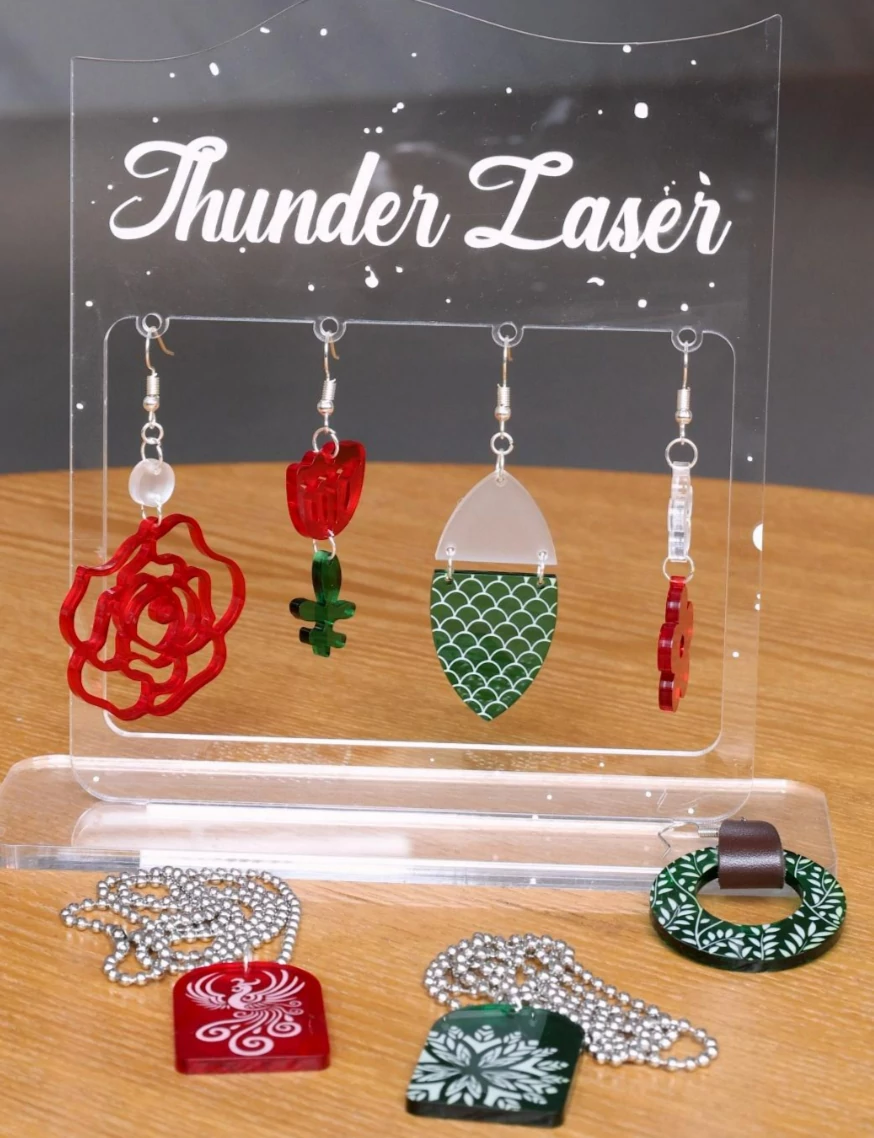
Acrylic accessories
Signs, Displays, and Containers
Acrylic is widely used for illuminated sign boxes, retail displays, exhibition stands, and brand signage. Laser cutting allows manufacturers to create virtually any shape, while laser engraving adds customized graphics and branding elements.
Acrylic Furniture
Laser-cut acrylic sheets are increasingly used for furniture manufacturing. Acrylic desks, decorative panels, display cabinets, and even bathtubs can be produced with decorative edges and engraved patterns.
Custom Gifts and Invitations
Laser engraving can permanently mark logos, names, artwork, and messages onto acrylic awards, trophies, plaques, and commemorative gifts. Wedding invitations and personalized acrylic products are also popular applications.
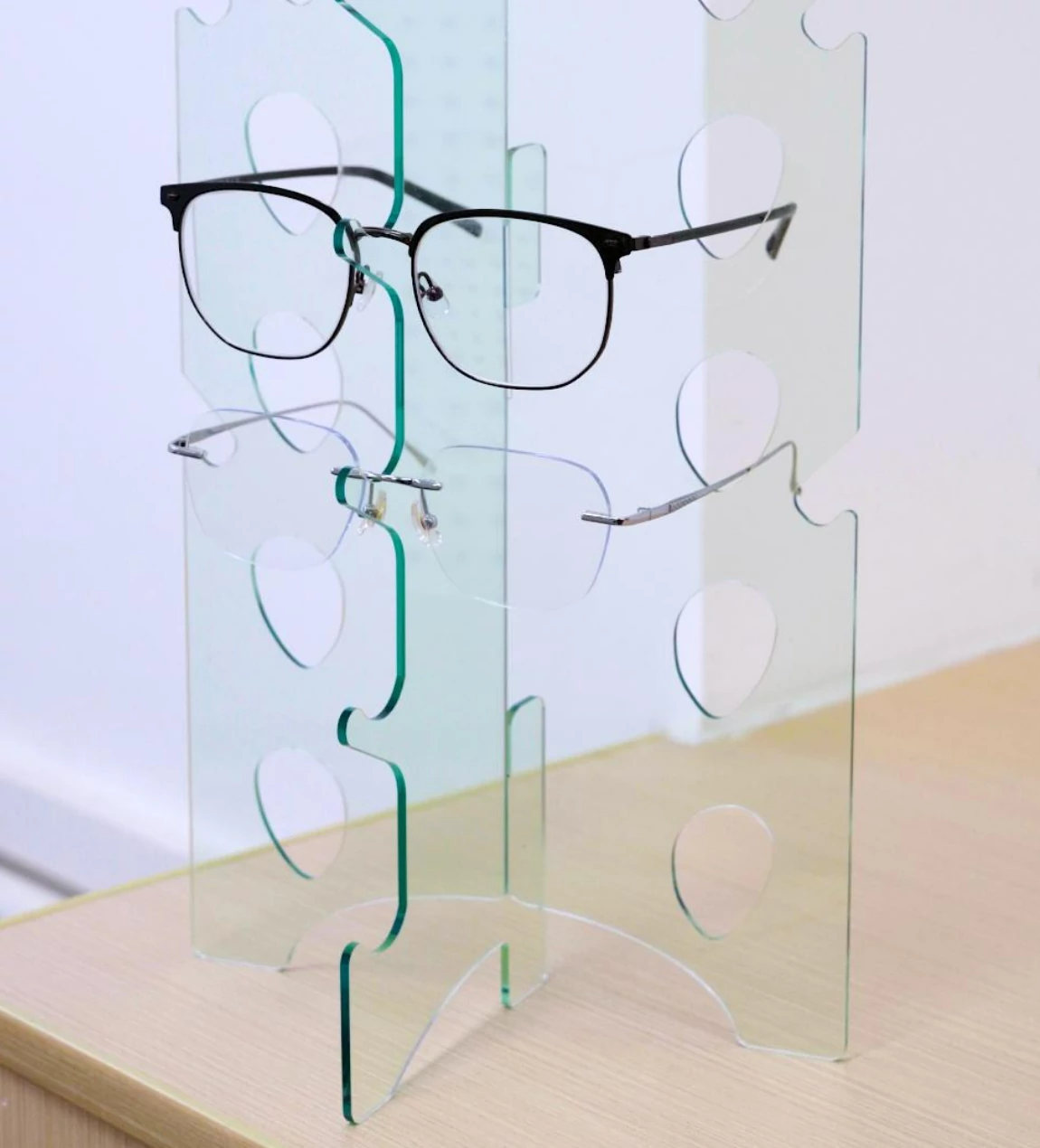
Acrylic eyeglasses display stand
Where to Buy Acrylic Materials
Plastic Distributors
Many local and national plastic suppliers provide standard and custom-sized cast and extruded acrylic sheets, rods, tubes, and specialty acrylic products.
Online Retailers
Platforms such as Amazon, eBay, and specialized material suppliers offer a wide variety of acrylic sheets, mirrored acrylic, colored acrylic, engraving blanks, and casting materials.
Hardware and Home Improvement Stores
Some hardware stores stock basic acrylic sheets and rods suitable for home projects, although material options are usually limited.
Specialized Acrylic Suppliers
Professional acrylic fabrication companies offer custom cutting, forming, engraving, and machining services while providing a broad range of material specifications.
How to Choose an Acrylic Supplier
When selecting a supplier, consider:
- Material quality
- Product consistency
- Available sizes and thicknesses
- Delivery time
- Cost-effectiveness
The best supplier should match your project requirements while providing reliable quality and service.
How to Choose the Right Laser Machine for Acrylic Processing
In the acrylic industry, equipment selection largely depends on the intended application. For most acrylic products, CO2 laser machines remain the most mature and widely used solution.
Because acrylic absorbs the 10.6 μm wavelength of CO2 lasers extremely well, CO2 systems deliver excellent results for both laser engraving acrylic and laser cutting acrylic.
For cutting-focused applications, a CO2 laser cutting machine is highly recommended. It can rapidly cut acrylic sheets while producing smooth, flame-polished edges that often require no secondary polishing.
Depending on material thickness, users may select:
- 60W CO2 laser
- 100W CO2 laser
- 150W CO2 laser
- Higher power configurations
For 3–5 mm acrylic, an 60W system is typically sufficient. For materials thicker than 10 mm, 100W or higher is recommended for better cutting quality and productivity.
If your primary requirement is laser engraving acrylic, such as logo engraving, graphic engraving, trophy marking, and advertising sign production, a CO2 laser engraving machine remains the preferred choice.
CO2 lasers produce a smooth and uniform frosted effect on acrylic surfaces, creating stronger contrast and more attractive visual results than many alternative laser technologies.
For applications requiring ultra-fine laser marking acrylic, such as micro text, QR codes, electronics labeling, or precision identification, a UV laser marking machine can also be considered.
UV lasers offer:
- Smaller laser spots
- Higher precision
- Better micro-marking performance
However, in the acrylic industry, UV lasers are mainly used for precision marking rather than large-area engraving or sheet cutting.
Conclusion
Whether you are performing laser engraving acrylic, acrylic laser etching, laser marking acrylic, or laser cutting acrylic, laser technology has become one of the most important manufacturing methods in the acrylic industry.
Compared with traditional machining methods, laser equipment offers greater precision, more design freedom, higher productivity, and improved product quality.
If you are looking for the right laser machine for acrylic engraving and cutting, ZS Machinery can recommend the most suitable solution based on your material thickness, product type, and production requirements. Contact us today to discuss your acrylic laser processing project and receive professional equipment recommendations.
Laser Marking Nameplates: Nameplate Types and Laser Marking Equipment Selection