Laser Marking in 2026: What You Need to Know About Technology, Processes, Materials, and Industrial Applications
What is Laser Marking?
Laser marking is a processing technology that uses a high-energy laser beam to create permanent marks on the surface of materials. Due to its high precision, strong durability, and non-contact nature, it has been widely adopted across various industrial fields.
Unlike traditional methods such as inkjet printing or mechanical engraving, laser marking requires no consumables, and the marks are resistant to wear, high temperatures, and chemical corrosion. As a result, it has become a core technology in modern manufacturing, especially in product traceability and identification.
Common marking contents include text, graphics, logos, serial numbers, and QR codes. These marks are typically permanent and are created by altering the material’s surface rather than adding external substances.
Several related terms are often used together:
Laser Marking → surface modification (color change, oxidation)
Laser Engraving → material removal (creating depth)
Laser Etching → shallow surface melting
In industrial practice, these processes are fundamentally similar, as all use laser energy for processing. The differences lie in laser type, power, and interaction time, which result in different processing effects.
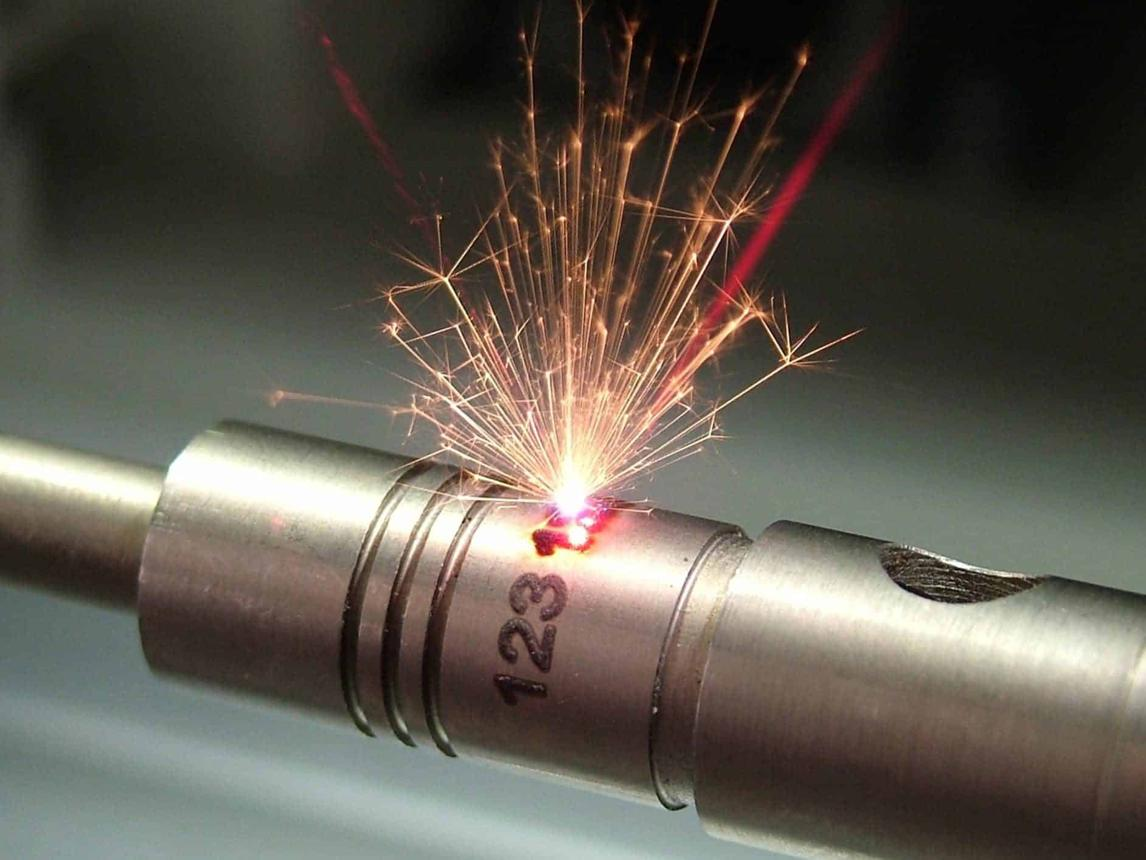
Weapon component marking
Working Principle of Laser Marking
Laser marking works by directing a high-energy laser beam onto a material surface, causing physical or chemical changes that form a mark. It mainly involves two mechanisms:
1.Thermal Processing
Thermal processing uses a high-energy-density laser beam (a concentrated energy source) to irradiate the material surface. The material absorbs the laser energy, causing a rapid temperature rise in the irradiated area.
This results in effects such as:
Material transformation
Melting
Ablation
Vaporization
This method is commonly used in fiber laser marking and CO₂ laser marking.
2.Photochemical Processing (Cold Processing)
Photochemical processing involves high-energy (UV) photons that can break molecular bonds in the material (especially organic materials) or surrounding media, leading to non-thermal material removal.
This type of processing is particularly important because it does not rely on thermal ablation. Instead, it achieves “cold peeling” by breaking chemical bonds, avoiding thermal damage such as heating or deformation of surrounding areas.
For example, in electronics manufacturing, excimer lasers are used to deposit thin films on substrates or create narrow grooves on semiconductor wafers. It is also widely used for marking heat-sensitive plastics and high-reflective materials like glass.

Cabinet UV Laser Marking Machine
Structure of a Laser Marking Machine
A complete laser marking machine consists of several core systems working together to achieve high-precision processing.
1.Laser Source
The laser source is the core component that generates the laser beam. Different types are used for different materials:
Fiber laser → metals
CO₂ laser → non-metals
UV laser → precision and sensitive materials
The laser source is typically installed inside the machine body.
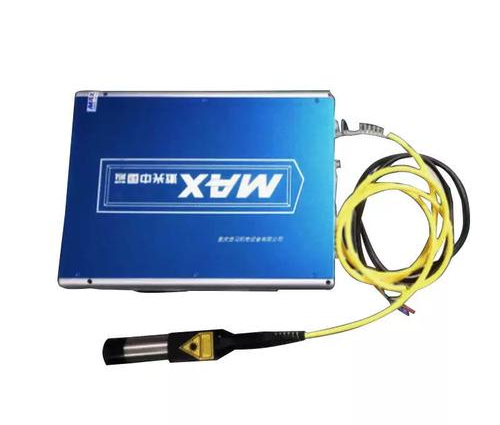
MAX 20W Fiber Laser Source
2.Laser Power Supply
The laser power supply provides stable electrical power (typically AC 220V) to the laser source and is usually installed inside the control cabinet.
A high-quality power supply ensures:
Stable laser output
Consistent marking quality
Long-term reliable operation
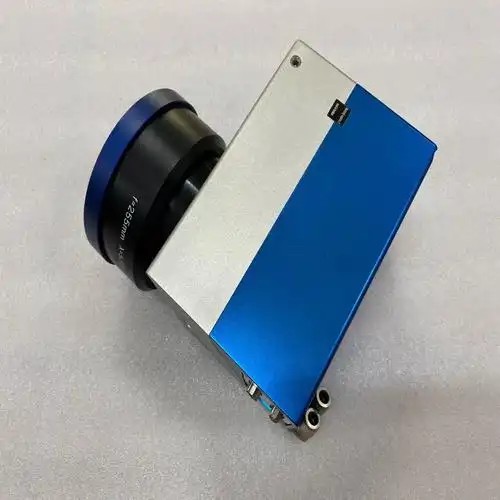
3.Galvo Scanning System
The galvo scanning system is the core component responsible for controlling the laser beam movement. It mainly consists of an optical scanner and a servo control system.
Its working principle is to drive mirrors in the X and Y directions using high-speed servo motors, thereby changing the laser beam path and enabling fast scanning of text, graphics, and codes.
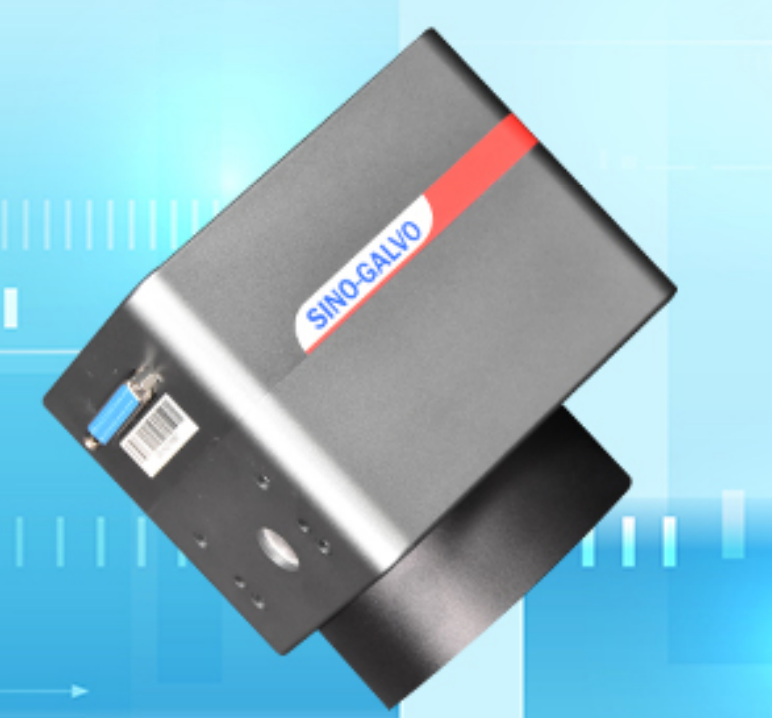
Laser marking machine galvanometer
3.1Structure and Working Method
The system typically includes:
X-axis and Y-axis scanning modules
High-speed servo motors
Laser reflection mirrors
Position detection sensors
Control driver unit
Each servo motor axis is equipped with a high-precision mirror. The computer sends digital signals to control motor movement, achieving precise positioning and path control of the laser beam.
3.2Key Performance Features
Modern galvo systems offer several advantages:
High-speed scanning capability
Low-inertia design and high-response motors enable fast marking and improved productivity.
High precision and stability
Precision bearings and high-resolution feedback systems reduce errors and ensure stable long-term performance.
High repeatability and low drift
Advanced sensors provide high linearity, repeat accuracy, and low drift over time, ensuring consistent batch processing.
Low power consumption and low heat generation
Optimized control reduces energy usage and heat, improving system stability and reducing reliance on temperature control.
3.3Technology Trends
Modern galvo systems continue to improve in:
Higher scanning speed
Greater precision
Longer service life
They are the foundation for achieving both high speed and fine processing in laser marking.
4.F-theta Lens (Focusing System)
The focusing system concentrates the laser beam into a point, typically using an F-theta lens. Different focal lengths result in different marking areas and effects.
Common marking areas include:
110 × 110 mm
150 × 150 mm
Up to 300 × 300 mm for larger systems
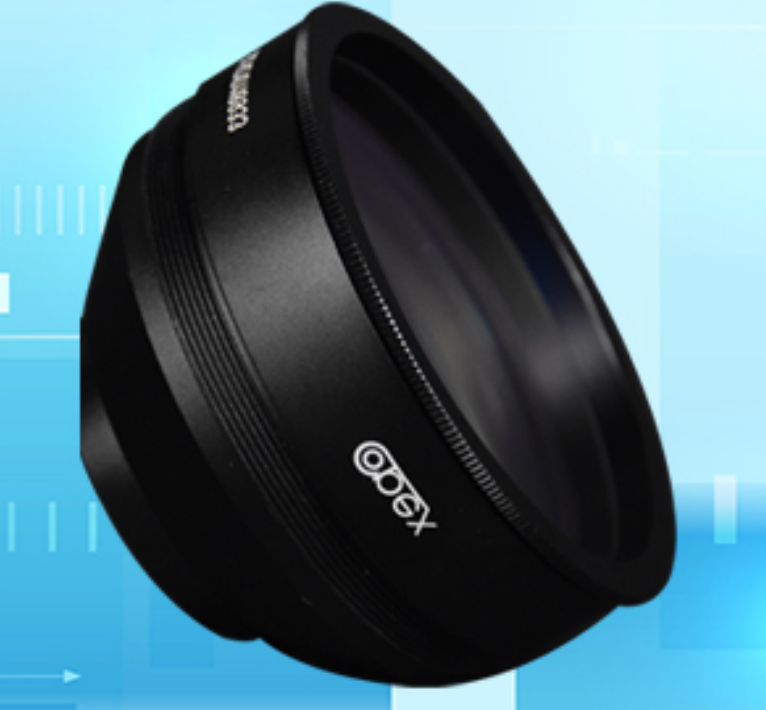
Laser marking machine focusing lens
5.Control System
The control system is the central unit of the laser marking machine, responsible for coordinating all operations.
It controls:
Laser modulation
Galvo scanning system
Overall marking process
The system typically includes a computer, motherboard, CPU, hard drive, memory, D/A card, display, and input devices.
Types of Laser Marking Machines (By Wavelength and Application)
Laser marking machines are typically classified based on wavelength, which determines how the laser interacts with materials and affects processing results.
The main types include fiber laser, CO₂ laser, and UV laser, along with a supplementary type—green laser.
Fiber Laser Marking Machine (1064 nm)
Fiber lasers operate in the near-infrared range and mainly use thermal processing. They are highly effective for metals.
They are widely used for marking stainless steel, aluminum, copper, and other metals, offering high efficiency, strong contrast, and suitability for high-speed and deep marking. This is the most widely used solution in industrial applications.
CO₂ Laser Marking Machine (10.6 μm)
CO₂ lasers operate in the far-infrared range and are highly absorbed by organic materials.
They are suitable for wood, leather, paper, acrylic, and similar materials, commonly used in packaging, crafts, and advertising industries. They offer stable performance and relatively lower cost.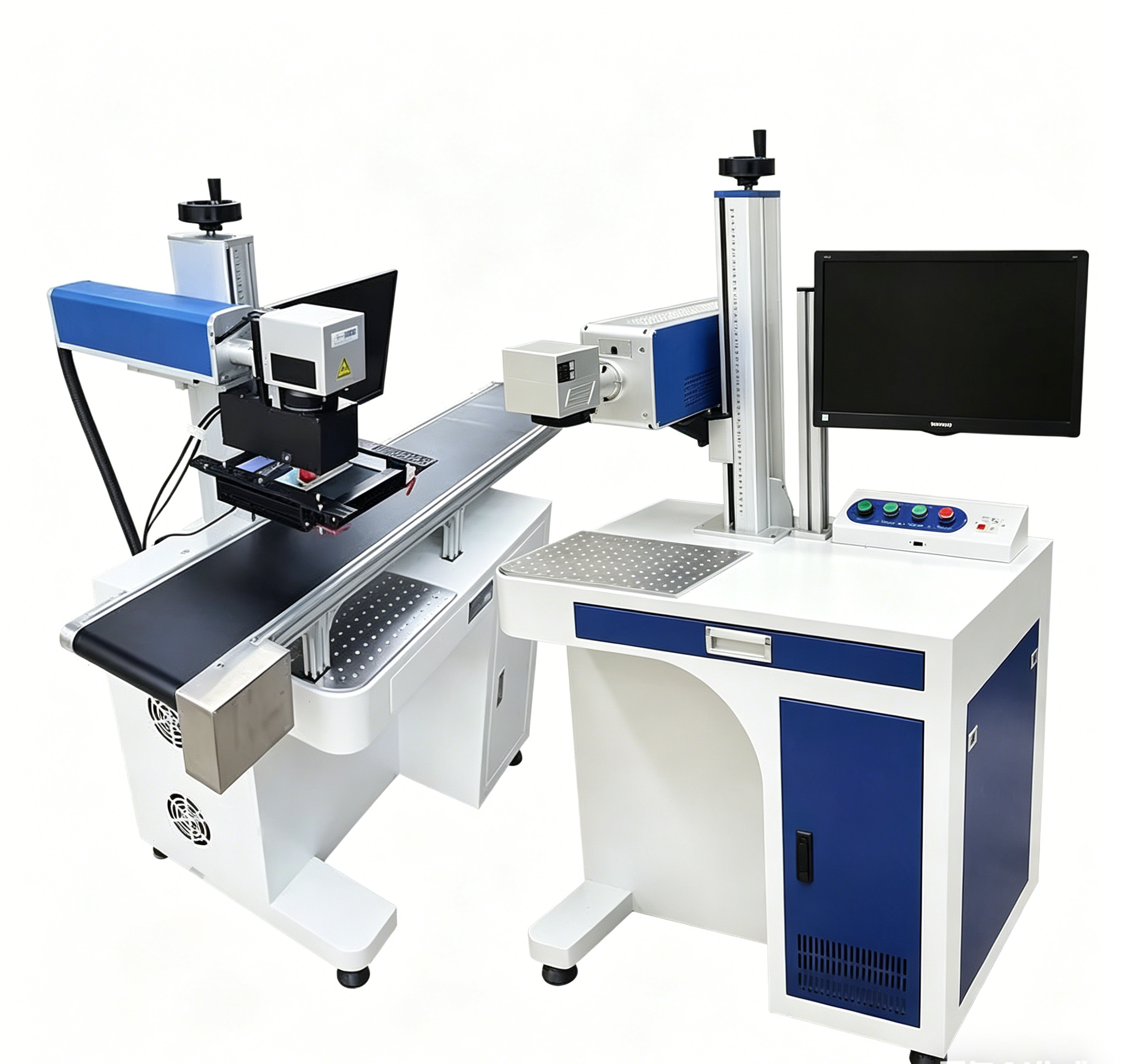
UV Laser Marking Machine (355 nm)
UV lasers operate at short wavelengths and use photochemical (cold) processing, producing almost no heat effect.
They are ideal for plastics, glass, and precision electronic products, offering high accuracy, clean edges, and no burning or deformation.
Green Laser Marking Machine (532 nm)
Green lasers fall between fiber and UV lasers in wavelength and can be considered a transitional solution.
They produce less heat than fiber lasers but more than UV lasers, with moderate cost and precision. They are suitable for certain special materials, such as reflective surfaces or specific electronic materials, but are generally not considered a mainstream option.
Comparison of Laser Types
| Laser Type | Wavelength | Processing Type | Main Materials | Application Position |
| Fiber Laser | 1064 nm | Thermal | Metals | Mainstream industrial |
| CO₂ Laser | 10.6 μm | Thermal | Non-metals | Organic materials |
| UV Laser | 355 nm | Cold | Precision materials | High-precision |
| Green Laser | 532 nm | Transitional | Special materials | Supplementary |
Overall, laser marking can be applied to almost all industrial materials, making it an extremely versatile technology.
Industrial Applications of Laser Marking
Laser marking is widely used in industries that require durability, precision, and traceability.
Electronics Industry
Used for PCB boards, ICs, connectors, and precision components. It enables micro-level marking without mechanical stress and supports high-density codes.
Automotive Industry
Used for engine parts, metal components, nameplates, and VIN codes. Marks remain clear under heat, oil, and wear.
Packaging Industry (Food & Beverage)
Used for dates, batch numbers, and anti-counterfeiting marks. No consumables are required, and it supports high-speed production lines.
Medical Industry
Used for surgical tools, medical devices, and packaging traceability. It is clean, non-contact, and meets strict hygiene standards.
Industrial Manufacturing & Hardware
Used for tools, molds, mechanical parts, and metal products. Suitable for batch production and automation.
Semiconductor Industry
Used for wafers, chip packaging, and micro-components. Requires high precision and minimal thermal impact, typically using UV lasers.
Aerospace Industry
Used for high-strength alloys and critical components. Marks must withstand extreme conditions, making laser marking ideal.
Energy & Power Industry
Used for cables, batteries, solar panels, and equipment labels. Suitable for outdoor and high-temperature environments.
HS Code of Laser Marking Machines
Customers often ask about HS codes. According to 2026 China customs data, common codes include:
845611, 844332, 847989, 848620
Note: These are the first six digits of international HS codes. Specific classifications may vary by country, so it is recommended to confirm with local customs before shipment.

Visual laser marking machine for animal ear tags
Advantages and Limitations of Laser Marking
Laser marking offers significant advantages in industrial applications. It provides permanent marks that can withstand heat, friction, and chemical exposure. The process requires no consumables, reducing long-term costs and maintenance. It also delivers high precision and is easily integrated into automated production lines. Additionally, it is environmentally friendly, as it does not involve solvents or emissions.
However, it also has limitations. The initial equipment investment is relatively high, and different materials require different laser types. In most cases, marking is limited to monochrome or contrast effects, with limited color capability.
How to Choose the Right Laser Marking Machine
Choosing the right system depends on materials, application requirements, and production conditions.
For materials, fiber lasers are ideal for metals, UV lasers for plastics and glass, and CO₂ lasers for non-metals.
For marking requirements, UV lasers are best for high precision, fiber lasers for deep engraving, and CO₂ lasers for large-area processing.
For production scale, desktop machines are suitable for small batches, while automated systems are better for mass production.
For application scenarios, standalone workstations use standard machines, while production lines require integrated systems.
FAQ
What is laser marking used for?
It is used for product identification, traceability, and anti-counterfeiting across industries.
Is laser marking permanent?
Yes, it creates durable marks resistant to wear and corrosion.
Which laser is best for plastics?
UV laser is generally recommended for clean and precise marking.
What is the difference between marking and engraving?
Marking alters the surface, while engraving removes material to create depth.
Conclusion And Call To Action
Laser marking is an efficient, precise, and highly adaptable modern processing technology. By selecting the appropriate laser type and configuration, high-quality permanent marking can be achieved across various materials and industries.
If you would like to learn more about laser marking machines or need a complete marking solution, feel free to contact ZS Machinery. We will provide a customized one-stop solution based on your requirements.
UV LED Curing Explained: Technology, Systems, and Industrial Applications