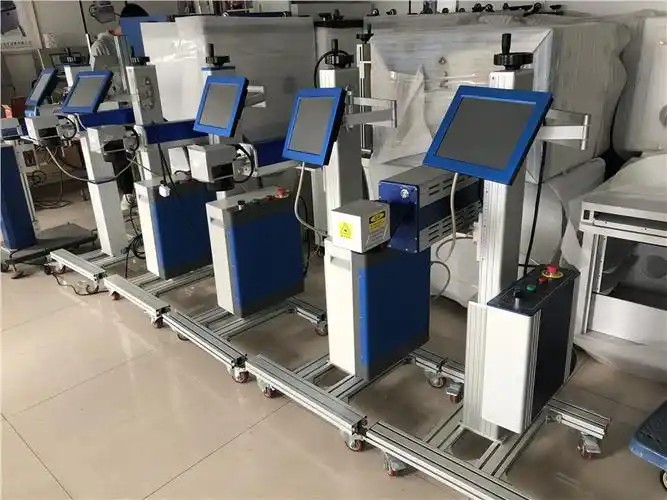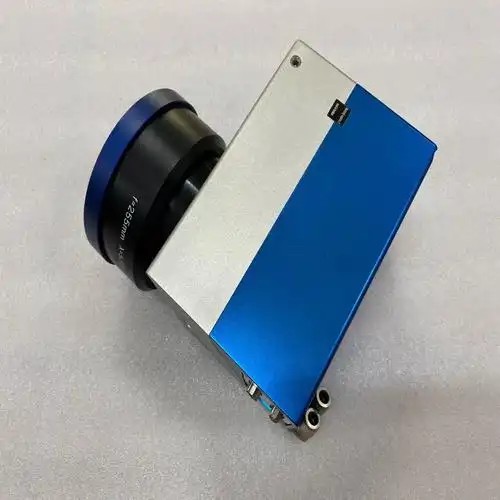
Laser Marking Fabric: Complete Guide to Textile Laser Marking Technology
The textile industry is undergoing a major transformation driven by automation, digital manufacturing, and product customization. Traditional fabric marking methods such as screen printing, heat transfer printing, embroidery, and ink-based coding are increasingly challenged by demands for higher production efficiency, greater durability, and more flexible customization.
As a result, laser marking fabric has become one of the fastest-growing technologies in textile manufacturing. From sportswear and fashion apparel to automotive interiors, military uniforms, footwear materials, and home textiles, laser marking technology is providing manufacturers with a cleaner, faster, and more precise way to create permanent markings on fabric surfaces.
Unlike conventional printing methods, textile laser marking is a non-contact process that uses a focused laser beam to modify the surface of the material without physical tools or consumables. The result is a highly durable mark that will not peel, fade, or wear off easily.
In this guide, we will explore how fabric laser engraving works, which materials can be processed, the advantages of laser technology, common applications, and how to choose the best laser marking machine for fabric production.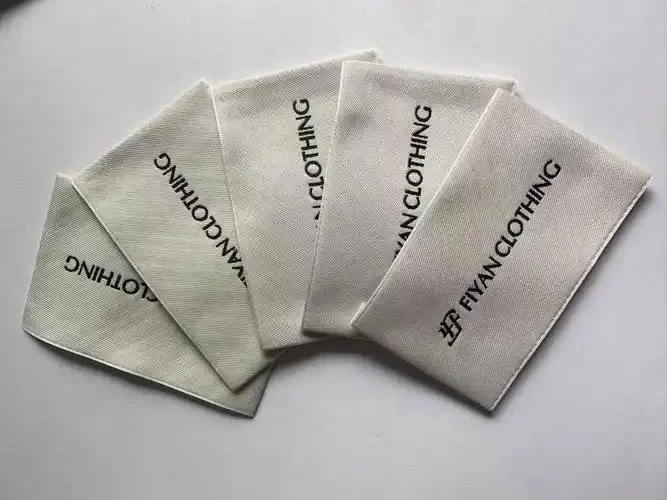
What Is Laser Marking Fabric?
Laser marking fabric refers to the process of using a laser beam to create permanent patterns, logos, serial numbers, barcodes, QR codes, decorative textures, or identification marks on textile materials.
Unlike laser cutting, which completely penetrates the fabric, laser marking only affects the surface layer of the material. Depending on the fabric type and laser settings, the process may produce:
- Color change marking
- Surface carbonization
- Controlled bleaching
- Texture modification
- Decorative engraving effects
The marking depth is usually very shallow, allowing manufacturers to create highly visible designs while preserving the integrity and flexibility of the fabric.
Modern laser marking systems can process both natural and synthetic textiles with exceptional precision, making them ideal for industrial production as well as personalized customization.
How Does Textile Laser Marking Work?
The principle of laser marking textiles is based on the interaction between laser energy and fabric fibers.
When a focused laser beam strikes the textile surface, the material absorbs the laser energy and undergoes localized thermal reactions. Depending on the type of fabric, these reactions may include:
- Carbonization
- Oxidation
- Vaporization
- Pigment removal
- Surface discoloration
The laser beam is controlled by computer software, allowing complex designs, logos, and variable data to be transferred directly onto the fabric surface.
Unlike printing technologies that add material onto the fabric, laser marking modifies the fabric itself. This is why laser-generated marks typically offer superior durability compared to ink-based methods.
The process is entirely digital, meaning every product can have a different design without requiring screens, molds, or tooling changes.
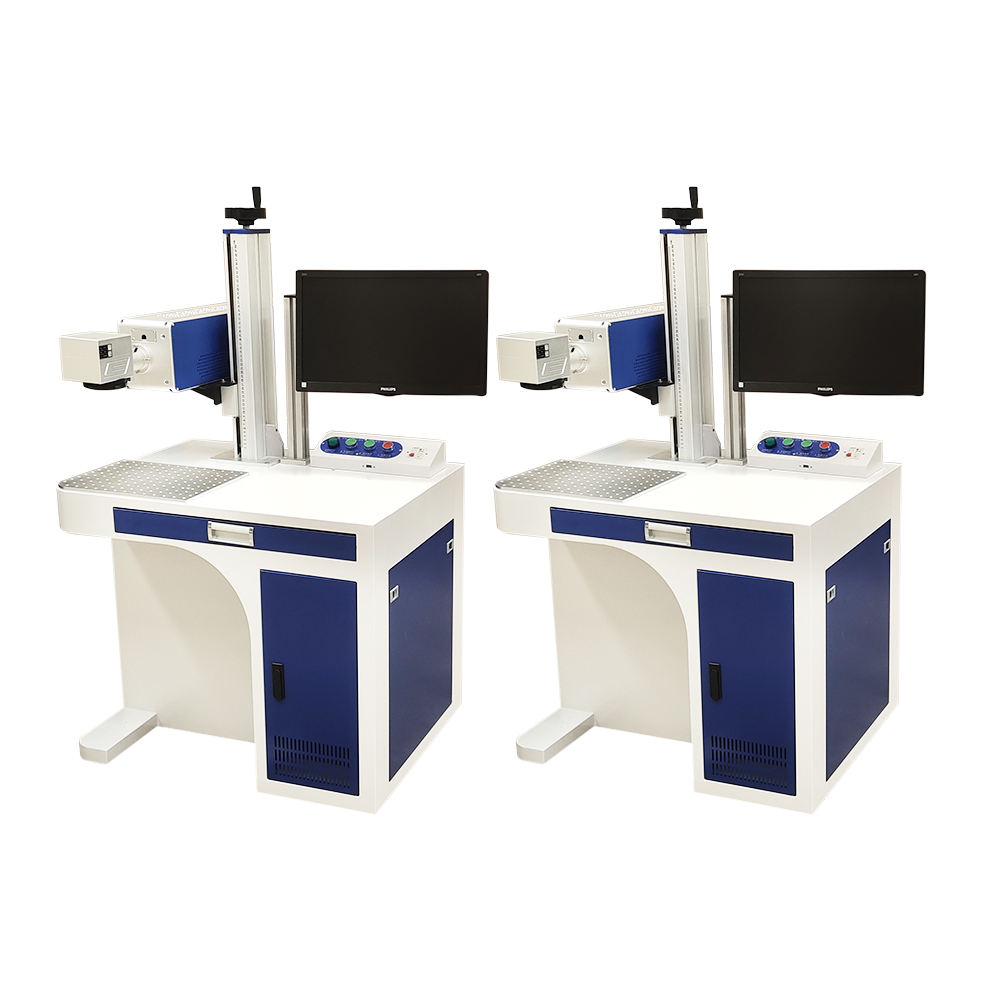
CO2 Laser Marking Machine
Why Is Laser Marking Becoming Popular in the Textile Industry?
Permanent Marking
One of the biggest advantages of laser marking fabric is permanence.
Because the laser modifies the actual material surface rather than applying ink or labels, the mark becomes an integral part of the fabric. It resists:
- Washing
- Abrasion
- UV exposure
- Chemical cleaning
This makes laser marking ideal for industrial textiles, uniforms, and product identification applications.
High Precision and Detail
Modern laser systems can produce extremely fine details.
Manufacturers can accurately mark:
- Small text
- Company logos
- QR codes
- Barcodes
- Serial numbers
- Decorative graphics
Even complex patterns can be reproduced consistently across large production batches.
No Consumables Required
Traditional textile marking often requires:
- Ink
- Solvents
- Transfer films
- Printing screens
Laser marking eliminates these consumables entirely, reducing operating costs and minimizing environmental impact.
Fast Production Speed
Galvo laser systems can achieve marking speeds of several thousand millimeters per second.
This allows manufacturers to integrate laser marking directly into production lines for continuous operation.
Suitable for Mass Customization
Consumers increasingly demand personalized products.
Laser technology allows manufacturers to produce:
- Individual names
- Unique serial numbers
- Personalized graphics
- Custom branding
without slowing down production.
Which Fabrics Can Be Laser Marked?
One of the reasons laser marking technology has gained popularity is its compatibility with a wide range of textile materials.
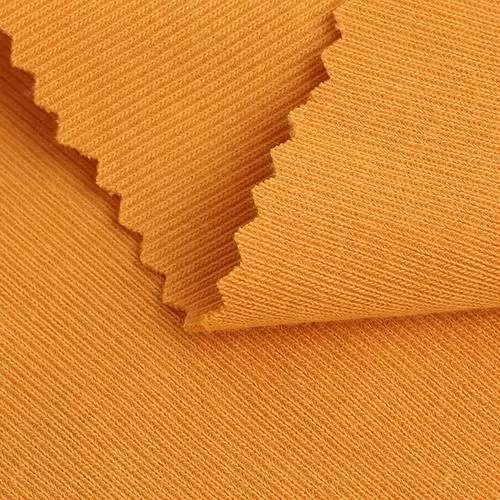
Cotton Fabric
Cotton is one of the most commonly processed natural fibers.
Laser marking on cotton typically produces dark contrast marks due to controlled carbonization of the fibers.
Common applications include:
- Apparel branding
- Fashion products
- Promotional textiles
- Canvas bags
Cotton fabric
Polyester Fabric
Polyester is widely used in sportswear and industrial textiles.
Laser marking polyester often produces high-contrast marks without damaging the surrounding material.
Applications include:
- Sports uniforms
- Safety clothing
- Industrial workwear
- Textile labels
Denim Fabric
Laser marking has revolutionized denim manufacturing.
Traditional denim washing and distressing processes consume large amounts of water and chemicals.
Laser engraving denim allows manufacturers to create:
- Vintage effects
- Decorative patterns
- Fashion graphics
- Brand logos
while reducing environmental impact.
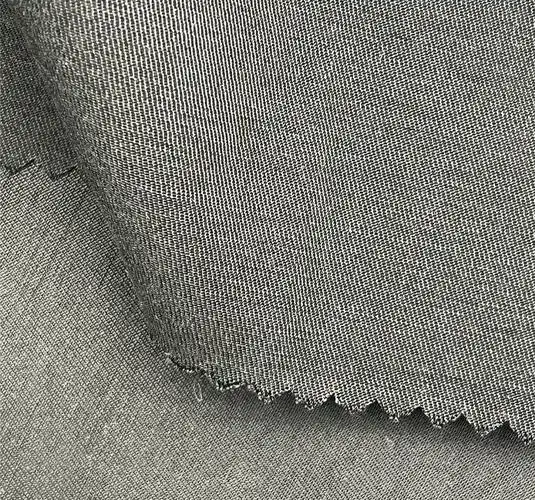
Nylon Fabric
Nylon fabrics are commonly found in:
- Outdoor equipment
- Backpacks
- Tactical gear
- Military products
Laser marking provides permanent identification marks without compromising material performance.
Nylon Fabric
Non-Woven Fabrics
Medical and hygiene industries often use non-woven textiles.
Laser marking enables batch coding, product identification, and traceability without introducing contamination risks.
Common Applications of Fabric Laser Marking
Laser marking textiles has expanded far beyond simple branding.
Today, manufacturers use laser systems across numerous industries.
Garment Industry
Applications include:
- Clothing logos
- Brand labels
- Size markings
- Washing instructions
- Decorative graphics
Sportswear Manufacturing
Laser marking is widely used for:
- Team logos
- Player names
- Product traceability
- Anti-counterfeiting identification
Footwear Industry
Many shoe manufacturers use laser technology to mark:
- Upper materials
- Insoles
- Tongue labels
- Product codes
Automotive Interiors
Automotive suppliers use textile laser marking on:
- Seat fabrics
- Door panel coverings
- Interior decorative textiles
Military and Tactical Equipment
Applications include:
- Uniform identification
- Equipment coding
- Tactical gear branding
- Asset tracking
Home Textile Products
Laser marking can be used on:
- Curtains
- Upholstery fabrics
- Decorative textiles
- Bedding products
to create customized patterns and permanent branding.
CO₂ Laser vs Fiber Laser vs UV Laser for Fabric Marking
Not all laser technologies are suitable for textile materials. Choosing the right laser source is critical for achieving the desired marking quality.
CO₂ Laser Marking Machine
CO₂ lasers operate at a wavelength of 10.6 μm and are considered the industry standard for fabric laser marking.
Advantages:
- Excellent absorption by organic materials
- Clean marking results
- Suitable for most textiles
- Ideal for engraving and cutting fabric
Applications:
- Cotton
- Polyester
- Denim
- Leather
- Non-woven materials
For most textile manufacturers, a CO₂ laser marking machine is the preferred solution.
Fiber Laser Marking Machine
Fiber lasers operate at 1064 nm.
While extremely effective for metals, fiber lasers are generally less suitable for most fabrics because textile materials do not absorb this wavelength efficiently.
Fiber lasers are mainly used when marking coated textile labels or textile products that contain metallic components.
UV Laser Marking Machine
UV lasers operate at 355 nm and use a “cold marking” process.
Advantages:
- Minimal heat affected zone
- Ultra-high precision
- Suitable for delicate materials
Applications:
- High-end textile labels
- Technical fabrics
- Precision QR codes
- Specialty textile products
Although UV lasers offer exceptional quality, their higher cost usually limits them to specialized applications.
How to Choose a Laser Marking Machine for Fabric
Selecting the right laser marking machine for fabric depends on several factors, including material type, production volume, marking requirements, and budget. Choosing the wrong laser source can result in poor marking quality, low efficiency, or even damage to the fabric.
Before purchasing a machine, manufacturers should evaluate the following factors.
Fabric Material Type
Different fabrics respond differently to laser energy.
Natural materials such as cotton, linen, bamboo fiber, and wool generally absorb CO₂ laser wavelengths very well, producing clear and high-contrast marks.
Synthetic materials such as polyester, nylon, microfiber, and non-woven fabrics can also be processed effectively, although laser parameters may need adjustment to avoid excessive melting or discoloration.
For highly sensitive technical textiles, UV laser systems may provide better results due to their lower thermal impact.
Production Volume
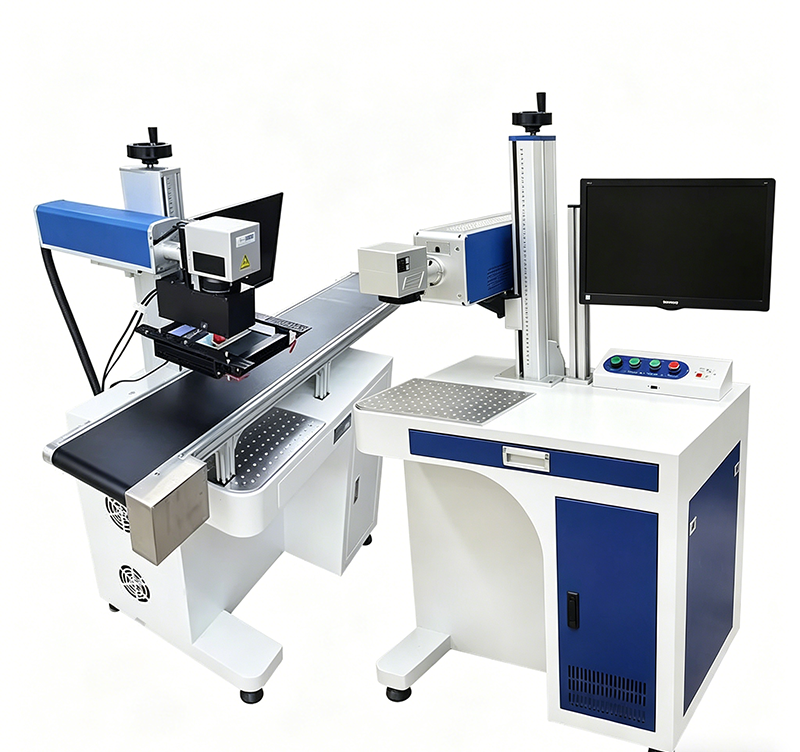
For small workshops and customization businesses, a standard desktop CO₂ laser marking machine may be sufficient.
For medium-sized manufacturers processing hundreds or thousands of products daily, a high-speed galvo laser marking system is recommended.
For large-scale industrial production, automated laser marking systems integrated with conveyor lines, vision positioning systems, and MES software can significantly improve efficiency.
Marking Content
The complexity of the design also affects machine selection.
Simple applications:
- Logos
- Serial numbers
- Product codes
can be handled by standard laser systems.
Advanced applications such as:
- Photographic engraving
- Variable QR codes
- Personalized names
- Intricate decorative patterns
require higher scanning speeds and more advanced control software.
Working Area Requirements
The required marking area depends on product size.
Typical options include:
- 100 × 100 mm
- 200 × 200 mm
- 300 × 300 mm
- Large-format customized systems
Manufacturers processing large textile panels, automotive fabrics, upholstery materials, or home textile products may require larger working areas.
Budget Considerations
Generally speaking:
Entry-level systems:
- Small workshops
- Personalized products
- Startup businesses
Mid-range systems:
- Garment factories
- Textile suppliers
- Promotional product manufacturers
Industrial systems:
- Mass production
- Fully automated production lines
- Continuous operation environments
Investing in the correct machine from the beginning often reduces long-term operating costs and improves production efficiency.
Recommended CO2 Laser Parameters for Different Fabrics
Laser settings vary depending on material composition, color, thickness, and desired marking effect.
The following values should be used only as starting references.
Cotton Fabric
Typical Settings:
- Laser Power: 15-30%
- Speed: 800-1500 mm/s
- Frequency: 20-50 kHz
Result:
- Dark contrast marking
- High readability
- Excellent detail reproduction
Polyester Fabric
Typical Settings:
- Laser Power: 10-25%
- Speed: 1000-2000 mm/s
- Frequency: 20-80 kHz
Result:
- Clean white or dark contrast marks
- Minimal fabric deformation
Denim Fabric
Typical Settings:
- Laser Power: 20-50%
- Speed: 800-1500 mm/s
- Multi-pass processing when needed
Result:
- Vintage appearance
- Fashion distressing effects
- Decorative patterns
Nylon Fabric
Typical Settings:
- Laser Power: 10-20%
- High-speed scanning
- Controlled pulse settings
Result:
- Sharp markings
- Reduced melting risk
Because textile compositions vary between manufacturers, parameter testing should always be performed before mass production.
CO2 Laser Marking Machines
Common Fabric Laser Marking Problems and Solutions
Although laser marking technology is highly reliable, operators may occasionally encounter quality issues.
Fabric Burning
Possible Causes:
- Excessive laser power
- Slow marking speed
- Improper focus
Solutions:
- Reduce power settings
- Increase scanning speed
- Recalibrate focal distance
Poor Contrast
Possible Causes:
- Insufficient laser energy
- Incorrect frequency settings
- Unsuitable fabric material
Solutions:
- Increase laser power slightly
- Optimize pulse frequency
- Perform material compatibility testing
Fabric Deformation
Possible Causes:
- Excessive heat accumulation
- Multiple overlapping scans
Solutions:
- Use lower power
- Increase speed
- Improve ventilation and cooling
Blurred QR Codes
Possible Causes:
- Excessive marking depth
- Low resolution artwork
- Incorrect focus
Solutions:
- Use vector graphics
- Optimize spot size
- Reduce marking depth
Fabric Laser Marking vs Traditional Printing Methods
Many manufacturers compare laser technology with conventional textile decoration methods before investing in equipment.
Laser Marking vs Screen Printing
Screen Printing:
Advantages:
- Suitable for large color graphics
- Low cost for high-volume identical designs
Disadvantages:
- Requires screens and consumables
- Limited flexibility
- Environmental concerns
Laser Marking:
Advantages:
- No consumables
- Permanent marking
- Digital workflow
- Easy customization
Disadvantages:
- Usually monochrome effects
- Higher initial equipment investment
Laser Marking vs Heat Transfer Printing
Heat transfer printing provides vibrant colors but may eventually peel or fade.
Laser marking produces permanent markings that become part of the fabric itself, making it ideal for industrial identification and branding applications.
Laser Marking vs Embroidery
Embroidery offers a premium appearance but requires thread, needles, and longer production times.
Laser marking provides faster processing, greater flexibility, and lower production costs for variable data applications.
Future Trends of Textile Laser Marking
As Industry 4.0 and digital manufacturing continue to evolve, laser marking is becoming increasingly important within textile production.
Several key trends are shaping the future of the industry.
Smart Manufacturing Integration
Modern laser systems are increasingly connected with:
- MES systems
- ERP software
- Production databases
- Cloud management platforms
This allows automatic generation of product information and traceability codes.
Mass Customization
Consumers increasingly expect personalized products.
Laser marking enables manufacturers to produce:
- Individual names
- Unique serial numbers
- Custom graphics
- Limited edition products
without changing tooling or production workflows.
Sustainable Manufacturing
Environmental regulations are becoming stricter worldwide.
Compared with traditional printing methods, laser marking offers:
- No ink consumption
- No chemical waste
- Reduced water usage
- Lower operating costs
making it an environmentally friendly production solution.
Automation and Vision Systems
Advanced laser systems now incorporate:
- Machine vision
- Automatic positioning
- Robotic loading
- Conveyor integration
These technologies improve productivity while reducing labor costs.
Conclusion
Laser marking fabric has become one of the most efficient and versatile technologies in modern textile manufacturing. Whether used for branding, traceability, decoration, personalization, or industrial identification, laser marking offers significant advantages over traditional printing and engraving methods.
From cotton and polyester to denim, nylon, and non-woven materials, textile laser marking delivers permanent, high-precision results while supporting automation, sustainability, and mass customization.
For most fabric processing applications, CO₂ laser marking machines remain the preferred solution due to their excellent compatibility with organic materials, high processing speed, and superior marking quality.
As the textile industry continues moving toward digital manufacturing and personalized production, laser marking technology will play an increasingly important role in helping manufacturers improve efficiency, reduce costs, and create higher-value products.
About ZS Machinery
ZS Machinery specializes in industrial laser solutions for marking, engraving, welding, and cutting applications. Our product portfolio includes CO₂ laser marking machines, fiber laser marking machines, UV laser marking machines, and customized automation systems for textile and fabric processing industries.
Whether you are producing garments, sportswear, footwear materials, home textiles, automotive interiors, or technical fabrics, our team can help you select the most suitable laser marking solution based on your material type, production requirements, and budget.
Contact ZS Machinery today to learn more about professional fabric laser marking solutions and automated textile laser processing equipment.
Barcode Laser Marking Guide:From the History of Barcodes to Industrial Traceability Solutions