925 Hallmark: What It Means, Why It Matters, and How It Is Marked on Jewelry
In the jewelry industry, 925 hallmark is one of the most important quality and authenticity markings used worldwide. Whether on silver rings, necklaces, bracelets, or luxury jewelry products, the 925 stamp is a symbol of purity, quality assurance, and brand trust.
With the rapid development of modern manufacturing technology, traditional stamping methods are gradually being replaced by laser marking systems, which provide higher precision, permanence, and efficiency.
What Is 925 Hallmark?
925 hallmark refers to a purity stamp indicating that a metal product is made of 92.5% pure silver and 7.5% alloy metals, usually copper.
This material is commonly known as Sterling Silver.
The hallmark “925” is usually engraved or marked on jewelry to certify its authenticity and material composition.
Typical markings include:
- 925
- S925
- Sterling
- 925 Silver
- Brand logo + 925
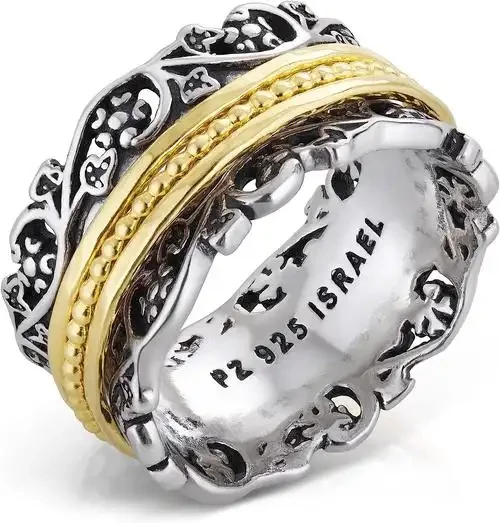
Silver ring marked 925
Why Is 925 Hallmark Important?
The 925 hallmark plays a critical role in the jewelry industry for three main reasons:
1. Authenticity Verification
It confirms that the product is genuine sterling silver rather than fake or low-grade metal.
2. Brand Trust
Jewelry brands use 925 marking to build customer confidence and reinforce product value.
3. International Trade Standard
In global markets, 925 silver marking is a widely recognized standard required for export and retail distribution.
Without a clear hallmark, jewelry products may lose credibility in both wholesale and retail markets.
How Is 925 Hallmark Applied on Jewelry?
There are several traditional and modern methods used to apply 925 markings on jewelry:
1. Mechanical Stamping (Traditional Method)
This method uses a physical mold or punch to press the “925” mark into the metal surface.
Advantages:
- Low cost
- Simple process
Disadvantages:
- Can deform thin jewelry
- Limited design flexibility
- Tool wear over time
2. Chemical Etching
Uses chemical reactions to corrode the surface and form markings.
Advantages:
- Suitable for batch production
Disadvantages:
- Chemical waste
- Environmental concerns
- Less precise compared to laser
3. Laser Marking (Modern Standard Method)
Today, most jewelry manufacturers use laser marking machines to apply 925 hallmarks.
Laser marking uses a high-energy beam to modify or remove a very thin layer of material, creating a permanent mark without physical contact.
Advantages:
- Permanent and wear-resistant
- Extremely high precision
- No deformation of jewelry
- Suitable for complex logos
- Eco-friendly (no chemicals)
This is now the most widely used method in modern jewelry manufacturing.
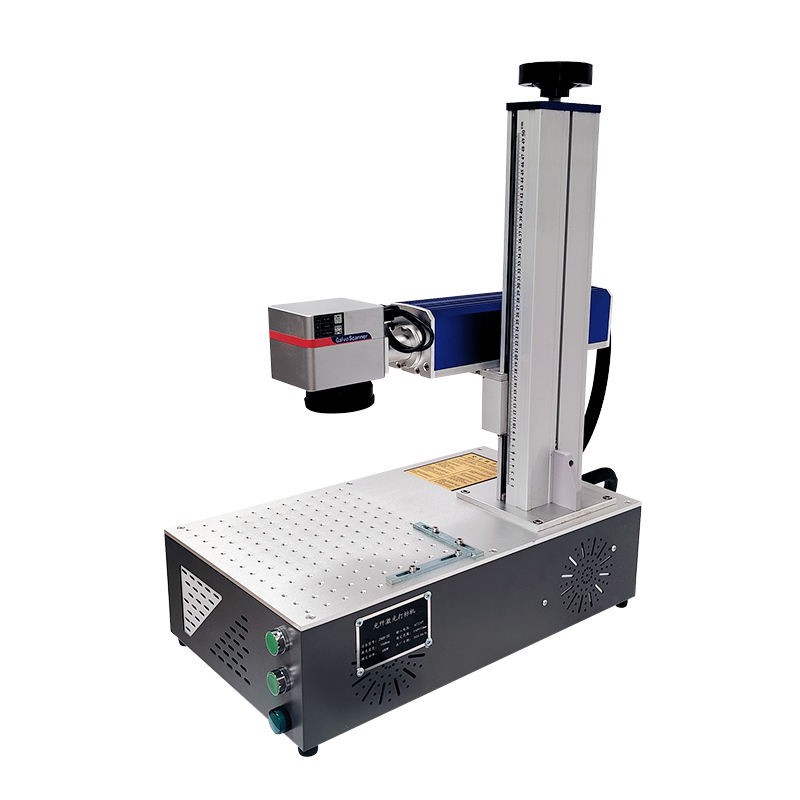
50W fiber Laser Marking Machine
What Laser Machines Are Used for 925 Hallmark Marking?
Different types of laser systems can be used depending on material and desired effect.
Fiber Laser Marking Machine
Best for:
- Sterling silver jewelry
- Stainless steel accessories
- Metal tags and components
Typical power:
- 20W / 30W / 50W
Advantages:
- Fast marking speed
- High precision
- Stable performance
MOPA Fiber Laser Machine
Best for:
- High-end jewelry
- Colored marking on metals
- Fine decorative engraving
Advantages:
- Adjustable pulse width
- Better edge quality
- Reduced heat impact
- Allows black or color marking effects on certain metals
UV Laser Marking Machine
Best for:
- Ultra-fine jewelry marking
- Micro 925 stamps
- High-end luxury jewelry
Advantages:
- Cold processing
- Minimal heat damage
- Extremely fine detail
How Laser Marking 925 Hallmark Works (Step-by-Step Process)
Using a desktop fiber laser marking machine as an example, the process is very simple and efficient.
Step 1: Import the Design
Operators import marking content into the software, such as:
- 925
- S925
- Brand logo
- Serial number
Supported file formats include AI, DXF, PLT, BMP, JPG, PNG, etc.
Step 2: Position the Jewelry
Place the jewelry piece (ring, necklace, bracelet, etc.) onto the working platform.
Common fixtures are used to ensure stable positioning, especially for small or curved surfaces.
Step 3: Focus Adjustment
Adjust the laser head height to ensure the focal point is precisely on the jewelry surface.
Correct focusing ensures sharp and clean marking edges.
Step 4: Set Laser Parameters
Typical parameters include:
- Laser power
- Speed
- Frequency
- Fill spacing
- Marking depth
For silver jewelry, low power and high speed are commonly used to avoid overheating and discoloration.
Step 5: Start Marking
Once settings are confirmed, start the laser process.
A typical 925 hallmark marking takes only:
- 1–5 seconds per item
The process is fully automated and non-contact.
Step 6: Quality Inspection
After marking, check:
- Clarity of “925”
- Edge sharpness
- Depth consistency
- Position accuracy
Once approved, the product is ready for polishing, packaging, or sale.

Laser-cut samples of silver jewelry
Does Laser Marking Affect Jewelry Quality?
This is a common concern in jewelry manufacturing.
Laser marking removes only a very thin surface layer, typically micrometer-level depth. It does not affect:
- Structural strength
- Weight (negligible change)
- Overall appearance
Compared with stamping, laser marking is much safer for delicate or high-value jewelry.
Applications of 925 Hallmark Laser Marking
Laser marking is widely used in:
- Sterling silver rings
- Necklaces and pendants
- Bracelets
- Earrings
- Luxury jewelry sets
- Custom jewelry products
- Wedding jewelry
- Fashion accessories
It is especially important for:
- Jewelry branding
- Anti-counterfeiting
- Product traceability
- Export certification
Conclusion
The 925 hallmark is more than just a number—it represents purity, trust, and international quality standards in the jewelry industry.
While traditional stamping and chemical methods are still used in some applications, laser marking has become the dominant technology due to its precision, permanence, and flexibility.
With fiber laser, MOPA laser, and UV laser systems, manufacturers can achieve high-quality, consistent, and professional 925 marking on all types of silver jewelry.
CerMark Alternatives: Better Solutions for Permanent Metal Laser Marking