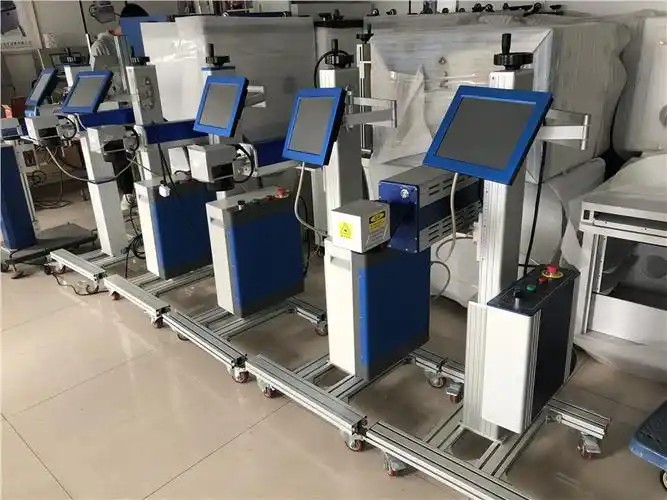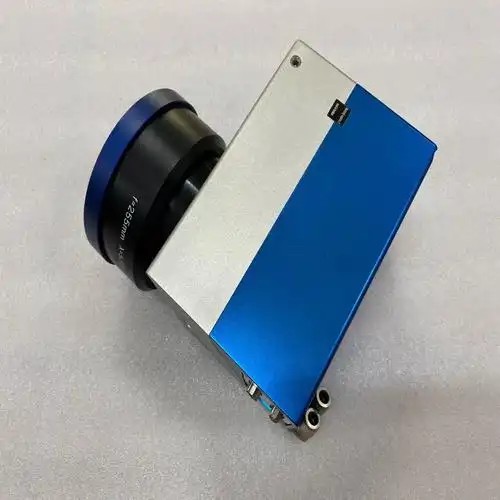
Laser Marking Silver: A Complete Guide to Fiber Laser Engraving and Marking Silver
Laser marking silver is widely used for engraving names, logos, serial numbers, dates, patterns, and other identification or decorative information on silver products. However, silver is not processed exactly like stainless steel or ordinary carbon steel. Its high reflectivity and excellent thermal conductivity make laser processing more demanding, particularly when fine detail, high contrast, or deep engraving is required.
For most silver marking applications, fiber lasers are the primary choice, while MOPA fiber lasers can provide additional control for specialized applications. UV lasers can also be considered when extremely fine marking or low-heat processing is required.The right solution depends on the type of silver, surface finish, required marking depth, product geometry, and production volume.
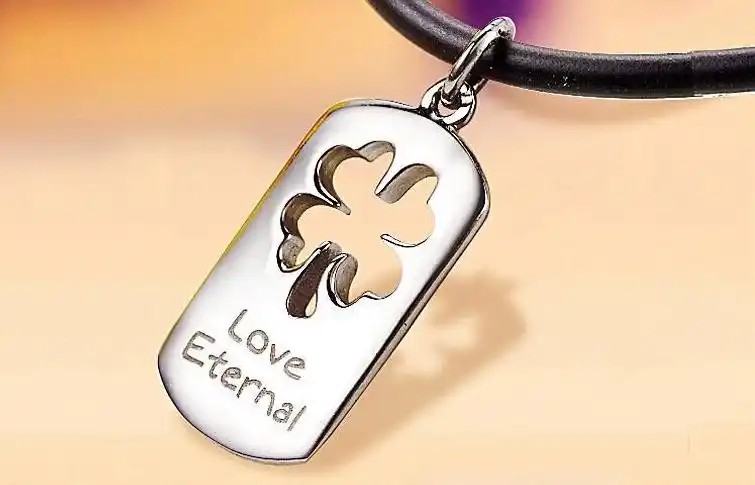
Laser marking of silver pendants
Can You Laser Mark Silver?
Yes. Silver can be marked and engraved with a suitable laser system.Common applications include:
- Silver jewelry
- Sterling silver products
- Silver nameplates
- Silver ornaments
- Silver components
- Personalized gifts
- Industrial silver parts
Laser processing is attractive because it is:
- Permanent
- Non-contact
- Digitally controlled
- Highly repeatable
- Suitable for very small details
- Free from traditional inks and marking plates
Unlike printing, the laser does not apply a separate marking material to the surface. It modifies or removes the material itself.However, achieving a good result on silver requires more careful parameter selection than many common metals.
Why Is Silver Difficult to Laser Mark?
Two properties of silver are particularly important:
High reflectivity and high thermal conductivity.
These characteristics affect how laser energy interacts with the material.
High Reflectivity
Silver is one of the most reflective metals, particularly at the wavelengths commonly used by conventional infrared fiber lasers.When the laser beam reaches the surface, part of the optical energy is reflected rather than absorbed.This means that simply increasing laser power does not always provide the expected improvement in processing efficiency.The laser system needs to deliver sufficient energy to the material while maintaining appropriate:
- Focus
- Pulse characteristics
- Scanning speed
- Frequency
- Power
This becomes particularly important when working with highly polished silver.
High Thermal Conductivity
Silver also has extremely high thermal conductivity.Heat generated by the laser can spread rapidly through the material.For some applications, this can make it more difficult to create strong localized thermal effects.The result can be different from what would be expected when using the same parameters on stainless steel.
Therefore, silver should not simply be treated as polished stainless steel with a different color.It requires its own processing parameters.
What Type of Silver Can Be Laser Marked?
The term “silver” can describe several different materials.The most common examples include:
Fine Silver
Fine silver has a very high silver content and is relatively soft.
925 Sterling Silver
Sterling silver typically contains approximately 92.5% silver, with the remaining portion consisting of other alloying elements.It is one of the most common materials used for jewelry.
Silver-Plated Products
Silver-plated products are different because the visible silver is only a relatively thin surface layer over another material.This distinction is important when choosing engraving depth.A laser can mark the silver coating, but excessive engraving may expose the underlying material.
Therefore:Laser parameters should be selected according to the actual material structure, not simply the appearance of the product.
What Is the Best Laser for Marking Silver?
For most silver marking applications, a fiber laser is the first technology to consider.However, the specific fiber laser configuration depends on the application.
Fiber Laser
Fiber lasers are widely used for metal marking and can process silver jewelry and components.They can be used for:
- Names
- Logos
- Serial numbers
- Dates
- QR codes
- Decorative patterns
- Product identification
For general silver marking, a standard fiber laser can be an effective solution when properly configured.
MOPA Fiber Laser for Silver
A MOPA fiber laser provides more flexible control over pulse characteristics than many conventional Q-switched fiber laser systems.This can be useful when processing applications require more control over:
- Pulse duration
- Frequency
- Peak power
- Heat input
- Surface interaction
For silver jewelry, this additional flexibility can be useful when working with small details or when the desired surface appearance is difficult to achieve using conventional parameters.MOPA is particularly worth considering when the customer requires more than simple identification marking.
For example:
- Fine jewelry engraving
- Detailed patterns
- Small text
- Decorative effects
- Specialized surface finishes
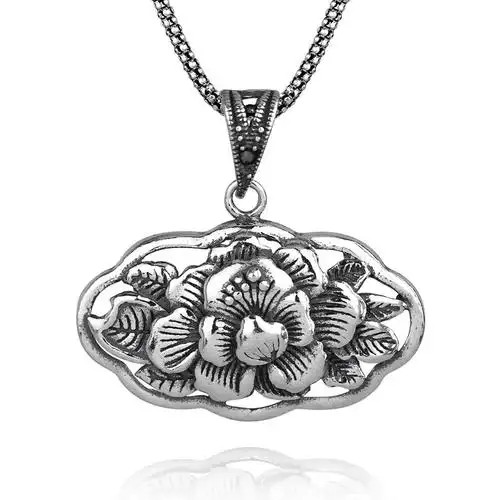
Laser engraving of silver pendants
Can UV Lasers Mark Silver?
UV lasers can also interact with metals, but they are generally not the first choice when the main requirement is efficient material removal from silver.Their shorter wavelength can provide different absorption and processing characteristics and may be useful when extremely fine or specialized processing is required.
However, UV lasers generally have lower power, so if used to mark metal materials, the marks will usually be very shallow. To achieve clear markings, the speed is much slower compared to fiber lasers.
Laser Marking Silver Jewelry
Jewelry is one of the most interesting applications for silver laser engraving.Products may include:
- Rings
- Bracelets
- Pendants
- Necklaces
- Earrings
- Charms
- Silver ornaments
The main advantage of laser engraving is its ability to create very small and repeatable details.For example, a ring may require a name or date on the inside surface.A bracelet may require a logo or personalized message.A pendant may require a detailed pattern.Because the laser process is digitally controlled, the design can be changed through software without changing physical tooling.
Laser Marking Silver Rings with a Rotary Axis
A rotary axis can significantly expand the capabilities of a silver laser marking machine.A standard galvo laser is primarily designed for relatively flat surfaces.A ring, however, has a curved surface.A rotary attachment can rotate the ring while the laser performs the marking.The basic process is:
Design → Position Ring → Rotate → Laser Mark
This allows the machine to process:
- Ring interiors
- Ring exteriors
- Cylindrical jewelry
- Bracelets
- Round ornaments
For jewelry businesses, a fiber laser + rotary axis can therefore be a practical configuration for personalized silver products.
Laser Marking Silver vs. Deep Engraving
Not every silver product needs deep engraving.This distinction is important.
Surface Marking
Suitable for:
- Names
- Dates
- Logos
- Identification
The objective is mainly to create a visible and permanent surface mark.
Deep Engraving
Suitable for:
- Decorative patterns
- Recessed designs
- Deeper personalization
- More pronounced engraving effects
Deep engraving removes more material and usually requires multiple passes.The deeper the engraving becomes, the more important material removal efficiency and heat management become.For this reason, a customer should decide whether they need marking, engraving, or deep engraving before selecting the laser configuration.
Can You Deep Engrave Silver?
Yes.
A fiber laser can progressively remove silver through repeated scanning.
A typical process may involve:
Pass 1 → Pass 2 → Pass 3 → Pass 4 → Deeper cavity
The actual depth depends on:
- Laser power
- Material
- Scanning speed
- Pulse characteristics
- Hatch spacing
- Focus
- Number of passes
For small jewelry pieces, deep engraving may not always be desirable because excessive material removal can affect the appearance or structural dimensions of the product.
For decorative jewelry, a controlled shallow engraving may produce a better result than simply maximizing depth.
How to Get a High-Contrast Mark on Silver
Silver presents a particular challenge when a strong visual contrast is required.The result can be affected by:
- Surface polishing
- Laser parameters
- Pulse characteristics
- Focus
- Scanning speed
- Frequency
- Surface condition
- Marking strategy
A highly polished silver surface can behave differently from a brushed or textured surface.Therefore, there is no universal setting that guarantees the same appearance on every silver product.In some cases, the desired visual effect may be achieved through controlled surface modification rather than deep material removal.For commercial production, testing the actual silver product is strongly recommended.
Silver Laser Marking Parameters: A 50W Fiber Laser Example
There is no universal parameter setting for laser marking silver. The appropriate settings depend on the silver alloy, surface finish, marking depth, graphic size, and the result required.
Based on more than ten years of laser processing and project experience at ZS Machinery, we can use a 50W fiber laser marking machine processing a 925 sterling silver ring as a practical example.For a typical personalized engraving application, such as marking a name, date, or small logo on the inner or outer surface of a 925 silver ring, a suitable starting configuration could be:
| Parameter | Example Starting Setting |
|---|---|
| Laser source | 50W Fiber Laser |
| Material | 925 Sterling Silver |
| Marking type | Text / Logo / Fine engraving |
| Marking speed | 500–1,000 mm/s |
| Frequency | 20–40 kHz |
| Pulse width | Adjust according to laser source |
| Hatch spacing | 0.02–0.04 mm |
| Passes | 1–3 passes for surface marking |
| Focus | Precise focus on the silver surface |
| Lens | 110 × 110 mm or suitable small-field lens |
| Rotary axis | Recommended for ring processing |
These values should be regarded as a starting point rather than a universal recipe. For example, a highly polished 925 silver ring may require different settings from a brushed or textured surface. Similarly, a small name engraving requires a different strategy from deep decorative engraving.
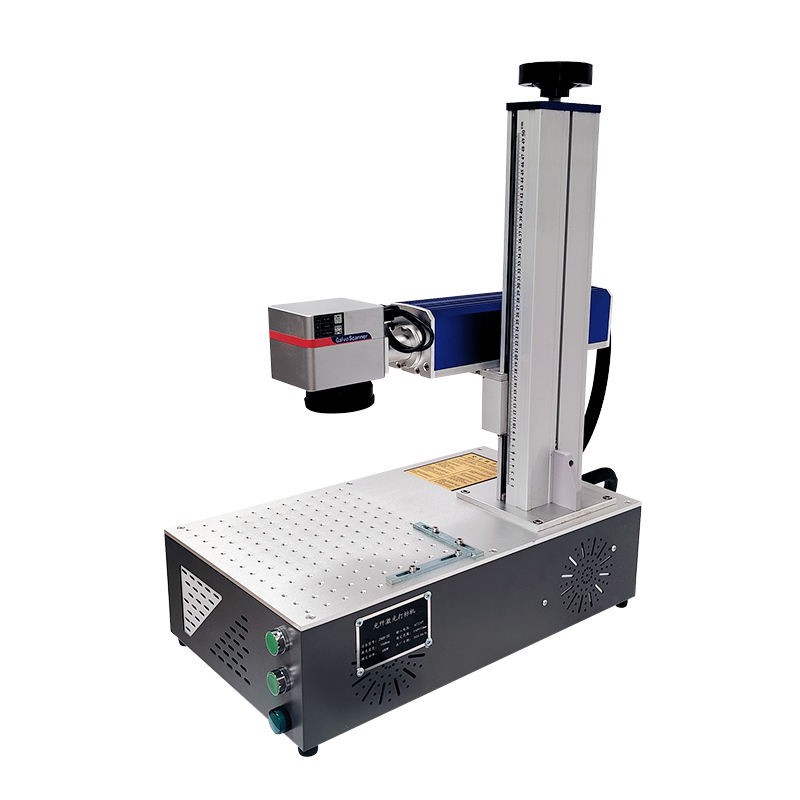
50W fiber Laser Marking Machine
Common Problems When Laser Marking Silver
Weak Marking
Possible causes include:
- Insufficient energy absorption
- Incorrect focus
- Excessive scanning speed
- Unsuitable pulse parameters
Inconsistent Marking
Possible causes include:
- Uneven surface
- Different material composition
- Incorrect focusing
- Inconsistent positioning
Excessive Heat
Too much energy in one area can affect the surrounding surface.
Damage to Plating
Deep engraving on silver-plated products may expose the base material.
Slow Production
Low-power systems may require more passes when deep engraving is required.
These problems demonstrate why silver processing should be optimized for the actual product rather than relying on generic laser parameters.
How to Choose a Silver Laser Marking Machine
Before purchasing equipment, consider the following:
1. What Type of Silver?
Is it:
- Fine silver?
- 925 sterling silver?
- Silver-plated material?
2. What Do You Need to Mark?
- Name
- Logo
- Date
- Pattern
- Serial number
- Deep engraving
3. How Large Is the Product?
Small jewelry may benefit from a compact marking field and precise optical configuration.
4. Do You Need Rotary Marking?
For rings, bracelets, and cylindrical products, a rotary axis can be highly useful.
5. What Is Your Production Volume?
For occasional personalization, 20W may be sufficient.For higher production volumes, 30W or 50W may provide better productivity.
6. Do You Need Flexible Pulse Control?
If the application requires more control over the laser-material interaction, a MOPA fiber laser may be worth considering.
Silver Laser Marking for Small Jewelry Businesses
Laser marking can also be an attractive technology for small jewelry businesses and personalization services.A relatively compact fiber laser can be used to provide:
- Name engraving
- Gift personalization
- Wedding ring engraving
- Anniversary engraving
- Custom logos
- Small-batch jewelry production
The digital workflow also makes it possible to switch between designs quickly.
For a business receiving many different customer orders, this flexibility can be more valuable than extremely high processing speed.A compact machine with a rotary attachment can provide a practical starting point for personalized jewelry services.
Final Thoughts
Laser marking silver is entirely possible, but silver requires more careful consideration than many commonly marked metals. Its high reflectivity and excellent thermal conductivity influence how efficiently laser energy is absorbed and how heat is distributed during processing.
For most applications, a fiber laser is the most practical starting point. A MOPA fiber laser can provide additional flexibility when fine details, specialized surface effects, or more precise pulse control are required. UV lasers can also be considered for certain precision applications, particularly where very fine processing or reduced thermal impact is important.
For jewelry applications, the appropriate machine depends not only on laser power but also on the product geometry and marking requirements. A 20W fiber laser can be sufficient for many names, dates, and logos, while 30W or 50W systems can provide higher processing efficiency or support more demanding engraving applications. A rotary axis is particularly useful for rings, bracelets, and other curved products.
At ZS Machinery, we help customers select laser marking configurations based on the actual silver material, product shape, required marking effect, and production volume. We can evaluate whether a standard fiber laser, MOPA fiber laser, rotary configuration, or another laser solution is more appropriate for the application.
If you are planning to mark silver jewelry, sterling silver, silver-plated products, or other silver components, sample testing with the actual material is the best way to determine the appropriate laser, power, rotary configuration, and processing parameters before purchasing a machine.
Metal Tag Engraving Machine: Methods, Materials, Applications and Automation