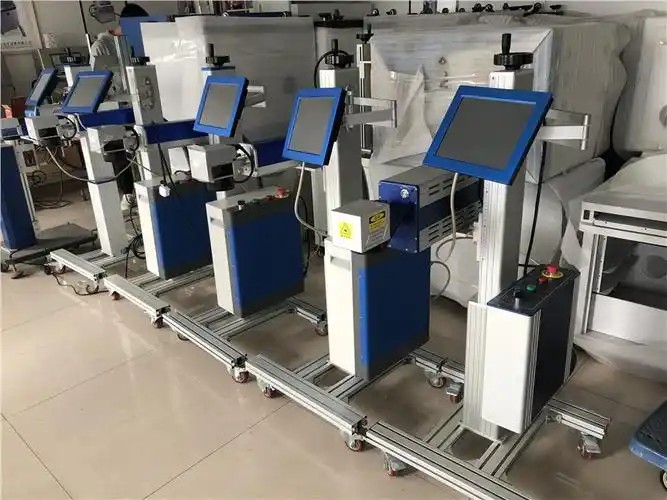
Why Most Handheld Laser Engraver Are Fiber Lasers? CO2 & UV Laser Limitations Explained
If you have browsed handheld laser marking equipment recently, you may have noticed a clear industry phenomenon: almost all mature, portable handheld laser markers adopt fiber laser technology. UV laser and CO2 laser handheld models are either extremely rare or unavailable for practical industrial portable use.
Many buyers and engineers wonder: Why are fiber lasers dominant in handheld marking machines? What technical barriers prevent CO2 and UV lasers from being widely used in portable handheld devices?
This article breaks down the core differences between fiber, CO2, and UV laser marking technologies. It explains the inherent technical difficulties, structural limitations, and application boundaries of handheld CO2 and UV lasers, helping you select the most suitable portable laser marking machine for on-site industrial marking.
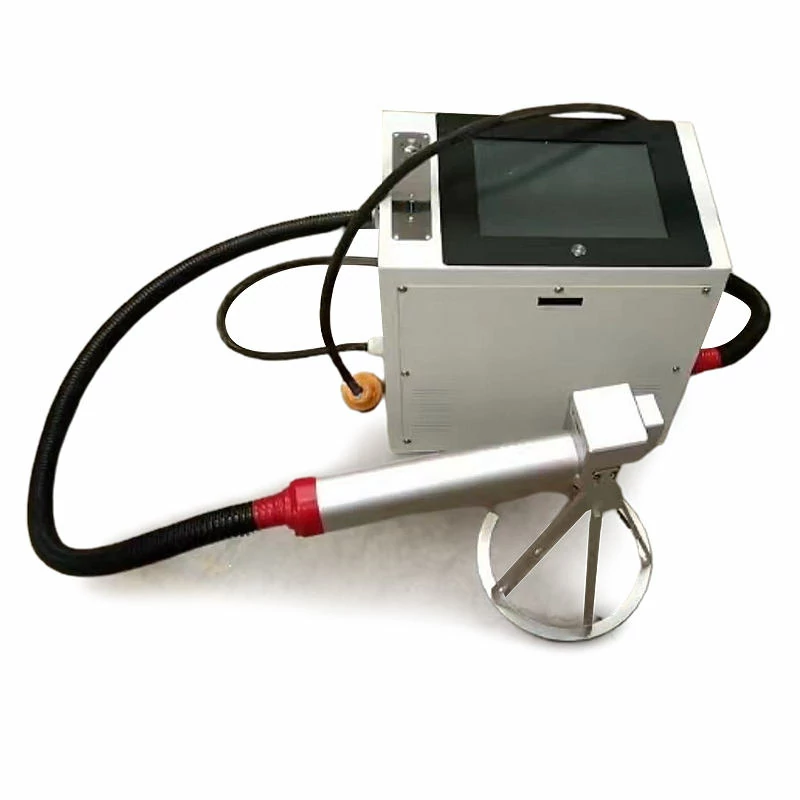
Handheld Portable Laser Marker
Core Requirements for Qualified Handheld Laser Engraver
Unlike fixed desktop laser markers, handheld portable equipment has strict non-negotiable technical requirements. Only lasers that meet all the following standards can achieve stable commercial handheld operation:
-
Shock and vibration resistance: Stable light output during frequent shaking and movement
-
Compact and lightweight structure: Easy handheld operation and portable carrying
-
Low power consumption and easy heat dissipation: Support battery power supply and long-time field work
-
High optical stability: No light deviation or power attenuation during dynamic use
-
Controllable cost and high durability: Adapt to complex industrial on-site environments
Fiber lasers perfectly match these requirements, while CO2 and UV lasers have fatal flaws in multiple core indicators.
Why Fiber Lasers Dominate Handheld Laser Marking (1064nm)
Fiber laser marking machines are the absolute mainstream in the handheld laser equipment market, relying on their unique all-fiber optical path design and excellent environmental adaptability.
1. All-fiber optical path, anti-shake and anti-vibration
The laser gain medium of a fiber laser is optical fiber, and laser transmission is completely completed inside the fiber. There is no free-space lens, reflector, or discrete optical component. Even if the handheld head shakes, swings, or jolts violently, the optical path will not shift or lose light. This fundamentally solves the biggest stability problem of handheld laser equipment.
2. Compact structure and low heat generation
Fiber lasers support air-cooled heat dissipation, eliminating the need for bulky water cooling systems. The power supply and laser body are miniaturized, enabling lightweight handheld head design and matching lithium battery portable power supply. It truly realizes wireless, mobile, and unrestricted on-site marking.
3. Wide application range and mature cost control
With a 1064nm wavelength, fiber lasers are highly compatible with all metal materials and most engineering plastics, covering mainstream industrial marking scenarios such as steel structures, pipes, hardware accessories, and auto parts. After years of technical iteration, fiber laser costs are low, with stable mass production and ultra-high market maturity.
Why CO2 Lasers Are Difficult to Make Practical Handheld Markers (10.6μm)
CO2 lasers are mainly used for non-metal marking such as wood, leather, paper, and acrylic. Although desktop CO2 marking machines are very common, truly portable battery-powered handheld CO2 lasers are almost absent in the market. The limitations come from hardware structure and optical principles.
1. Glass tube CO2 laser: Completely unsuitable for handheld use
Traditional glass CO2 laser tubes adopt a sealed gas-filled glass cavity structure. They are fragile, fear vibration, and are prone to air leakage or tube cracking when shaken. In addition, glass CO2 tubes must rely on water cooling, with large overall volume and heavy weight, making portable handheld operation impossible.
2. RF metal tube CO2 laser: Limited portability and poor stability
Although upgraded RF metal CO2 tubes support air cooling and have improved shock resistance, they still have insurmountable drawbacks for handheld scenarios:
-
Free-space optical path design: The laser needs multiple reflectors to transmit to the galvanometer. Slight shaking will cause optical deviation, uneven marking, and sharp power drop. Reinforcing shock resistance will greatly increase costs.
-
High power consumption and large volume: RF power supplies are bulky and power-hungry, unable to support battery power supply. Most so-called “handheld CO2 markers” on the market only have a handheld head, with a large host box grounded and wired, failing to achieve true portability.
-
Narrow application scenarios: 10.6μm far-infrared wavelength cannot mark metals, and non-metal handheld marking demand is far lower than metal industrial marking, resulting in insufficient market driving force for iteration and upgrading.
Why UV Lasers Barely Have Commercial Handheld Models (355nm)
UV lasers (355nm) are known as “cold light marking”. They are suitable for ultra-fine marking of glass, PCB, silicone, and precision plastic parts, with non-carbonation and high-precision advantages. However, UV handheld marking machines are almost blank in the commercial market, with more severe technical bottlenecks than CO2 lasers.
1. Precision free-space optical path, extremely sensitive to vibration
Most industrial UV lasers adopt DPSS solid-state frequency doubling technology. The internal optical path is composed of pump sources, crystals, and frequency doubling components, requiring extremely high alignment accuracy. Handheld shaking and vibration will directly reduce the frequency doubling efficiency, causing sharp power attenuation or even complete failure of UV light output. The optical stability cannot be maintained in dynamic handheld scenarios at all.
2. Strict temperature control and high heat dissipation requirements
UV frequency doubling crystals are extremely sensitive to temperature changes. Slight temperature drift will affect laser output quality. Desktop UV machines are equipped with precise constant-temperature water cooling systems, while handheld portable equipment cannot achieve stable temperature control and anti-vibration protection at the same time.
3. High cost and low power ceiling
The manufacturing cost of UV lasers is 5–10 times that of fiber lasers of the same power. Matching shock-proof optical path and portable power supply will further push up the overall price. In addition, the mainstream industrial UV laser power is only 3–10W, with low marking efficiency, unable to meet the fast marking demand of on-site handheld operation.
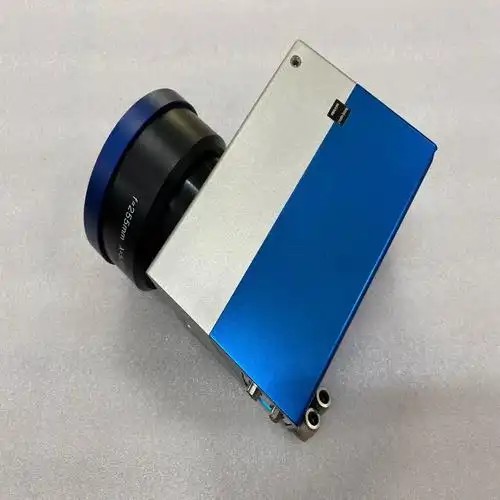
UV Laser Source
Fiber vs CO2 vs UV Handheld Laser Marking Machine: Full Comparison
|
Laser Type
|
Handheld Availability
|
Core Technical Pain Points
|
Applicable Materials
|
|---|---|---|---|
|
Fiber Laser (1064nm)
|
Fully mature & widely used
|
No obvious shortcomings, stable anti-shake, portable and low power consumption
|
All metals, most plastics
|
|
CO2 Laser (10.6μm)
|
Semi-portable only (host wired)
|
Free optical path vibration deviation, high power consumption, unable battery-powered
|
Wood, leather, paper, acrylic and other non-metals
|
|
UV Laser (355nm)
|
No commercial handheld models
|
Vibration-sensitive frequency doubling optical path, strict temperature control, high cost, low power
|
Glass, PCB, silicone, precision plastic ultra-fine marking
|
Industry Practical Application Conclusions
1. On-site industrial handheld marking is dominated by fiber lasers. Most on-site scenarios such as large steel structures, pipeline engineering, and metal workpiece inventory marking target metal materials, which perfectly fit the advantages of fiber handheld lasers.
2. Non-metal marking prefers desktop CO2 equipment. For wood, leather, and paper marking, enterprises mostly adopt fixed desktop CO2 machines. There is no rigid demand for handheld portability, so there is no need to overcome the high cost of handheld CO2 transformation.
3. UV fine marking is limited to fixed stations. High-precision UV marking requires a stable environment and precise optical calibration. It is completely suitable for fixed desktop operation and not applicable for complex and mobile handheld working scenarios.
Final Verdict
The reason why handheld laser marking machines are almost all fiber lasers is not market preference, but inevitable technical matching. Fiber lasers have inherent advantages in anti-vibration stability, portability, power consumption, cost and material adaptability. In contrast, CO2 and UV lasers have insurmountable technical and cost bottlenecks in portable handheld scenarios, making them unable to achieve large-scale commercial promotion.
Top 10 Laser Manufacturers in China 2026: Pattern Analysis of Domestic Laser Industry Leaders
Color Laser Engraving on Metal: How Laser Parameters Create Different Colors
Color Laser Engraving on Metal: How Laser Parameters Create Different Colors