Dot Peen Marking for Anchor Rods: A Practical Solution for Deep Marking Before Hot-Dip Galvanizing
Anchor rods are commonly used in construction, steel structures, mechanical installation and other heavy-duty applications. Because these components often need to be identified by grade, size, batch number or manufacturer information, permanent marking is an important part of production and traceability.
In a recent application, a customer needed to mark 1.5-meter-long anchor rods weighing approximately 10 kg each. The rods are made from 10.9-grade high-strength iron, and the marking is performed before hot-dip galvanizing. The customer required after galvanizing, the markings are clearly visible.
For this application, ZS Machinery suggested a handheld electric dot peen marking machine is a more practical solution than a conventional laser marking machine.
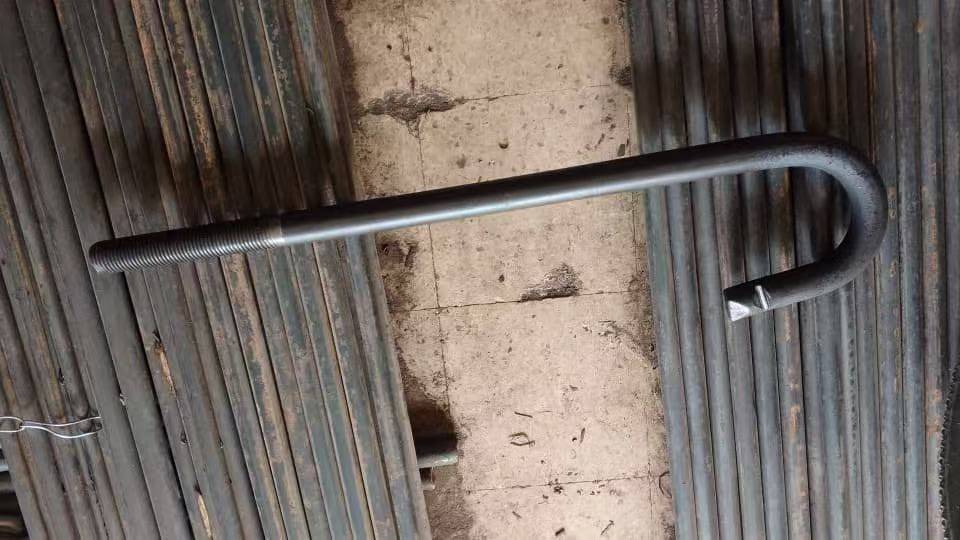
Anchor rods need marking
Why Does Marking Depth Matter Before Hot-Dip Galvanizing?
Hot-dip galvanizing adds a zinc coating to the surface of the steel to improve corrosion resistance.
The thickness of a hot-dip galvanized coating can vary depending on the steel composition, material thickness and galvanizing process. As a general reference, the zinc coating on structural steel is often around 50–100 μm (0.05–0.10 mm), although thicker or thinner coatings are possible depending on the application and applicable standard.
When identification is very shallow, the final appearance and readability can be affected by the surface treatment. For applications where the identification needs to remain physically distinguishable, a deeper mark can provide more material definition beneath the surface coating.This is why we need deeper marking depth in this project.It’s best to control the depth at least 0.1mm.
Why Is a Laser Marking Machine Not the First Choice?
Laser marking is widely used for steel and other metals. A fiber laser can easily create serial numbers, logos, QR codes and other identification marks on steel surfaces.However, deep engraving is different from normal laser marking.
A typical fiber laser marking machine is designed primarily for surface marking and engraving. If a depth of around 0.2 mm is required on high-strength steel, the machine may need:
- Higher laser power
- Multiple processing passes
- Longer processing time
- More thermal input
- More demanding parameter optimization
It is technically possible to achieve deeper engraving with an appropriate laser configuration, but the overall equipment cost and processing time can increase significantly.
For this particular application, the customer does not simply need a visible surface mark. They need a physical indentation with meaningful depth.That makes dot peen marking a more practical technology.
Another Challenge: The Anchor Rod Is 1.5 Meters Long
The material itself also affects machine selection.The anchor rod in this application is approximately 1.5 meters long and weighs about 10 kg.A conventional desktop marking machine requires the workpiece to be positioned inside the marking area. For a long and heavy rod, this means the operator may need to repeatedly move, position and remove the workpiece.This creates several problems:
- Difficult manual handling
- More positioning work
- Larger machine space requirements
- Higher operator workload
- Less convenient loading and unloading
For a small metal part, this may not be a problem.For a 1.5-meter anchor rod, it becomes an important part of the production process.Instead of moving the entire workpiece to the machine, a handheld marking machine allows the operator to bring the marking head directly to the workpiece.
Why Choose a Handheld Electric Dot Peen Marking Machine?
A dot peen marking machine uses a hard marking stylus to make a series of controlled impact points on the metal surface.These individual dots form letters, numbers, symbols and other identification information.For the anchor rod application, the handheld configuration provides several practical advantages.
1. Deep Physical Marking
Unlike a surface laser mark, dot peen marking physically deforms the metal surface.
For this application, the target marking depth is approximately 0.3–0.5 mm, depending on material hardness, character size and marking conditions.
2. Suitable for High-Strength Steel
The anchor rods are made from 10.9-grade high-strength steel.
Mechanical dot peen marking is suitable for permanent identification on many steel components where physical depth is required.
3. Easy Handling of Long Workpieces
The operator does not need to place the entire 1.5-meter rod inside a small desktop marking area.The rod can remain in a suitable working position while the operator brings the handheld marking head to the required location.This is particularly useful for long, heavy or difficult-to-handle components.
4. Integrated Touchscreen Control
For this application, an electric dot peen marking machine with an integrated touchscreen controller can be used without an external computer.The operator can create or select the required marking content directly from the machine.This makes the setup relatively simple for workshop and production-floor use.
5.Dual control methods: touch screen and mouse
The device supports touchscreen operation, allowing for operation with a stylus. It also has a USB port for mouse use, offering two operating modes for added convenience.
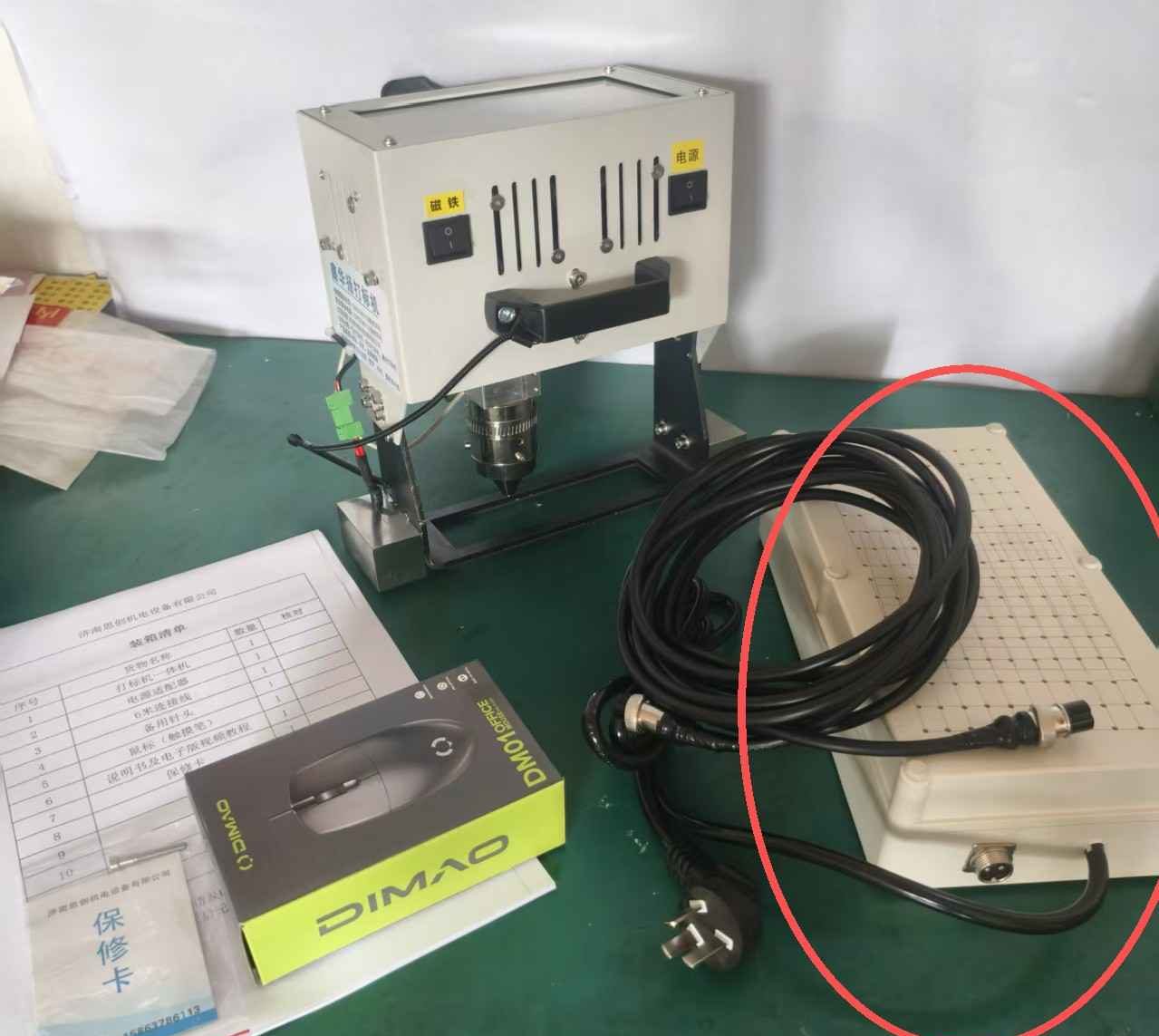
Electric dot peen marking machine
What Can Be Marked on Anchor Rods?
Dot peen marking can be used for many types of permanent identification.Depending on the customer’s requirements, an anchor rod may be marked with:
- Steel grade
- Product diameter
- Product length
- Manufacturer identification
- Batch number
- Heat number
- Serial number
- Production code
- Product standard
- Customer identification
- Traceability information
For example:
10.9 – M24 × 1500 – BATCH 260930
The exact marking content can be customized according to the customer’s production and traceability requirements.
Handheld Dot Peen vs Automatic Dot Peen Machine
A handheld machine is not the only option.For larger production volumes, an automatic dot peen marking system can also be developed.
| Feature | Handheld Dot Peen | Automatic Dot Peen |
|---|---|---|
| Workpiece Handling | Manual | Automatic or semi-automatic |
| Long/Heavy Parts | Very convenient | Requires suitable loading system |
| Production Volume | Small to medium | Medium to high |
| Positioning | Operator positioning | Automatic positioning |
| Automation | Limited | High |
| Initial Investment | Lower | Higher |
| Best For | Flexible production | High-volume production |
For a small or medium production volume, the handheld machine allows the operator to mark different positions without building a complex production line.For high-volume production, automation becomes more valuable.
Automatic Dot Peen Marking for High-Volume Anchor Rod Production
If the customer needs to process large quantities of anchor rods every day, ZS Machinery can also design an automated dot peen marking system.A possible production process is:
Automatic Loading → Positioning → Dot Peen Marking → Inspection → Unloading
Depending on the production line, additional functions can be integrated, such as:
- Roller conveyor
- V-block positioning
- Automatic feeding
- Automatic workpiece rotation
- Multiple marking positions
- Barcode or QR code reading
- PLC control
- Automatic loading and unloading
- Production data management
For long anchor rods, the machine structure can also be designed according to the actual workpiece length and production layout.This allows the marking system to become part of the customer’s production line rather than operating as an independent manual machine.
ZS Machinery: Marking Solutions Based on the Application
Machine selection should start with the actual production requirement rather than simply choosing between laser and dot peen technology.For the anchor rod application discussed in this case, the key requirements were:
10.9-grade steel + 1.5 m length + approximately 10 kg weight + At least 0.15 mm depth + hot-dip galvanizing
Based on these requirements, a handheld electric dot peen marking machine provides a practical solution.
For higher production volumes, ZS Machinery can also customize automatic dot peen marking systems according to the workpiece size, marking position, production capacity and loading method.
We can help evaluate:
- Required marking depth
- Workpiece dimensions and weight
- Marking content
- Production volume
- Manual or automatic loading
- Positioning requirements
- Post-marking processes
- Integration with existing production lines
The goal is not simply to provide a marking machine, but to select a marking method that fits the complete manufacturing process.
If you have a similar anchor rod, bolt, stud or heavy steel component, send us the workpiece size, material, required marking depth, marking content and production volume. We can recommend a suitable marking configuration and test the marking effect before finalizing the machine.
Fiber Laser Engraving Aluminum: How Deep Can You Engrave Aluminum?