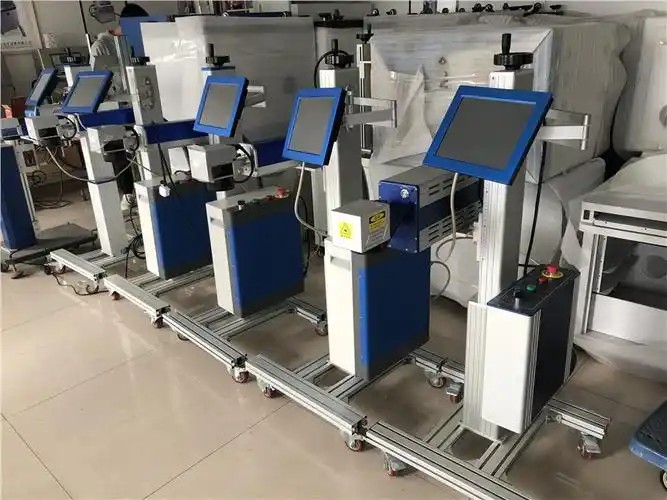
Fiber Laser Engraving Aluminum: How Deep Can You Engrave Aluminum?
Aluminum is widely used in automotive parts, machinery, electronics, nameplates, enclosures, profiles and other industrial products. Because of its low weight and good corrosion resistance, it is one of the most common metals processed by laser.But marking aluminum and engraving aluminum are not exactly the same process.
A fiber laser can create high-contrast marks on aluminum very efficiently, but when the application requires actual material removal and a recessed engraving, the laser parameters, power and processing strategy become much more important.So how deep can a fiber laser engrave aluminum? What power should you choose? And when should you use a fiber laser engraving machine instead of an aluminum laser cutting machine?
This guide explains the differences and helps you choose the right equipment for aluminum marking, engraving and cutting.
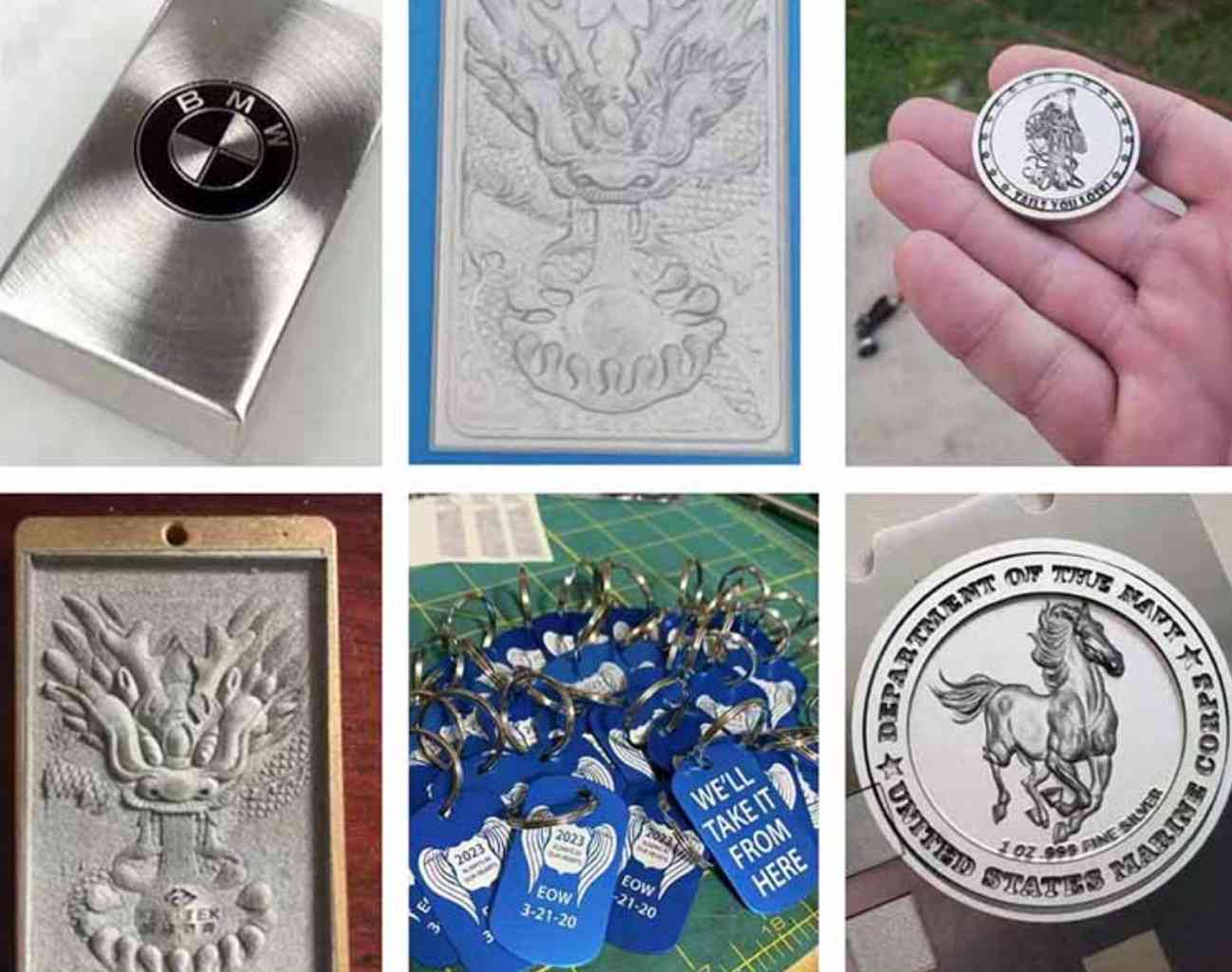
Aluminum laser marking samples
Can a Fiber Laser Engrave Aluminum?
Yes. A fiber laser can engrave aluminum by concentrating laser energy onto a small area of the metal surface.
Depending on the material and process parameters, the laser can be used for:
- Surface marking
- High-contrast marking
- Light engraving
- Deep engraving
- Text and numbers
- Logos
- QR codes and barcodes
- Scales and graduations
- Recessed patterns
- Identification grooves
However, the amount of material removed depends on much more than laser power.Important factors include:
- Laser power
- Pulse width
- Frequency
- Scanning speed
- Hatch spacing
- Number of passes
- Focus position
- Aluminum alloy
- Surface treatment
- Required engraving depth
How Does a Fiber Laser Engrave Aluminum?
A typical fiber laser engraving system uses the following optical structure:
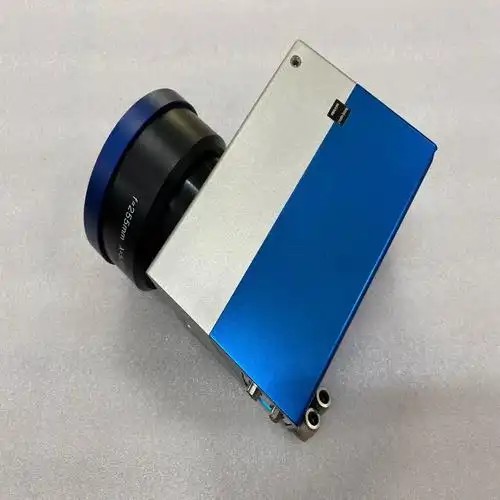
Fiber Laser Source → Beam Delivery → Galvanometer Scanner → F-Theta Lens → Focused Laser Beam → Aluminum Workpiece
The galvanometer mirrors rapidly move the laser beam across the working area.When the focused beam reaches the aluminum surface, the concentrated energy produces localized heating and material removal. By repeatedly scanning the selected area, the machine can gradually create a recessed engraving.
For light marking, only limited material interaction may be required.While for deeper engraving, the same area can be processed through multiple passes.
Why Are Multiple Passes Used for Deep Engraving?
Deep engraving is usually not achieved by simply increasing the power to the maximum.A controlled process may use repeated passes to gradually remove material while maintaining the required engraving quality.The actual strategy depends on:
- Required depth
- Aluminum alloy
- Laser power
- Pulse characteristics
- Engraving area
- Desired production speed
This is also why sample testing is important for industrial aluminum engraving applications.
How Deep Can a Fiber Laser Engrave Aluminum?
There is no single depth that applies to every aluminum engraving application.For example, two aluminum components processed with the same 50W fiber laser can produce different engraving results because their alloy, surface treatment, focus and process parameters are different.The main factors affecting engraving depth include:
Laser Power
Higher power generally provides greater material removal capability.
Scanning Speed
Slower scanning generally increases the energy delivered to a particular area, but excessive heat can affect the process.
Pulse Width and Frequency
For pulsed fiber lasers, pulse characteristics influence how laser energy interacts with the aluminum surface.
Hatch Spacing
The distance between scanning lines affects energy distribution and material removal.
Number of Passes
Additional passes can progressively increase engraving depth.
Focus
Accurate focusing is important for maintaining a concentrated laser spot and stable processing.
Aluminum Alloy and Surface Condition
Different aluminum alloys, finishes and surface treatments can respond differently to the laser.
Therefore, engraving depth should be determined through actual sample testing rather than relying only on a theoretical power-to-depth chart.
30W, 50W or 100W Fiber Laser for Aluminum Engraving?
For industrial aluminum engraving, we generally recommend 30W as the minimum practical power for reliable processing.The appropriate power depends on whether you need surface marking, light engraving, deeper engraving or higher production efficiency.
30W Fiber Laser
30W is suitable for:
- General aluminum marking
- Logos
- Serial numbers
- QR codes
- Light engraving
- Aluminum nameplates
- Anodized aluminum
It is a practical starting point for many general-purpose applications.
50W Fiber Laser
50W provides greater material removal capability and higher processing efficiency.It is more suitable when you need:
- Faster engraving
- Deeper engraving
- More material removal
- Higher production volume
- Larger engraved graphics
100W Fiber Laser
100W is suitable for more demanding industrial applications where engraving depth, processing efficiency or material removal is important.Typical applications may include:
- Deep engraving
- Large identification areas
- Industrial components
- Mold and tooling identification
- High-volume production
The highest power is not always the best choice. The machine should be selected according to the aluminum alloy, engraving depth, marking area, production volume and required cycle time.
Can You Deep Engrave Aluminum With a Fiber Laser?
Yes, but deep engraving should be treated as a different application from ordinary laser marking.If you only need a black or high-contrast serial number, a relatively low-power fiber laser may be sufficient.If you need a recessed groove or visibly removed material, the process may require:
- Higher laser power
- Multiple passes
- Optimized hatch patterns
- Controlled scanning speed
- Accurate focus
- Suitable pulse parameters
For industrial applications, the goal is not simply to achieve the deepest possible engraving.A better objective is to achieve the required depth at an acceptable production speed and with consistent quality.
Can a Fiber Laser Engrave Anodized Aluminum?
Yes. Anodized aluminum is one of the common materials processed by fiber laser marking systems.Because the surface contains an anodized layer, the laser can create a strong visual contrast by modifying or removing the surface layer.This is common for:
- Electronic housings
- Nameplates
- Control panels
- Consumer products
- Aluminum tags
- Industrial labels
However, anodized aluminum and bare aluminum should not necessarily use the same parameters.
Anodized Aluminum
Often provides excellent contrast for identification and graphic marking.
Bare Aluminum
May require more careful parameter optimization because of aluminum’s reflective characteristics and the specific alloy.
Painted or Coated Aluminum
The laser may primarily interact with the coating rather than the aluminum substrate.For this reason, testing the actual material is recommended before mass production.
What Aluminum Products Can You Engrave With a Fiber Laser?
Fiber laser engraving can be used on many aluminum products.
Aluminum Nameplates and Tags
Engrave product codes, serial numbers, logos and identification information.
Aluminum Panels
Create text, scales, symbols and control-panel graphics.
Aluminum Mechanical Parts
Mark production numbers, assembly information and traceability codes.
Aluminum Enclosures
Suitable for electrical and electronic housings.
Aluminum Profiles
Mark identification information, specifications and production codes.
Automotive Aluminum Parts
Used for part numbers, traceability information and manufacturing identification.
Aluminum Tools and Industrial Components
Permanent identification can be added without using physical cutting tools.
Fiber Laser Engraving vs. CNC Router for Aluminum
A fiber laser is not the only technology that can engrave aluminum.For some applications, a CNC router may be more suitable.
| Feature | Fiber Laser | CNC Router |
|---|---|---|
| Contact with Workpiece | Non-contact | Contact |
| Tool Wear | No cutting tool | Cutting tools wear |
| Fine Text | Excellent | Depends on tool |
| Small Graphics | Excellent | Depends on tool |
| Deep Material Removal | Possible | Excellent |
| Large Deep Engraving | Application dependent | Often more suitable |
| Chips and Dust | Very low | More chips/dust |
| Surface Marking | Excellent | Less suitable |
If the main requirement is fine text, logos, serial numbers, QR codes and controlled engraving, a fiber laser is attractive.
If the main requirement is large-scale and relatively deep mechanical material removal, a CNC router may be a better solution.
Can a Fiber Laser Engrave and Cut Aluminum?
This is where it is important to distinguish between a fiber laser engraving machine and a fiber laser cutting machine.
A low-power marking or engraving machine may be able to remove material from aluminum, but that does not mean it is designed to efficiently cut aluminum sheet or tube.Laser cutting is a different process.
A dedicated fiber laser cutting machine typically uses:
- High-power fiber laser source
- Dedicated laser cutting head
- Focusing optics
- Cutting nozzle
- Assist gas
- CNC motion system
- Cutting control software
The cutting head focuses the laser into a suitable spot and delivers assist gas through the nozzle. The system is designed to continuously penetrate and remove material along the cutting path.This is very different from repeatedly scanning a line with a galvanometer marking system.
Fiber Laser Engraving Aluminum vs. Laser Cutting Aluminum
If your requirement is to create identification or recessed graphics, use a fiber laser engraving system.While if your requirement is to cut aluminum material into separate parts, use a dedicated fiber laser cutting machine.
Fiber Laser Engraving
Best for:
- Logos
- Text
- Serial numbers
- QR codes
- Light engraving
- Deep engraving
- Scales
- Identification marks
Fiber Laser Sheet Cutting
Best for:
- Aluminum sheets
- Aluminum plates
- Panels
- Brackets
- Mechanical components
- Custom sheet metal parts
For example, if you need to cut a 3 mm aluminum sheet into a specific mechanical component, a dedicated fiber laser cutting machine is much more appropriate than trying to cut it with a 30W or 50W marking machine.
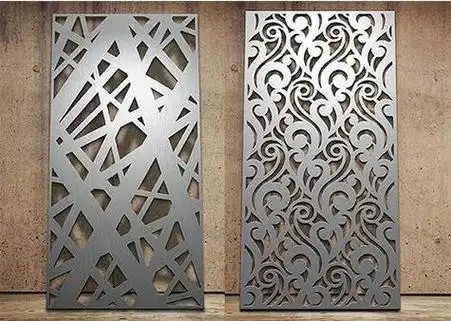
Laser cut aluminum plate
Fiber Laser Cutting Machine for Aluminum Sheet
For customers processing aluminum plates or sheet metal, ZS Machinery also provides dedicated fiber laser sheet metal cutting machines.These systems are designed for continuous cutting rather than surface marking.Typical configurations can be selected according to:
- Aluminum thickness
- Sheet size
- Required cutting speed
- Production volume
- Cutting accuracy
- Part geometry
The machine can be configured with an appropriate fiber laser source, cutting head, CNC system, working table and assist-gas system.This makes it suitable for industrial aluminum sheet processing rather than simply marking the surface.
If your main requirement is aluminum sheet cutting, a dedicated fiber laser cutting machine should be considered instead of a laser engraving machine.
Fiber Laser Tube Cutting Machine for Aluminum Tubes
Aluminum is also widely used in tubes and profiles.Typical applications include:
- Aluminum tubes
- Square tubes
- Rectangular tubes
- Aluminum profiles
- Structural profiles
- Furniture components
- Automotive components
- Industrial frames
For these applications, a fiber laser tube cutting machine can be used to cut the tube or profile according to the required geometry.The cutting system can perform operations such as:
- Straight cutting
- Angle cutting
- Hole cutting
- Slot cutting
- Contour cutting
- Profile cutting
The tube cutting machine uses a dedicated cutting head and CNC-controlled movement to process the workpiece along multiple axes.Therefore, if your aluminum product is a tube or profile rather than a flat sheet, a tube laser cutting machine is usually a better choice than a conventional flat-sheet laser cutter or marking machine.
Which Machine Do You Need for Aluminum?
The easiest way to select the machine is to start with the actual process you need.
| Your Requirement | Recommended Machine |
|---|---|
| Serial numbers and logos | Fiber Laser Marking Machine |
| QR codes and barcodes | Fiber Laser Marking Machine |
| Light engraving | Fiber Laser Engraving Machine |
| Deeper engraving | 50W / 100W or suitable higher-power Fiber Laser |
| Large deep material removal | Fiber Laser or CNC Router depending on depth and size |
| Aluminum sheet cutting | Fiber Laser Sheet Metal Cutting Machine |
| Aluminum tube cutting | Fiber Laser Tube Cutting Machine |
| Large aluminum parts with multiple marking positions | CNC + Galvo Laser System |
| Marking + cutting in one production process | Combination of suitable laser systems |
The key is to choose the machine according to the manufacturing process, not simply the material.
What Marking Area Do You Need for Aluminum Engraving?
For a galvanometer fiber laser engraver, the marking area should mainly be selected according to the size of the engraving content.For example:
- Up to approximately 80 × 80 mm → 110 × 110 mm
- Up to approximately 150 × 150 mm → 175 × 175 or 200 × 200 mm
- Up to approximately 250 × 250 mm → 300 × 300 mm
A larger aluminum workpiece does not necessarily require a larger marking field.
For example, if you have a 500 mm aluminum panel but only need to engrave a 70 × 50 mm serial number, a 110 × 110 mm marking field may still be sufficient.If the aluminum component is much larger and requires engraving in multiple positions, a CNC + Galvo configuration can be considered.
The CNC axes move the laser system to different positions, while the galvanometer performs high-speed local scanning.
How to Choose a Fiber Laser Engraving Machine for Aluminum
Before selecting a machine, consider five main questions.
1. What Type of Aluminum Are You Processing?
Aluminum alloy, anodized aluminum, coated aluminum and other surface conditions can respond differently.
2. Do You Need Marking or Actual Engraving?
If you only need identification, a lower-power fiber laser may be enough.
If you need material removal and depth, consider a higher-power configuration.
3. How Deep Do You Need to Engrave?
Depth is one of the most important factors affecting power and processing time.
4. How Large Is the Engraving Content?
Select the marking field according to the actual engraving area.
5. Are You Engraving or Cutting?
If you need to remove material but not separate the workpiece, laser engraving may be suitable.
If you need to cut aluminum sheet or tube into separate parts, use a dedicated fiber laser cutting machine.
Why Choose ZS Machinery for Aluminum Laser Processing?
Aluminum applications can range from simple identification marking to deep engraving and full material cutting.ZS Machinery can provide different laser solutions according to the actual application, including:
- Fiber laser marking machines
- Fiber laser engraving machines
- High-power fiber laser systems
- Fiber laser sheet metal cutting machines
- Fiber laser tube cutting machines
- CNC + Galvo laser systems
- Customized automation solutions
We do not recommend a laser simply by wattage.
We first look at the aluminum alloy, surface condition, marking or engraving depth, workpiece size, processing area, production volume and required speed.For new applications, sample testing is also recommended to confirm the engraving depth, contrast, processing speed and final quality before choosing the final configuration.
Final Thoughts
A fiber laser is an excellent tool for engraving aluminum, but aluminum engraving and aluminum cutting are two different applications.
For serial numbers, logos, QR codes and general identification, a fiber laser marking machine may be all you need.
For actual material removal and deeper engraving, a 30W, 50W, 100W or higher-power fiber laser can be selected according to the required depth and production efficiency.
When the goal is to cut aluminum sheet, a dedicated fiber laser sheet metal cutting machine is the better solution.
When processing aluminum tubes or profiles, a fiber laser tube cutting machine provides the appropriate CNC-controlled cutting process.
The right machine therefore depends not simply on the fact that the material is aluminum, but on what you need the laser to do to the aluminum.
Contact ZS Machinery for Your Aluminum Laser Processing Project
Looking for the right laser solution for aluminum?
Whether you need fiber laser engraving, laser marking, deep engraving, aluminum sheet cutting or aluminum tube cutting, ZS Machinery can recommend a suitable configuration based on your actual application.
Send us your:
- Aluminum material or alloy
- Workpiece size and thickness
- Engraving or cutting requirements
- Required engraving depth
- Marking or cutting area
- Production volume
If you have aluminum samples, drawings or reference photos, you can also send them to us for evaluation and sample testing.
Our team can help you determine whether you need a fiber laser engraver, a high-power fiber laser system, an aluminum sheet cutting machine, a tube laser cutting machine, or a customized CNC laser solution.
Contact ZS Machinery to discuss your aluminum laser processing application and find the right machine for your production needs.
Cheap Laser Marking Machine: Is the Cheapest Option Really Worth It?