Laser Marking Business: Market Trends, Business Opportunities and Future Technology
A laser marking business can take many forms, from a small workshop offering personalized engraving to a professional B2B service that marks thousands of industrial components every month. As laser technology becomes more affordable and easier to integrate into production, laser marking is no longer limited to large manufacturers.
But the industry is changing.
Basic engraving services are becoming increasingly competitive, while new opportunities are emerging in industrial traceability, automation, machine vision, high-precision processing, and smart manufacturing.
To understand where the laser marking business is heading, it is useful to first look at how products were marked before laser technology became widely available.

Laser marking nameplates and customized gifts
How Were Products Marked Before Laser Technology?
Industrial marking has existed for much longer than laser marking. Manufacturers have traditionally used mechanical, chemical, and ink-based methods to identify their products.
Mechanical Engraving
Mechanical engraving uses a cutting tool to physically remove material from the surface.
It can produce relatively deep and durable marks and has been used for:
- Metal nameplates
- Tools
- Molds
- Machine components
- Industrial parts
However, the process involves physical contact. Cutting tools wear over time, and producing complex graphics or small codes can be relatively difficult.
Stamping and Steel Stamping
Another traditional method is stamping.
A punch or hardened tool presses against the material to create a permanent indentation. This method is still used today for applications where extremely durable identification is required.
However, changing the marking content often requires changing the tooling, making it less flexible for variable information.
Dot Peen Marking
Dot peen marking developed into an important industrial identification technology. A hardened pin rapidly impacts the surface to create a series of dots that form letters, numbers, logos, and Data Matrix codes.
Dot peen remains useful for applications such as:
- Automotive components
- Steel parts
- Machinery
- Industrial tools
- Heavy-duty components
Its advantages include durability and relatively low operating cost. However, it is still a contact-based process and can produce noise and tool wear.
Inkjet and Screen Printing
Instead of removing or deforming material, ink-based technologies add information to the surface.
Inkjet printing is particularly useful for high-speed production lines and variable information such as:
- Production dates
- Batch numbers
- Barcodes
- Product codes
However, ink systems require consumables and may face issues involving adhesion, drying, chemical resistance, and long-term durability.
Chemical and Electrochemical Etching
Chemical and electrochemical processes can also create permanent marks on metals.
These technologies can produce good results, but they involve additional chemicals, processing steps, and environmental considerations.
How Did Laser Marking Change the Industry?
Laser marking introduced a fundamentally different approach.Instead of using a mechanical tool to contact the material, a focused laser beam modifies the surface without physical contact.
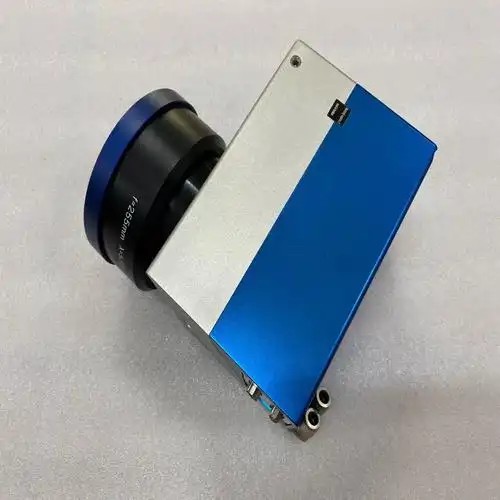
The basic process is:Laser Source → Galvo Scanner → Focused Beam → Material Surface
This simple change created several important advantages.
Laser marking can provide:
- Non-contact processing
- High precision
- No mechanical marking tool
- Easy digital customization
- High-speed marking
- Small characters and detailed graphics
- QR and Data Matrix codes
- Easy production-line integration
Perhaps the biggest change is digital flexibility.Changing from one serial number to another does not require a new tool. The marking content can simply be changed through software.This makes laser marking particularly suitable for modern manufacturing, where products often require unique identification and traceability.
Is Laser Marking Still a Good Business in 2026?
Yes, but the business is becoming more specialized.The entry-level market is increasingly competitive. Compact laser marking machines have become accessible to small businesses, workshops, and individual entrepreneurs.
This has created opportunities in areas such as:
- Personalized gifts
- Jewelry engraving
- Promotional products
- Metal products
- Customized accessories
- Small-batch manufacturing
However, simply purchasing a laser and offering basic engraving is no longer a strong competitive advantage.The more interesting opportunities are increasingly found in B2B services and specialized applications.
Where Are the Opportunities in the Laser Marking Business?
1. Personalized Products
Small businesses can use laser marking to customize:
- Jewelry
- Tumblers
- Pens
- Keychains
- Metal cards
- Gifts
- Accessories
This model is relatively easy to start because the equipment can be compact and the products can be sold individually.However, competition can also be high.
2. B2B Laser Marking Services
A more scalable opportunity is providing laser marking services to local manufacturers.Many small and medium-sized manufacturers may not want to purchase and maintain their own marking equipment.A professional laser marking service can process:
- Serial numbers
- Logos
- QR codes
- Barcodes
- Product codes
- Batch numbers
- Identification marks
Instead of selling one customized product at a time, the business can process hundreds or thousands of components for a single customer.This creates the possibility of repeat orders and long-term B2B relationships.
3. Industrial Traceability
Traceability is becoming increasingly important in manufacturing.Manufacturers need to know:
- Where a component was produced
- Which production batch it belongs to
- When it was manufactured
- Which production line processed it
Laser marking can create permanent identification directly on the component.Common examples include:
Serial Numbers
QR Codes
Data Matrix Codes
Part Numbers
This is one reason industrial laser marking remains an important market even as consumer engraving becomes more competitive.
The Most Important Laser Marking Technology Trends
The future of laser marking is not simply about making lasers more powerful.The bigger change is the integration of automation, machine vision, artificial intelligence, and advanced laser sources.
AI-Assisted Laser Marking
Traditional laser marking follows predefined instructions:
Set Parameters → Position Part → Mark
Future systems can become much more adaptive:
Identify → Analyze → Select Parameters → Mark → Inspect
AI can potentially assist with:
- Parameter optimization
- Process monitoring
- Defect detection
- Marking quality inspection
- Automatic positioning
- Production data analysis
Research and industrial development are increasingly exploring AI-assisted laser processing and autonomous manufacturing strategies.This could eventually make laser marking systems easier to operate, particularly for applications involving different materials or frequently changing products.
Vision-Guided Laser Marking
Machine vision is another major development.A conventional system may require the operator or fixture to place every component in exactly the same position.A vision-guided system can instead use a camera to identify the workpiece.The process becomes:
Camera → Identify Part → Locate Marking Area → Laser Marking → Inspection
This is particularly useful when:
- Parts have different orientations
- Fixtures cannot guarantee precise positioning
- Multiple products share the same production line
- Marking positions vary between products
Vision-guided marking is therefore an important bridge between traditional laser marking and intelligent manufacturing.
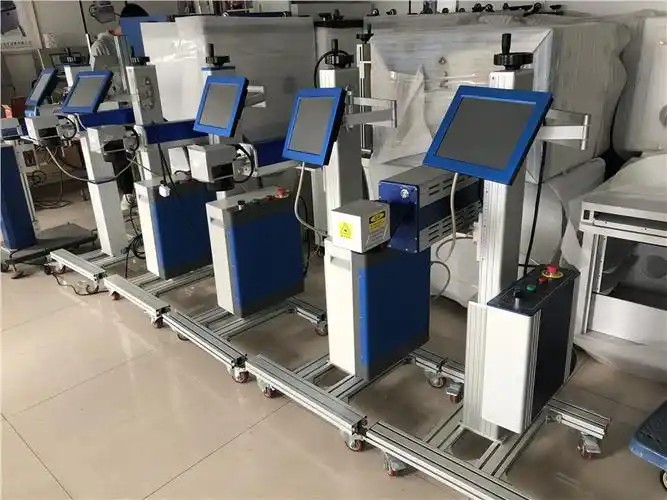
Flying Laser Marking for Production Lines
Another important development is flying laser marking.Traditional marking often follows:
Stop → Mark → Move
A flying laser marking system allows:
Move → Detect → Mark → Continue
The product does not necessarily need to stop for every marking operation.This is particularly useful for continuous production of:
- Cables
- Wires
- Pipes
- Packaging
- Bottles
- Electronic products
- Industrial components
Encoders, sensors, motion controllers, and laser systems work together to synchronize the marking process with production-line speed.This allows laser marking to become part of the manufacturing process rather than a separate operation.
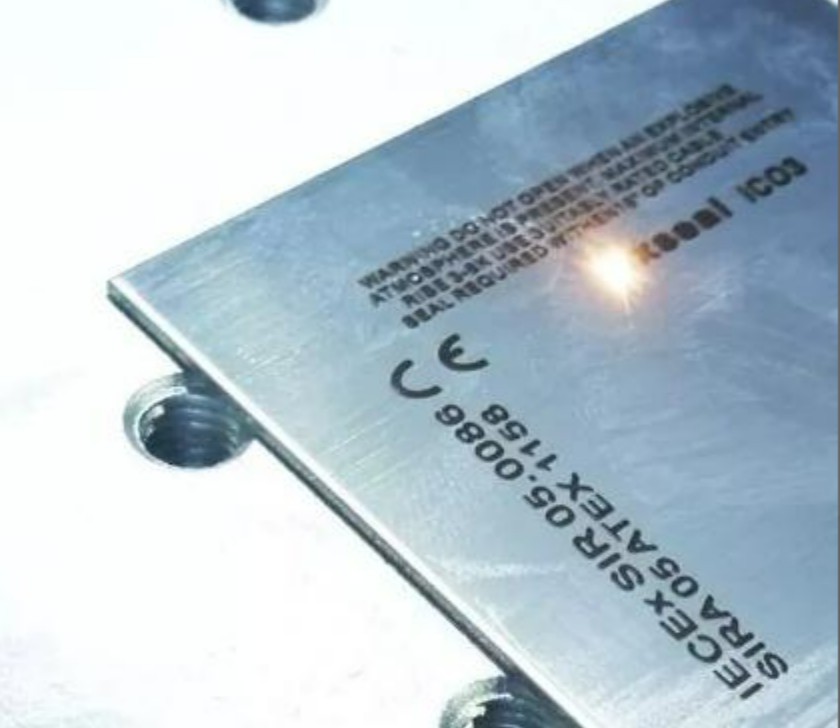
Black Laser Marking On Metal Board
Picosecond and Femtosecond Lasers
Another important development is the increasing use of ultrafast lasers.Traditional industrial marking often uses nanosecond-pulse laser sources.Picosecond and femtosecond lasers operate with much shorter pulses.The objective is not simply to produce more power.Instead, ultrafast lasers can provide much more precise control over how energy interacts with the material.Potential applications include:
- Micro marking
- Precision engraving
- Micro-texturing
- Semiconductor processing
- Glass processing
- Medical components
- High-precision manufacturing
These technologies are unlikely to replace standard fiber laser marking for ordinary metal identification.
Instead, they are more likely to expand the market toward high-value precision applications.
Beam Shaping and Advanced Laser Processing
Traditional laser systems often use relatively conventional beam profiles.
Advanced laser processing is increasingly exploring ways to control the shape and distribution of laser energy.
Technologies such as:
- Beam shaping
- Structured beams
- Multi-focus processing
- Dynamic beam control
can potentially improve processing efficiency and precision.
This is particularly interesting for high-end manufacturing, where the objective is not simply to create a visible mark but to precisely control the interaction between the laser and the material.
From Laser Marking to Functional Surface Engineering
One of the most interesting long-term trends is that laser processing is moving beyond traditional marking.A laser does not necessarily have to create only:Text + Logo + Serial Number
It can also modify the microscopic structure of a surface.This can create functional properties such as:
- Reduced reflection
- Controlled friction
- Hydrophobic surfaces
- Hydrophilic surfaces
- Optical structures
- Micro-textures
- Decorative surface effects
In these applications, laser technology moves from marking toward functional surface engineering.This represents a much broader opportunity than conventional engraving.
What Will the Laser Marking Business Look Like in the Future?
The evolution can be summarized in three stages.
Yesterday
Mechanical Tools + Operator
↓
Today
Laser + Software + Operator
↓
Tomorrow
Laser + Vision + AI + Automation + Production Data
The laser itself remains important, but the surrounding technology becomes increasingly valuable.
This means that future competition may not simply be about:Who sells the cheapest laser marking machine?Instead, it may increasingly become:Who can provide the most practical and intelligent marking solution?
Which Laser Is Suitable for a Laser Marking Business?
The right machine depends on the target market.
Fiber Laser
Suitable for:
- Stainless steel
- Aluminum
- Carbon steel
- Brass
- Titanium
- Industrial components
MOPA Fiber Laser
Useful for more specialized applications such as:
- Color marking on stainless steel
- Fine marking
- Certain plastics
- Detailed engraving
UV Laser
Suitable for:
- Sensitive materials
- Plastics
- Electronics
- Fine marking
- Specialty applications
CO₂ Laser
Commonly used for:
- Paper
- Cardboard
- Wood
- Leather
- Packaging
- Other organic materials
Ultrafast Laser
More suitable for:
- Micro-processing
- Precision applications
- Advanced materials
- High-end manufacturing
The best machine is therefore not necessarily the most powerful one. A successful laser marking business should choose equipment according to its materials, customers, production volume, and application requirements.
The Future of the Laser Marking Business
The laser marking industry is not simply moving toward higher-power machines.It is moving toward greater intelligence, automation, precision, and integration.For entrepreneurs, personalized engraving can still provide an accessible entry point. For established businesses, B2B marking services and industrial traceability can offer more opportunities for repeat orders.At the technology level, the most important developments to watch include:
- AI-assisted laser processing
- Machine vision
- Flying laser marking
- Automated production lines
- Picosecond and femtosecond lasers
- Advanced beam shaping
- Micro- and nano-scale surface texturing
These technologies are gradually changing the definition of laser marking itself.
Laser Marking Solutions from ZS Machinery
At ZS Machinery, we have helped many customers solve different laser marking challenges, from basic metal marking and personalized products to specialized industrial applications and production-line marking.
Different materials and production environments require different laser technologies. Instead of simply selecting the highest-power machine, we help customers evaluate the material, marking effect, production speed, and application requirements before choosing a suitable solution.
Whether you are starting a small laser marking business, expanding an existing engraving service, or looking for an industrial marking system, sample testing is often the best way to determine the right laser technology.
Have a material or marking application you would like to test? Contact ZS Machinery to discuss your laser marking requirements.
Laser Marking Rotary: A Complete Guide to Rotary Attachments for Laser Marking