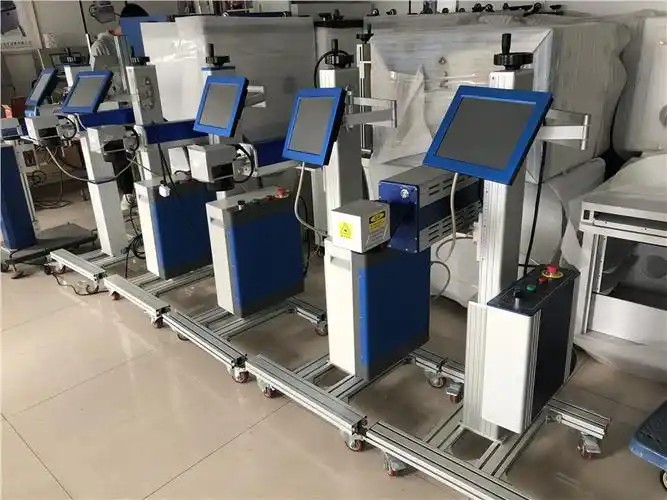
Stainless Steel Laser Engraving Machine: Complete Guide to Laser Marking Stainless Steel
A stainless steel laser engraving machine is a professional laser processing system designed for permanent marking, engraving, and surface processing on stainless steel products. With the advantages of high precision, fast processing speed, and no consumables, laser technology has become one of the most widely used solutions for stainless steel identification and engraving.
Compared with traditional engraving methods, a modern laser marking machine for stainless steel can create clear and permanent marks without damaging the material surface. It is widely used in industrial components, kitchenware, medical instruments, jewelry, automotive parts, tools, nameplates, and customized metal products.
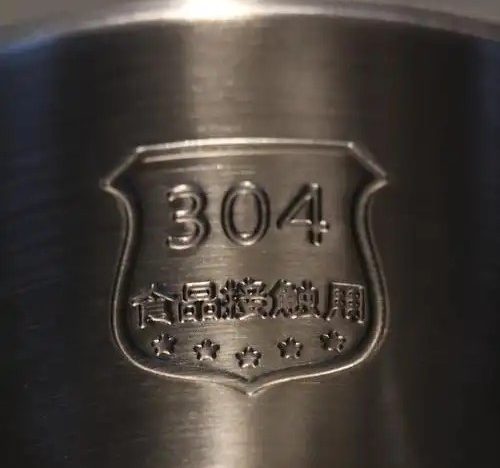
Laser Engraving On 304 Stainless steel
1. Why Is Stainless Steel Challenging for Laser Engraving?
Stainless steel is widely used in manufacturing, but achieving high-quality laser results requires proper equipment selection and parameter adjustment.
1.1 High Hardness and Durability
Stainless steel grades such as:
- 304 stainless steel
- 316 stainless steel
- 201 stainless steel
- 430 stainless steel
are known for their strength and wear resistance.
While these properties make stainless steel ideal for industrial applications, they also make traditional engraving more difficult.
Mechanical engraving methods require:
- Cutting tools
- Physical pressure
- Regular tool replacement
For complex logos, tiny text, or detailed patterns, traditional methods may struggle with accuracy.
Laser engraving, however, uses a focused laser beam without physical contact, allowing precise processing even on small and complex designs.
1.2 Heat Management Requirements
Although stainless steel can withstand high temperatures, excessive heat input during processing may cause:
- Surface discoloration
- Heat affected areas
- Deformation in thin materials
Therefore, laser parameters such as:
- Power
- Speed
- Frequency
- Pulse width
must be carefully adjusted.
This is especially important for:
- Medical devices
- Food processing equipment
- Precision components
where surface quality is critical.
1.3 Stainless Steel Reflectivity
Stainless steel has a relatively reflective surface, which affects laser absorption.
Different laser wavelengths interact differently with stainless steel.
For this reason, 1064nm fiber laser technology has become the most popular choice for stainless steel marking and engraving because it provides:
- Excellent metal absorption
- High processing efficiency
- Long operating lifetime
2. What Is a Stainless Steel Laser Engraving Machine?
A stainless steel laser engraving machine is a system that uses a concentrated laser beam to permanently process stainless steel surfaces.A typical fiber laser engraving system includes:
Fiber Laser Source
The laser source generates the high-energy laser beam.
Common brands include:
- IPG
- JPT
- MAX
- Raycus
The laser source determines:
- Processing speed
- Stability
- Application range
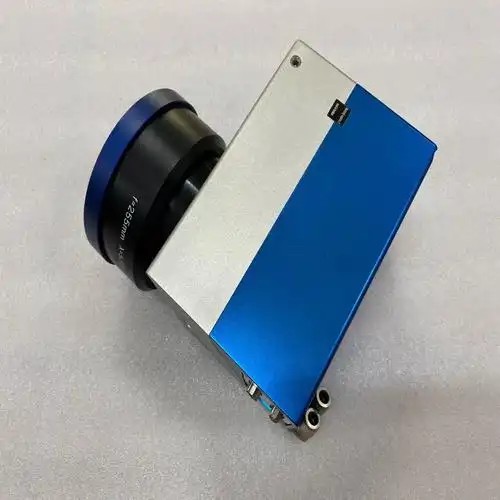
Galvanometer Scanner
The galvanometer system controls the movement of the laser beam at high speed.
Compared with traditional CNC engraving:
- No mechanical cutting movement
- Faster processing
- Higher precision
F-theta Lens
The F-theta lens focuses the laser beam onto the working area.
Different lenses provide different marking areas:
Common sizes:
- 110 × 110mm
- 175 × 175mm
- 300 × 300mm
A smaller marking area usually provides higher energy density and finer details.
Control Software
Most fiber laser engraving machines use professional marking software such as EZCAD.
The software controls:
- Text
- Logos
- QR codes
- Serial numbers
- Patterns
- Filling parameters
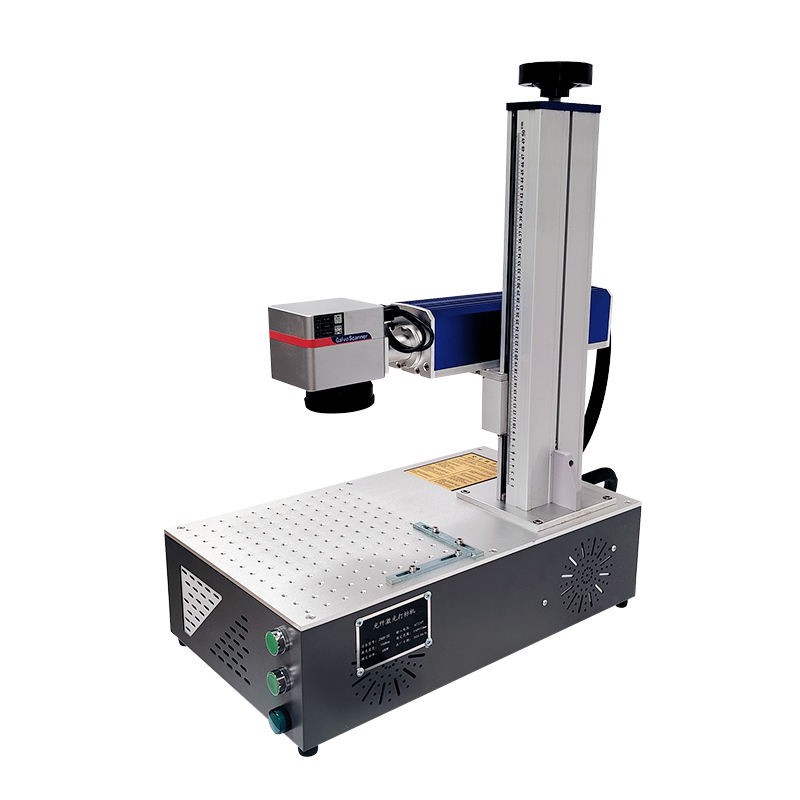
50W fiber Laser Marking Machine
3. Laser Marking vs Laser Engraving Stainless Steel
Many customers confuse laser marking and laser engraving because both use lasers. However, they are different processing methods.
Laser Marking Stainless Steel
Laser marking mainly changes the surface appearance without removing a large amount of material.
Typical depth:
A few microns to several tens of microns
Applications:
- Company logos
- Serial numbers
- Barcodes
- QR codes
- Product identification
Advantages:
- High speed
- Clean appearance
- Suitable for mass production
Laser Engraving Stainless Steel
Laser engraving removes material from the surface to create a visible depth.
Typical depth:
Dozens of microns to several hundred microns
Applications:
- Mold engraving
- Tools
- Industrial parts
- Decorative patterns
- Anti-counterfeiting marks
Compared with marking, engraving requires:
- Higher laser power
- Lower speed
- More processing passes
Laser Marking vs Laser Engraving Comparison
| Laser Marking | Laser Engraving | |
|---|---|---|
| Processing method | Surface modification | Material removal |
| Depth | Micron level | Deeper grooves |
| Speed | Faster | Slower |
| Main purpose | Identification | Decoration and functional engraving |
| Common power | 20W-30W | 30W-100W+ |
4. Which Laser Is Best for Stainless Steel?
4.1 Fiber Laser Engraver for Stainless Steel
Fiber laser is the most common technology for stainless steel processing.
Advantages:
- Excellent metal absorption
- Long lifetime
- Low maintenance
- High efficiency
Suitable for:
- Stainless steel marking
- Product identification
- Light engraving
- Industrial applications
Recommended Power Range
20W Fiber Laser
Suitable for:
- Basic logo marking
- Serial numbers
- Small products
30W Fiber Laser
The most popular choice.
Advantages:
- Faster speed
- Better productivity
- More application flexibility
50W Fiber Laser
Suitable for:
- Deeper engraving
- Larger production volume
- Industrial applications
100W Fiber Laser
Used for:
- Heavy engraving
- Large material removal
- High-efficiency production
4.2 MOPA Fiber Laser for Stainless Steel
MOPA fiber laser is an advanced version of fiber laser technology.The main difference is adjustable pulse width.This provides better control over:
- Heat input
- Surface reaction
- Color effects
MOPA laser is widely used for:
Black Marking Stainless Steel
By adjusting parameters such as:
- Pulse width
- Frequency
- Speed
- Defocusing distance
MOPA lasers can create deep black markings on stainless steel.
Applications:
- Medical devices
- Electronics
- Premium products
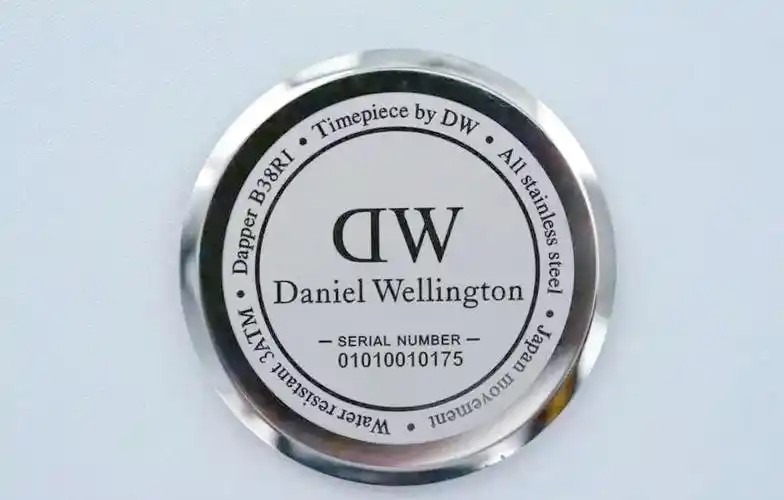
Laser marking black on stainless steel
Color Laser Marking Stainless Steel
MOPA fiber lasers can also create different colors on stainless steel through controlled oxidation.
Possible colors include:
- Gold
- Blue
- Purple
- Green
- Black
Applications:
- Jewelry
- Luxury products
- Decorative metal parts
5. What Products Can Be Processed with Stainless Steel Laser Engraving Machines?
5.1 Stainless Steel Jewelry
Laser engraving has become popular in jewelry customization.
Applications:
- Rings
- Bracelets
- Necklaces
- Pendants
MOPA lasers are especially suitable for:
- Fine details
- Personalized designs
- Color effects
5.2 Kitchenware and Consumer Products
Examples:
- Stainless steel bottles
- Knives
- Cups
- Kitchen tools
Laser marking provides:
- Permanent logos
- Brand identification
- Decorative patterns
5.3 Industrial Components
Manufacturers use laser marking for:
- Serial numbers
- Part numbers
- Traceability codes
Industries include:
- Automotive
- Aerospace
- Machinery
- Electronics
5.4 Medical Instruments
Stainless steel medical tools require permanent and clean identification.
Laser marking advantages:
- No ink
- No chemicals
- Permanent marks
- High precision
Applications:
- Surgical tools
- Medical devices
- Laboratory equipment
5.5 Stainless Steel Nameplates
Laser engraving machines are widely used for:
- Equipment labels
- Metal tags
- Industrial signs
Advantages:
- Long lifetime
- Resistant to wear
- Suitable for harsh environments
6. How Deep Can You Engrave Stainless Steel?
The engraving depth depends on many factors.
There is no fixed depth because results vary according to:
- Laser power
- Material grade
- Speed
- Frequency
- Filling density
- Number of passes
Approximate Reference
20W Fiber Laser
Suitable for:
- Surface marking
- Light engraving
Typical engraving:
Approximately 0.01-0.05mm
30W Fiber Laser
Suitable for:
- Medium engraving
Typical engraving:
Approximately 0.02-0.1mm
50W Fiber Laser
Suitable for:
- Deeper engraving
Typical engraving:
Approximately 0.05-0.2mm
Multiple Pass Processing
For deeper engraving:
The machine can repeat the same design multiple times.
For example:
First pass:
Remove surface layer
Second and third passes:
Increase depth gradually
For mold engraving and industrial applications, higher power lasers and multiple passes are commonly used.
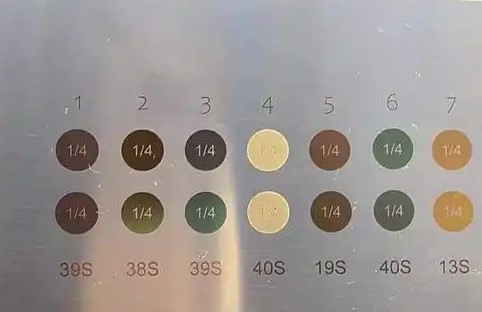
Colour Laser etching On Stainless Steel
7. How to Choose a Laser Marking Machine for Stainless Steel?
Choose Marking or Engraving?
If your purpose is:
- Logo marking
- Serial numbers
- QR codes
A 20W or 30W fiber laser is usually enough.
If your purpose is:
- Deep engraving
- Mold processing
- Removing material
Consider:
- 50W+
- Higher power systems
Choose Fiber Laser or MOPA Laser?
Standard Fiber Laser
Best for:
- Industrial marking
- Stainless steel identification
- General engraving
MOPA Fiber Laser
Best for:
- Color marking
- Black marking
- Premium products
- Sensitive materials
Consider Rotary Axis
For cylindrical stainless steel products:
- Cups
- Rings
- Pipes
- Bottles
A rotary attachment is recommended.
8. Stainless Steel Laser Engraving Machine vs Traditional Methods
| Method | Advantages | Limitations |
|---|---|---|
| Mechanical engraving | Deep engraving possible | Tool wear, slower |
| Chemical etching | Large area processing | Chemical waste |
| Printing | Low cost | Not permanent |
| Laser engraving | Permanent, precise, clean | Initial investment |
Laser technology has become the preferred solution for many industries because it combines:
- Precision
- Efficiency
- Environmental friendliness
9. Stainless Steel Laser Engraving Solutions from ZS Machinery
ZS Machinery provides professional laser processing solutions for stainless steel applications.
Our solutions include:
- Fiber laser marking machines
- MOPA laser engravers
- Rotary laser engraving systems
- Customized marking solutions
Different customers have different requirements.
Therefore, we help customers select suitable configurations according to:
- Material type
- Marking effect
- Production volume
- Budget
Whether you need:
- Industrial traceability marking
- Stainless steel logo engraving
- Black marking
- Color marking
- Customized metal engraving
ZS Machinery can provide a suitable laser solution.
Conclusion
A stainless steel laser engraving machine is not only a marking tool but also an advanced manufacturing solution for modern industries.
From simple product identification to deep engraving, black marking, and color marking, fiber laser and MOPA laser technologies have expanded the possibilities of stainless steel processing.
For businesses looking for a laser marking machine for stainless steel, the right choice depends on:
- Required depth
- Material type
- Production requirements
- Desired appearance
With the development of laser technology, stainless steel laser engraving is becoming faster, cleaner, and more versatile, providing reliable solutions for industries ranging from jewelry and consumer products to automotive and precision manufacturing.
Laser Marking Paper Guide:Which type machine to choose?