UV Laser Engraver vs UV Laser Marking vs UV Laser Etching: Complete Guide for Precision Laser Processing
As industrial marking and precision manufacturing continue to develop, more companies are paying attention to UV Laser Engraver, UV Laser Marking, and UV Laser Etching technologies are often used together in the laser industry, but many customers still do not fully understand the differences between them, especially when choosing equipment for plastics, glass, electronic components, medical products, and high-precision engraving applications.
Many users also have the same question:
“UV laser power is usually lower than fiber laser. Can UV laser really engrave materials?”
The answer is yes — but the working principle of UV laser processing is completely different from traditional high-power thermal engraving systems.
Unlike fiber laser systems that mainly rely on high thermal energy to melt or vaporize materials, UV laser technology belongs more to a “cold laser processing” method. Its advantage is not brute-force power, but ultra-high precision, extremely small heat affected zones, and superior material absorption capability.
In this article, ZS Machinery will explain:
- What is a UV Laser Engraver?
- What is the difference between UV Laser Marking and UV Laser Etching?
- Why UV laser can achieve precision engraving even with lower power
- Which materials are suitable for UV laser processing
- How to choose the right UV laser machine
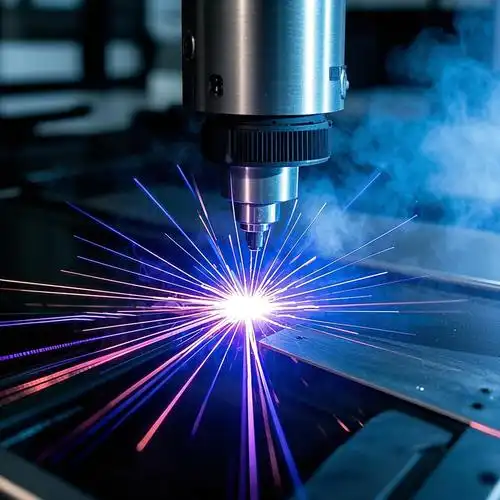
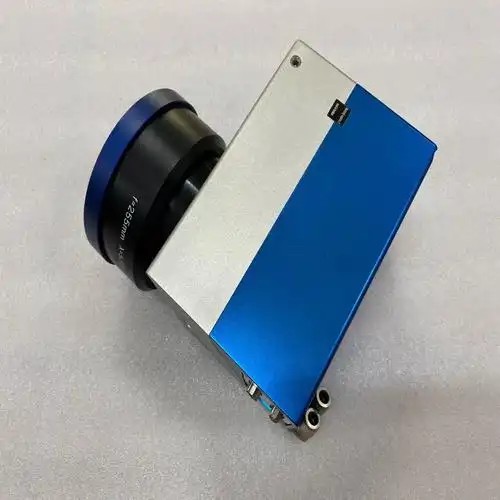
UV Laser Source
1.What Is a UV Laser Engraver?
A UV Laser Engraver is a laser engraving machine that uses a 355nm ultraviolet laser source to process materials.
Compared with traditional fiber lasers (1064nm) or CO2 lasers (10.6μm), UV laser has a much shorter wavelength, which gives it several important advantages:
- Higher material absorption rate
- Smaller laser spot size
- Better focusing capability
- Lower thermal diffusion
- Higher precision engraving performance
Because of these characteristics, UV laser engraving machines are widely used for:
- Plastic laser marking
- Glass engraving
- PCB marking
- Electronic component engraving
- Medical device marking
- QR code marking
- Fine logo engraving
- Crystal engraving
- Precision industrial marking
Unlike high-power fiber laser engraving, UV laser processing focuses more on:
- Precision
- Surface quality
- Minimal heat damage
- Fine detail performance
This is why UV laser systems are especially popular in high-end manufacturing industries.
2.Why Can UV Laser Perform Engraving Even with Lower Power?
Many customers believe:“Low power means weak engraving ability.”But this understanding is not entirely correct in UV laser applications.The engraving capability of a laser system does not depend only on power. It also depends on:
- Wavelength absorption
- Energy density
- Pulse width
- Spot size
- Heat control capability
UV Laser Uses “Cold Processing”
Traditional fiber lasers mainly rely on thermal melting and vaporization.
However, UV laser processing works differently.
UV laser has a shorter wavelength and higher photon energy, which allows materials to absorb laser energy much more efficiently. Instead of generating excessive heat, UV laser can directly break molecular bonds on the material surface.
This process is often called:
- Cold marking
- Cold engraving
- Photochemical processing
Because less heat spreads into surrounding areas, UV laser can achieve:
- Cleaner edges
- Higher precision
- Lower deformation
- Reduced burning
- Minimal cracking risk
This is especially important for fragile or heat-sensitive materials.
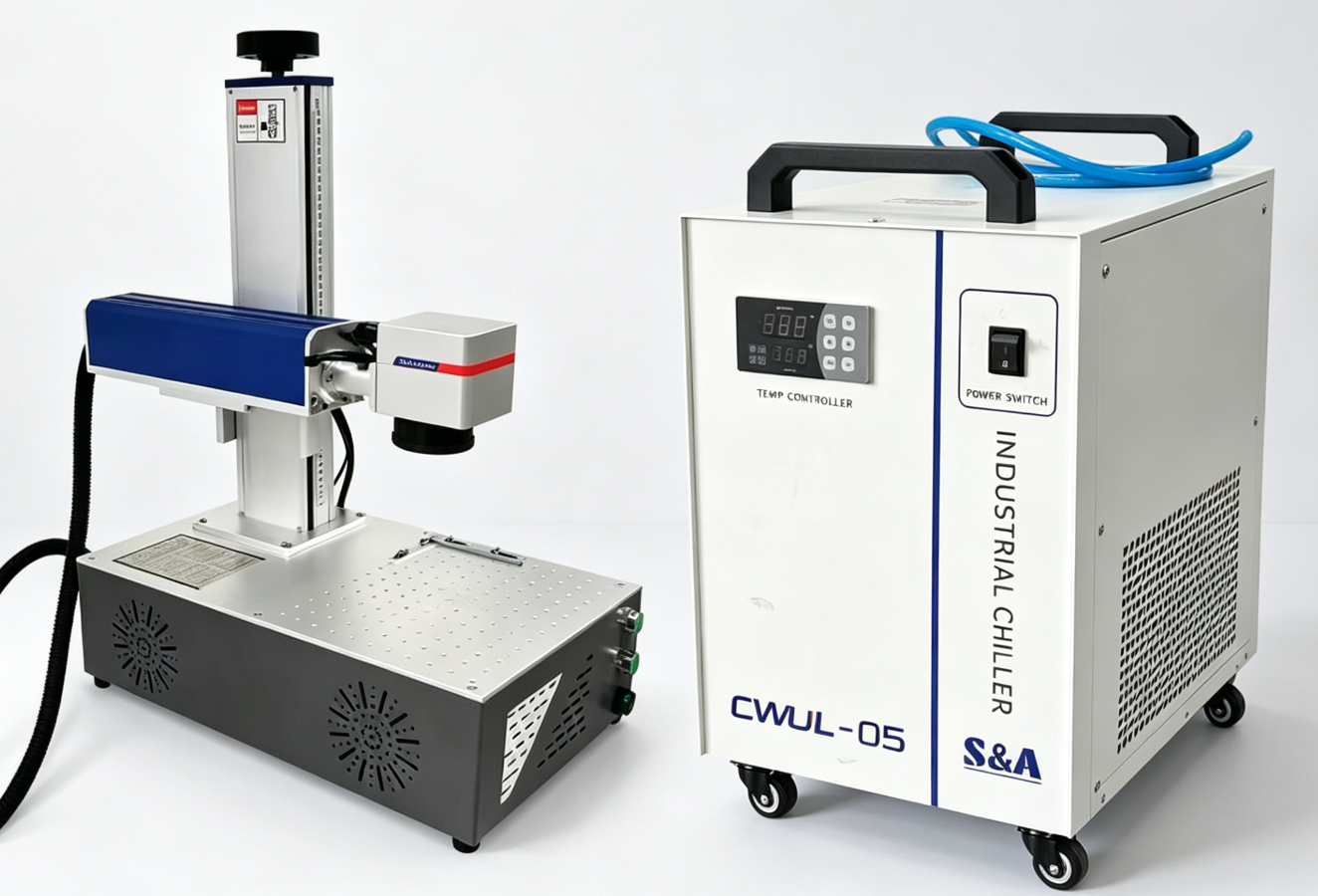
UV Laser Marking Machine for glass marking
3.What Is UV Laser Marking?
UV Laser Marking mainly refers to creating permanent marks on the material surface without significant material removal.
Typical UV laser marking applications include:
- Serial numbers
- QR codes
- Logos
- Date codes
- Product traceability marks
- Electronic component identification
UV laser marking is especially suitable for:
- Plastics
- Transparent materials
- Glass
- Medical packaging
- Electronic products
- Silicone materials
Compared with fiber laser marking, UV laser marking can produce:
- Higher contrast
- Finer details
- Cleaner edges
- Less thermal damage
This is why UV laser marking is widely used in electronics and medical industries.
4.What Is UV Laser Etching?
In the UV laser industry, we believe the term “UV Laser Etching” is often more accurate than simply using “UV Laser Engraving” or “UV Laser Marking”
This is because the working principle of a UV laser is closer to a micro-etching or photochemical processing method.
A UV Laser Etching machine uses a 355nm ultraviolet laser source with an extremely small laser spot and very short pulse width. When the UV laser beam is focused onto the material surface, the material absorbs the ultraviolet energy much more efficiently than traditional infrared lasers. Instead of generating excessive heat, the UV laser can directly break molecular bonds on the material surface, creating micro-level structural changes with minimal thermal damage.
Compared with traditional thermal engraving systems, UV laser etching produces much lower heat diffusion.Especially for sensitive materials such as plastic, glass, acrylic, transparent materials, coated products, and electronic components, UV Laser Etching can achieve processing results that are difficult for fiber lasers or CO2 lasers to achieve.
Therefore, from a technical perspective, many high-precision UV laser applications are actually closer to “etching” rather than traditional deep “engraving.”
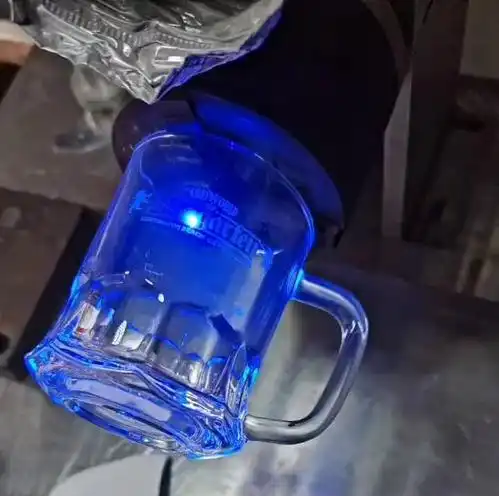
UV Laser Marking On Glass Cup
5.UV Laser Engraver vs Fiber Laser Engraver
This is one of the most common customer questions.
Fiber Laser Advantages
Fiber laser engraving machines are better for:
- Deep metal engraving
- Fast industrial marking
- Stainless steel engraving
- Brass engraving
- Aluminum engraving
- Heavy-duty metal processing
Fiber laser systems usually have higher power levels such as:
- 30W
- 50W
- 100W
- 200W
They are excellent for industrial metal applications.
UV Laser Advantages
UV laser engravers are better for:
- Precision engraving
- Plastic marking
- Glass engraving
- Heat-sensitive materials
- Fine electronic components
- High-detail processing
UV laser systems usually use:
- 3W
- 5W
- 10W
- 15W
Although the power appears lower, the processing precision is much higher.
Therefore, UV laser is not designed to replace fiber laser for heavy metal engraving. Instead, it solves applications where traditional thermal lasers cannot achieve ideal results.
6.What Materials Can UV Laser Engravers Process?
UV laser engraving machines support a very wide material range.
Plastic Materials
UV laser performs exceptionally well on plastics because it generates less burning and melting.
Suitable plastics include:
- ABS
- PVC
- PE
- PP
- Acrylic
- Silicone
- Engineering plastics
Glass and Crystal
UV laser is one of the best solutions for:
- Glass engraving
- Crystal engraving
- Bottle marking
- Glass logo engraving
- QR codes on glass
Compared with CO2 laser systems, UV laser greatly reduces cracking risks.
Electronic Components
UV laser is widely used in:
- PCB marking
- IC marking
- Semiconductor engraving
- Cable marking
- Connector marking
Medical Industry
Medical products require:
- High precision
- Permanent marking
- Low contamination
- Minimal thermal damage
UV laser is ideal for:
- Medical packaging
- Surgical tools
- Pharmaceutical marking
- Medical plastics
7.Key Advantages of UV Laser Engraving Machine
Ultra-High Precision
UV laser has an extremely small spot size, making it ideal for micro engraving and tiny characters.
Minimal Heat Affected Zone
Lower thermal diffusion helps reduce:
- Burning
- Material deformation
- Edge damage
- Cracking
Better Performance on Sensitive Materials
UV laser works well on materials that are difficult for fiber lasers or CO2 lasers.
Cleaner Engraving Quality
The engraving edges are smoother and more refined.
Excellent for Fine QR Codes and Small Fonts
UV laser can maintain readability even with very small markings.
8.How to Choose the Right UV Laser Engraving Machine
When selecting a UV laser engraver, customers should consider:
Material Type
Different materials require different laser configurations.
Precision Requirement
For ultra-fine engraving, galvanometer quality and optical systems are extremely important.
Cooling System
UV lasers require stable industrial water cooling systems for continuous operation.
Working Area
Choose the correct marking field according to product size.
Automation Needs
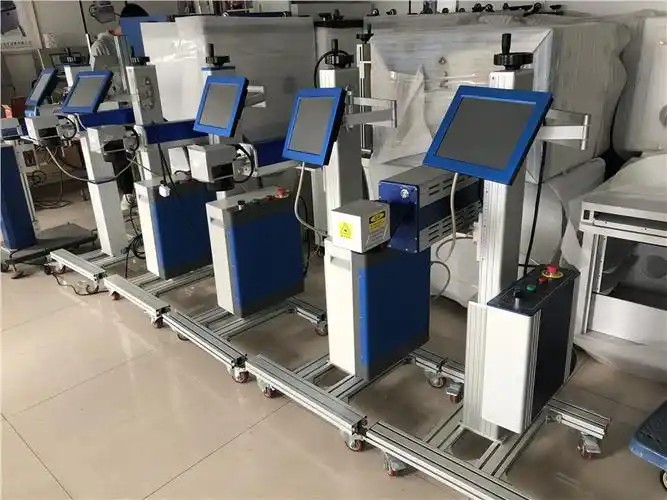
For industrial production lines, automatic positioning and conveyor systems may be required.
ZS Machinery UV Laser Engraving Solutions
ZS Machinery specializes in industrial laser equipment and provides professional UV laser engraving solutions for global customers.
Our UV Laser Engraving Machines feature:
- Industrial-grade 355nm UV laser source
- High-speed scanning system
- Precision focusing optics
- Stable industrial cooling system
- Long-term continuous working capability
- Support for automation integration
Our machines are widely used for:
- Plastic laser marking
- Glass engraving
- Electronic component marking
- Medical device processing
- QR code engraving
- Precision industrial applications
We can also provide:
- Material testing
- Sample engraving
- Parameter recommendations
- OEM customization
- Technical support
Whether you need a compact UV laser engraver or a complete industrial UV laser marking system, ZS Machinery can provide a professional solution based on your materials, production requirements, and budget.
If you are looking for a high-precision UV Laser Engraver, UV Laser Marking Machine, or UV Laser Etching solution, feel free to contact ZS Machinery for professional recommendations and sample testing.
What Is UV Marking? Complete Guide to UV Laser Marking and UV Printing Solutions