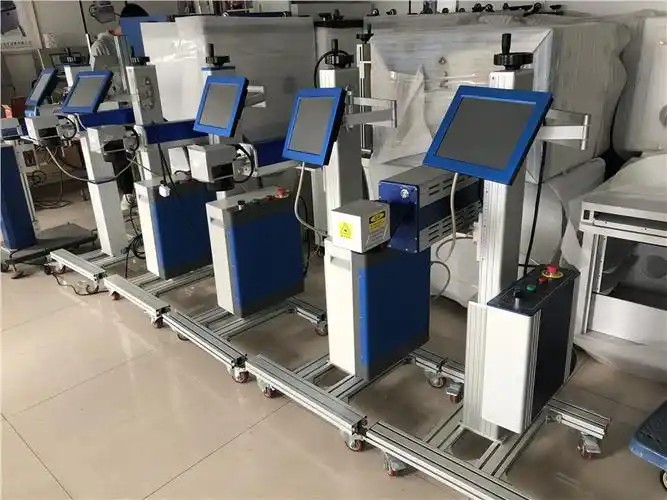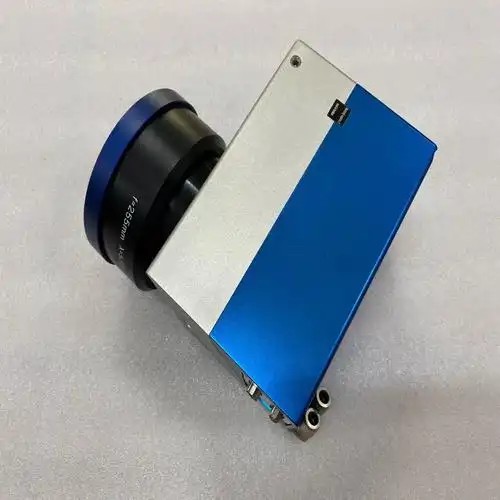
Laser Deep Engraving: Materials, Methods, Applications and Machine Selection
Laser deep engraving is a laser processing method used to remove material and create a clearly defined recessed surface, rather than simply changing the color or appearance of the material. Unlike shallow laser marking, deep engraving can create visible depth, grooves, textures, cavities, and even multi-level or relief-style effects.
Deep engraving is not limited to metal or fiber lasers. Depending on the material, fiber, CO₂, and UV lasers can all be used for different types of deep engraving. Fiber lasers are widely used for deep engraving metals, while CO₂ lasers are often more suitable for materials such as acrylic, wood, leather, glass, and stone. UV lasers can be considered for fine processing of certain plastics and other sensitive materials.
The best solution therefore depends on what material you are engraving, how much depth you need, the required surface quality, and how quickly the process needs to be completed.
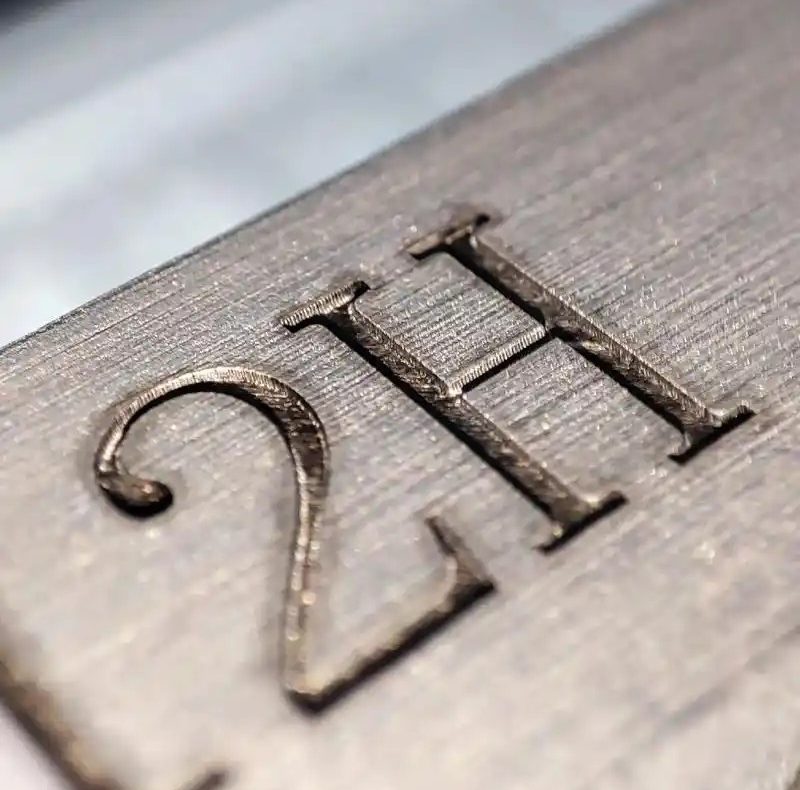
Laser Deep Engraving
What Is Laser Deep Engraving?
Laser deep engraving removes material progressively from the surface to create a permanent recessed structure.It is useful to distinguish three common laser processes:
| Process | Main Purpose | Material Removal |
|---|---|---|
| Laser Marking | Create identification or visual contrast | Very low |
| Laser Engraving | Remove material to create a design | Moderate |
| Laser Deep Engraving | Create a significant recessed structure | Higher |
A surface mark may only change the appearance of the top layer.Deep engraving goes further by repeatedly removing material from the same area.The result can be:
- Deep text
- Logos
- Grooves
- Patterns
- Cavities
- Textures
- Multi-level surfaces
- Relief-style designs
This makes laser deep engraving particularly useful when the engraving needs to remain clearly visible even after polishing, handling, or long-term use.
How Does Laser Deep Engraving Work?
Deep engraving is generally achieved by controlling the laser to remove material layer by layer.A simplified process is:
Laser Scan → Material Removal → Repeated Passes → Deeper Cavity
During each pass, the laser removes a small amount of material.The machine can then repeat the scanning process until the required depth is achieved.Several parameters influence the result:
- Laser power
- Scanning speed
- Frequency
- Pulse characteristics
- Focus position
- Hatch spacing
- Number of passes
- Material properties
The objective is not simply to use the highest possible power.The goal is to remove material efficiently while maintaining acceptable:
- Depth
- Accuracy
- Surface quality
- Edge definition
- Thermal control
What Materials Can Be Deep Engraved?
One of the biggest misconceptions about deep laser engraving is that it is mainly a metal-processing technique.In reality, many different materials can be engraved deeply when the correct laser wavelength and processing parameters are used.
Deep Engraving Metal
Metal is one of the most important applications for laser deep engraving.Common materials include:
- Stainless steel
- Carbon steel
- Tool steel
- Aluminum
- Brass
- Copper
- Titanium
For these applications, fiber lasers are generally the primary choice.
Typical applications include:
- Industrial components
- Molds
- Tools
- Metal parts
- Jewelry
- Machine components
- Permanent identification
- Decorative engraving
For demanding deep engraving applications, higher-power fiber lasers can provide greater material removal efficiency than low-power marking systems.
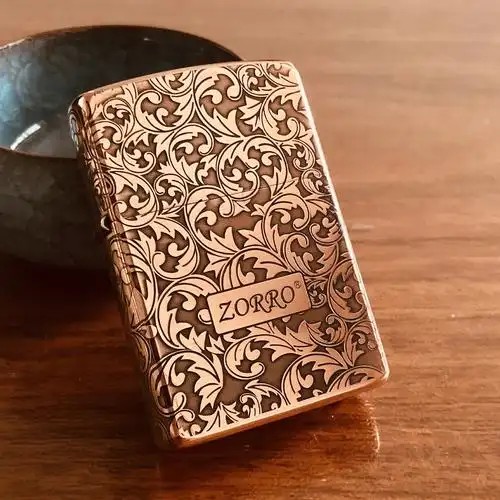
Laser engraving on metal lighter casing
Laser Deep Engraving Acrylic
Acrylic is another material that can produce attractive results with laser deep engraving.Acrylic can be processed to create:
- Deep lettering
- Decorative patterns
- Recessed graphics
- 3D effects
- Display components
- Awards
- Signs
For acrylic, CO₂ lasers are commonly used because the material absorbs the CO₂ laser wavelength effectively.However, deep engraving acrylic requires careful control of heat.Too much energy in a small area can cause:
- Melting
- Edge deformation
- Excessive roughness
- Unwanted transparency changes
The objective is therefore to achieve sufficient material removal without excessively heating the surrounding acrylic.
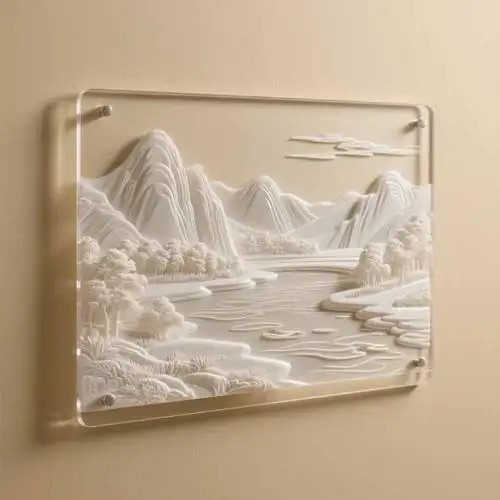
Acrylic laser deep engraving
Deep Engraving On Wood
Wood is particularly suitable for CO₂ laser processing.Depending on the type of wood and required result, laser engraving can create:
- Deep logos
- Decorative patterns
- Text
- Textures
- Relief effects
- Personalized designs
Possible materials include:
- Hardwood
- Plywood
- MDF
- Veneer
- Certain engineered wood products
Wood varies considerably in density, resin content, grain structure, and moisture.As a result, two different types of wood can require very different laser parameters even when they have similar thicknesses.For deep engraving, multiple controlled passes can be used to gradually remove material and create a more pronounced design.
Deep Engraving Leather
Leather can also be processed with laser technology, particularly for decorative and personalized products.Applications include:
- Bags
- Wallets
- Belts
- Shoes
- Leather accessories
- Crafts
- Personalized products
CO₂ lasers are commonly used for leather processing.However, not all leather products behave in the same way.Natural leather and synthetic leather can have very different compositions.Special attention should be given to synthetic materials containing PVC or other chlorine-containing compounds, which should not be laser processed without confirming the material composition and appropriate safety requirements.For commercial production, material testing should always be performed before processing an unfamiliar leather product.
Deep Engraving Glass
Glass can also be processed using laser technology to create decorative and textured effects.Common applications include:
- Glass bottles
- Awards
- Glassware
- Decorative glass
- Personalized products
CO₂ lasers are widely used for many glass engraving applications.However, glass behaves differently from metals and plastics.Excessive localized thermal stress can lead to:
- Cracking
- Chipping
- Unwanted surface damage
For this reason, deep or multi-pass glass processing requires carefully controlled laser energy and scanning parameters.
Deep Engraving Stone
Stone is another material that can be processed using CO₂ laser systems.Examples include:
- Marble
- Granite
- Slate
- Certain natural and engineered stones
Applications include:
- Decorative stone
- Memorial products
- Signs
- Architectural products
- Personalized stone items
The appearance and achievable depth depend heavily on the composition and surface structure of the stone.For some stone applications, the desired result may be a deep textured surface rather than a highly polished cavity.
Deep Engraving Plastic
Plastic is more complicated because different plastics absorb laser energy differently.Potentially suitable materials include:
- Acrylic
- ABS
- Certain engineering plastics
- Laser-compatible plastics
- Specialty coated plastics
However, “plastic” is not a single material category.Two visually similar plastic products may respond completely differently to the same laser.For this reason, testing the exact material is especially important when selecting a laser for plastic deep engraving.
Which Laser Is Best for Deep Engraving?
There is no single laser that is best for every deep engraving application.The laser should be selected primarily according to the material.
| Laser Type | Typical Materials | Deep Engraving Applications |
|---|---|---|
| Fiber Laser | Metals | Deep metal engraving |
| CO₂ Laser | Acrylic, wood, leather, glass, stone | Non-metal engraving |
| UV Laser | Certain plastics, glass, specialty materials | Fine-detail processing |
| MOPA Fiber | Metals and selected plastics | Specialized engraving |
The wavelength determines how efficiently the material absorbs the laser energy.
Therefore:The best laser for deep engraving is the laser that matches the material and the required processing result.
How Deep Can a Laser Engrave?
There is no universal maximum engraving depth.The achievable depth depends on:
- Laser type
- Laser power
- Material
- Scanning speed
- Pulse characteristics
- Frequency
- Focus
- Hatch spacing
- Number of passes
- Thermal properties
A 50W fiber laser may produce a very different depth on stainless steel compared with aluminum.Likewise, a CO₂ laser may produce completely different results on acrylic, wood, and leather.Therefore, it is more meaningful to define the required depth for a specific application than to ask for a universal maximum depth.For production applications, sample testing is the most reliable way to determine the achievable depth and processing time.
How to Achieve Deeper Laser Engraving
Several techniques can improve deep engraving performance.
Higher Laser Power
More available laser energy can increase material removal efficiency.
Multiple Passes
Repeated scanning gradually removes material and allows deeper structures to be created.
Optimized Hatch Spacing
The distance between scanning lines affects how efficiently the entire engraving area is processed.
Proper Focus
Maintaining the appropriate focal position helps concentrate laser energy where material removal is required.
Optimized Scanning Speed
Scanning too quickly can reduce material removal, while excessive energy can create unwanted thermal effects.
Cross-Hatching
Changing the scanning direction between passes can improve the consistency of some deep engraving structures.
Air Assist
For some materials such as wood and acrylic, air assistance can help remove debris and improve processing conditions.The optimal combination depends on the material and desired result.
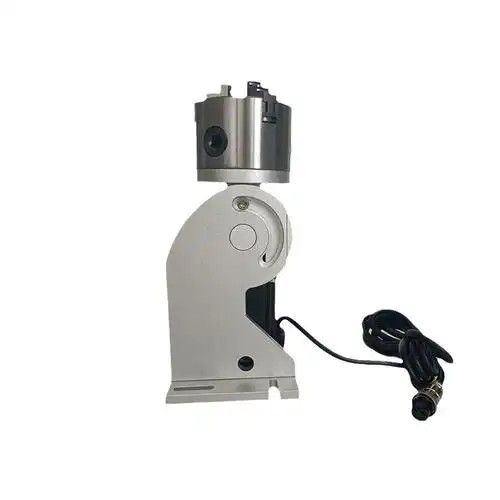
80mm rotary fixures for jewlery marking
Laser Deep Engraving vs. Laser Cutting
For many deep engraving applications, a laser marking machine with a galvo scanning system is sufficient. The laser repeatedly scans the same area to remove material layer by layer and create a recessed design.
Because the beam is controlled by a galvo scanner, the working area is usually relatively compact, such as 100 × 100 mm, 150 × 150 mm, 200 × 200 mm, or 300 × 300 mm, depending on the F-Theta lens and machine configuration.These machines typically use relatively low or medium laser power compared with industrial laser cutters.
For example, fiber laser engraving machines may use 20W, 30W, 50W, 60W, 80W, or 100W sources depending on the material and required depth. CO₂ and UV galvo systems can also be used for deep engraving applications involving suitable non-metal materials.
A laser cutting machine, on the other hand, is designed to process larger sheets and cut completely through the material. It normally uses a dedicated laser cutting head rather than a galvo marking head. Industrial sheet-metal fiber laser cutters commonly start at around 1,000W and can use much higher power for thicker materials. Their working areas are also much larger, often 1 square meter or more, such as 1500 × 3000 mm or 2000 × 4000 mm.
For example, if you want to create a 2 mm deep logo or pattern on a small metal component, a fiber laser marking machine equipped with a galvo scanner may be a practical solution. The machine can repeatedly scan the design until the required depth is achieved.
If you need to cut a 3 mm acrylic sheet into different shapes, a CO₂ laser cutting machine with a dedicated cutting head would be more appropriate.
The key difference is therefore not simply laser power. It is the entire machine architecture.Deep engraving is generally a localized material-removal process, while laser cutting is a large-area, through-material separation process.
For small, detailed deep engraving jobs, a galvo laser marking machine can offer a compact footprint, precise beam control, and relatively low equipment cost. For large sheets, through-cutting, and high-volume material separation, a dedicated laser cutting machine is the more appropriate solution.
How to Choose a Laser Deep Engraving Machine
Before purchasing a machine, consider the following factors.
Laser Type
Choose fiber, CO₂, or UV according to the material.
Laser Power
Higher power can improve material removal efficiency, especially for demanding applications, but it should match the required depth and production volume.
Working Area
Choose a marking or engraving field that fits the product size.
Galvo or Gantry
Galvo systems are attractive for high-speed processing of relatively small areas.
Gantry systems are generally more suitable for large-area engraving and cutting.
Rotary Axis
A rotary axis is useful for:
- Rings
- Tubes
- Cylinders
- Shafts
- Round decorative products
Cooling and Machine Configuration
The cooling system, optical configuration, control system, and software should all be appropriate for the selected laser source and production environment.
Why Sample Testing Matters
Deep engraving is highly dependent on the actual material.Even within the same material category, different grades, coatings, colors, densities, and surface treatments can produce different results.For example:
- Two stainless steels may require different parameters.
- Different acrylic formulations may melt differently.
- Hardwood and plywood behave differently.
- Genuine leather and synthetic leather are not equivalent.
A sample test can determine:
- Achievable depth
- Processing time
- Surface quality
- Edge quality
- Required power
- Number of passes
- Suitable laser type
This is much more reliable than selecting a machine based only on a specification sheet.
Final Thoughts
Laser deep engraving is much broader than simply deep engraving metal with a high-power fiber laser. The appropriate laser technology depends on the material and the type of surface structure required.
At ZS Machinery, we help customers select laser engraving solutions according to their actual materials and applications rather than simply recommending the highest-power machine. Whether you need deep metal engraving, acrylic engraving, wood and leather engraving, or precision processing of specialty materials, sample testing can help determine the most suitable laser type, power, lens, and machine configuration.
If you are planning a deep engraving application and are unsure which laser is suitable, send us your material, desired engraving depth, product size, and a sample design. We can help evaluate the appropriate laser solution before you invest in the equipment.
Laser Marking Silver: A Complete Guide to Fiber Laser Engraving and Marking Silver