Galvanometer Laser Engraver Working Area: Why Does the Lens Size Matter?
When choosing a galvanometer laser engraver, one specification that often causes confusion is the marking area.You may see the same laser marking machine offered with different fields such as:
- 110 × 110 mm
- 175 × 175 mm
- 200 × 200 mm
- 300 × 300 mm
If the laser source and galvanometer are the same, why does changing the lens change the marking area?The answer lies mainly in the scanning angle, optical design, and F-theta lens.
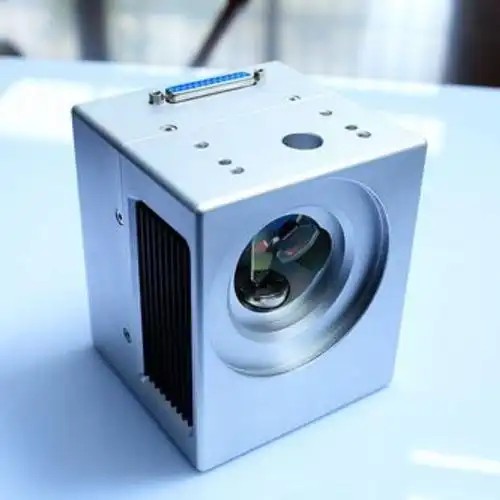
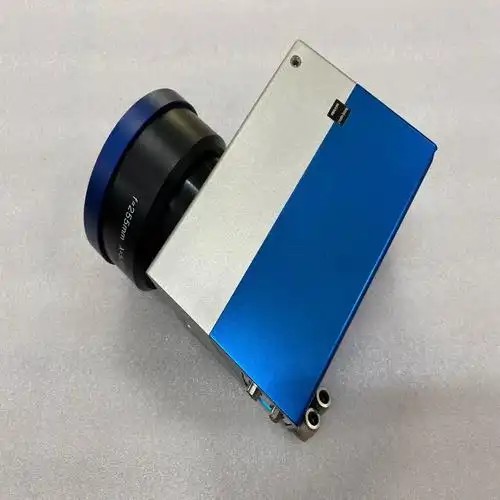
Galvanometer system
How Does a Galvanometer Laser Engraver Control the Marking Area?
A galvanometer laser engraver does not normally move the entire laser head across the workpiece.Instead, it uses two high-speed galvanometer mirrors to change the direction of the laser beam.The basic optical path is:
Laser Source → Beam Expander → X/Y Galvanometer Mirrors → F-Theta Lens → Workpiece
The X galvanometer controls the horizontal direction, while the Y galvanometer controls the vertical direction.When the control software sends different position commands to the galvanometers, the mirrors rotate by different angles. This changes the direction of the laser beam, allowing the laser spot to move across the marking field.
The F-theta lens then focuses the beam onto the work surface and is designed to produce a relatively uniform relationship between the scanning angle and the position of the laser spot.In simple terms:
The galvanometers control where the beam points, while the F-theta lens determines how that beam is focused and distributed across the working field.
Why Does a Different F-Theta Lens Create a Different Marking Area?
The marking area is closely related to the optical design of the F-theta lens.A lens designed for a smaller field, such as 110 × 110 mm, focuses the laser over a relatively compact area.A lens designed for 300 × 300 mm allows the beam to cover a much larger area.
This does not mean that the laser source itself has become more powerful or that the galvanometer has suddenly become capable of physically moving farther.Instead, the optical system changes how the beam is projected onto the workpiece.A simplified relationship is:
Larger scanning angle or longer effective optical path → larger marking field
However, the actual relationship is determined by the complete optical design rather than a single lens parameter.
Why Can’t We Simply Use the Largest Possible Lens?
Because a larger marking field involves trade-offs.A 300 × 300 mm field is not automatically better than a 110 × 110 mm field.The larger field generally requires a different optical configuration and working distance. As the scanning range increases, the laser beam must travel across a wider area, and maintaining the same spot characteristics becomes more challenging.Several factors can therefore change.
1. Working Distance
Different F-theta lenses have different focal lengths and working distances.A large-field lens typically requires a greater distance between the lens and the workpiece.This is why changing from one lens to another may require adjusting the machine’s working height.The correct focus position is essential for obtaining the expected marking quality.
2. Laser Spot Size
The spot size is one of the most important factors in laser marking.A smaller spot generally allows finer details and higher energy density.When a system is designed for a larger marking field, maintaining an extremely small spot across the entire field becomes more difficult.The actual spot size depends on the laser beam quality, beam diameter entering the lens, optical design, and other factors.
Therefore, two lenses with different marking areas may produce different practical marking performance even when used with the same laser source.
3. Energy Density
Laser marking depends on how much energy is delivered to a given area.If the optical system produces a larger spot, the energy density can decrease.This can affect:
- Marking speed
- Material removal
- Engraving depth
- Contrast
- Fine-detail processing
For applications such as deep engraving or fine metal marking, this can be important.
4. Marking Resolution
A smaller field can be advantageous when very small details are required.For example, if you are marking tiny text, high-density QR codes, fine patterns, or detailed graphics, a smaller optical field may provide better control.A larger field is more useful when the workpiece or marking content is larger.The correct choice therefore depends on the application rather than simply selecting the largest available field.
How Does the Machine Know Where to Mark?
The marking software works with the galvanometer control system to convert the design coordinates into galvanometer movement commands.For example, suppose the design contains a point at a specific X/Y coordinate.
The control system converts that position into corresponding mirror angles.
The mirrors rotate to those angles, and the laser beam is directed to the corresponding location on the workpiece.
The process happens continuously as the laser traces text, graphics, QR codes, or other patterns.This is why the galvanometer system can move the laser beam extremely quickly without mechanically moving the laser head.
The software, control card, galvanometer drivers, mirrors, and F-theta lens therefore work as one optical positioning system.
Does a Larger Marking Area Mean Lower Accuracy?
Not necessarily, but the optical characteristics can be different.It would be inaccurate to say that a 300 × 300 mm lens automatically produces poor accuracy.A properly designed optical system can provide high-quality marking over a large field.
However, larger fields introduce greater optical challenges, and the practical resolution, spot size, distortion, and energy density may differ from those of a smaller-field system.For this reason, the marking field should always be considered together with the required marking detail and application.
Which Marking Area Should You Choose?
The right marking area should be based mainly on the size of your marking content, rather than simply the overall size of the workpiece.
Before choosing a laser marking machine, measure or estimate the maximum length and width of the content you need to mark. Then choose a marking field that is slightly larger than this area.
For example, if your largest logo, text, QR code, or graphic is approximately 80 × 60 mm, a 110 × 110 mm marking field may be sufficient. If the marking content is around 250 × 200 mm, a 300 × 300 mm field would provide more suitable working space.The specific choice depends on the largest area you want to apply it to.
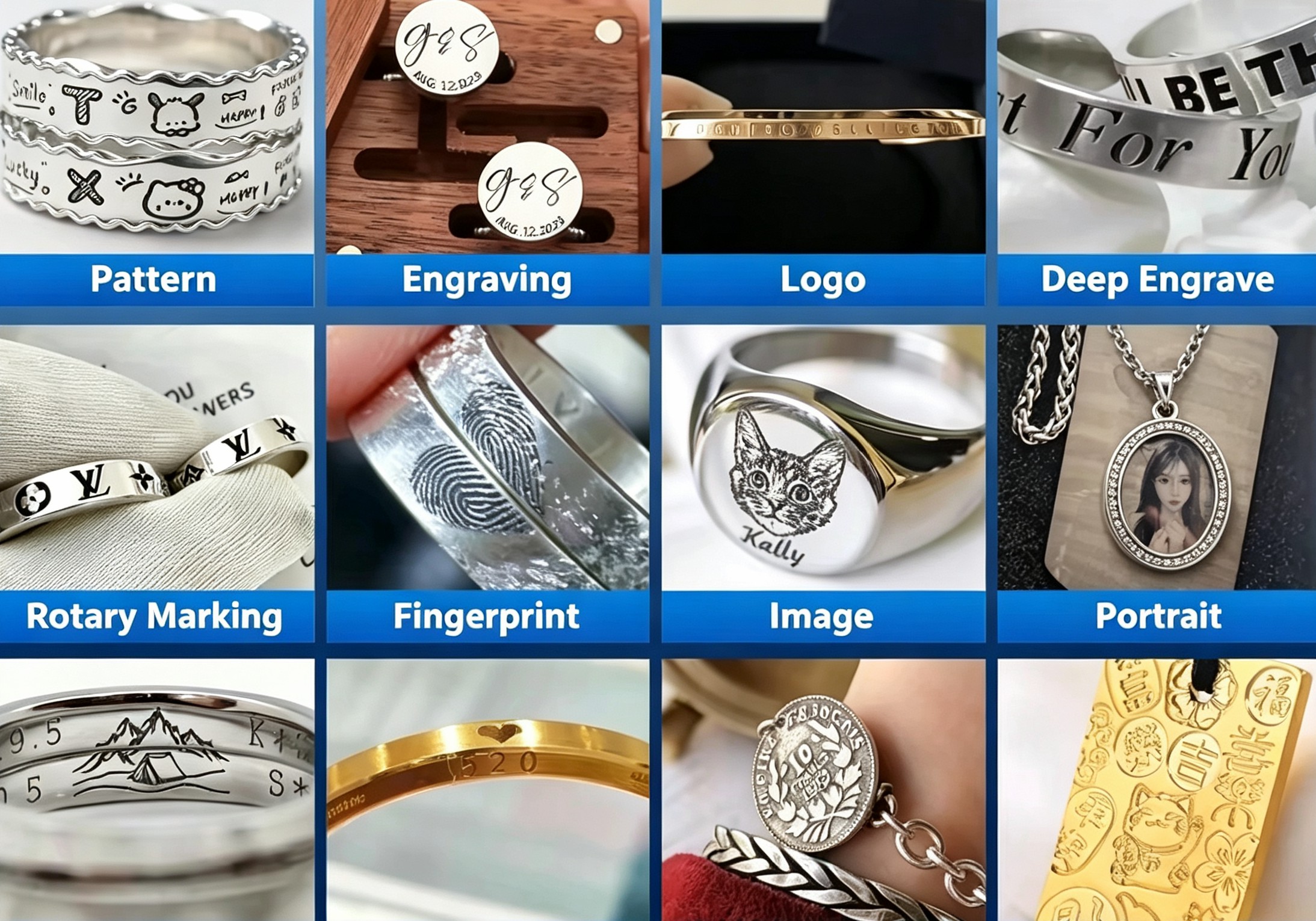
Jewelry Engraving Samples
What If the Workpiece Is Larger Than 300 × 300 mm?
This is where another approach becomes useful.Instead of continuously increasing the optical field, the machine can combine mechanical CNC movement with a galvanometer system.For example:
CNC X/Y Axis → Moves the Galvo System
Galvanometer → Performs High-Speed Local Scanning
The CNC axis can move the laser system to different areas of a large workpiece, while the galvanometer performs detailed marking within each local field.For a large steel plate, for example, the machine could work like this:
Move to Area 1 → Mark → Move to Area 2 → Mark → Move to Area 3 → Mark
This provides a practical way to process large workpieces without requiring an extremely large optical scanning field.
Final Considerations When Choosing a Galvo Lens
The marking field is only one part of the optical system.When choosing an F-theta lens for a galvanometer laser engraver, consider:
- Required marking area
- Workpiece size
- Required detail
- Laser wavelength
- Laser power
- Required marking depth
- Working distance
- Spot size
- Production speed
- Whether rotary marking is required
For example, a 110 × 110 mm field may be suitable for fine marking on small metal parts, while a 200 × 200 mm or 300 × 300 mm field may be more practical for larger components.
The objective is not to choose the largest lens.
It is to choose the optical configuration that provides the right balance between working area, marking quality, energy density, and production requirements.
At ZS Machinery, different F-theta lens configurations can be selected according to the laser source, material, marking size, and application requirements. For larger workpieces, we can also develop CNC + Galvo systems that combine mechanical positioning with high-speed galvanometer scanning.Contact us now to get a customized marking solution for you.
Industrial Laser Etching vs Engraving vs Marking Machines: Are They the Same?