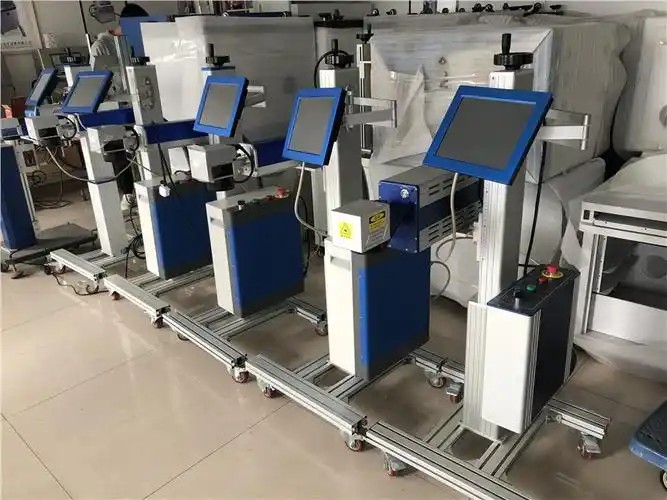
Laser Marking and Cutting Machine: Can a Laser Marker Really Cut Metal?
The term laser marking and cutting machine can be confusing.When you search for this term, you might be looking for a machine that can perform both marking and cutting functions simultaneously.But can a laser marking machine really cut metal? The answer is Yes—but whether it is the right machine depends on what you need to cut.
A low-power fiber laser marker may cut thin metal by repeatedly processing the same area. This can work for small parts and specific applications, but it is generally much slower and more limited than using a dedicated cutting machine.
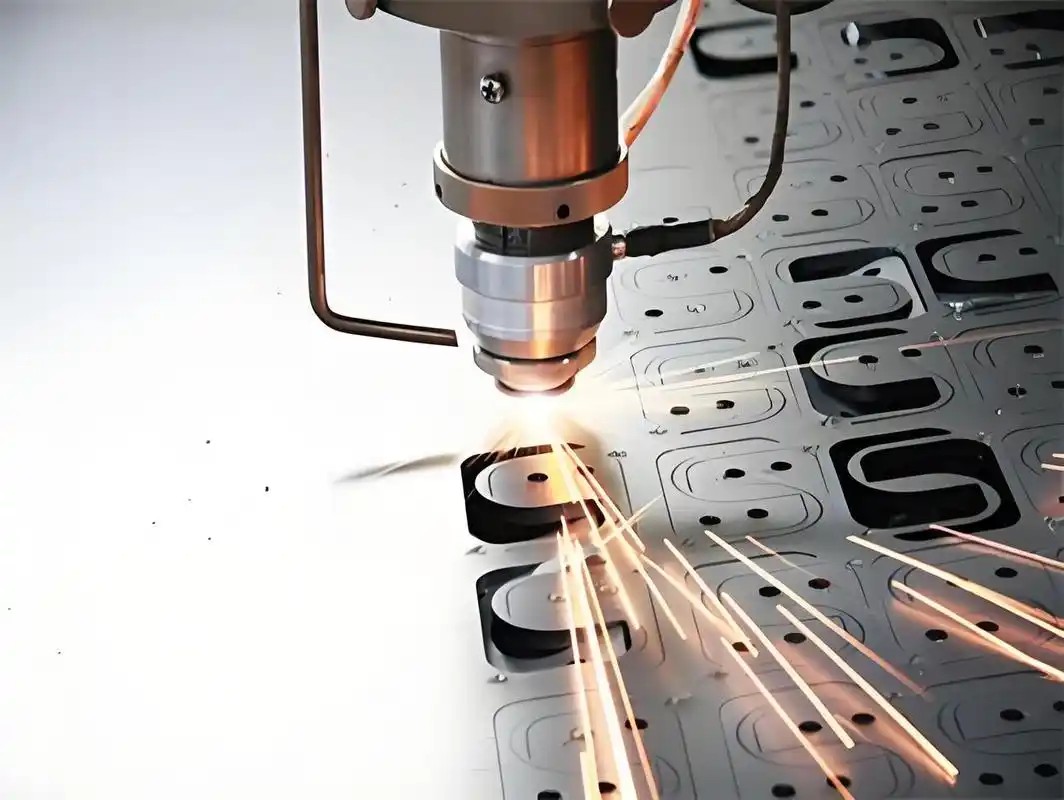
Laser cutting And Marking Process
What Is a Laser Marking and Cutting Machine?
A laser marking machine is primarily designed to modify the surface of a material rather than cut completely through it.For metal applications, common fiber laser marking powers include 20W, 30W, 50W, and 100W. These machines are widely used for:
- Serial numbers
- QR codes
- Barcodes
- Logos
- Product identification
- Deep engraving
- Surface marking
- Traceability codes
With sufficient laser energy, a marking machine can also remove material deeply enough to cut through certain thin metal sheets.This is usually achieved by multiple passes. The laser repeatedly scans the same cutting path, gradually removing material until the workpiece is separated.
Therefore, a machine advertised as a “laser marking and cutting machine” may be capable of both processes, but its cutting capability is usually limited compared with a dedicated laser cutter.
Can a Laser Marking Machine Cut Metal?
Yes, but there are important limitations.A fiber laser marking machine can cut some thin metals, particularly small pieces or thin sheets. The actual cutting capability depends on:
- Laser power
- Material type
- Material thickness
- Laser spot size
- Focus position
- Scanning speed
- Pulse parameters
- Repetition frequency
- Number of passes
- Cutting path
- Heat accumulation
For example, a 50W or 100W pulsed fiber laser can remove a small amount of metal with each pass. By repeating the process many times, the laser may eventually penetrate the material.This is fundamentally different from the way a dedicated fiber laser cutting machine is designed to work.A marking machine is optimized for fast surface processing, while a cutting machine is optimized for continuous material removal and penetration.
Why Does a Laser Marking Machine Need Multiple Passes for Cutting?
The difference is not simply laser power. The optical and processing system is also fundamentally different.
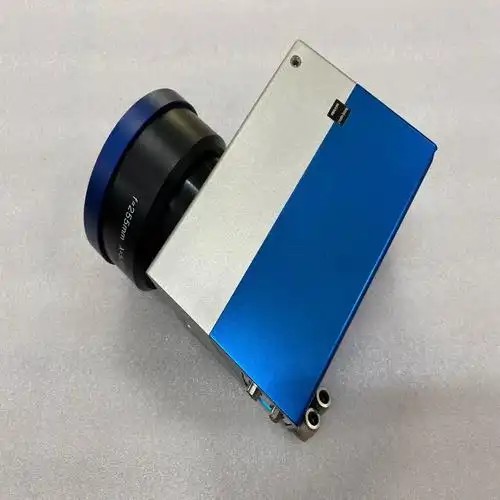
A conventional laser marking machine is usually built around a galvanometer scanning system and an F-theta scanning lens. The galvanometer mirrors move the laser beam rapidly across the marking field, making the system highly effective for surface marking, engraving, and other precision applications.
A dedicated laser cutting machine, on the other hand, normally uses a specialized laser cutting head. The cutting head focuses the laser beam onto a small spot and delivers assist gas through a nozzle. The focused beam and gas flow work together to continuously remove molten or vaporized material from the cutting kerf.
This difference in optical configuration is important.
During normal laser marking, the laser only needs to modify the surface. Depending on the application, this may involve annealing, discoloration, surface ablation, or shallow material removal.For cutting, the laser needs to penetrate the entire thickness of the material and maintain a stable cutting process along the cutting path.
A relatively low-power marking machine using a galvanometer system may therefore need to process the same path repeatedly:
Pass 1 → Pass 2 → Pass 3 → … → Final penetrationEach pass removes a small amount of material until the laser eventually cuts through the workpiece.
A dedicated cutting machine is designed differently. Its cutting head, focusing optics, nozzle, assist-gas system, and motion system are optimized for continuous material removal rather than repeated marking passes.
This is why a machine’s laser power alone does not determine its cutting capability. The laser source, beam delivery system, cutting head, focusing optics, assist gas, motion system, and process parameters all affect cutting performance.
Multiple-pass cutting can still be useful for thin metal parts, small components, jewelry, and other applications where the cutting path is short and production volume is limited. However, as material thickness, cutting length, or production volume increases, a dedicated laser cutting system becomes much more practical.
Why Is a Laser Marking Machine Not an Ideal Metal Cutting Machine?
Although a marking machine can perform some cutting tasks, several factors limit its use as a general-purpose metal cutter.
1. Cutting Speed
A low-power marking laser may need many passes to penetrate a metal sheet.If the cutting path is long, processing time can become significant.A dedicated fiber laser cutting machine uses much higher power and a purpose-built cutting head, allowing material to be removed much more efficiently.
2. Heat Accumulation
Repeatedly scanning the same area puts energy into the material.When many passes are required, heat can accumulate around the cutting zone. This can affect the edge and surrounding material, especially on thin metal components with small or detailed features.
3. Cutting Edge Quality
Laser marking systems are primarily designed for marking rather than producing optimized cutting edges.For applications where edge quality is important, a dedicated cutting head, appropriate focal optics, assist gas, and cutting parameters provide much better process control.
4. Limited Material Thickness
A marking machine is generally intended for relatively thin cutting applications.As thickness increases, the number of passes and processing time can increase rapidly.A dedicated fiber laser cutter is designed specifically for processing thicker metal sheets and plates.
5. Limited Working Area
Most galvo marking machines have a relatively compact marking field.Common configurations may include 110 × 110 mm, 175 × 175 mm, 200 × 200 mm, or 300 × 300 mm, depending on the optical system.This is excellent for marking small components.
It is not comparable to the large working tables commonly used on sheet metal laser cutting machines.
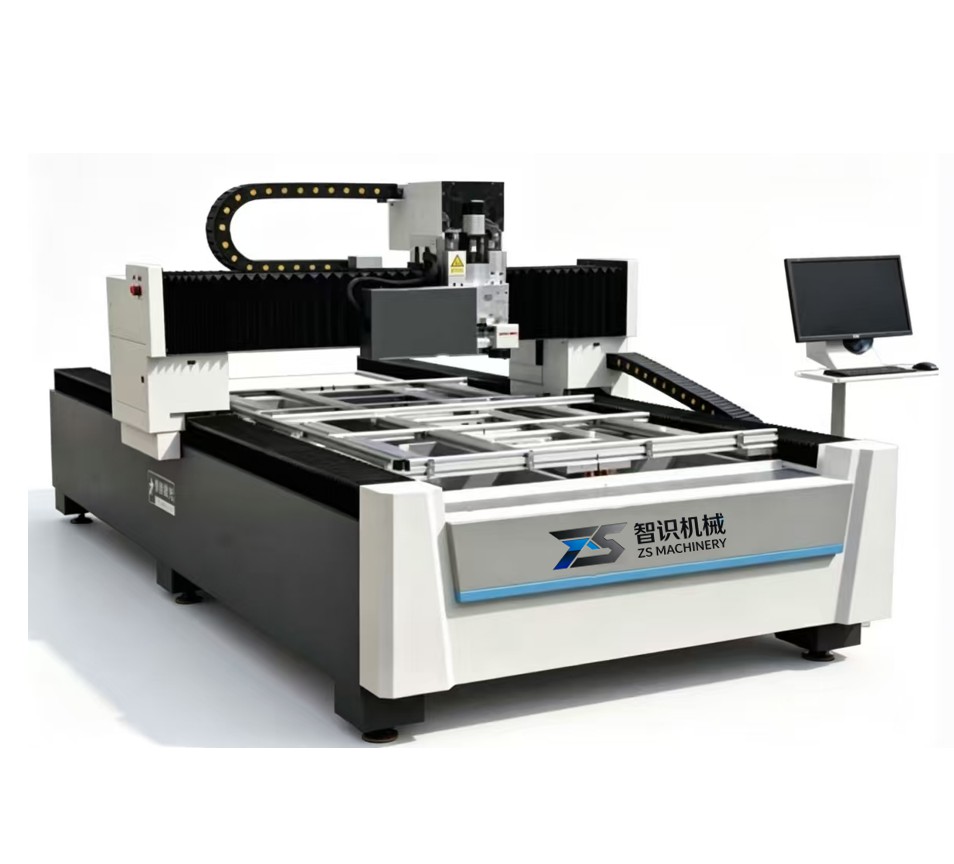
Laser Plate Cutting Machine
Laser Marking Machine vs Fiber Laser Cutting Machine
The two machines may both use a fiber laser, but their designs and purposes are different.
| Feature | Laser Marking Machine | Fiber Laser Cutting Machine |
|---|---|---|
| Main purpose | Marking and engraving | Metal cutting |
| Typical laser power | 20W–300W for many marking applications | Commonly 1kW and above |
| Laser scanning | Galvanometer | Cutting head / CNC motion |
| Cutting | Limited, mainly thin material | Core function |
| Multiple passes | Often required for cutting | Generally designed for efficient cutting |
| Working area | Usually compact | Large working table |
| Assist gas | Usually not central to marking | Important for cutting |
| Thick metal | Not suitable for general cutting | Designed for it |
| QR/serial marking | Excellent | Possible but not the primary purpose |
| Small detailed marking | Excellent | Less specialized |
The important point is that laser power alone does not determine whether a machine is a cutting machine.The optical system, cutting head, motion system, assist gas, software, and overall machine design also matter.
What About a Handheld Laser Welding and Cutting Machine?
This is where another type of multi-function laser equipment becomes useful.Many handheld fiber laser welding machines are available with relatively high laser powers such as:
- 1,000W
- 1,500W
- 2,000W
- 3,000W
Depending on the configuration, the same laser platform can provide welding and thin-sheet cutting functions.A typical multi-function handheld system may support:
Welding + Cutting + Cleaning
The cutting function is generally intended for thin metal and auxiliary cutting applications, rather than replacing a dedicated CNC fiber laser cutting machine.The reason these systems can provide more practical cutting performance than a low-power marking machine is the combination of:
- Higher laser power
- Appropriate beam delivery
- Cutting nozzle
- Assist gas
- Suitable cutting parameters
The laser welding torch or processing head may use different nozzles or configurations for different processes.It is therefore more accurate to say that the high-power laser source and cutting configuration provide the cutting capability, rather than simply saying that a welding gun can cut metal because it has high power.
When Is a Laser Marking Machine With Cutting Capability Useful?
A marking machine with limited cutting capability can make sense when cutting is not the main production process.Typical applications include:
Thin Metal Parts
Small stainless steel, aluminum, brass, or other thin metal components may be cut when the required size and thickness are within the machine’s capability.
Jewelry
Jewelry manufacturers may need both engraving and small-scale cutting.For example, a specialized pulsed fiber laser can be used for:
- Ring engraving
- Name engraving
- Pattern marking
- Small metal component cutting
In this situation, having both functions on one compact machine can be useful.
Small Metal Tags and Components
If a company needs to mark and occasionally cut small metal tags or thin components, a marking machine with cutting capability may eliminate the need for a separate cutting machine.
Prototyping and Low-Volume Production
For occasional cutting, the slower multiple-pass process may be acceptable when purchasing a dedicated cutting machine would not be economically practical.
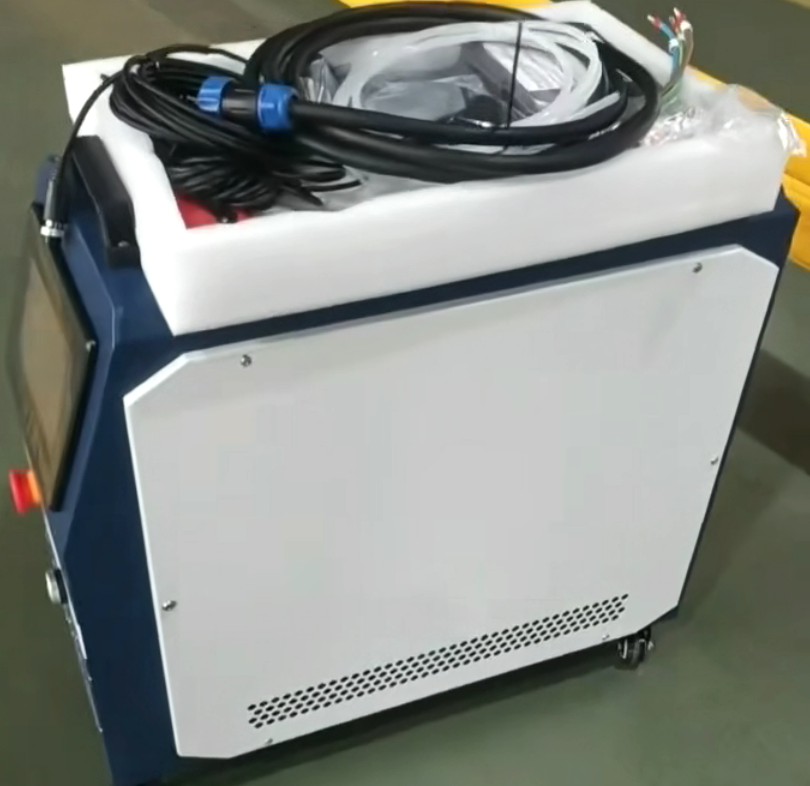
Handheld laser welding and cutting machine
Which Machine Should You Choose?
The easiest way to choose is to start with your main production requirement, rather than simply looking at whether a machine has a “cutting” function.
If your main requirement is marking:
Choose a fiber laser marking machine.It is suitable for:
- QR codes
- Barcodes
- Serial numbers
- Logos
- Product identification
- Deep engraving
- Surface marking
Some models can also perform limited cutting of thin materials.
If your main requirement is welding, with occasional cutting:
Consider a handheld laser welding and cutting machine.It provides a higher-power laser platform for welding and can also handle certain thin-sheet cutting tasks.
If your main requirement is metal cutting:
Choose a dedicated fiber laser cutting machine.It is designed for:
- Higher cutting efficiency
- Larger workpieces
- Longer cutting paths
- Greater material thickness
- Continuous production
This approach avoids using a marking machine for a task it was not primarily designed to perform.
What About a Laser Cutting Machine With Marking Functions?
A dedicated fiber laser cutting machine can usually perform basic marking functions as well as cutting. This is because the laser cutting system has enough power and precise motion control to mark or engrave certain information on the workpiece.
For manufacturers that mainly cut metal sheets but occasionally need to add:
- Part numbers
- Serial numbers
- Logos
- Positioning marks
- Simple text
- QR codes or identification information
a laser cutting machine with marking capability can be a practical solution. The same machine can cut the sheet and add identification marks during the production process.
However, if marking is your main purpose, buying a laser cutting machine just for its marking function usually does not make economic sense.
A fiber laser cutting machine requires a much larger and more expensive system, including a high-power laser source, dedicated cutting head, CNC motion system, cutting table, assist-gas system, and other components. The overall equipment cost can be many times higher than that of a dedicated laser marking machine, and in some configurations the difference can reach more than tenfold.
For example, if your main requirement is to mark serial numbers and QR codes on small metal parts, a 30W or 50W fiber laser marking machine with a galvanometer scanning system may be sufficient. There is little reason to purchase a high-power sheet metal laser cutter simply because it can also perform marking.
The general rule is simple:
Mainly cutting → Choose a fiber laser cutting machine with marking capability.
Mainly marking → Choose a dedicated laser marking machine.
The right choice should be based on the primary production process rather than the number of functions a machine can perform.
Laser Marking and Cutting Machine: The Bottom Line
A laser marking and cutting machine can be a practical solution for certain applications, especially when you need high-quality marking together with occasional cutting of thin materials.However, it is important to distinguish between cutting capability and cutting performance.
A 20W, 30W, 50W, or 100W fiber marking machine may be able to cut thin metal by using multiple passes. This can be useful for small parts, jewelry, thin tags, and prototyping.But when cutting becomes the main production process, especially for large sheets, longer cutting paths, or thicker materials, a dedicated CNC fiber laser cutting machine is the more appropriate solution.
At ZS Machinery, we supply laser marking, laser welding, and laser cutting equipment for different industrial applications. Instead of treating every laser as a universal machine, we evaluate the material, thickness, workpiece size, marking or cutting requirements, production volume, and automation needs to determine the appropriate configuration.
Whether you need a compact fiber laser marker, a multifunctional handheld welding and cutting machine, or a dedicated fiber laser cutting system, the right equipment should be selected according to the actual process—not simply according to the number of functions listed on the machine.
Galvanometer Laser Engraver Working Area: Why Does the Lens Size Matter?