Laser Marking Steel: The Complete Guide to Steel Laser Marking
Steel is one of the most widely used engineering materials in modern manufacturing. From machine components and automotive parts to medical instruments, kitchenware, construction hardware, and industrial equipment, steel products are everywhere.
As manufacturing moves toward automation, traceability, and digital production management, permanent product identification has become increasingly important. Companies are no longer satisfied with temporary labels or ink printing—they need durable, high-precision marks that remain readable throughout the product’s service life.
This is why laser marking steel has become the preferred marking solution for manufacturers worldwide.
At ZS Machinery, we have supplied laser marking systems for customers in the hardware, automotive, cookware, machinery, and metal fabrication industries for many years. Based on our practical experience, this guide explains how steel laser marking works, what types of steel can be marked, how to choose the right equipment, and when professional laser marking services may be a better option than purchasing your own machine.
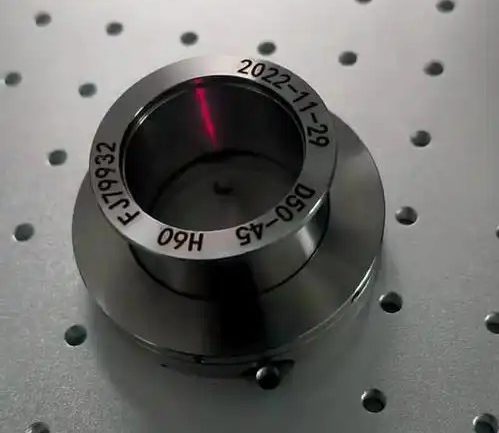
Laser marking on carbon steel fittings
What Is Steel Laser Marking?
Steel laser marking is a non-contact manufacturing process that uses a focused laser beam to permanently mark information onto a steel surface.
Depending on the application, the laser may:
Change the surface color
Oxidize the material
Create a high-contrast black mark
Remove a thin surface layer
Engrave into the material
Unlike traditional marking methods such as ink printing, stamping, or chemical etching, laser marking requires no consumables, produces virtually no waste, and creates permanent markings without physically contacting the workpiece.
Today, fiber laser technology has become the industry standard for steel marking because of its speed, precision, and low operating cost.
Common Types of Steel for Laser Marking
Although people often simply say “steel,” there are actually many different types of steel, each responding differently to laser energy.
Carbon Steel
Carbon steel is one of the most common industrial materials.
Typical applications include:
Structural components
Machinery parts
Hardware
Industrial brackets
Fiber lasers can easily produce logos, serial numbers, QR codes, and deep engraved markings on carbon steel.
Mild Steel
Mild steel contains relatively low carbon content and is widely used in fabrication and manufacturing.
It is commonly found in:
Sheet metal
Fabricated products
Machine frames
Industrial enclosures
Because mild steel absorbs laser energy efficiently, it offers fast marking speeds and excellent contrast.
Stainless Steel
Stainless steel is one of the most popular materials for laser marking.
Common grades include:
SUS304
SUS316
SUS430
Depending on the laser parameters, stainless steel can produce:
White markings
Black markings
Annealed markings
Deep engravings
With MOPA fiber lasers, stainless steel can even achieve colored marking effects for decorative applications.
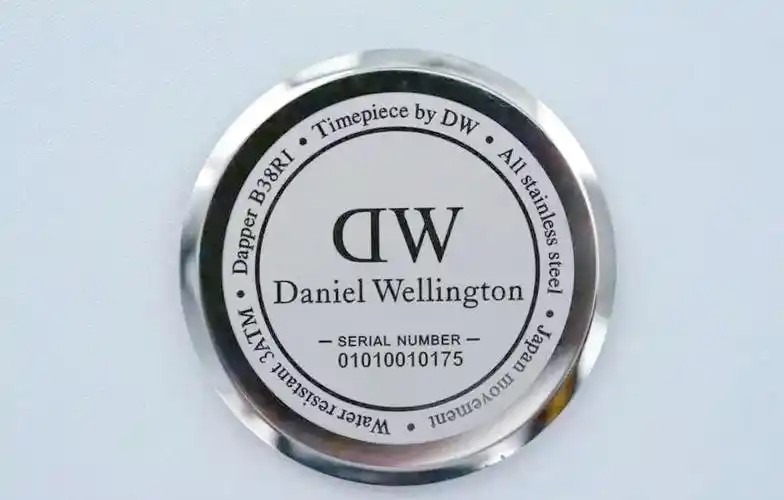
Laser marking black on stainless steel
Alloy Steel
Alloy steels are widely used for:
Automotive components
Mold manufacturing
Industrial tools
Heavy machinery
Because alloy steel generally has higher hardness, deeper engraving usually requires higher laser power or multiple marking passes.
Galvanized Steel
Galvanized steel has a protective zinc coating.
Laser marking is possible, but excessive power may damage the zinc layer.
Proper parameter adjustment is essential to achieve clear markings while maintaining corrosion resistance.
What Can Be Laser Marked on Steel?
Modern manufacturers use laser marking for much more than simply printing a company name.
Common applications include:
1.Company logos
2.Brand trademarks
3.Product model numbers
4.Part numbers
5.Serial numbers
6.QR codes
7.Data Matrix codes
8.Manufacturing dates
9.Batch numbers
10.Traceability information
11.CE and certification marks
12.Deep engraved identification
13.Black laser marking
Because laser marking is computer-controlled, every mark can be automatically generated, making it ideal for Industry 4.0 production lines.
Laser Marking vs. Laser Engraving on Steel
Although many people use these terms interchangeably, they are not exactly the same.
Laser Marking
Laser marking changes the surface appearance without removing significant material.
Advantages include:
- Faster processing
- Smooth surface
- Minimal material removal
- Ideal for logos, QR codes, and serial numbers
Laser Engraving
Laser engraving removes material to create measurable depth.
Advantages include:
- Better wear resistance
- Permanent identification
- Suitable for harsh environments
It is commonly used for:
- Mold identification
- Heavy machinery
- Industrial tools
- Nameplates
Black Laser Marking
Black laser marking creates high-contrast black marks through controlled surface oxidation or annealing.
It is widely used on stainless steel for:
- Medical devices
- Surgical instruments
- Kitchenware
- Premium metal products
Which Laser Machine Is Best for Steel?
Generally speaking, fiber laser marking machines are the most suitable marking machines for marking metal products. You can check Why fiber laser is the best for metal to understand why.The following are some common types of fiber laser marking machines to choose from.
Desktop Fiber Laser Marker
Ideal for:
- Small workshops
- Laboratories
- Sample production
- Small businesses
Compact, affordable, and easy to operate.
Cabinet Fiber Laser Marker
The most popular industrial solution.
Suitable for:
- General manufacturing
- Hardware factories
- Machinery production
- Daily industrial marking
Offers excellent productivity and stability.
Fully Enclosed Fiber Laser Marker
Designed for higher safety standards.
Recommended for:
- European markets
- Educational institutions
- Medical manufacturers
- Automated production lines
The enclosed design improves operator safety while reducing dust and laser exposure.
Handheld Fiber Laser Marker
Perfect for oversized workpieces that cannot easily be placed on a worktable.
Typical applications:
- Steel plates
- Large molds
- Heavy machinery
- Construction equipment
MOPA Fiber Laser Marker
Compared with standard fiber lasers, MOPA lasers provide much greater pulse control.
Advantages include:
- Superior black marking
- Better fine detail
- Cleaner edges
- Reduced heat affected zone
MOPA lasers are especially suitable for high-end stainless steel products and premium industrial applications.
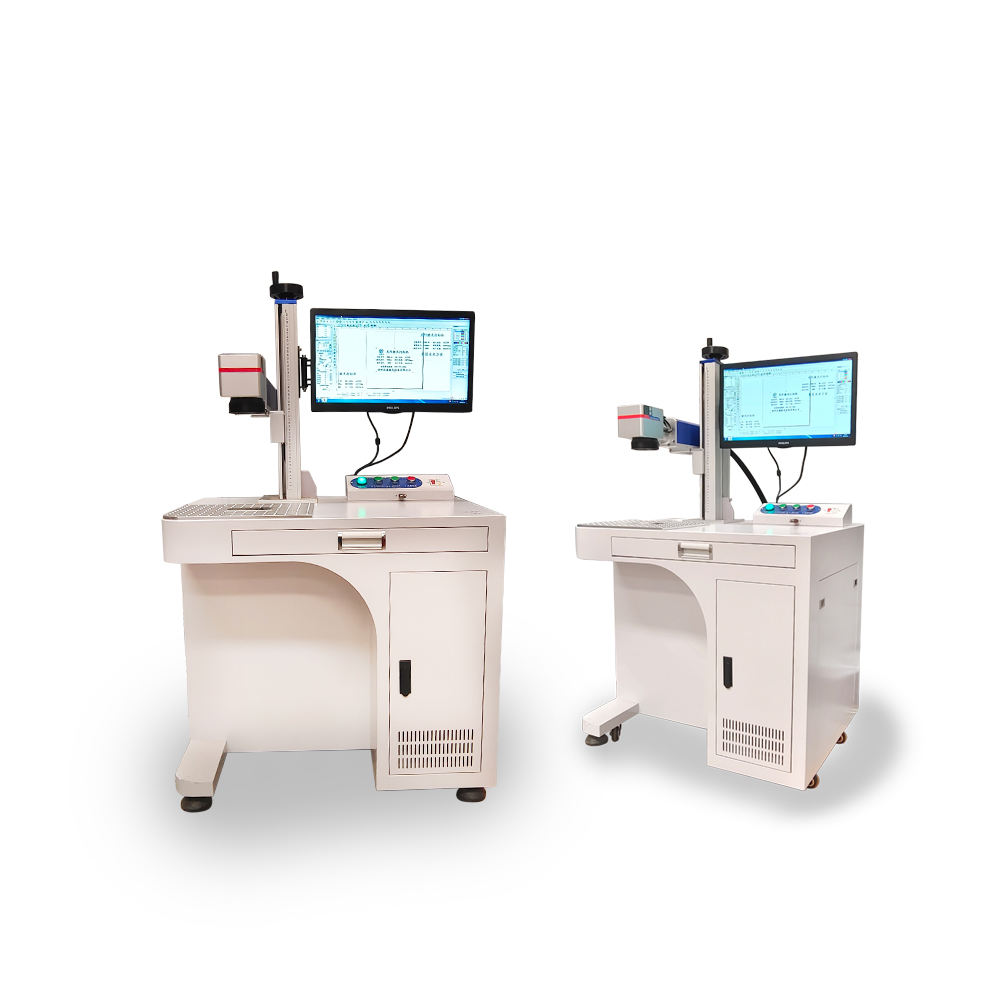
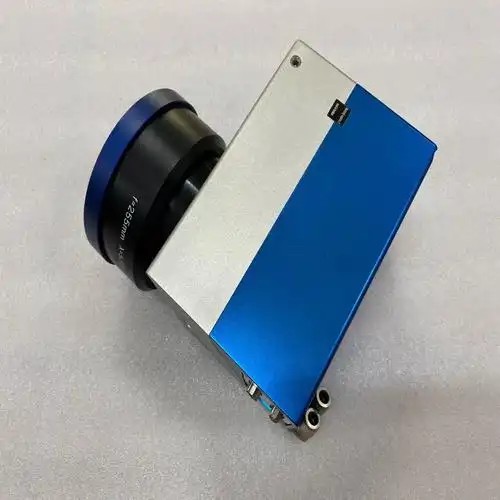
MOPA Laer Marking Machine
Recommended Laser Power for Steel
Based on our experience, different power levels are suitable for different applications.
20W Fiber Laser
Suitable for:
- Logos
- QR codes
- Light marking
Best for low-volume production.
30W Fiber Laser
Provides faster processing than 20W while maintaining excellent quality.
Suitable for medium production.
50W Fiber Laser (Recommended)
For most industrial customers, we recommend a 50W fiber laser.
Advantages include:
- Higher marking speed
- Better engraving capability
- Improved production efficiency
- Suitable for both marking and light engraving
This is the most versatile option for steel processing.
60W–100W Fiber Laser
Recommended for:
- Deep engraving
- Mold manufacturing
- Large steel components
- Continuous industrial production
How Deep Can a Laser Mark Steel?
Laser marking depth depends on several factors, including:
- Laser power
- Marking speed
- Pulse frequency
- Focus position
- Number of passes
- Steel hardness
In our experience:
- Standard surface marking usually creates a depth of approximately 0.01–0.05 mm.
- Light engraving commonly reaches 0.05–0.20 mm.
- Deep engraving can exceed 0.50 mm by using multiple passes and optimized parameters.
For deep engraving, we generally recommend multiple marking passes rather than using extremely high power in a single pass. This approach produces cleaner edges, reduces burr formation, and delivers better overall quality.
Common Applications of Steel Laser Marking
Steel laser marking is widely used across many industries.
Typical applications include:
- Automotive components
- Machine parts
- Industrial equipment
- Kitchenware
- Medical instruments
- Power tools
- Bearings
- Pipe fittings
- Construction hardware
- Metal nameplates
- Industrial valves
- Fasteners
- Tooling
Whether marking a simple logo or a fully automated traceability code, fiber laser systems provide consistent, permanent results.
Laser Marking Services or Buy Your Own Machine?
Many companies initially choose professional laser marking services for prototype development, sample production, or low-volume orders.
Outsourcing is often the best choice when:
Production volume is low
Products change frequently
Equipment investment is difficult to justify
However, for manufacturers producing hundreds or thousands of steel parts every day, purchasing a laser marking machine usually becomes the more economical solution.
Owning your own equipment offers:
Lower cost per part
Faster production
Complete production control
Easier integration with automated lines
Improved product traceability
Why More Manufacturers Are Switching to Fiber Laser Marking
Traditional marking technologies such as ink printing, stamping, labels, and chemical etching are gradually being replaced by fiber laser systems.
The reasons are straightforward:
- Permanent markings
- No consumables
- High precision
- Low maintenance
- Fast processing
- Easy automation
- Environmentally friendly production
As manufacturing standards continue to improve, laser marking has become the preferred identification technology for steel products worldwide.
Why Choose ZS Machinery?
At ZS Machinery, we focus on much more than selling laser machines.
We provide complete steel laser marking solutions, including:
- Fiber laser marking machines
- MOPA laser marking systems
- Customized automation solutions
- Free sample testing
- Process optimization
- Technical training
- After-sales support
Whether you need a compact desktop machine, a fully enclosed industrial system, or a customized production line, our engineering team can recommend the right solution based on your materials, production volume, and marking requirements.
If you’re looking for reliable laser marking steel solutions or professional laser marking services, ZS Machinery is ready to help you improve efficiency, enhance product traceability, and build a more intelligent manufacturing process.
Fiber Laser Engraving Stainless Steel: The Complete Guide to Deep Metal Engraving