How to Choose a Laser Marking Machine for Plastic? Detailed Laser Marking Solutions for Different Plastic Materials
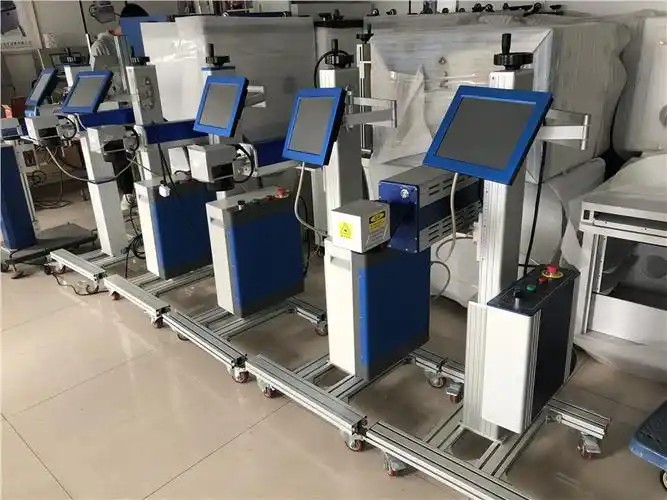
Plastic products are widely used in industrial manufacturing and daily life, and more and more companies are beginning to use laser marking technology to replace traditional silk printing, labeling, and inkjet coding processes. Compared with traditional processing methods, laser marking plastic offers advantages such as permanence, high precision, no consumables, environmental friendliness, and a high level of automation. Therefore, it is widely used in electronics, automotive, medical, packaging, household, and consumer goods industries.
However, many customers encounter one problem when choosing equipment: which laser marking machine should be selected for different plastic materials?
In fact, “plastic” is only a general term. There are many different types of plastics, and each material has different laser absorption rates, heat resistance, and surface reaction characteristics. Some plastics are suitable for fiber laser marking, while others are more suitable for UV laser marking. For some heat-sensitive materials, choosing the wrong laser type can easily cause problems such as burning, yellowing, melting, rough edges, deformation, and strong odors. Therefore, selecting the correct laser solution is extremely important.
Today, ZS Machinery will systematically explain:
What laser is suitable for different plastic materials
How curved plastic products achieve laser marking
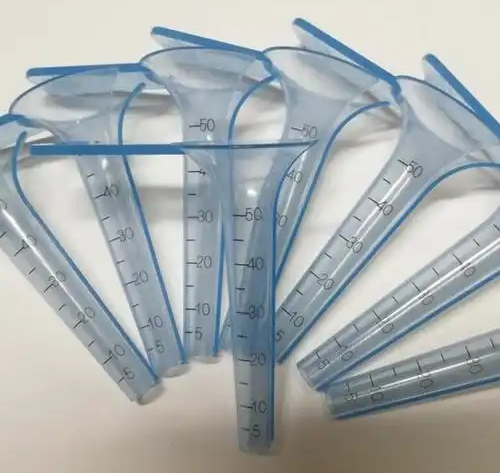
Laser Marking Plastic
What Laser Is Suitable for Different Plastic Materials?
When many customers inquire about plastic laser marking, they often assume that “all plastics are basically the same.” In reality, however, the differences between plastics are very significant. Different plastics vary greatly in laser wavelength absorption, heat resistance, melting point, color reaction, and thermal deformation capability. This is why some plastics work very well with fiber lasers, while others may burn, turn yellow, or even melt directly.
1.The most common category is hard engineering plastics such as ABS, PC, PP, PE, and PA
These materials are widely used in electronic housings, automotive parts, industrial components, and home appliances. They generally have relatively high mechanical strength and good heat resistance, allowing them to withstand heat more effectively.
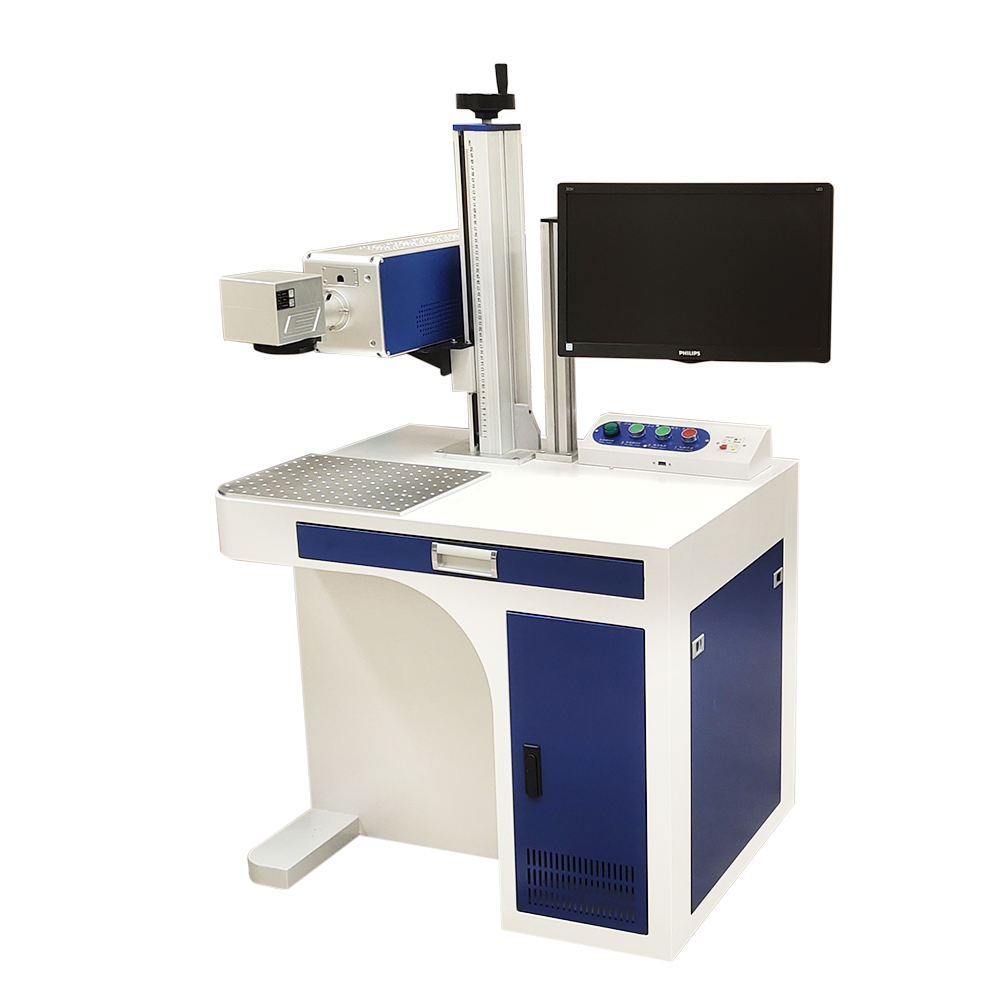
For this type of hard plastic, they usually have good absorption for the 1064nm wavelength, so in many cases they can be processed directly using a fiber laser marking machine. Fiber lasers can achieve high-speed, high-contrast marking of text, logos, QR codes, and serial numbers on these materials. Equipment cost is also lower, making them very suitable for mass industrial production.
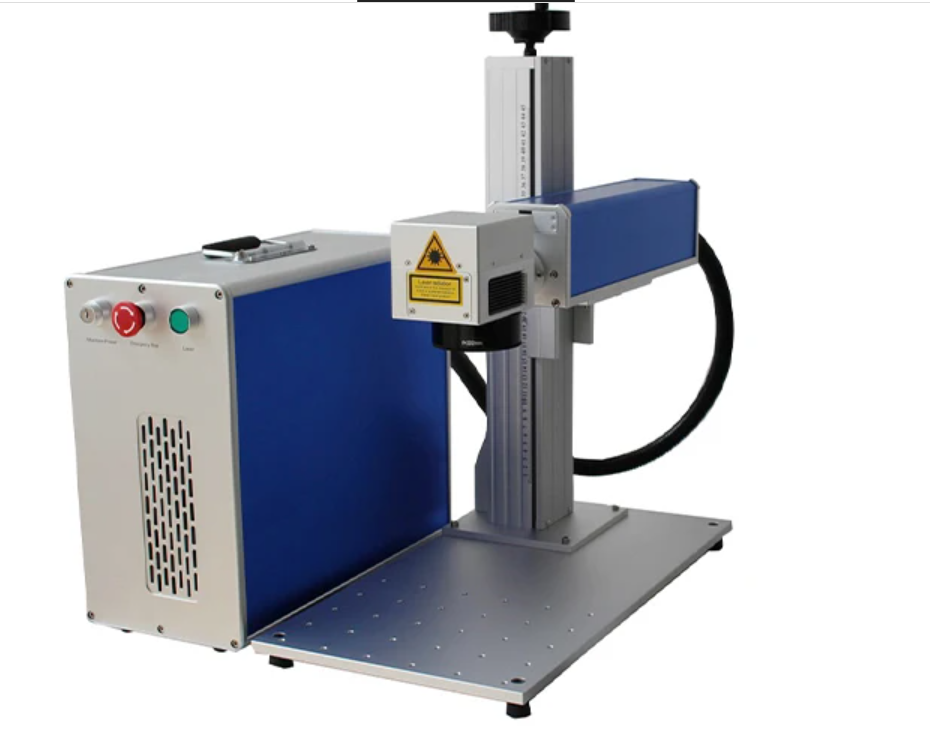
Desktop Fiber Laser Marking Machine
2.For soft plastics such as TPU, TPE, silicone, PVC tubes, and flexible packaging materials
The situation is completely different. These materials are usually highly heat-sensitive, have low melting points, and can easily deform, curl, or melt after heating. If an ordinary fiber laser is used, problems such as material burn-through, yellow edges, and strong odors are very likely to occur.
Therefore, for soft plastics, the industry generally recommends UV laser marking machines. UV lasers have shorter wavelengths, smaller focused spots, and extremely low heat-affected zones, allowing clear marking without causing obvious material damage. Many medical tubes, food packaging materials, cable jackets, and flexible plastic products commonly use UV laser solutions.

UV Laser Marking Machine
3.Another very typical plastic material is acrylic (Acrylic/PMMA)
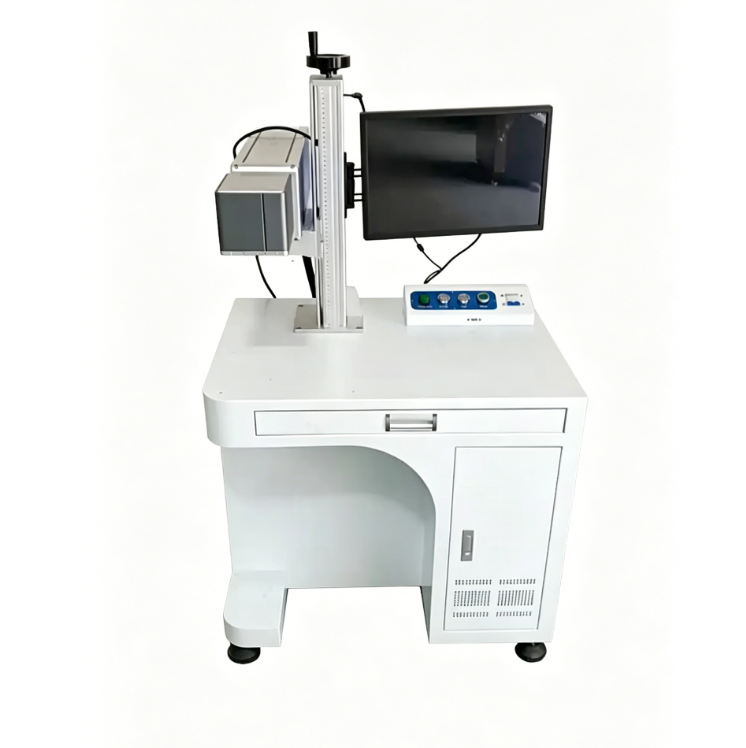
Unlike ordinary engineering plastics, acrylic has a very high absorption rate for CO2 lasers. Therefore, CO2 laser marking and engraving machines are the most common equipment used for acrylic processing. CO2 lasers can not only perform surface marking, but also achieve cutting, deep engraving, frosted effects, and transparent effect processing. Many advertising signs, display stands, handicrafts, and illuminated sign industries use CO2 lasers for acrylic processing.
How to Achieve Laser Marking on Curved Plastic Products?
Many plastic products are not standard flat structures, but instead feature curved surfaces, cylindrical shapes, or even irregular contours. Examples include plastic cups, cosmetic bottles, personal care packaging, plastic pipes, medical reagent bottles, electronic housings, and various round containers. These are all typical curved plastic products.
Laser marking is essentially a “focused processing” method. Only when the material surface is located at the laser focal point can the clearest and most uniform marking effect be achieved. For flat products, maintaining a consistent focal distance is relatively easy. However, for curved products, if ordinary flat marking methods are still used, the following problems may occur:
Clear marking in the center but blurry edges
Some areas appearing unfocused
Character deformation or stretching
Uneven marking depth
QR codes becoming unreadable
Even localized burning or missed marking
These problems are even more noticeable on plastic materials because plastics are generally sensitive to heat. Once certain areas become out of focus, uneven laser energy distribution may cause yellowing, melting, or rough edges.
Therefore, in curved plastic product processing, ZS Machinery usually recommends the following solutions.
1.Rotary Attachment
For cylindrical or regularly curved products, we usually add a rotary attachment to the laser marking machine worktable. Its working principle is actually very simple: when laser marking starts, the rotary attachment rotates the workpiece synchronously, allowing the laser to continuously process the same circular surface. In this way, the original curved surface is converted into an “unfolded flat path,” enabling uniform marking.
The biggest advantages of this method are:
Characters will not deform
Consistent clarity around the circumference
QR codes are easier to read
Logos will not stretch
Suitable for 360° rotary marking
For example, many wraparound logos on thermos cups, plastic cups, and cosmetic bottles are actually completed using rotary attachments.
Fiber lasers, UV lasers, and CO2 lasers can all work together with rotary attachments.
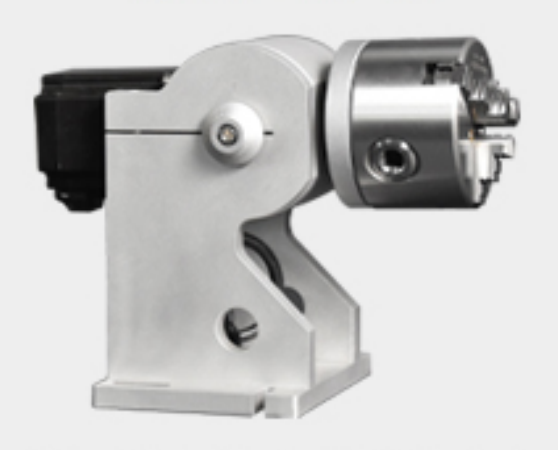
Rotary shaft tooling fixture
2.3D Dynamic Focusing Laser Marking
If the product is not simply cylindrical but has complex curved surfaces, such as:
Irregular plastic housings
Automotive plastic components
Curved electronic products
Complex medical plastic assemblies
Then ordinary rotary attachments may no longer solve the problem. This is because the height of these products continuously changes, making it impossible for the laser focus to remain consistent. In such cases, a 3D dynamic focusing laser system (3D Laser Marking) is usually used.
The biggest difference between 3D laser marking and ordinary 2D marking is that it can not only control movement in the X and Y directions, but also adjust the Z-axis focal distance in real time. Simply put, the laser focus automatically changes according to the surface height, ensuring optimal focusing conditions at all times.
Therefore, it is especially suitable for:
Large curved surfaces
Stepped surfaces
Irregular plastic parts
Complex 3D housings
Today, many high-end consumer electronic product housings are already widely using 3D laser marking solutions.
3.Vision Positioning + Automated Fixtures
For some mass-produced plastic products, simply “marking the product” is not enough. Position consistency must also be guaranteed. Examples include:
Plastic buttons
Electronic housings
Connectors
Medical plastic components
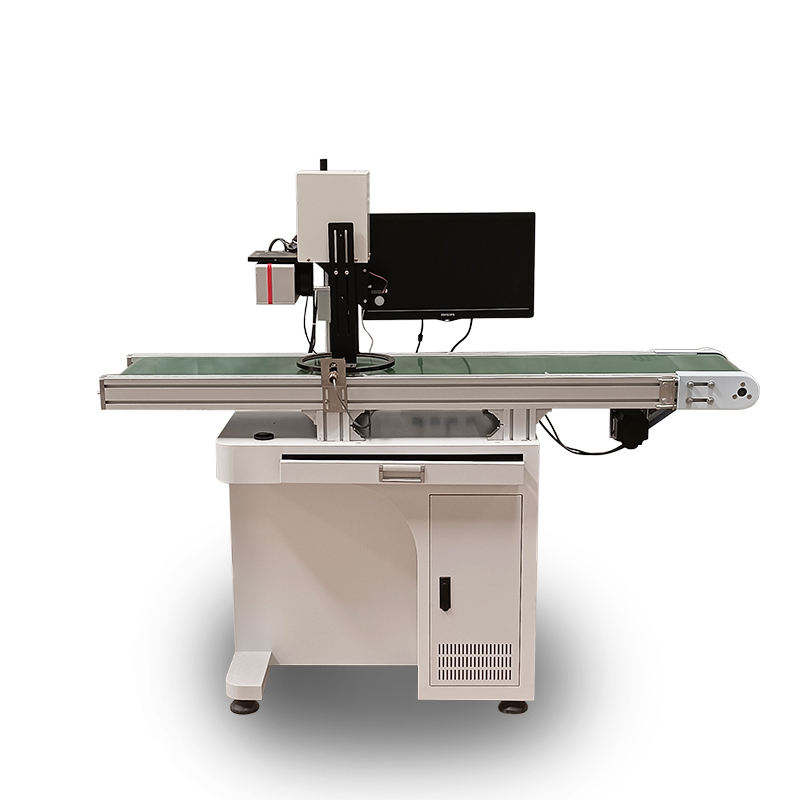
These products are usually small in size, and their placement direction can easily shift. Therefore, many automated production lines add:
CCD vision positioning systems
Automatic rotary fixtures
Automatic loading and unloading systems
The camera automatically identifies the product position and angle, and the system then automatically corrects the marking path. This ensures consistent marking results even if the product has slight deviations, which is also an important direction for the increasing intelligence of plastic laser marking technology today.
Different plastic materials vary greatly in laser absorption rates and heat resistance, so there is no “one machine suitable for all plastics” solution. Only by selecting the correct laser type, parameters, and fixture configuration can more stable and clearer marking results be achieved.
Contact ZS Machinery To Get Your Customized Marking Solutions
ZS Machinery can provide fiber laser, UV laser, CO2 laser, and other plastic laser marking solutions according to different plastic materials, product structures, and production requirements. Rotary attachments, 3D dynamic focusing, and automation customization are also supported.
If you are not sure which laser equipment is suitable for your product, welcome to contact ZS Machinery for professional laser marking solutions.
Aluminum and Plastic Laser Etching: Processing Challenges and Equipment Selection Guide