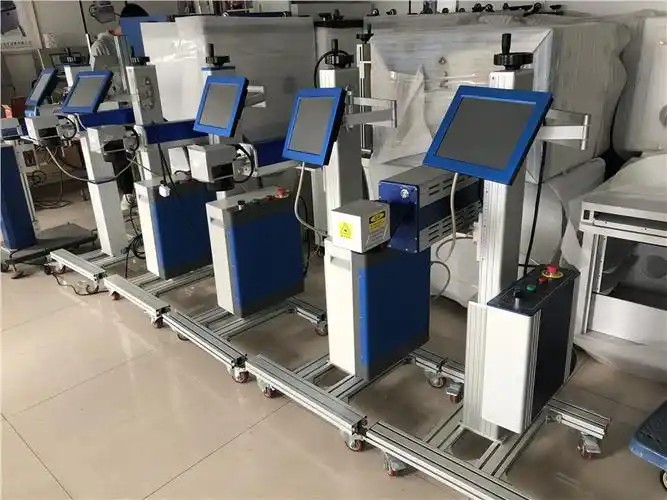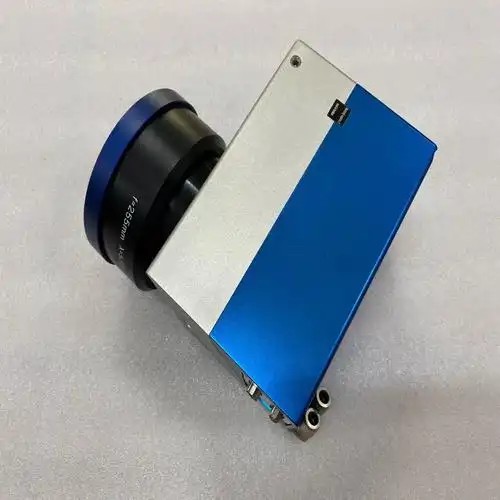
Black Laser Marking: The Complete Guide
In modern manufacturing, Black Laser Marking has become one of the most widely used laser marking processes for metal products. Compared with standard white or gray laser markings, black markings provide significantly higher contrast, better barcode readability, and a more premium appearance. As a result, they are widely used in medical devices, automotive parts, stainless steel cookware, consumer electronics, aerospace components, and other high-end industrial products.
Many customers often ask questions such as:
- Can a standard fiber laser marking machine produce black markings?
- Why can some machines create a deep black mark while mine only produces a gray color?
- What is the difference between black marking with a MOPA laser and a standard fiber laser?
With more than ten years of experience in laser marking equipment manufacturing, ZS Machinery will explain the principles, equipment selection, and practical operating tips for Black Laser Marking.
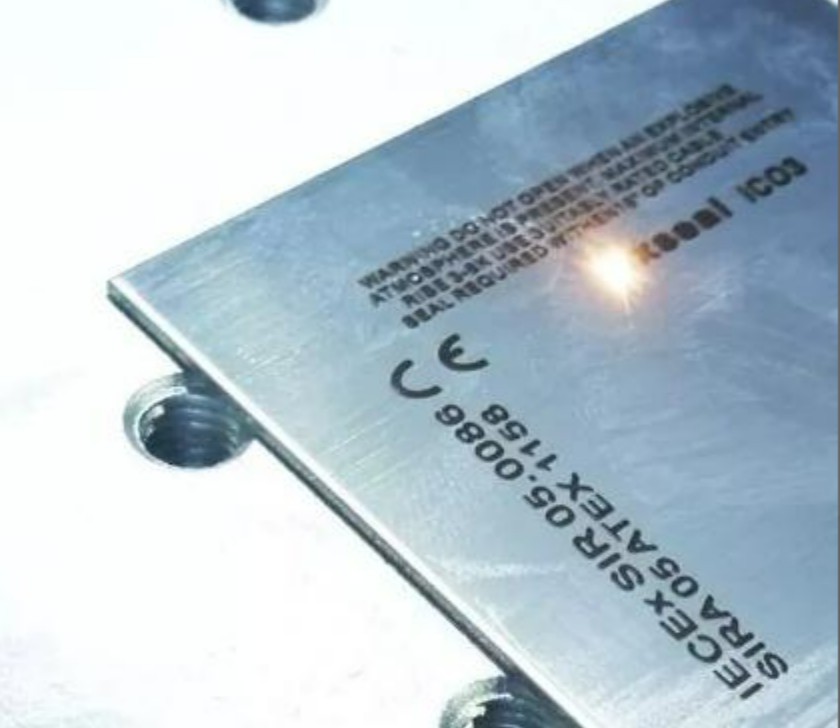
Black Laser Marking On Metal Board
What Is Black Laser Marking?
Black Laser Marking, sometimes referred to as Black Laser Etching, is a laser processing technique that produces high-contrast black markings on the surface of a material.
Many people believe that laser black marking simply “burns” the material black. In reality, the process is much more sophisticated.
The mechanism depends on the material being processed.
For stainless steel, titanium, and other metals, the black appearance is typically created by forming a dense oxide layer under precisely controlled laser energy.
For anodized aluminum, the laser modifies the microstructure of the anodized layer, reducing light reflection and producing a uniform black appearance.
In recent years, ultrafast laser technology has introduced another approach. Femtosecond lasers can create ultra-black surfaces through micro- and nano-structured textures, which is fundamentally different from traditional oxidation-based black marking.
In other words, Black Laser Marking is not simply material removal. Instead, it carefully controls laser energy to produce a unique optical effect on the material surface.
Which Materials Can Be Black Laser Marked?
Today, black laser marking can be successfully applied to a wide variety of materials, including:
- Stainless steel (304, 316, 430, etc.)
- Titanium and titanium alloys
- Anodized aluminum
- Aluminum-magnesium alloys
- Nickel alloys
- Medical-grade metals
Among these materials, stainless steel remains the most common application for black laser marking.
Typical products include:
- Medical device UDI codes
- Surgical instrument logos
- Stainless steel insulated bottles
- Cookware branding
- Automotive part identification
- Industrial nameplates
Why Are More Manufacturers Choosing Black Laser Marking?
Compared with conventional gray laser marks, the biggest advantage of black laser marking is its exceptional contrast.
For QR codes, Data Matrix codes, and other machine-readable markings, higher contrast translates directly into higher scanning reliability.
Black laser marking also offers several additional benefits:
- Premium appearance
- More visible company logos
- Excellent long-term durability
- High resistance to heat and corrosion
- No inks or chemical consumables
- Compliance with medical UDI and industrial traceability standards
These advantages have made black laser marking the preferred choice for manufacturers in the medical, automotive, and high-end consumer goods industries.
Can a Standard Fiber Laser Produce Black Markings?
This is one of the questions we receive most frequently.
The answer is yes—but with limitations.
A standard Q-switched fiber laser marking machine can produce black markings on stainless steel. However, achieving consistent results requires a relatively narrow processing window.
Improper parameter settings may result in:
- Uneven black color
- Gray appearance
- Burned edges
- Brownish tones
- Rough surface finish
For ordinary logos and text marking, a properly adjusted standard fiber laser can usually meet production requirements.
However, if your application requires:
- Deep black logos
- High-quality QR codes
- Large-area uniform black marking
- Medical-grade identification
a MOPA laser marking machine is generally the better solution.
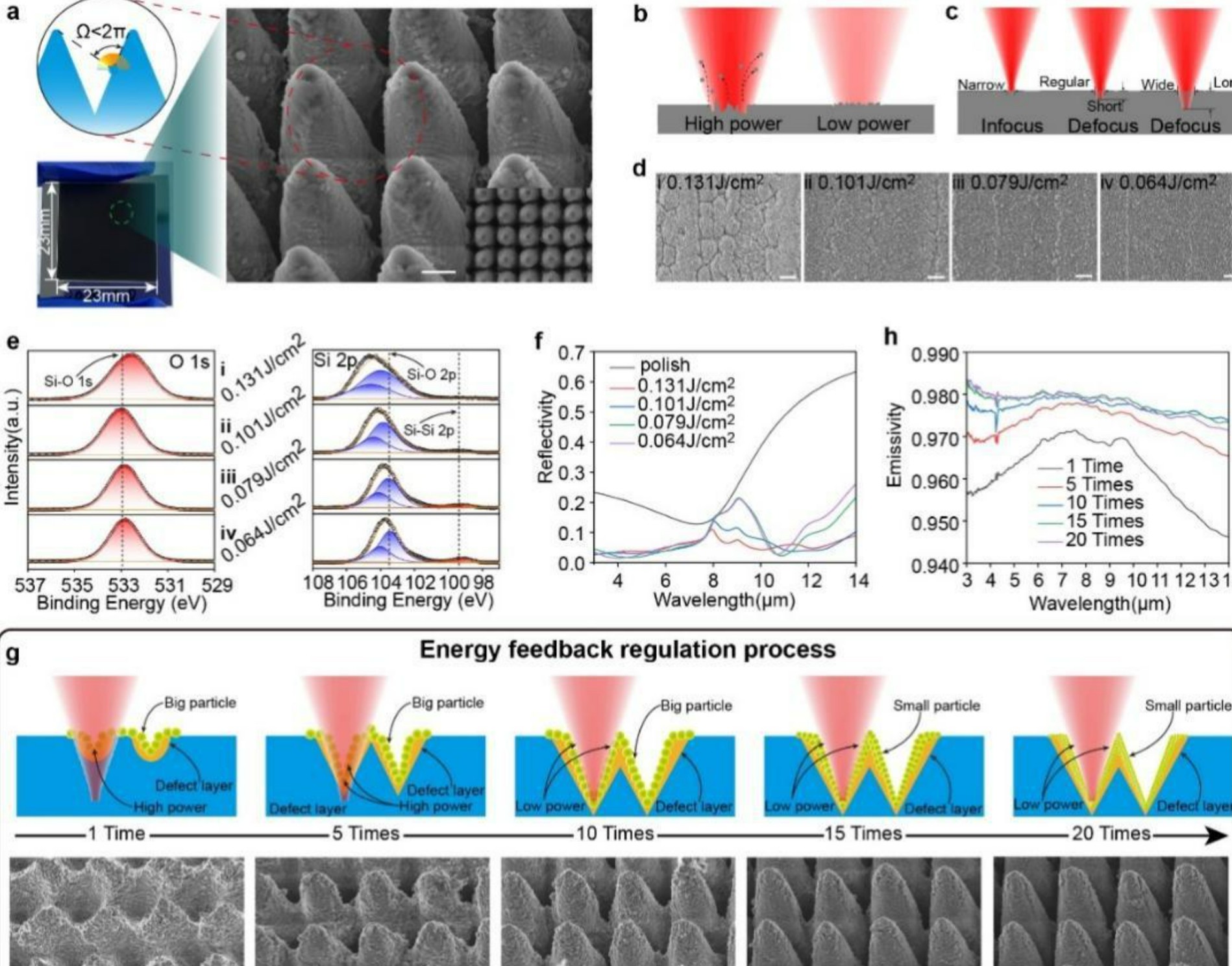
Femtosecond laser microstructure
Why Is a MOPA Laser Better for Black Laser Marking?
Compared with conventional fiber lasers, the biggest advantage of a MOPA laser is its ability to independently control pulse width and pulse frequency.
This allows the laser to deliver much more precise pulse energy while maintaining the same average output power.
As a result, a MOPA laser can:
- Reduce the heat-affected zone
- Better control oxide layer formation
- Produce more uniform black markings
- Improve QR code readability
- Minimize material damage
This is why many products, including smartphone housings, medical devices, and aerospace components, are manufactured using MOPA laser black marking.
How to Perform Black Laser Marking on Stainless Steel (ZS Machinery Experience)
Many users assume that increasing laser power is enough to achieve a darker black.
In reality, successful black marking depends on several parameters working together.
Based on years of application experience and sample testing, ZS Machinery recommends paying attention to the following settings.
1. Focus Adjustment (Most Important)
Unlike ordinary laser marking, black marking on stainless steel is usually not performed at the exact focal point.
In most cases, we recommend using a slight defocus of approximately 1–3 mm from the material surface.
A slight defocus reduces peak energy density and helps form a more uniform oxide layer, resulting in a deeper and more consistent black appearance.
2. Use Relatively High Laser Power
For 20W and 30W fiber laser systems, relatively high output power is generally recommended.
For example:
- About 80% power for a 20W machine
- About 60–70% power for a 30W machine
Higher power helps create a stable oxide layer, but excessive power may cause excessive ablation and lighter colors.
3. Reduce the Marking Speed
The faster the scanning speed, the less laser energy is delivered to each point.
To achieve a darker black, the marking speed should usually be reduced.
In practical production, we have found that 100–200 mm/s often provides excellent black marking results.
For larger logos, the speed can be adjusted appropriately to balance productivity and marking consistency.
4. Reduce the Hatch Spacing
Black marking requires higher energy coverage across the entire marking area.
For this reason, we generally recommend a relatively small hatch spacing, such as 0.01 mm.
Dense filling produces a more uniform oxide layer while minimizing gray areas and color variation.
5. Select an Appropriate Pulse Frequency
For standard fiber lasers, the pulse frequency is usually kept within the manufacturer’s recommended range.
With MOPA lasers, however, pulse width and frequency can be optimized together to produce even higher-quality black markings.
6. Always Perform Sample Testing Before Mass Production
Even when using the same laser machine, different batches of stainless steel may vary in composition, surface finish, and polishing quality.
Therefore, before beginning production, we strongly recommend testing samples to verify:
- Black color consistency
- Contrast
- Logo edge quality
- QR code readability
Once the desired result is achieved, save the parameters for future production. This is standard practice in professional laser marking workshops.
What Is the Difference Between Black Laser Marking and Laser Engraving?
Many users confuse black laser marking with deep laser engraving.
In reality, they are two completely different processes.
The purpose of Black Laser Marking is to create a high-contrast black surface while removing very little material. The process has minimal impact on the part’s dimensions and surface finish.
Laser Engraving, on the other hand, removes a significant amount of material to produce a visible recessed pattern. It is commonly used for nameplates, molds, decorative graphics, and applications requiring depth.
For medical devices, QR codes, product logos, and traceability markings, Black Laser Marking is generally the preferred solution.
Conclusion
Black Laser Marking has become one of the most mature and reliable laser marking technologies in modern manufacturing. By selecting the right equipment and optimizing key parameters such as focus position, laser power, marking speed, and hatch spacing, manufacturers can achieve uniform, high-contrast, and permanent black markings on stainless steel, titanium, anodized aluminum, and many other materials.
If your products require high-contrast logos, QR codes, UDI markings, or permanent branding, ZS Machinery can provide professional black laser marking solutions tailored to your materials and applications. We offer standard fiber laser marking machines, MOPA laser marking machines, as well as free sample testing to help you achieve the best possible Black Laser Marking results.
Fiber Laser Metal Engraver: Complete Buying Guide for Industrial Metal Engraving